The writer is an economist, anchor, geopolitical analyst and the President of All Pakistan Private Schools’ Federation
president@pakistanprivateschools.com
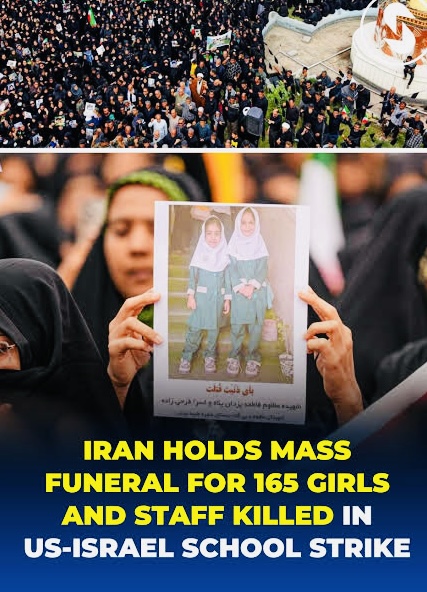
The unlawful attacks of Us-Isreal on hospitals and schools in Iran represent a tragic violation of International Law and escalation in an already volatile conflict, underscoring the human cost of geopolitical rivalries. The mounting evidence of civilian devastation demands transparency and accountability. The strike on Shajareh Tayyebeh Girls’ School in Minab, one of the deadliest incidents occurred on the first day of the operation when a missile struck the Shajareh Tayyebeh girls’ elementary school in Minab, a city in southern Iran’s Hormozgan province. The attack happened around 10 a.m. local time, during school hours, when approximately 165 students mostly girls aged 7 to 12 were in attendance. Iranian state media reported that 165 people were killed, including students, teachers, and staff, with an additional 96 injured. Some estimates place the death toll as high as 180, with the majority being young girls. Eyewitness accounts describe a “double-tap” strike: an initial missile of US-Isreal hit the school, followed by a second that targeted survivors sheltering in the prayer hall. Videos and images verified by independent outlets show extensive destruction, with at least half of the two-story building reduced to rubble, backpacks and schoolbooks scattered amid the debris. Parents had reportedly been called to collect their children amid the onset of strikes, exacerbating the chaos and casualties. Iranian officials have confirmed that the missiles were launched from Bahrain, home to the US Navy’s Fifth Fleet, though this specific detail remains verified in independent reports. A mass funeral in Minab drew thousands, with mourners chanting against the US and Israel, highlighting the profound grief and anger. The incident has been labeled a “horrific” violation by the UN Human Rights Office, with UNESCO condemning attacks on educational institutions as endangering students and undermining international protections. In addition to the schools strikes by the US and Israel, multiple hospitals have reportedly been hit. Iranian authorities claim at least 10 medical centers have been damaged, including Shohada Hospital in Sarpol-e Zahab, a field hospital in Salas-e Babajani, Khatam-al-Anbia Hospital, and Gandhi Hospital in Tehran. The attack on the school has been described as a grave violation of humanitarian law, and the UN Committee on the Rights of the Child has called for an immediate investigation into the incident. The humanitarian crisis in Iran is worsening, with reports of more than 23 attacks on schools and health infrastructure, killing and injuring numbers of others. The United Nations has condemned attacks on schools and hospitals in Iran, calling for investigations and accountability. The UN Committee on the Rights of the Child has emphasized protecting children from war. The Iranian government has accused the US and Israel of deliberately targeting civilians, including children, and has demanded accountability for the perpetrators. As the death toll rises and regional tensions boil, the international community must prioritize protecting civilians, children and upholding the laws of war to prevent further atrocities. This’s a same pattern of Isreal which was adopted at Gaza War resulted in a severe humanitarian crisis, with over 100,000 Palestinians killed in which about 40 percentage of the number was of children and 2.6 million residents living in dire conditions, but still an average of one child killed every hour over the last 23 months. Over 4,000 of those were infants under one year old; more than 171,000, Injured with Save the Children reporting about 42,000 children injured and 21,000 left with permanent disabilities; 2.6 million residents face extreme hardship and severe humanitarian conditions with famine confirmed in Gaza Governorate and more than a million people in IPC Phase 5 catastrophic hunger. Over 94% of hospitals and 97% of schools have been damaged. The pattern shows massive civilian tolls, especially among children, and a deepening humanitarian crisis. Without swift intervention, this cycle of violence risks engulfing the Middle East in prolonged instability. In the early hours of February 28, 2026, the United States and Israel launched an unlawful and invasion of the coordinated military operation against Iran, codenamed Operation Roaring Lion by Israel and referred to as Epic Fury by US officials. This invasion, which began with airstrikes on high-value targets including Iranian leadership, has rapidly escalated into a full-scale regional war now entering its sixth day. Among the most controversial aspects of the campaign are strikes on civilian infrastructure, particularly hospitals and schools, which have resulted in significant innocent civilian and children casualties. Iranian authorities and international human rights organizations have condemned these incidents as deliberate violations of international humanitarian law, amounting to war crimes. The US and Israel have denied targeting civilians, insisting their operations focus on military objectives, but calls for independent investigations are mounting amid a rising death toll exceeding 1,000 civilians and children. The strikes have not only claimed the life of Iran’s Supreme Leader Ayatollah Ali Khamenei but have also drawn global scrutiny for their impact on non-combatants. The specific attacks on hospitals and schools as deliberate violations of international humanitarian law, amounting to war crimes, the human cost, international reactions, and the legal framework under which such actions constitute war crimes. Photos from Tehran show damaged buildings, including hospitals, following airstrikes. The head of Iran’s Medical Council reported widespread disruptions to healthcare amid the attacks. Human Rights Activists News Agency (HRANA) documented strikes on medical centers between March 2 and 3, contributing to a civilian death toll that includes 181 children under 10. UN human rights experts have condemned these as “grave violations,” noting that targeting medical institutions breaches international humanitarian and human rights law. Iran’s Ministry of Foreign Affairs accused the US and Israel of hitting 33 civilian sites, including hospitals and residential areas. However, the proximity of alleged military targets to civilian infrastructure has raised questions about proportionality and distinction under international law. Iran has retaliated with missile and drone strikes on US bases in the region, including in Bahrain, where air defenses intercepted dozens of projectiles. The conflict has spilled over, with Iranian strikes on multiple countries and US forces sinking US warships. Civilian casualties inside Iran stand at over 1,600 killed and 6,000 wounded in the first five days, per Iranian media. Rights groups like Amnesty International have called for de-escalation and accountability, warning that US-Isreal indiscriminate attacks violate the UN Charter.
By legal analysis on the War Crimes and International Laws, under the Geneva Conventions, deliberately attacking civilian objects like schools and hospitals is prohibited and constitutes a war crime. The Rome Statute of the International Criminal Court defines such acts as serious violations when committed intentionally in an international armed conflict. Even if military targets are nearby, attacks must adhere to principles of distinction (separating civilians from combatants) and proportionality (ensuring civilian harm is not excessive relative to military gain). UN have urged an impartial investigation into the Minab school strike, describing it as a “grave violation of humanitarian law.” If evidence shows deliberate targeting or reckless disregard for civilians, those responsible could face prosecution. The US-Israeli denial rings hollow given the pattern of strikes, while supporters claim Iran’s use of civilian sites as shields complicates matters—though no verified evidence supports this for the Minab schools. The UN has demanded de-escalation, by condemning the “unlawful military attacks” and calls for the accountability. Amnesty International highlighted the rapid expansion of hostilities and risks to civilians and children. Protests in Iran and abroad have decried the strikes, with chants framing them as terrorism. Activists call for a massive anti-war mobilization, emphasizing welfare over warfare. The international community has responded with outrage and condemnation, with the UN, UNESCO, calling for an end to the attacks on schools and civilian infrastructure. Italian Defence Minister Guido Crosetto has also criticized the US-Israeli strikes as a breach of international law. Grave violations of International Law, as the attacks on Iran may constitute a crime of aggression, violating the UN Charter’s prohibition on aggression. The use of force against another state without UN Security Council authorization is a clear breach of international law. The targeting of schools and hospitals is also a grave violation and war crime under international humanitarian law. The humanitarian crisis in Iran is worsening, with reports of more than 23 attacks on health infrastructure, killing and injuring numbers of others. The United Nations has condemned attacks on schools and hospitals in Iran, calling for investigations and accountability. The UN Committee on the Rights of the Child has emphasized protecting children from war, and the World Health Organization has verified 13 attacks on health infrastructure in Iran. The World Health Organization has verified these attacks, and there are concerns that the conflict may escalate further, putting more civilians at risk. International laws prohibit attacks on civilians, schools, hospitals, and other protected areas. The Geneva Conventions and the Rome Statute of the International Criminal Court (ICC) consider such attacks war crimes. Specifically, the following actions are prohibited: Attacks on Civilians, as direct attacks on civilians or civilian objects are war crimes, as stated in the Geneva Conventions and the ICC’s Rome Statute; Attacks on schools and hospitals targeting schools and hospitals is a grave violation of humanitarian law, protected under the Geneva Conventions and the Convention on the Rights of the Child; Indiscriminate attacks that fail to distinguish between civilians and combatants, or are disproportionate to the military advantage, are considered war crimes; Use of explosive weapons in densely populated areas is also a war crime, as it puts civilians at risk. War crimes have serious consequences, including individual criminal responsibility, state responsibility, and international accountability. The International Criminal Court (ICC) and other international tribunals can prosecute individuals for war crimes, imposing penalties such as imprisonment. As consequences of War Crimes: Individual criminal responsibility can be held accountable for war crimes, including commanders and superiors; State responsibility can be held responsible for war crimes committed by their agents or on their territory; International accountability as the ICC and other international tribunals can investigate and prosecute war crimes. International Criminal Court (ICC) investigates and prosecutes war crimes, crimes against humanity, and genocide. Ad Hoc Tribunals of the UN Security Council can establish ad hoc tribunals to prosecute war crimes in specific conflicts. States can investigate and prosecute war crimes under universal jurisdiction or national laws at national courts. Nuremberg and Tokyo Trials in Post-WWWII trials held individuals accountable for war crimes. Yugoslav and Rwandan Tribunals as Ad hoc tribunals prosecuted war crimes in the former Yugoslavia and Rwanda. The ICC has prosecuted individuals for war crimes in countries like the Democratic Republic of Congo and Mali.
In the face of mounting evidence from the US-Israeli strikes on Iranian hospitals and schools—these actions unequivocally constitute war crimes under the Geneva Conventions and the Rome Statute of the International Criminal Court. Echoing the tragic patterns seen in Gaza, where tens of thousands of children have been killed or maimed amid widespread destruction of civilian infrastructure, this escalation flouts fundamental principles of distinction, proportionality, and humanity, fueling a humanitarian catastrophe!
History doesn’t repeat itself neatly, but the comparison sticks because both moments feel like power cracking open. Britain in 1945 was bankrupt, overstretched, and dependent on American loans—victorious in war, but stripped of empire and forced into retreat. The United States today looks different: still the core of global finance, still unmatched in military reach. Calling Iran “the beginning of the end” reads more like a warning than a fact. If Washington gets dragged into a long, costly confrontation that burns lives and money without clear gains, it could accelerate the same kind of imperial fatigue—domestic frustration, allies hedging bets, rivals pushing harder. The real echo of 1945 isn’t sudden collapse; it’s the slow shift where unquestioned dominance starts to feel provisional, and the world begins pricing in life after American primacy. In the face of mounting evidence from the US-Israeli strikes on Iranian hospitals and schools—these actions unequivocally constitute war crimes under the Geneva Conventions and the Rome Statute of the International Criminal Court. Echoing the tragic patterns seen in Gaza, where tens of thousands of children have been killed or maimed amid widespread destruction of civilian infrastructure, this escalation flouts fundamental principles of distinction, proportionality, and humanity, fueling a humanitarian catastrophe with over 1,600 civilian deaths in Iran within days. As the UN, UNESCO, Amnesty International, and global voices demand impartial investigations and accountability, the international community must unite to enforce de-escalation, prosecute perpetrators through the ICC or ad hoc tribunals, and break the cycle of impunity, lest unchecked aggression plunge the Middle East into irreversible chaos and further erode the sanctity of international law. In the shadow of the US-Israeli onslaught initiated on February 28, 2026—under the banners of Operation Roaring Lion and Epic Fury—what if the rubble of Shajareh Tayyebeh Girls’ School in Minab, where over 165 young lives were extinguished in a calculated double-tap strike, and the shattered wards of hospitals like Gandhi in Tehran and Shohada in Sarpol-e Zahab, serve not merely as evidence of war crimes under the Geneva Conventions and Rome Statute, but as a haunting mirror to humanity’s recurring amnesia?—stand as unequivocal war crimes under the Geneva Conventions and the Rome Statute of the International Criminal Court, violating core principles of distinction and proportionality. With at least over 1600 civilian deaths and 6,000 injuries in the first five days, this pattern mirrors the Gaza crisis where over 100,000 Palestinians, including 40,000 children, perished amid similar devastation, exacerbating a regional humanitarian catastrophe marked by famine and displacement. Despite US and Israeli intentional civilian targeting, mounting evidence from satellite imagery, eyewitness accounts, and independent probes—including UN condemnations labeling the Minab strike a “grave violation” and calls for ICC investigations—demands immediate accountability, de-escalation, and adherence to international law to avert further atrocities and prevent the Middle East’s descent into prolonged chaos. Paralleling Gaza’s apocalypse with its 100,000 fatalities, including 40,000 children and widespread famine, one must ponder: when geopolitical chessboards prioritize power over playgrounds, does the international community’s chorus of UN condemnations, Amnesty pleas, and ICC threats truly challenge the impunity of aggressors, or merely echo the hollow promises of a world order fraying at its ethical seams? Mike Pompeo says join Western civilization and live wonderfully—yet 165 girls lie murdered in a school, and from that civilization we hear no sympathy, only silence. If history’s ghosts from Nuremberg to Rwanda whisper warnings unheeded, then perhaps this Iranian inferno demands not just accountability through tribunals but a radical reckoning: will we finally dismantle the architectures of aggression, safeguarding the innocent from the crosshairs of empire, or condemn future generations to inherit a legacy where children’s laughter is silenced by the roar of missiles, and justice remains a footnote in the annals of forgotten atrocities?