The writer is an economist, anchor, geopolitical analyst and the President of All Pakistan Private Schools’ Federation
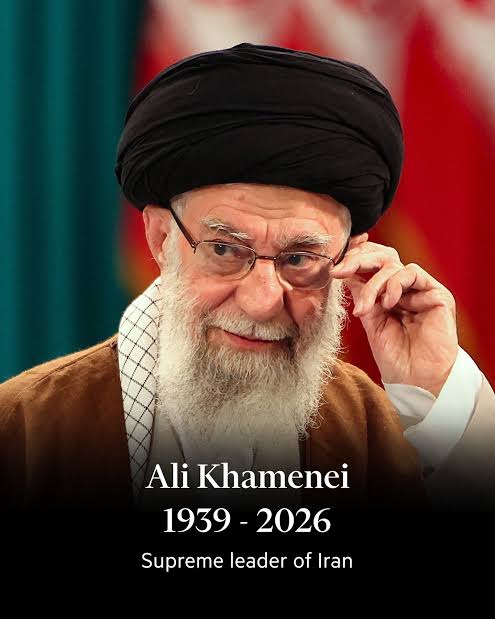
The notion of targeting Ayatollah Khamenei, the Supreme Leader of Iran, is a precipice of peril, a threshold that, once crossed, threatens to unleash a maelstrom of unforeseen consequences. Ayatollah Khamenei had the opportunity to hide, but he preferred martyrdom. Trump killed Rehbar Khamenei, who was waiting for martyrdom in his own office, to unite the whole Iran. Iran’s Supreme Leader Ayatollah Ali Khamenei’s death in a US-Israel airstrike has sent shockwaves globally, but contrary to expectations, it hasn’t led to chaos. Instead, Iran’s response has been resolute, showcasing its strength and leaving the world questioning its assumptions. Mojtaba Khamenei, the late leader’s son, is seen as a successor, indicating a possible continuation of hardline policies. It belies the simplistic assumption that the removal of a singular figurehead would precipitate an instantaneous collapse, a return to a semblance of normalcy. Rather, Iran’s resolute response has shattered the illusion of vulnerability, leaving an indelible mark on the global psyche. The reverberations of this audacious act will be felt far beyond Tehran’s streets, casting a pall of distrust over international relations and underscoring the perils of militarized diplomacy. The world watches, transfixed, as the paradigm of power shifts, and the currency of dialogue depreciates in the face of unbridled aggression. Targeting Ayatollah Khamenei is not a child’s play, Iranian are not even believing that this has happened. The idea was to wage war on Iran, remove the leader, and in a few moments things would return to normal. But Iran surprised everyone, as a serious matter that irreparable damage has been done. A precedent has been set for the entire world that dialogue has no value. When the Syrian president fled the country, his army surrendered to the rebels; Hasina Wajid fled the country, her government collapsed; This happened in Nepal too, but in Iran, the Supreme Leader knew that his people had been killed indiscriminately before. The abyss of misunderstanding yawns wide, engulfing the uninitiated. Trump’s America, oblivious to the crucible of martyrdom, mistakes ferocity for fragility, and resolve for rhetoric. In the sanctum of Iran, where Ali’s legacy flows like a river, and Karbala’s sacrifice is etched in collective memory, the impulse to retaliate is not a calculation, but a consecration. The attempted strike on Khamenei is not merely an attack on a leader, but an affront to a people’s sacred narrative. And in this crucible, Iran’s response will not be dictated by fear, but forged in the fire of defiance. The world trembles, for in this perilous dance, the lines between rationality and recklessness blur, and the stakes escalate to the very precipice of existence. The specter of threat hangs over the landscape of international relations, as Trump’s America perceives Iran’s sovereignty as a dagger poised to strike. Yet, the question echoes: what tangible threat has Iran posed to warrant such belligerence? Has Tehran dispatched troops to America’s shores, or is it merely the presence of US military bases encircling Iran that fuels this animosity? The White House remains unscathed by Iranian missiles, and the nuclear card, once a pretext for aggression, now appears to be a double-edged sword. Libya’s Gaddafi relinquished his nuclear ambitions, only to meet his demise; Iran, steadfast in its pursuit, now stands accused of provocation. As the tables turn, Iran’s defiance may yet prove to be America’s most regrettable miscalculation. The horizon of the Middle East darkens as Iran’s missiles pierce the silence, striking at the heart of US and Israeli interests. Tehran’s vow to defend its ancient civilization echoes through the ages, warning of a long and brutal war that will leave no stone unturned. The world watches, transfixed, as a new chapter unfolds – one in which Iran’s decades-long preparation for asymmetric warfare confronts the unpreparedness of a superpower. The missile attacks on the US embassy and Netanyahu’s office in Saudi Arabia have made the situation in the region extremely tense. Iran, expressing its determination to defend its 6,000-year-old civilization, has warned the US and Israel of a long war and severe consequences. Iran has been preparing for this fight for the past 20 years, while the US may not be fully prepared for this new type of war of the 21st century. These attacks could be the precursor to a long and exhausting war that will have global repercussions. Iran has fired new types of ballistic and hypersonic missiles to target senior commanders of the Israel Defense Forces (IDF), Iran is targeting leaders linked to the assassination of Iranian Supreme Leader Ayatollah Ali Khamenei. The strategy devised before Ayatollah Khamenei’s assassination has so far been remarkably successful. Ayatollah Khamenei had ordered that all important people appoint four successors so that one can succeed the other. This is exactly what has happened because America has martyred many leaders, so now those in power are taking the war forward. The ripples of this conflict will be felt far beyond the region, threatening to engulf the globe in a maelstrom of retaliation and counter-retaliation. As the chessboard of geopolitics is rewritten, one question haunts the minds of leaders: what horrors will this new era of warfare unleash? As the shadows of war lengthen across the Middle East, Iran’s defiant stance against the onslaught of US and Israeli aggression has laid bare the fragility of Western calculations. Trump’s overtures for negotiation, rebuffed by Tehran, reveal a leader ensnared by Netanyahu’s machinations, his strategy of swift regime change now mired in the quagmire of Iranian resilience. With the regime intact, resistance unbroken, and the conflict stretching beyond initial projections, the specter of a protracted war looms large – a grim testament to the perils of hubris and miscalculation.
Iran’s Supreme Leader Ayatollah Ali Khamenei’s death in a US-Israel airstrike has sent shockwaves globally, but contrary to expectations, it hasn’t led to chaos. Instead, united Iran’s response has been resolute, showcasing its strength and leaving the world questioning its assumptions.
In the shadowed annals of our turbulent age, where the tremors of the earth oft conceal the machinations of man, commenced this grave affair: an ostensible earthquake upon the Persian soil unveiled itself as a clandestine nuclear trial, coupled with the bold proclamation from the Islamic Revolutionary Guard Corps of an intercontinental ballistic missile’s assay. The earthquake in Iran was confirmed to be a nuclear test, and along with it, the IRGC announced that they were testing an intercontinental ballistic missile. This was a kind of signal that if we are attacked by a nuclear attack, then America will not be safe either, we will also respond in the same way. This is the whole background in which this statement has come from Russia, perhaps China will also issue a similar statement. We must not forget that Iran’s security is also closely linked to the security of China and Central Asia, and at present, it is Iran that is the only pro-China country in the Gulf. Herein lay a dire portent, a veiled admonition that should the fires of atomic aggression be loosed upon Iran, the distant shores of America would likewise tremble in reciprocal fury. Such is the somber tapestry against which Russia’s solemn decree hath emerged, perchance to be echoed by the Dragon of the East; for we dare not disregard the inextricable bonds that tether Iran’s bulwark to the fortunes of China and the vast steppes of Central Asia, wherein Iran stands solitary sentinel as the sole bastion of pro-Chinese allegiance amidst the Gulf’s fractious realms. As the shadows of war darken across the Middle East, Russia and China stand as sentinels of Iran’s sovereignty, their condemnation of US and Israeli actions echoing through the halls of global diplomacy. The international community is on high alert, with warnings of potential catastrophic consequences, including a nuclear winter and global food shortages. Russia and China have strongly condemned the US and Israeli attacks on Iran, warning that these actions could escalate into a broader conflict and undermine global stability. The specter of nuclear conflict looms large, with Dmitry Medvedev’s stark warning that Hiroshima and Nagasaki’s devastation would pale in comparison, serving as a chilling reminder of the precipice upon which the world teeters. Russian Foreign Minister stated that Moscow sees no evidence of Iran developing nuclear weapons and is urging a diplomatic solution. Russia’s Deputy Chairman of the Security Council, Dmitry Medvedev, has cautioned that continued regime-change efforts could push the world toward World War III. China, meanwhile, is calling for an immediate ceasefire and de-escalation, emphasizing the need for respect for Iran’s sovereignty. The stakes are monumental, and the consequences of miscalculation catastrophic, as the international community grapples with the possibility of a Third World War. Russia and China have announced their full diplomatic and moral support for Iran, condemning the US and Israel’s actions as a threat to world peace. This comes after Iran’s missile attacks on US and Israeli targets, with Russia warning that the situation could escalate into a global conflict. China has called for an immediate cessation of military operations, emphasizing the importance of respecting Iran’s sovereignty. Chinese Foreign Minister Wang Yi has condemned the strikes as violations of sovereignty and urged a return to diplomacy. The conflict has raised concerns about global stability, with Russia warning of a potential World War III. The international community is urging de-escalation and a return to diplomatic efforts. The sudden departure of American planes from the Gulf whispers a tale of unforeseen consequences, a testament to the unpredictable nature of war. It is speculated that Chinese technology may have played a pivotal role in this unexpected turn of events, leaving the American government in disarray. The initial war plan, once touted as a swift and decisive strike, now lies in tatters, its estimates proven woefully inaccurate. The discordant statements from American officials paint a picture of chaos, a government grappling with the harsh realities of a conflict gone awry. The speculation surrounding China’s involvement raises questions about the shifting balance of power in the region. China’s growing influence and technological advancements could be redefining the geopolitical landscape. China’s support for Iran could accelerate its rise as a dominant player in the Middle East, challenging US influence. China’s involvement may indicate its growing capabilities in cyber warfare and advanced missile technology. Other nations may reassess their alliances and strategies in response to China’s increased presence. As the dust settles on the ruins of America’s grand strategy, Iran emerges triumphant, its defiant stance having ignited a constitutional crisis in the United States. The bitter discord between Trump and Netanyahu lays bare the perverse calculus of power politics, where the nuclear option looms as a grotesque trump card. Meanwhile, the American people are being led down a rabbit hole of chaos and carnage, their elected representatives powerless to stop the juggernaut of war. The Senate trembles, the House prepares to defy, and the ghosts of Vietnam whisper haunting warnings of a quagmire to come. Will Congress reclaim its war powers, or will the imperial presidency drag the nation into another abyss? The world holds its breath as America teeters on the brink.
America is losing the war. Iran has attacked the largest US military base in the Middle East, which is in Qatar, with missiles. American defense system, Iran disabled it, Iran defeated American technology. Iranian drones followed the Abraham Lincoln ship for several kilometers, gave all the information to the Iranian forces, but the American defense technically did not even let the news reach them. Iran shot down an F15, Iran has defeated American technology in every way. Iran can fight a war for months. It is producing missile drones every day. Iran has launched retaliatory attacks on several countries, including Israel, USA, UAE, Saudi Arabia, Qatar, Kuwait, Jordan, Iraq, Bahrain, Oman, Syria, Cyprus, bases of France, Italy, and UK, following the killing of Supreme Leader Ayatollah Ali Khamenei. Although, the UK Ministry of Defence says that the “Shahed-type drone” that targeted a British base in Cyprus was not launched from Iran. First a British military base, then a Saudi oil refinery, and now Turkey. Israel is involved in all of these attacks and is trying to drag these countries into a war against Iran. The attacks have resulted in significant damage and losses, with reports of 560 US soldiers killed, CENTCOM generals lost, and multiple military bases and equipment destroyed. Iran claims to have destroyed a US warship in the Indian Ocean and shot down an Israeli F-35 Stealth Aircraft over Tehran. The country has also demonstrated its naval power by targeting a US destroyer more than 600 kilometers away in the Indian Ocean. Gulf countries have reported intercepting Iranian missiles and drones, with Qatar claiming to have intercepted 101 missiles. The conflict has escalated tensions in the region, with fears of a broader regional war. The conflict between Iran and the US-Israel has escalated, with both sides exchanging strikes. Iran launched retaliatory attacks on US and Israeli targets, including military bases in the Middle East, after the US and Israel struck Iran, killing Supreme Leader Ali Khamenei. Reports indicate significant damage and casualties, but exact numbers vary. The conflict has drawn condemnation and concern from various countries, with some calling for de-escalation. Iran has a bigger option than the atomic bomb, Hormuz!! If Iran closes Hormuz, the biggest loss in the region will be to Qatar, Saudi Arabia, and the Emirates. Iran says only Chinese ships can pass through the Strait of Hormuz, calling it a “gesture of thanks” for Beijing’s support. All other vessels are banned, and Tehran warns any unauthorized crossing will be met with military action. After Riyadh, an Iranian drone successfully attacked the US consulate in Dubai. Iran has attacked US bases all over the Middle East and has not denied a single attack. But Iran has denied attacking Saudi Arabia. So who is it that wants a full-scale war? If the name Mossad comes to mind, you are not alone. The defense system that the Gulf countries were proud of today failed to stop the Iranian drone despite spending billions of dollars. Iranian drones reached the US embassies by tearing through the air defenses of Saudi Arabia and Dubai. Now the media all over the world has raised the same question. Was the defense system of the Gulf countries really ready for this war? Fear and panic have spread among the people, governments are silent and American diplomatic staff are moving to safer places. The precariousness of global security hangs in the balance as the US Navy, erstwhile guarantor of maritime stability, finds itself unable to fulfill its pledge to escort shipping through the Strait of Hormuz. A chokepoint of existential import, the Strait’s vulnerability exposes the fragility of international commerce and the limits of military might. Meanwhile, Iran’s burgeoning arsenal of drones and hypersonic missiles casts a long shadow over the region, its technological advancements confounding expectations and defying decades of isolation. As the world watches, the rules-based order teeters – a testament to the unpredictability of geopolitics and the enduring power of strategic ambiguity. The unfolding scenario in the Strait of Hormuz presents a complex geopolitical landscape. The US Navy’s announced inability to provide escorts highlights a shift in regional power dynamics. Iran’s advancements in coastal defence and missile technology underscore its growing capabilities. Meanwhile, global economic indicators, such as European gas prices and idle shipping, reflect the potential consequences of escalating tensions. The situation is fluid, with multiple stakeholders navigating strategic interests and security concerns. The unfolding narrative surrounding the Jeffrey Epstein files presents a labyrinthine web of intrigue, implicating high-profile figures and geopolitical maneuvers. With Donald Trump mentioned over 1,000 times, alongside Bill Clinton and Bill Gates, the documents have sparked intense scrutiny and speculation, particularly regarding potential influences and orchestrations behind the scenes. The timeline of events, including arrests, testimonies, and sudden geopolitical shifts, fuels perceptions of a coordinated effort to suppress the scandal. As the world grapples with these revelations, questions linger about power dynamics, accountability, and the intersection of global politics and elite circles. The connection between Epstein’s associates and the Iran War is a topic of debate that Israel blackmailed Trump to launch a war on Iran to distract from the Epstein scandal. Trump’s name appears over 3,000 times in the Epstein files, sparking concerns about potential connections. The US-Israel war on Iran began shortly after the release of Epstein files, Israel has significant influence over US foreign policy, particularly regarding Iran. Although, Trump denies Israel pressured him, saying he “might have forced their hand”. Indeed, the war serves US and Israeli strategic interests in the region. As the world teeters on the brink of global conflagration, the shadows of war lengthen across the Middle East, and the specter of nuclear conflict looms large. Iran’s defiant stance against US-Israeli aggression has laid bare the fragility of Western calculations, and the perverse calculus of power politics has reduced diplomacy to a mere illusion. The imperial presidency, fueled by hubris and miscalculation, hurtles towards the abyss, dragging the world with it. The ghosts of Vietnam whisper haunting warnings of a quagmire to come, as Congress trembles and the House prepares to defy. Will the world succumb to the madness, or will sanity prevail? The stakes are monumental, and the consequences of miscalculation catastrophic. As the horizon darkens, one question haunts the minds of leaders: what horrors will this new era of warfare unleash?