

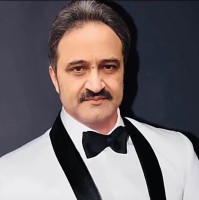
The writer is an economist, anchor, jurist, geopolitical analyst and the President of All Pakistan Private Schools’ Federation
president@Pakistanprivateschools.com
For seven decades Pakistan has lived under a constitutional framework imported from Westminster — a system designed for a different polity, a different time, and a different scale of challenges. Yet 28 years of constitutional amendments, interim governments, and repeated experiments have not delivered what 250 million Pakistanis were promised: stability, accountability, and decisive governance. Now, it’s time, Pakistan does not need another amendment. Pakistan needs a new constitution for the Presidential System. The constitution of a country sets a broad framework in which to make laws, rules, and regulations to organize the life of the people, at both the collective and the individual levels. It needs a new constitutional contract between the state and its people. Pakistan’s 1973 Constitution, as amended 26 times and most fundamentally by the 18th Amendment, vested executive authority in a Prime Minister accountable to a fractured Parliament rather than directly to the people. The result after 28 years of experimentation is not parliamentary sovereignty, but parliamentary paralysis. Article 90 to 99 created a system where governments rise and fall on the whims of 342 members, not on the will of 250 million citizens. This has produced policy discontinuity, constitutional deadlocks, and a chronic deficit of accountability. The federation rests on three constitutional essentials: confidence in institutions, representation of the people, and trust among political actors. Pakistan’s parliamentary framework has eroded all three, producing governance failure and elite capture rather than service delivery. A transition to a presidential system is constitutionally permissible and politically necessary. Under Articles 238 and 239, Parliament may amend the Constitution with a two-thirds majority in both Houses. Alternatively, under Article 48, the Prime Minister, with approval of a joint sitting, may refer to referendum any matter of national importance in a Yes or No form — including the choice between parliamentary and presidential government. The required constitutional architecture is clear, not experimental: 1. A directly elected President vested with executive authority and accountable to the people; 2. A Senate as the sole legislative check, with equal representation for each federating unit, elected in general elections to ensure parity and continuity; 3. Empowered local governments under Article 140-A to deliver services at the grassroots and reduce dependence on patronage. This is not a peril to democracy. It is a peril to vested interests. Changing faces will not cure institutional decay. What 250 million Pakistanis require is a stable, representative system with transparent institutions, merit-based governance, and efficient local administration. Therefore, the constitutional path forward is a national referendum to decide the form of government. Let the citizens, not coalitions, determine whether Pakistan continues with a dysfunctional parliamentary model or adopts a presidential constitution built for accountability and delivery. Pakistan’s economic crisis is a constitutional crisis. Economic progress is inextricably linked with democracy and political stability in today’s Pakistan. Unfortunately, due to a dysfunctional democracy and prevailing political instability, Pakistan faces multiple economic and security crises today. Several countries have suffered several interventions, but those that transitioned to becoming fully functioning democracies achieved sustained inclusive economic growth and social progress by valued reforms. South Korea, Indonesia, Turkey, Bangladesh, and several Latin American countries are its examples. A vibrant democracy is a prerequisite for inclusive economic growth and social progress. The current constitutional imbroglio warrants that the document needs to be revisited and rewritten in accordance with the altered situation and ground realities. A constitution that has so many lacunas and loopholes that can be exploited and interpreted to its own benefit, needs to be redone. The constitution of Pakistan should be rewritten for the benefit of Pakistan, and preferably the system of government should be defined as not formed through politics or elections but through the process of Meritocracy. In historical terms, the earliest constitutions, such as the Constitution of the United States, are fairly simple and bare documents. However, there is a rich constitutional jurisprudence that has emerged from them over time. England doesn’t have one and its laws and governance are constantly improving. The traditional unwritten British constitution is quite peculiar and stands out among all other historical examples of constitutionalism. Post-colonial countries have much more detailed constitutions and seek to define, in elaborate terms, principles of policy and fundamental rights, as well as the structure of government. India and Pakistan constitutions are the longest in the world. Ranked 115th on the 2024 Democracy Index and last in South Asia on human development, with 30% below the poverty line and inflation eroding real incomes, the state cannot deliver because the 1973 Constitution — amended 26 times — incentivizes instability through floor-crossing, ordinance rule, and coalition blackmail, as seen in 2017 and 2022. Length has not produced efficacy. The required reset is not cartographic but structural: implement Article 140-A to devolve political, administrative and financial authority to empowered, directly elected local governments; replace patronage with merit-based governance; and insulate policy from transient parliamentary majorities. For a population of 250 million, 65% youth, this is the only framework that can locate decision-making with citizens, enable private enterprise, ensure continuity of reform, and convert constitutional text into measurable service delivery and growth. Law cannot serve a nation if the structure of the state prevents decisions from being made and implemented. Pakistan now requires a new constitutional contract: a Presidential system with direct election, separation of powers, and fixed terms — anchored in a fresh constituent process. It is time to move from Westminster conventions to a Pakistani framework. From gridlock to governance. From party rule to people’s mandate. The question before us is no longer political. It is constitutional. Who governs Pakistan? The answer must be: the people, directly. The majority of the developed states United States of America, Russia, China, France, etc. are ruling their states with the Presidential form of government. The parliamentary system is mostly used in third-world countries. The 8th Amendment turned Pakistan into a semi-presidential republic and in the period between 1985 and 2010, the executive power was shared by the president and prime minister. The 18th Amendment in 2010 restored Parliamentary Democracy in the country and reduced the presidency to a ceremonial position. In a handwritten note of Quid e AZAM Muhammad Ali Jinnah dated July 10, 1947, Quid e AZAM wrote that the parliamentary form of government had worked satisfactorily in England and nowhere else, “Presidential form of government is more suited to Pakistan,”. Unlike the USA, after the partition of the Subcontinent, the constitution-making process was not a matter of reflection and choice but depended on vicissitudes of time and power politics. We were unable to come out of the lasting spell of the Government of India Act, 1935 which remained the constitution of Pakistan till the framing and enforcement of the first Constitution of Pakistan in 1956. The 1973 Constitution, though it declared itself a federal state with a parliamentary government at the center, was a result of limited choices. It is true that Pakistan has experienced different kinds of governments; from democracy to military dictatorship, to civilian martial law by Z.A. Bhutto but governance was construed as a seminal issue. Given the current political scenario, the presidential system is not perilous for democracy but, in reality, it is a threat to the vested interest of the corrupt political elite of our country. Like parliamentary democracy, the presidential system is a democratic system. In the presidential system, the president is elected either directly by the people or through an electoral college which makes the executive power concentrated in his office. The president derives his authority from the Constitution and law, unlike the dictator. The president is elected for a definite period of time but that is not the case with dictatorship. The US Constitution is regarded as the father of the presidential system of government. It worked well over the last more than two centuries and is considered one of the main reasons for building the USA into a strong nation and eventually into a world power in the 20th century. The US constitutional model has been followed in the 82 countries that came under US influence in the 19th and 20th centuries. The US Constitution revolves around the doctrine of Separation of Powers coupled with the system of Checks and Balances. The American Constitution divides the governmental power into legislative, executive, and judicial categories. It is also pertinent to mention here that under the presidential form of government, the president cannot act capriciously, arbitrarily, or according to his own personal whims. His actions are subject to scrutiny either by the parliament or judiciary depending upon the model of the presidency. The Congress in the USA has the power to impeach the president on the grounds of conviction, bribery, or other high crimes and misdemeanors. It can refuse to ratify a treaty negotiated by the president. The US Supreme Court can declare a presidential action as repugnant to the Constitution if the same is true vires the Constitution.
Interior Minister Mohsin Naqvi has correctly identified the root of Pakistan’s governance failure. But diagnosis alone is not enough. The real test lies in the prescription: the creation of 20 to 32 new provinces and administrative units. It is clear from this discussion that the president cannot go beyond the sphere of powers allotted to him by the Constitution and law. Before we redraw the map, we must define the destination. If we are to reset the present system, the end goal must be inclusive and sustained economic growth, not merely administrative convenience. This goal must be measured against two non-negotiable pillars. First, the state must guarantee delivery of basic services at the grassroots — education, health, clean drinking water, sanitation, and public transport — with citizens having direct and meaningful access to their elected representatives. Second, the state must enable, not obstruct, the private sector by dismantling remote, intrusive, and unaccountable bureaucracies and replacing them with local, facilitative institutions that allow businesses to produce, export, and create jobs for our youth. Any proposal for new provinces must be judged solely on whether it strengthens these two pillars. If it does not, it risks being another structural experiment without impact. The creation of a multiplicity of new provinces would, in the first instance, imperil the delicate process of fiscal consolidation presently underway, whereby Pakistan has achieved a markedly reduced fiscal deficit and a surplus on the primary balance, while contemplating medium-term tax reforms encompassing tariff rationalisation, abolition of the super tax, relief for salaried taxpayers and exporters, expedited refunds, selective GST reductions for the poor, enhanced collection of agricultural income tax, urban property tax and GST on professional services, and greater harmonisation of federal and provincial tax regimes. Secondly, the establishment of additional provinces would impose substantial incremental fiscal burdens; the commendable provincial support to the federation through grants under Article 164 of the Constitution, coupled with surplus targets already exceeded, would become unsustainable once each new entity requires its own headquarters, legislature, administrative apparatus and infrastructure, thereby constraining residual capacity to transfer resources to the centre and compelling heavier federal reliance on bank borrowing precisely as credit expansion to SMEs, agriculture and low-cost housing gains traction—an outcome inimical to inclusive growth. Thirdly, the National Finance Commission process, already so contentious that no fresh Award has been finalised since 2010 notwithstanding the mandate of Article 160(1), would be rendered yet more intractable by an enlarged and more heterogeneous set of claimants, with less-developed provinces pressing for redistributive criteria and more prosperous ones seeking to preserve existing shares, prolonging negotiations and delaying resource allocation. Fourthly, administrative restructuring would absorb vast political and bureaucratic attention as nascent provinces establish institutional frameworks, apportion assets and liabilities, and render their administrations operational—an exercise that, as experience with the dissolution of One Unit demonstrated, required several years before routine governance could resume—thereby diverting focus from development, service delivery and reform, while disputes over assets risk judicial escalation and the Council of Common Interests becomes preoccupied with inter-provincial controversies, compromising the very objective of improved public services. Fifthly, coordination difficulties already manifest since the Eighteenth Amendment in domains such as food and agriculture, education, health, climate change and population planning—where federal decisions ceased to bind the provinces and implementation has proved uneven—would multiply with a greater number of governments pursuing divergent interests, as illustrated by the wheat support-price controversy. Finally, the constitutional procedure for creating new provinces is exacting and, given existing opposition from certain provincial assemblies, would demand considerable political capital to secure the requisite consensus among provinces and parties, absorbing leadership attention at the expense of economic revival. Against this backdrop, the balance of legal, fiscal and administrative risks weighs decisively against the proliferation of provinces; a more carefully calibrated alternative is required if the same governance objectives are to be pursued without jeopardising the momentum toward macroeconomic stability. A constitutionally coherent and empirically validated alternative to creating additional provinces lies in establishing a fully empowered, adequately resourced, and directly elected local government system under Article 140-A. Pakistan’s own experience between 2001–2009 yielded a 58% citizen satisfaction rate with service delivery — the highest on record — while the Police Order 2002 concurrently improved institutional accountability of law enforcement. The deficiencies of that model were structural and legislative, not conceptual, and are remediable through refined statutory design rather than territorial fragmentation. Devolution of political, administrative, and financial authority to the local tier, in accordance with the scheme of subsidiarity implicit in the Constitution, brings decision-making proximate to the citizen without inserting a new provincial bureaucracy. Such local governments can directly provide land, utilities, and infrastructure; lower the cost of doing business; and tailor regulatory reform to spur employment, investment, and exports. Critically, this pathway preserves macroeconomic continuity, protects fiscal consolidation, avoids duplicative administrative expenditure, and facilitates a durable National Finance Commission Award under Article 160. In contrast, cartographic exercises risk repeating the disruption caused by the 2017 dismissal and the 2022 no-confidence motion — interruptions that imposed measurable costs on growth and reform. At this juncture, Pakistan does not require new provinces only, but it requires a structural constitutional reset also: to complete devolution, to fortify local governments as bodies directly accountable to the people, and to enable the private sector. Redrawing boundaries without transforming institutional culture will replicate, not resolve, governance failure. Under the presidential system, the president is the de jure as well as the de facto head of the country’s administration. The president enjoys complete discretion in selecting those people as ministers who possess the potential to discharge the duties of their respective portfolios effectively and ably. The selection pool is vast and not confined to parliamentarians. The political executive, thus chosen, represents cross-sections of society. The unelected ministers are neither motivated by short-term populist measures, nor bound by party compromises, and concentrate on chalking out policies for long-term national goals. The ministers completely devote their energies to the country’s development rather than wasting their time in endless politics and conciliations. Another important advantage of the presidential system is that party discipline is maintained, with fewer chances of desertion. They thus pay full attention to the business of legislation along with focusing on strengthening the constitutional framework and rule of law.
Heading: From crisis to clarity, from gridlock to governance — Pakistan needs a Presidential Constitution. One that replaces diffusion of responsibility with direct accountability, that replaces five-year instability with fixed-term leadership, and that allows citizens to vote for a person, not be held hostage to a party. Pakistan now needs a system of direct accountability, decisive leadership, and stability. If Pakistan is to endure as a democratic, stable, and prosperous federation, this is the last and necessary constitutional compact: to fix the system, not the faces.
For 79 years Pakistan has changed Prime Ministers, but not outcomes. The Westminster model, premised on fragile coalitions and perpetual bargaining, has reduced governance to a contest of numbers instead of a mandate of the people. The defect is structural, not personal. Pakistan now requires a constitutional reset, not another caretaker or another face. Under Articles 238 and 239, Parliament can enact this change. Under Article 48, the people themselves can decide it through referendum. What is required is a Presidential Constitution: one that vests executive authority in a directly elected President for a fixed term, replaces diffusion of responsibility with direct accountability, and anchors stability in law rather than in coalition arithmetic. It must be paired with empowered local governments under Article 140-A to deliver services at the grassroots. Instead, we have inherited gridlock. Parliamentary politics, built on fragile coalitions and perpetual bargaining, has reduced the question of “Who Governs Pakistan?” to a contest of numbers, not a mandate of the people. The time has come to ask whether the system itself is the problem. Pakistan does not need another caretaker arrangement or another face at the helm. It needs a new constitutional compact. From crisis to clarity, from gridlock to governance — Pakistan needs a Presidential Constitution. One that replaces diffusion of responsibility with direct accountability, that replaces five-year instability with fixed-term leadership, and that allows citizens to vote for a person, not be held hostage to a party. Pakistan now needs a system of direct accountability, decisive leadership, and stability. If Pakistan is to endure as a democratic, stable, and prosperous federation, this is the last and necessary constitutional compact: to fix the system, not the faces.
The writer is an economist, anchor, jurist, geopolitical analyst and the President of All Pakistan Private Schools’ Federation
president@Pakistanprivateschools.com