The writer is an economist, anchor, geopolitical analyst and the President of All Pakistan Private Schools’ Federation
president@pakistanprivateschools.com
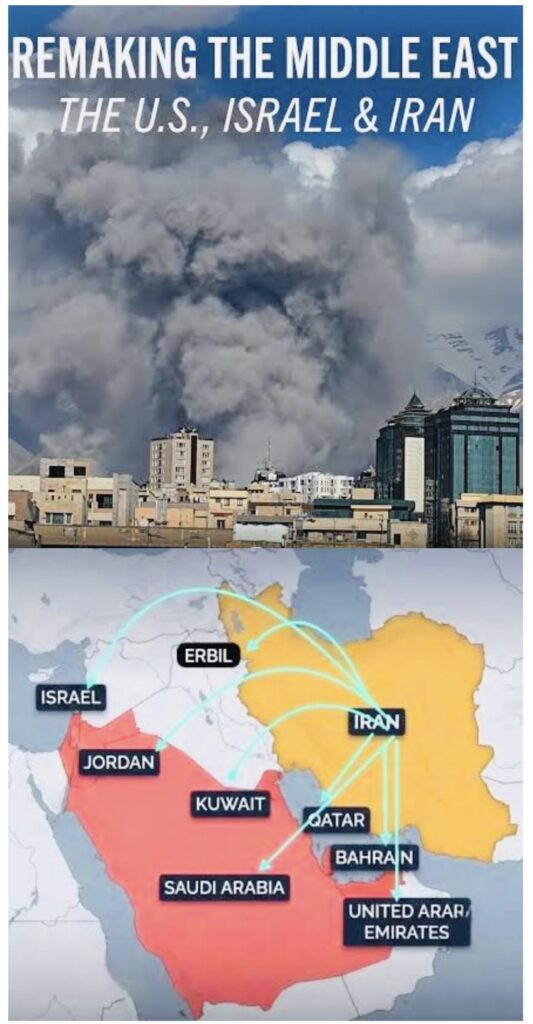
An Iranian general has laid down ceasefire terms for Washington: Compensation of all our losses; Full compensation from the US; A 100% guarantee for the future; and complete withdrawal of US forces from the Persian Gulf. It’s a maximalist slate that reframes “stop firing” as “rewrite the Gulf,” and signals Tehran won’t trade quiet for anything less than retreat and ironclad assurances. Iran has shattered Trump’s pride; he launched the war expecting Iranians to turn on the Ayatollah, but Israel’s strikes united the Persian nation—now no one opposes the regime, they stand together against America and Israel. With midterms looming and Americans exhausted by the war, Trump scrambles for an exit, tied to Netanyahu and shadowed by the Epstein files; he’s dug a hole ahead and behind, and whether he falls now or faces jail later, his ruin looks certain. The United States, together with Israel, has once again stepped into a war in the Middle East without a clear objective, without a coherent strategy, and without any realistic understanding of how it will end. The decision to attack Iran appears driven less by security necessity than by domestic political calculations and the desire to reshape the regional balance of power. What began with dramatic airstrikes and triumphant rhetoric is quickly turning into a prolonged confrontation with no achievable victory. The consequences are already extending far beyond West Asia, accelerating the erosion of international law and order. US Secretary of War Pat Hegseth may be sacrificed over the Iran war—if the battlefield sours, the blame will cascade onto Hegseth while Trump stays politically insulated. Gulf capitals are furious, openly faulting Washington for torching regional stability. Before the first strike, Gen. Dean Keene warned Trump that Tehran could choke the Strait of Hormuz; Trump brushed it off, betting Iran would capitulate first. Now water itself has become leverage in Iran’s strategy—a potential weapon that could reshape any clash with the US and Israel. More than two weeks into the Iran war, the Strait of Hormuz has become the decisive battlefield. Abraham Lincoln Ship severely damaged and returned, three ships trying to transit were destroyed by the IRGC, while Washington accuses Tehran of mining the chokepoint. As US‑Israeli strikes hit Iranian bank buildings, the Guards vow that Israeli banks, Google and other lifelines are now targets, insisting the war will end only on Iran’s terms. All eyes turn to Kharg Island—25 km off the coast, 300 miles from the Strait, the artery for Iran’s oil economy. America pounded it with its heaviest bombs, wrecking everything but the crude infrastructure. With 5,000 Marines moving toward the Strait and talk of boots on the ground, Iran welcomes a face‑to‑face fight. Trump keeps spotlighting Kharg; Washington’s last‑ditch plan to seize it and salvage honor could instead become America’s death trap, deciding victory or ruin. You may find this premature—and some will dislike it—but it matters. The era of the Gulf’s Arab kingdoms (Saudi Arabia, UAE, Kuwait, Qatar, Bahrain, Oman) is over; the US military won’t be able to return to Arab soil to shield these thrones. Their wealth rested on peace, security and American patronage—gone now. The Middle East map is about to be redrawn, with a single quadrant left: Iran. Tehran seized it after a decisive victory over global arrogance; the signs were there, but the short‑sighted missed them. Winners rewrite the rules, shred the old papers, and draft new ones—even for the Arabs—where there’s no room for America or Israel; loyalty to Tehran becomes the price of stability. The New York Times, citing an investigation, says the school strike in Iran that killed 180 girls was a US Air Force error, despite Trump’s claim that Iran hit its own school. Now, will Trump face the ICJ—and will human rights voices rise? The old world order is dead—military power is the new currency. America’s Iran strategy has misfired, and the emergence of Mujtaba Khamenei signals continuity with teeth: a hardliner stepping forward mid-war tells the world Tehran will harden, not bend. If Arab states are dragged into a clash with Iran, Israel gains; Washington and Tel Aviv prefer Muslims fighting Muslims, exploiting internal rifts to advance their aims. Yet Muslim unity would force even a superpower to step back. Over the next decade, Pakistan, Turkey, Iran, Saudi Arabia and Indonesia look set to rise as new poles.
History is full of men who wield power without ever stepping into the light—no signatures on the orders they give, no speeches, only gestures. As Washington becomes more deeply entangled, Israel can gradually reduce its exposure while American forces absorb most of the diplomatic, military and economic costs. The most striking feature of this conflict is the absence of a consistent rationale. Washington is trapped in a familiar dilemma. It can destroy infrastructure and eliminate leaders, but it cannot control what follows. Rather than producing a moderate new leadership, the decapitation strategy has hardened the Iranians. Washington’s stated objectives have shifted repeatedly. For thirty years Mojtaba Khamenei was that shadow in Iran: no sermons, no campaigns, a face Iranians recognized without ever hearing the voice. Now, at fifty‑six and in the middle of a war, he becomes the Islamic Republic’s third Supreme Leader—and this is not just succession, it’s psychology. His father, Ali Khamenei, never wanted a dynastic handoff; the Council on Foreign Relations noted Mojtaba wasn’t on the 2025 shortlist, and Iran International quoted Assembly insiders saying the elder Khamenei feared it would echo the Pahlavis. Yet the Assembly picked him anyway—because, as one member put it, the enemy disliked him, and Trump’s “weak” jibe only helped his case. Three drivers define what comes next: first, he will substitute institutional muscle for personal legitimacy, leaning on the IRGC like no predecessor; second, he carries private grief into public power—his mother and wife died in the strike that killed his father, and when personal loss meets authority it becomes policy; third, his mentor Misbah Yazdi taught that nuclear weapons are an Islamic right, and Mojtaba now leads a state whose program survives its scientists. Trump called him a “lightweight” who wouldn’t last without American approval—a diplomatic insult that risks becoming a war mistake, because a leader branded weak must prove he isn’t. Washington thought decapitation would fracture Iran; instead, a wartime succession sent the opposite message: the system doesn’t rest on one man, it runs on ideology and resistance. The war’s shifting justifications betray its birth—no clear political end, only improvised cover stories. Israel’s role in shaping the conflict also deserves careful attention. For decades, Israeli Prime Minister Netanyahu has argued that Iran represents an existential threat that must be neutralised. Netanyahu therefore has strong incentives to push for sustained military pressure on Tehran. Yet the strategic burden of a prolonged war will fall primarily on the United States. At first, the goal was to destroy Iran’s nuclear capabilities. Soon after, it expanded to eliminating ballistic missile programmes. The mission was then described as dismantling Iran’s regional proxy networks. At other moments, the language suggested a regime change in Tehran. But, Iran’s arsenal—80,000 Shahed drones, 50,000 missiles including 10,000 ballistic and cruise types, plus Shaheds sold to Russia—means it can fight a long war. Kyiv complains it hasn’t received even 200 Patriots; Gulf states have already fired roughly 2,000 ($3–4m apiece). With Hormuz effectively closed, markets ignore US assurances; thousands of ships idle, waiting. Russia watches in calm—Washington’s gaze is off Ukraine, oil is moving—and China watches the spectacle while its tankers keep passing; Hormuz is shut to others, open to Beijing, and Iranian exports are up, not down. The West is burning strategic reserves (IEA and Japan included) to steady prices, but that buys maybe three months. Tehran hit Oman’s Salalah port to kill any Hormuz bypass, leaving no Gulf outlet but the strait. Give it six weeks and food pressure could force the Gulf to deal with Iran. Stalemate favors Tehran: US bombs to break it and reopen Hormuz; Iran answers in kind, often via Hezbollah’s steady rocket drip to drain Israel’s interceptors, already low with thinner resupply. When that stock runs thin, larger Iranian missiles could follow, with damage beyond Israel’s control. The Houthis give Tehran another lever on the strait. Washington’s bank strike in Tehran was a blunder—now Iran cites it to target Western banks and Gulf‑based tech (Microsoft, Nvidia, Amazon). America hasn’t grasped that closing Hormuz isn’t just about oil or bases; it’s about pushing Western business out of the Gulf—and, ultimately, the petrodollar itself. Marco Rubio even implied Washington struck because Israel was about to, then walked it back, exposing the scramble. Wars aren’t won by blowing up targets; they’re won when force delivers a political outcome. What is America’s? Negotiations, disarmament, regime collapse—none is stated. The gamble was decapitation: kill the supreme leader, watch the system fold. But Iran isn’t a brittle state—it’s a dense web of institutions, IRGC power, ideology and redundancies that replaced a leader mid-war and kept functioning. History warned against this fantasy: a country that endured eight years with Iraq, against both superpowers’ backing of Saddam, won’t buckle from a few dramatic strikes. The shifts in the stated purpose of waging war on Iran reflect the reality that the war was launched without a clearly defined political purpose. Even the explanations offered by senior American officials have exposed this confusion. At one point, US secretary of state Marco Rubio suggested that Washington acted because Israel was preparing to launch its own attack and the US wanted to strike first to prevent Iranian retaliation against American forces. The implication was that Washington had entered the war partly because Israel had already decided to do so. The remark was later softened, but the episode revealed how improvised the rationale for war has been. Wars are not won simply by destroying targets. They are won when military action produces a political outcome that advances national interests. In the case of Iran, the US has not articulated what such an outcome would look like. Is the goal to weaken Iran sufficiently to force negotiations? Is it to dismantle its military capabilities? Or is it to engineer a total collapse of the regime? The underlying assumption behind the American attack appears to have been that a rapid decapitation of Iran’s leadership would destabilise the regime and force it to accept American demands. The killing of senior figures, including the country’s supreme leader, was expected to trigger internal collapse and/or swift capitulation. That expectation reflects a familiar pattern of strategic miscalculation. Iran is not a fragile state that can be toppled through a few dramatic strikes. It is a deeply institutionalised political system with multiple centres of authority and a powerful security apparatus. Even after losing key leaders, the regime has installed a new supreme leader and continues to function through an extensive network of military, intelligence and ideological institutions. The Islamic Revolutionary Guard Corps alone commands enormous resources, influence and manpower. A political system that has survived more than four decades of internal and external pressure is unlikely to disintegrate overnight. The belief that Iran would quickly surrender also ignores the country’s history. In the 1980s, Iran fought a devastating war with Iraq that went on for eight years and cost hundreds of thousands of lives. Despite suffering massive casualties, economic hardship and international isolation — because Iraq was being supported by both the US and the then USSR — Tehran refused to capitulate.
Geopolitically, Iran has conquered the US–Israel war on Iran—not by erasing power, but by stripping it of its mystique; the spell of invincibility is broken, and the region will henceforth reckon with a power that endured the storm and emerged the author of its own terms.
The Iran‑Iraq war forged a culture of endurance that still defines Tehran—expecting surrender after a few weeks of bombs isn’t strategy, it’s wishful thinking. The US approach collapses on its own contradiction: you can’t remake a nation of 90 million with missile strikes, and sending ground troops means a war dwarfing Iraq and Afghanistan, against roughly a million fighters in unforgiving terrain. Even the fantasy of installing a friendly leader is fading; Trump admitted many once‑touted successors are already dead in US‑Israeli strikes. Mojtaba Khamenei’s rise after Ali Khamenei’s assassination has hardened the system’s core, while at home rising casualties, oil spikes and economic jitters shrink the appetite for another West Asian quagmire. The White House will be tempted to declare victory and exit, but a hurried pullback won’t erase Iran’s capabilities—only deepen instability. Tehran knows Washington’s power is formidable but politically boxed in, and it’s exploiting that by dragging out the war, squeezing energy markets and answering with asymmetric blows, forcing America toward two bad choices: escalate or retreat. The real price may be paid far from the Gulf. Washington keeps saying its strategic center of gravity is the Indo-Pacific and the China challenge, yet a grinding war with Iran yanks attention, munitions, carriers and diplomacy back to West Asia—exactly the region it wanted to deprioritize. Stockpiles drain, fleets stretch, crisis management consumes the bandwidth Beijing doesn’t have to spend. China needn’t fire a shot to win from this: while America locks into another open-ended fight, Beijing widens its economic reach, sharpens its military edge, and deepens partnerships. The Iran war shows the West fractured; China and Russia are converging, the Gulf bloc is splintering, and a fresh alignment favors Moscow and Beijing. So the questions sharpen: have Trump’s policies eroded US deterrence—fear and pressure giving way to bluster? If Washington can’t enforce its will on a vital waterway, who guarantees maritime security? Will allies now doubt whether America will stand with them when it counts? Have aggressive speeches and Twitter politics become theater rather than power? If a superpower is openly challenged and doesn’t respond, isn’t that strategic weakness—and proof the balance is shifting? Is America still the unchallenged hegemon, or are we already living in a new order? Great-power rivalry is a contest of endurance, and a superpower that repeatedly exhausts itself in regional wars erodes its capacity to compete where it matters. The irony is stark—a campaign meant to showcase US power and leadership may instead advertise the limits of American leverage and judgment. No doubt, Iran has conquered the myth, the fear, and the hegemony of US–Israel. The myth is broken. The fear that once girded American and Israeli hegemony has been conquered—not by a single battle, but by the demonstration that it can be withstood, absorbed, and answered. Geopolitically, Iran has conquered the US–Israel war on Iran—not by erasing power, but by stripping it of its mystique; the spell of invincibility is broken, and the region will henceforth reckon with a power that endured the storm and emerged the author of its own terms.