The writer is an economist, anchor, geo-political analyst
and the President of All Pakistan Private Schools’ Federation
president@Pakistanprivateschools.com
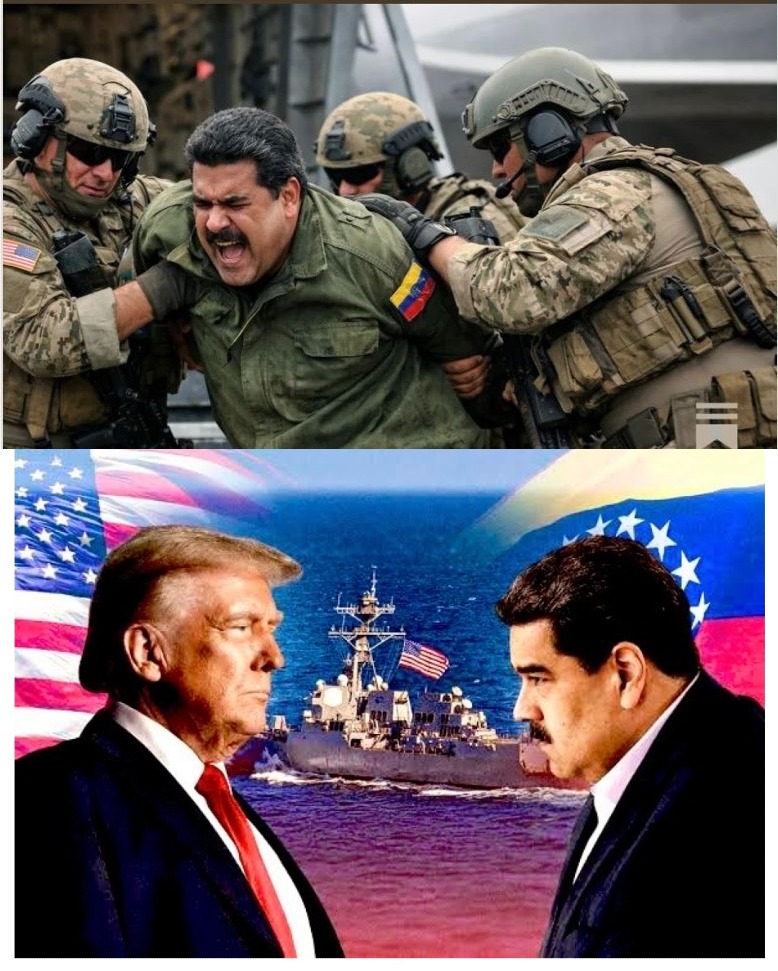
As the dust settles from the United States’ audacious military operation in Caracas, Venezuela emerges not merely as a nation in turmoil but as a linchpin in the escalating rivalry among global superpowers. The capture of President Nicolás Maduro by U.S. forces on January 3, 2026, marks a brazen reassertion of American influence in the Western Hemisphere, echoing the Monroe Doctrine while raising profound questions about sovereignty, resource control, and the erosion of international norms. U.S. forces executed “Operation Absolute Resolve,” involving airstrikes on military sites and a Delta Force raid on Maduro’s compound in Fuerte Tiuna. Maduro and his wife, Cilia Flores, were extracted via helicopter to the USS Iwo Jima and flown to New York. President Donald Trump announced the operation, citing Maduro’s 2020 indictment for narco-terrorism and links to groups like the Cartel de los Soles and Tren de Aragua. Trump declared the U.S. would “run” Venezuela temporarily, overseeing a transition and revitalizing its oil sector with American firms investing billions to repair infrastructure. Vice President Delcy Rodríguez, now acting leader, fled to Russia, while Venezuela’s Supreme Court appointed her to lead amid a state of emergency. Casualties remain unclear, but the operation’s precision suggests insider assistance, possibly lured by the bounty. Celebrations erupted among Venezuelan exiles in Miami, but Caracas saw chaos with power outages and protests. Venezuela has become a pivotal point in the clash of global powers, with the US, Russia, and China vying for influence. The recent capture of Venezuelan President Nicolas Maduro by US forces has sparked intense debate and raised questions about the motivations behind the move. This event, unfolding amid Venezuela’s protracted political, economic, and humanitarian crises, underscores how a resource-rich but beleaguered country has become a battleground for the U.S., Russia, and China. With Maduro now detained in New York’s Metropolitan Detention Center facing narco-terrorism charges, the world watches as geopolitical fault lines deepen, potentially heralding a new era of sphere-of-influence diplomacy. In the shadowy corridors of global power, the eerie hush from Beijing and Moscow following Nicolás Maduro’s abrupt capture by U.S. forces on January 3, 2026, whispers of a calculated restraint far removed from their usual thunderous rebukes against American adventurism— no fiery condemnations, no urgent diplomatic salvos, just a pregnant silence that begs the question: is this the soundtrack of compromise? This void has ignited whispers of a “silence of compromise,” where superpowers, weary of endless proxy skirmishes, might be orchestrating an unspoken pact, as posited by analyst Simon Godek’s provocative “trade of theory”: Washington claims Venezuela’s vast oil reserves and strategic minerals to fuel its hemispheric dominance, Moscow carves out territorial gains in Ukraine to solidify its Eurasian buffer. Such a spheres-of-influence bargain, if real, exposes the hollow core of international rhetoric—principles and morality discarded like spent ammunition in favor of pragmatic “mutual non-interference agreements,” where each titan bides its time for the next opportunistic strike, transforming global conflicts from ideological crusades into a cynical game of territorial musical chairs. Yet, as refugees stream across borders and Venezuelan streets simmer with uncertainty, one must ponder: is this mere speculation born of paranoia, or a chillingly plausible blueprint for a multipolar world where alliances fracture not with bangs, but with whispers, leaving smaller nations as mere bargaining chips in the great powers’ unrelenting pursuit of self-interest? That is why Simon Godek’s “trade of theory” becomes interesting at this point: The unusual soft reaction from China and Russia on Maduro’s departure has fueled speculation about a possible “silence of compromise” – a behind-the-scenes deal where major powers divide assets and influence. Simon Godek’s “trade of theory” suggests that the US gets Venezuela’s resources, Russia gets a chunk of Ukraine, and China gets Taiwan. This undeclared sphere-of-influence deal prioritizes interests over principles and morality. US seeks to regain influence in the Western Hemisphere, secure Venezuela’s oil resources, and counter Chinese and Russian influence. Russia aims to expand its presence in Latin America, challenge US dominance, and protect its interests in Ukraine. Whereas, China focuses on securing energy resources, expanding economic influence, and maintaining stability in the region. The situation is complex, with multiple factors at play. The US action in Venezuela has been condemned by China, Russia, and other countries, citing violations of international law and sovereignty. As the situation unfolds, it’s unclear what the future holds for Venezuela and the global balance of power. Will the US, Russia, and China continue to prioritize their interests, or will international pressure and diplomacy prevail?
In the labyrinth of international jurisprudence, the United States’ audacious airstrikes and abduction of Venezuelan President Nicolás Maduro, stand as a brazen affront to the sacrosanct pillars of the UN Charter, particularly Article 2(4), which unequivocally prohibits the threat or use of force against any state’s territorial integrity or political independence absent self-defense under Article 51 or explicit UN Security Council authorization—neither of which the Trump administration invoked, rendering this “Operation Absolute Resolve” an act of aggression akin to the “supreme international crime” decried at Nuremberg. Critically, this violates international law, as airstrikes and abductions without UN approval flout sovereignty norms, as “aggressive intervention,” potentially justifying similar actions elsewhere. Yet, it aligns with Trump’s 2025 National Security Strategy, emphasizing U.S. preeminence in the hemisphere and countering “non-Hemispheric competitors. Echoing the controversial 1989 U.S. invasion of Panama to seize Manuel Noriega—widely lambasted as a violation of sovereignty norms yet rationalized domestically through extraterritorial jurisdiction and the Ker-Frisbie doctrine, allowing prosecution regardless of abduction methods—this intervention flouts the Organization of American States Charter and customary international law, setting a perilous precedent that could embolden reciprocal by Russia in Ukraine or China in Taiwan, thereby unraveling the fragile tapestry of a rules-based global order. Yet, this flagrant breach aligns seamlessly with the 2025 National Security Strategy’s “Trump Corollary” to the Monroe Doctrine, a unilateral assertion of U.S. hemispheric preeminence aimed at countering “non-Hemispheric competitors” like Russia and China through resource dominance and migration control, prioritizing raw power politics over multilateral principles and exposing the hypocrisy of a superpower that champions sovereignty abroad while eroding it in its backyard. As Venezuela teeters from the Bolivarian Revolution’s egalitarian promises to the brink of collapse under economic sanctions and authoritarian grip, one must provocatively query: if might supplants right in the fractured arena of world powers, does this herald the twilight of international law, or merely the dawn of a neo-imperial era where the strong dictate the rules, leaving weaker nations as mere footnotes in the annals of geopolitical expediency? From Bolivarian Revolution to Brink of Collapse, Venezuela’s descent into crisis traces back to the late 1990s under Hugo Chávez’s Bolivarian Revolution, which nationalized key industries, including oil, to fund social programs. Chávez’s death in 2013 propelled Maduro to power, but his rule has been marred by allegations of authoritarianism, electoral fraud, and economic mismanagement. The 2018 election, widely condemned as rigged, led to Maduro’s second term, prompting the U.S. and over 50 countries to recognize opposition leader Juan Guaidó as interim president. Maduro’s 2024 reelection, again disputed, saw massive protests and thousands jailed. Economically, Venezuela’s GDP has plummeted 70% since 2013, with hyperinflation peaking at over 1 million percent in 2018. Oil production, once 3.5 million barrels per day (bpd) in the 1970s, dwindled to 1.1 million bpd in 2025 due to sanctions, corruption, and underinvestment. This has displaced over 8 million refugees, straining neighbors like Colombia and Brazil. U.S. sanctions, intensified since 2017, targeted Maduro’s regime for human rights abuses and narco-trafficking ties, including a $50 million bounty on Maduro in 2020. Alliances with Russia, China, and Iran provided lifelines: Russia sent military aid, China loaned over $60 billion, and Iran supplied gasoline amid shortages. Humanitarian fallout is stark: 80% of Venezuelans live in poverty, with malnutrition affecting millions. Maduro’s crackdowns, including extrajudicial killings, have drawn UN condemnation. This backdrop set the stage for U.S. intervention, framed as combating drug trafficking but rooted in broader strategic imperatives. Venezuela boasts the world’s largest proven oil reserves at 303 billion barrels—17% of global totals—surpassing Saudi Arabia. The Orinoco Belt holds ultra-heavy crude, requiring advanced technology for extraction. Under Maduro, production cratered from 3 million bpd to under 1 million, with exports funneled via Russian tankers to China (85% of output). This “dark fleet” evaded sanctions, bolstering adversaries while Venezuela’s infrastructure decayed. Trump’s pledge to “fix the badly broken infrastructure” signals a resource grab, with U.S. firms like Chevron poised to invest $80-100 billion to boost output by 1-2 million bpd. This revives colonial-era exploitation, prioritizing not only making profits over Venezuelan welfare, but also to protect and maintain its dollarisation hegemony. Beyond oil, Venezuela’s gold, lithium, and rare earths—vital for tech and defense—drew Chinese interest. Maduro’s deals with Beijing and Moscow ceded control, making Venezuela a proxy for great-power competition. The raid disrupts this, potentially stabilizing global oil prices long-term but risking short-term volatility if instability persists. Venezuela’s economy has informally dollarized since 2019, with 80% of transactions in U.S. dollars amid bolívar collapse. The official exchange rate hit 301 bolívars per dollar by January 2026, a 479% yearly surge, while black-market rates neared 560— an 85% premium. This de facto to protect and maintain its dollarisation hegemony and dollarization stabilized daily life but deepened inequality: a “dollar economy” for the elite contrasts with bolívar-dependent masses. Maduro’s regime abandoned price controls, allowing dollar circulation to curb inflation, but it highlighted state failure. Post-capture, U.S. oversight could formalize dollarization, aiding reconstruction but risking dependency. Critically, it exemplifies how sanctions weaponize the dollar, accelerating de-dollarization pushes by Russia and China elsewhere.
In the labyrinth of international jurisprudence, the US’ audacious airstrikes and abduction of Venezuelan President Nicolás Maduro, stand as a brazen affront to the sacrosanct pillars of the UN Charter, particularly Article 2(4), which unequivocally prohibits the threat or use of force against any state’s territorial integrity or political independence absent self-defense under Article 51 or explicit UN Security Council authorization—neither of which the Trump administration invoked, rendering this “Operation Absolute Resolve” an act of aggression akin to the “supreme international crime”, this violates international law, without UN approval flout sovereignty norms…
Simon Godek’s “trade of theory” posits a spheres-of-influence bargain: U.S. dominance in Venezuela for Russian gains in Ukraine and Chinese in Taiwan. While unsubstantiated, it aligns with Trump’s deal-making ethos and Fiona Hill’s 2019 testimony on Russia-Venezuela swaps. The operation’s timing—hours after Maduro met a Chinese envoy—suggests preemption of deeper ties. Implications are vast: It weakens U.S. moral authority against in Ukraine or Taiwan, as Russia and China may cite Venezuela to justify actions. For Latin America, it signals a “Trump Corollary” to the Monroe Doctrine, deterring extra-hemispheric incursions but risking backlash from allies like Brazil or Mexico. Globally, it accelerates a multipolar shift, where principles yield to power politics, potentially escalating refugee crises or proxy conflicts. Short-term impacts: Stabilized oil flows could lower global prices, benefiting consumers, but instability might spike them initially. Venezuela’s transition offers hope for democracy and refugee returns, yet U.S. running the country evokes Iraq’s pitfalls—insurgency, corruption, prolonged occupation. Significance lies in testing Trump’s “America First” against international law: Success could embolden interventions; failure, erode U.S. credibility. Critically, this prioritizes interests over morality, as Godek suggests. Maduro’s ouster removes a narco-threat but ignores root causes like inequality. For superpowers, Venezuela’s fate will shape alliances: Russia and China may accelerate anti-U.S. blocs, while Europe grapples with transatlantic rifts. In sum, Venezuela’s crisis, now amplified by U.S. intervention, portends a volatile future. As powers jockey for influence, the nation’s people—long pawns in this game—deserve more than rhetorical salvation. The coming days will reveal if this escalates to global confrontation or ushers pragmatic realignments. Venezuela is today a key axis in the clash of world powers. The situation is extremely delicate and the political, economic and humanitarian crisis is likely to escalate in the coming days. In the grand chessboard of global hegemony, all under the guise of an undeclared partition of spoils, where empires carve up not mere maps but the very arteries of economic power and influence? This shadowy “trade of theory,” as whispered in geopolitical circles, shatters the facade of righteous warfare, revealing conflicts not as crusades for morality or lofty principles, but as meticulously scripted “mutual non-interference agreements”—a diabolical queue where each superpower patiently awaits its allotted turn to plunder, fostering a world order built on cynical complicity rather than confrontation, where the cries of sovereign nations echo unheard in the void of great-power pragmatism. If this grim calculus holds true, then what becomes of humanity’s illusions of justice, and how long before the next pawn falls in this endless game of imperial patience, leaving us to wonder: are we witnessing the rebirth of 19th-century spheres of influence, or the prelude to a cataclysmic betrayal when one player inevitably breaks the pact? The global strategy of the United States, Russia and China will determine the direction of the future!