The writer is an economist, anchor, geopolitical analyst
and the President of All Pakistan Private Schools’ Federation
president@Pakistanprivateschools.com
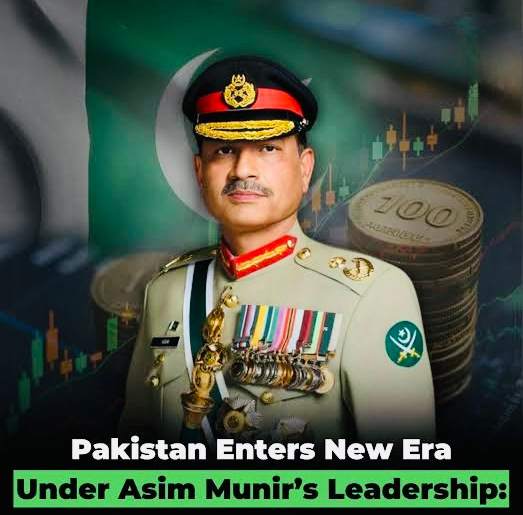
In the volatile chessboard of Asia and Middle East geopolitics, Pakistan’s maneuvers throughout 2025 have signaled a profound recalibration of its strategic posture, transforming it from a perceived regional underdog to a multifaceted influencer spanning the Middle East, Central and South Asia, and beyond. Pakistan’s recent diplomatic and military maneuvers under the leadership of Field Marshal Syed Asim Munir have significantly altered the regional landscape, positioning itself as a key player. These developments cement Pakistan’s position as a major player in regional geopolitics, with significant impact for global powers like the US and China. Pakistan’s alliances contribute to a shifting security landscape, potentially impacting regional security architecture, stability and conflict dynamics. The US shift towards Pakistan and away from India is a significant development in South Asia, reflecting changing global alignments and priorities. A notable subplot is the U.S. policy shift under President Trump 2.0, moving away from an “India-first” approach toward renewed engagement with Pakistan. Post-May conflict, Washington injected urgency into ties, concluding agreements worth $2 billion in military aid and trade, reflecting frustrations with India’s Russia ties and tariff disputes. This “thaw” positions Pakistan as a counterweight to China’s influence, yet it’s precarious: U.S. support remains conditional on counterterrorism, and lingering distrust from the Afghanistan withdrawal era persists. The recent Operation Bunyan-um-Marsoos, launched by Pakistan in response to India’s aggressive military actions, has brought the foreign policies of both nations under intense scrutiny. Critically, the conflict exposed India’s military buildup along the Line of Control (LoC), with reports of New Delhi amassing over 200,000 troops and procuring $20 billion in advanced weaponry from the U.S., Russia, and Israel in the preceding months—moves framed by Indian officials as defensive but interpreted in Islamabad as preparations for a larger offensive. Pakistan’s response, however, was not merely reactive; it leveraged pre-existing strategic preparations, including enhanced air defenses and intelligence-sharing networks. This shift, however, is not without its critics: while proponents hail it as a masterstroke of diversification, skeptics warn of overextension, economic dependencies, and the risk of entangling Pakistan in broader conflicts. The country’s strategic developments, agreements and alliances with US, China, Saudi Arabia, Turkey, Iran, Azerbaijan, Libya, Qatar, Jordan, Indonesia, Bangladesh, Sri Lanka and Nepal underscore its efforts to counterbalance India’s growing military presence. Saudi-Pakistan Defence Pact signed in September 2025, this agreement strengthens Pakistan’s security ties with Saudi Arabia, a significant player in the Middle East. At the heart of Pakistan’s strategic pivot is the Strategic Mutual Defense Agreement (SMDA) signed with Saudi Arabia, this Article 5-style pact—treating an attack on one as an attack on both—includes joint military exercises, intelligence sharing, and defense industry collaboration, with commitments for Saudi investments exceeding $10 billion in Pakistan’s arms production. The pact includes joint military exercises, intelligence sharing, and defence industry collaboration. Proponents in Islamabad view it as a counter to India’s growing ties with the UAE and Israel, potentially extending to a broader “Muslim NATO” involving Qatar, Bahrain, Jordon and others—though no formal expansions have been confirmed. Pakistan’s web of alliances extends further: A $4 billion arms deal with Libya in 2025 bolsters counterterrorism efforts, while deepened ties with Turkey and Azerbaijan focus on drone technology and joint ventures, with Azerbaijan pledging to purchase JF-17 jets. The Pakistani army, till now, has signed international agreements with different countries to sell defense equipment worth $9 billion. China-Pakistan Cooperation making Pakistan’s deepening ties with China, evident in joint defence projects like the JF-17 fighter jet and the Gwadar port, solidify its position in the region. Pakistan’s strategic moves are seen as a response to India’s growing military presence, particularly in the context of the Kashmir issue. In Middle East Dynamics the Saudi-Pakistan defence pact shifts regional power dynamics, with Pakistan emerging as a key security partner for Gulf states. Pakistan’s strategic location and partnerships with China and Iran enhance its role in Central Asian connectivity and with regional connectivity and energy corridors. Drawing on recent developments, figures, and Pakistan’s strategic uprising, and its sustainability amid ongoing regional volatilities do matter. Whispers from Indian media of a more audacious plan—a joint operation with China targeting India’s “Chicken Neck” (the Siliguri Corridor, a 22-kilometer-wide strip linking mainland India to its Northeast)—Circulating, exploiting the corridor’s vulnerability amid Bangladesh’s warming ties with Pakistan and China, including the revival of WWII-era airbases near the border, while neutral observers also note China’s “tactical calm” along the Line of Actual Control (LAC) as per Pentagon reports, suggesting Beijing’s indirect support without direct involvement. Iran, despite historical frictions, has seen improved border security cooperation after Iran-Israel war, and Qatar’s investments in Gwadar Port—part of the China-Pakistan Economic Corridor (CPEC)—total $3 billion this year alone. China remains the linchpin: Joint exercises in December 2025 involved over 5,000 troops, enhancing interoperability, while CPEC projects have generated $62 billion in economic activity since inception, though debt concerns persist at $30 billion owed to Beijing. CPEC’s expansion into Central Asia via Afghanistan could unlock $1 trillion in trade, but security threats from the Taliban and ISIS-K—responsible for 15 attacks in Pakistan this year—undermine stability. Critically, this diversification is also a double-edged sword. While it dilutes reliance on the U.S.—whose aid dipped to $150 million in 2024—it risks alienating Western partners. Globally, Pakistan’s rise influences energy corridors and connectivity.
Pakistan’s foreign policy has been successful in maintaining strategic partnerships. Pakistan’s stance is no longer defensive, it is being heard preferentially. Changing global alignments, changing thinking in the West, India’s internal weaknesses and Pakistan’s consistent diplomacy, all of these have combined to give Pakistan’s narrative the place it has been seeking for a long time. Pakistan has managed to maintain its strategic partnerships and alliances, ensuring its security and interests. Pakistan’s diplomatic efforts have been effective in building international support and pressure on India to engage in meaningful dialogue. Pakistan’s military operation has demonstrated its capabilities and strategic planning, deterring future aggression. The future of India-Pakistan relations remains uncertain, with both countries needing to reassess their foreign policy approaches. A more nuanced and strategic approach, prioritizing diplomacy and dialogue, may be necessary to prevent further. Pakistan framed its response as defensive, aimed at protecting its sovereignty and civilians, which garnered international sympathy. In contrast, India’s internal weaknesses and disagreements over trade and Russia’s oil purchases have strained US-India relations, with Trump imposing tariffs on Indian goods. This shift is evident in several areas: The US-Pakistan trade deal reduces tariffs on Pakistani exports to 19%, making them more competitive than Indian goods; Pakistan’s cooperation on counterterrorism and energy has positioned it as a key partner for the US; Pakistan’s narrative is being heard and accepted globally, marking a significant change in its diplomatic standing. Pakistan’s operation demonstrated military capability, with claims of destroying India’s BrahMos facility, disabling 70% of India’s power grid via cyberattacks, and neutralizing an S-400 system, valued at $1.5 billion. The United States’ intervention to broker a ceasefire was a diplomatic win, as it aligned with Pakistan’s stance to the unresolved Kashmir dispute. China’s unwavering support, further strengthened Pakistan’s position, providing diplomatic cover against India’s attempts at isolation. This was evident in China’s statements supporting Pakistan’s security. Prior to the conflict, Pakistan’s establishment was under pressure due to internal governance issues and external isolation. Operation Bunyan-um-Marsoos alleviated that Pakistan could project power effectively. Diplomatically, it gained U.S. and Chinese support, aligning with Pakistan’s Kashmir narrative, and received international sympathy for defending sovereignty, enhancing its regional assertiveness. Pakistan’s military demonstrated its precision strike capabilities, targeting key Indian military installations and infrastructure. Pakistan’s cyberattack on Indian websites and infrastructure highlights its growing capabilities in this domain. Pakistan’s operation showcased its strategic planning and coordination, catching India off guard. India’s foreign policy, under Prime Minister Modi, has been criticized for its aggressive approach towards Pakistan. The operation has exposed the limitations of India’s diplomatic efforts, which have failed to yield desired results. Despite India’s efforts to isolate Pakistan internationally, the country has managed to maintain its strategic partnerships and alliances. India’s aggressive military actions and rhetoric have been perceived as a threat by the international community, leading to a loss of credibility and trust. India’s inability to anticipate and prepare for Pakistan’s response to its military actions has resulted in significant damage to its military assets and infrastructure. India’s limited diplomatic efforts have failed to garner significant international support, with many countries urging restraint and dialogue. The global backlash against India, further bolstered Pakistan’s image as a defender of sovereignty. In contrast, India’s foreign policy during and after the conflict faced significant setbacks, both regionally and globally. India expected unconditional U.S. support, given its strategic partnership, but the U.S. intervened to broker a ceasefire rather than endorsing India’s actions. This was a significant miscalculation, with the U.S. focusing on de-escalation rather than supporting India’s narrative. India faced widespread criticism for its handling of the Pahalgam attack and Operation Sindoor. Israel’s open support, including supplying weapons, was a rare instance of backing. However, this dependency on external powers could weaken India’s strategic autonomy, and further damaged its credibility, highlighting operational failures. The U.S. intervened diplomatically, with President Trump to broker a ceasefire on May 10, 2025. For Pakistan, this was a diplomatic win; for India, a setback. China’s support for Pakistan was unwavering, providing diplomatic cover and reinforcing Pakistan’s position. This counterbalanced India’s attempts at isolation, highlighting geopolitical complexities. The United Nations, G7, and other international bodies urged de-escalation, reflecting global concern over the potential for a larger conflict. For Pakistan this success in defending sovereignty and gaining international sympathy, could lead to greater confidence in diplomatic and military strategies. However, Pakistan must navigate escalation risks and maintain focus on resolving Kashmir through dialogue. India’s failures have exposed vulnerabilities, particularly its reliance on military action without diplomatic preparation.
In the volatile chessboard of Asia and Middle East geopolitics, Pakistan’s maneuvers throughout 2025 have signaled a profound recalibration of its strategic posture, transforming it from a perceived regional underdog to a multifaceted influencer spanning the Middle East, Central and South Asia, and beyond. Pakistan’s recent diplomatic and military maneuvers under the leadership of Field Marshal Syed Asim Munir have significantly altered the regional landscape, positioning itself as a key player. These developments cement Pakistan’s position as a major player in regional geopolitics, with significant impact for global powers like the US and China.
Pakistan’s Operation Bunyan-um-Marsoos has demonstrated its military capabilities and strategic planning. This operation marked a significant shift in the regional balance of power, showcasing Pakistan’s military capabilities and strategic planning. Pakistan’s consistent diplomacy and improved ties with the US have led to preferential treatment, including a trade deal and reduced tariffs. But the real question, is America’s coldness towards India and closeness towards Pakistan, an indication of a policy shift in South Asia? America’s trade deal with Pakistan and tariffs on India, is the strategic balance changing?The US shift towards Pakistan and away from India is a significant development in South Asia, reflecting changing global priorities. Pakistan’s consistent diplomacy and improved ties with the US have led to preferential treatment, including a trade deal and reduced tariffs. In contrast, India’s disagreements over trade and Russia’s oil purchases have strained US-India relations, with Trump imposing tariffs on Indian goods. This shift highlights Pakistan’s growing strategic importance: Pakistan’s cooperation with the US on counterterrorism and energy positions it as a key partner in the region; Pakistan’s improved ties with the US and Saudi Arabia enhance regional security and stability; The US-Pakistan trade deal can boost Pakistan’s economy and increase its global trade footprint. The changing dynamics offer opportunities for Pakistan to: Strengthen ties with the US, China, and regional partners like Saudi Arabia, Turkey, Iran, Azerbaijan, Libya, Qatar, Jordan, Indonesia, Bangladesh, Sri Lanka and Nepal; Leverage trade deals and investment opportunities to drive growth; and to play a key role in regional security and connectivity initiatives. Pakistan can leverage these developments to drive economic growth and enhance regional cooperation in several ways: Pakistan’s strategic location makes it an ideal hub for regional trade and connectivity. The China-Pakistan Economic Corridor (CPEC) and the proposed Pakistan-Afghanistan-Tajikistan (PAT) corridor can boost economic activity and investment; Pakistan’s energy partnerships with Saudi Arabia, Qatar, and Iran can enhance energy security and reduce costs; The US-Pakistan trade deal and increased investment from Gulf states can drive economic growth and create jobs; Pakistan’s cooperation with the US, China, and regional partners Iran, Azerbaijan, Libya, Qatar, Jordan, Indonesia, Bangladesh, Sri Lanka and Nepal can enhance regional stability and security, attracting investment and promoting trade. Pakistan to focus on: Increase exports to the US and other markets, leveraging trade agreements and preferential treatment; Invest in infrastructure projects, like ports and roads, to enhance connectivity and trade; Implement energy sector reforms to attract investment and improve energy security. The conflict highlights the fragility of peace in South Asia, with a need for international coordination on issues like terrorist financing. Both countries may need confidence-building measures to prevent future escalations. Operation Bunyan-um-Marsoos has proven to be a pivotal moment in the foreign policies of Pakistan and India. Pakistan’s decisive response strengthened its position, showcasing military capability and diplomatic acumen, while India’s approach led to isolation and criticism. The long-term effects will likely shape India-Pakistan relations, with both nations needing to navigate a complex geopolitical landscape to ensure regional stability. As nuclear-armed neighbors, the responsibility to prevent further escalation rests heavily on both, underscoring the urgent need for dialogue and peaceful resolution.