The writer is an economist, anchor, geopolitical analyst
and the President of All Pakistan Private Schools’ Federation
president@Pakistanprivateschools.com
Israel’s announcement to recognize Somaliland as an independent state has sent shockwaves across the Middle East and Africa, exposing deep-seated tensions and competing interests. This move, while not entirely surprising given Israel’s history of quietly cultivating alliances, marks a significant shift in regional dynamics. As this move risks exacerbating regional tensions, isolating Saudi Arabia, and undermining Somalia’s sovereignty. Israel’s recognition of Somaliland as an independent state has sent shockwaves across the Middle East and Africa, exposing deep-seated tensions and competing interests. This move is not just a bilateral issue between Israel and Somaliland but a complex web of regional and global dynamics. Israel’s recognition of Somaliland as an independent sta te has sparked a heated debate, with many countries condemning the move as a threat to Somalia’s sovereignty and territorial integrity. The African Union, Arab League, and several countries, including Egypt, Turkey, and Saudi Arabia, have expressed their disapproval, warning that it could set a dangerous precedent for secessionist movements worldwide. On the other hand, Somaliland’s President Abdirahman Mohamed Abdullahi has welcomed the recognition, stating that it will boost their economy and stability. Israel’s Prime Minister Benjamin Netanyahu has also expressed his enthusiasm, inviting Abdullahi to visit Israel and exploring cooperation in agriculture, health, technology, and economy. Somaliland’s strategic location in the Horn of Africa, bordering the Bab al-Mandab Strait, makes it a crucial player in global trade and security. The US has publicly ruled out recognizing Somaliland, with President Trump stating that he needs to “study” the issue. The international community remains divided, and the situation is likely to escalate. Its proximity to Yemen’s Houthi-controlled areas and the Red Sea trade route is particularly enticing for Israel, seeking to bolster its presence in the region. Somaliland declared independence from Somalia in 1991 after a civil war, operating with its own government, currency, and security forces. Somaliland regards itself as the successor to that short-lived state, declaring independence again in 1991 after the collapse of Siad Barre’s regime and the ensuing Somali Civil War. For over three decades, Somaliland has maintained de facto autonomy, building democratic institutions, a stable economy, and relative security in contrast to Somalia’s federal government’s struggles with insurgency and fragility. Despite its de facto independence, no UN member state recognized Somaliland until Israel’s announcement. Somaliland’s strategic location in the Horn of Africa, bordering the Bab al-Mandab Strait, makes it a crucial player in global trade and security. Its proximity to Yemen’s Houthi-controlled areas and the Red Sea trade route is particularly enticing for Israel, seeking to bolster its presence in the region, and to expand its alliances, counter Iranian influence, and gain a foothold in the Horn of Africa. Somaliland’s strategic location near the Bab al-Mandab Strait could enhance Israel’s maritime security. Recognition may encourage other separatist movements, complicating regional dynamics. Somalia sees Israel’s move as a threat to its sovereignty and territorial integrity. Whereas, Somaliland aims to secure international recognition, attract investment, and leverage its strategic location for economic benefits. US has shown interest in Somaliland’s resources and strategic location, with Republicans introducing a bill to recognize the region. UAE and Saudi Arabia may use Somaliland for strategic cooperation, potentially altering regional power dynamics. Turkey has a significant military presence in Somalia, viewing Israel’s move as a challenge to its influence. Iran sees Israel’s recognition as a threat to its interests in the region. In Middle East geopolitics, Israel’s recognition of Somaliland adds fuel to regional tensions, particularly with Iran and its allies. African Union and Arab League also condemnation from these organizations highlights the international community’s concerns about Israel’s expansionist policies. In global geopolitics this move may embolden other separatist movements, while also sparking debates about sovereignty and territorial integrity. The situation is fluid, with regional and global powers taking sides. The international community awaits the outcome, as this move may reshape the Horn of Africa’s geopolitics. Somaliland’s Human Rights record concerns about the region’s human rights situation, particularly regarding minority groups and press freedom. Israel’s recognition of Somaliland may be seen as a distraction from its ongoing war with Palestinians. This move could escalate tensions, potentially destabilizing the Horn of Africa and the Red Sea region. This move is seen as a strategic alignment, with Israel seeking to expand its influence in the Horn of Africa and counter Iranian presence in the region. Somaliland’s location on the Gulf of Aden, a critical maritime route, makes it an attractive partner for Israel. Implications on regional stability also growing, Somalia views Israel’s recognition as a threat to its sovereignty, potentially escalating tensions between the two regions. This move may alter regional power dynamics, with countries like Ethiopia, Eritrea, and Djibouti taking notice of Somaliland’s strategic location. Israel’s presence may attract extremist groups, threatening regional stability and security. Countries like Turkey, UAE, and Saudi Arabia may increase their involvement in the region, further complicating dynamics. The brazen attempts by Israel and its regional allies to carve up Somalia, Yemen, Libya, and Sudan are nothing new – a tired script of arrogance and exploitation, doomed to fail. In a brazen display of geopolitical maneuvering, Somaliland’s President Abdurrahman Mohammed Abdullah “Irru” publicly flunted his fledgling alliance with Israel, tweeting about joining the Abraham Accords after a video call with Netanyahu. But Mogadishu sees this as a dagger to Somalia’s sovereignty, slamming the move as “illegal” and an affront to national unity. In the shadows of imperial ambition, Somalia stands as a testament to resilience, a nation battered by the storms of war, sanctions, and foreign interference, yet unbroken. Somaliland’s strategic perch near the Bab al-Mandab Strait – the chokepoint connecting Asia, Africa, and Europe via the Red Sea – makes it a coveted prize. Israel’s interest isn’t just about countering Iran’s influence or currying favor with the West; it’s about leveraging Somaliland’s proximity to Houthi-controlled Yemen, a key player in the Yemen conflict and a thwarted adversary of Saudi Arabia. But shadows loom larger: whispers of a sinister plan to resettle Gazans in Somaliland, first reported by the Financial Times, paint a chilling picture. Somaliland’s alleged willingness to accommodate up to a million displaced Palestinians raises urgent questions – is this a humanitarian gesture or a geopolitical pawn in a much darker game?
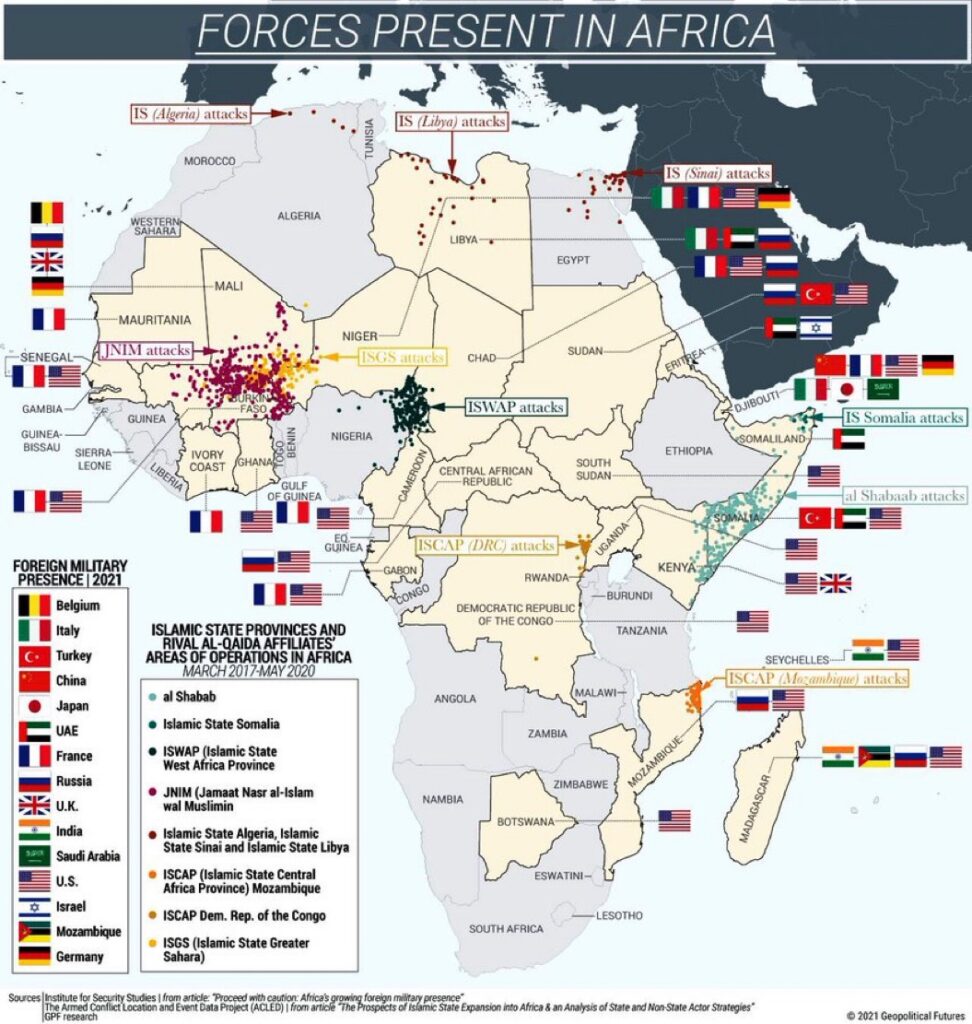
As the world watches, Somaliland’s fate could reshape regional power dynamics, and the lives of millions, in ways both calculated and unforeseen. Israel’s recognition of Somaliland as an independent state has sparked intense debate, with many seeing it as a move aligned with US interests in the region. Somaliland’s strategic location near the Bab al-Mandab Strait, a critical maritime route, and its rich mineral resources, including lithium, make it an attractive partner for the US and Israel. In July, Somaliland’s president offered the US a military base in Berbera and access to these resources, and US Republicans have introduced a bill to recognize Somaliland. Meanwhile, the US has increased drone strikes in Somalia, with 111 attacks this year alone, exceeding the combined total under previous administrations. This has raised concerns about the true motives behind the US’s involvement in the region. The situation is complex, with Somaliland seeking recognition and Somalia fighting to maintain its territorial integrity. The African Union and several countries have condemned Israel’s move, citing concerns about regional stability and the precedent it sets for secessionist movements. As the situation unfolds, questions remain about the implications for regional security, the role of external powers, and the future of Somaliland. Somaliland’s strategic location in the Africa has turned it into a high-stakes chessboard, with regional powers vying for influence. The UAE and Saudi Arabia see potential in leveraging Somaliland for cooperation, possibly bolstering their positions against Iran and securing vital trade routes. But Turkey’s significant military presence in Somalia, via its largest overseas base, signals a counter-narrative – Ankara’s bid to project power and protect its interests in a volatile region. Meanwhile, the backlash against Israel’s recognition of Somaliland has been telling: Arab, African, and Islamic nations have rallied to condemn the move, a unified front that could spell isolation for Saudi Arabia and reshape regional alliances. Israel’s recognition of Somaliland is a calculated gamble, reflecting its desire to expand influence in the Horn of Africa. Israel’s recognition of Somaliland is a strategic maneuver aimed at expanding its influence in the Horn of Africa, a region critical to global trade and security. By acknowledging Somaliland’s independence, Israel gains a foothourld near the Red Sea, potentially bolstering its military and economic interests. Beneath the surface, whispers of Mossad’s “quiet activity” echo through the Horn of Africa, hinting at a deeper game – one that pits regional power plays against Somalia’s fragile territorial integrity. As Somaliland inches toward normalization with Israel, the question hangs: will this cement stability or unleash a powder keg in a volatile region? But Somalia’s people are not mere pawns; they are guardians of their land, their sovereignty, and their future. They have stared down the barrel of history and refused to blink. The situation is fluid, with regional and global powers taking sides. The international community awaits the outcome, as this move may reshape the Horn of Africa’s geopolitics. However, this move has sparked controversy, with Somalia, the African Union, and several Arab nations condemning it as an attack on Somalia’s sovereignty. The recognition may isolate Saudi Arabia, which hasn’t endorsed the move, and exacerbate regional tensions, particularly with Iran and Turkey, who’ve criticized Israel’s action. However, this move risks exacerbating regional tensions, isolating Saudi Arabia, and undermining Somalia’s sovereignty. At its core, Israel’s recognition is a calculated geopolitical maneuver driven by security imperatives in the Red Sea corridor. Somaliland’s strategic location on the Gulf of Aden, overlooking the Bab el-Mandeb Strait—a chokepoint for 12% of global trade—offers Israel enhanced surveillance against Iran-backed Houthi militants in Yemen, who have targeted Israeli interests amid escalating tensions. Netanyahu’s invitation for Somaliland’s President Abdirahman Mohamed Abdullahi to visit Israel, coupled with promises of cooperation in agriculture, health, and technology, masks deeper ambitions: potential military basing at Berbera Port and intelligence sharing to counter regional threats. This dynamic is entangled in a web of rivalries. The United Arab Emirates (UAE), a key Abraham Accords signatory, has invested heavily in Berbera since 2016, operating a naval base and port to project power in the Red Sea and counter Turkish influence. Israel’s alignment with the UAE amplifies this, positioning Somaliland as a bulwark against Turkey’s support for Somalia’s federal government, which includes military training and infrastructure projects in Mogadishu. Turkey views the recognition as a direct challenge, condemning it alongside Egypt and Djibouti in joint statements that warn of proxy conflicts. Saudi Arabia, despite its alliances with the UAE and Israel, has joined the chorus of condemnation, affirming Somalia’s sovereignty through the Gulf Cooperation Council (GCC) and viewing the move as a “dangerous precedent” for Horn stability. Iran, Israel’s arch-adversary, likely sees this as an encirclement strategy, bolstering its Houthi allies and potentially escalating maritime disruptions. Russia and China, with their own Red Sea interests—Russia through Sudanese ties and China via its Djibouti base—have remained muted but could exploit the backlash to expand influence, portraying the West (and Israel) as neo-colonial meddlers. Russia’s Wagner Group has historical footprints in Africa, while China’s Belt and Road investments in Somalia could tilt toward stronger support for Mogadishu.
As the situation unfolds, it will be crucial to monitor the responses of key players, particularly the US, Russia, China, UAE, Saudi Arabia, Iran and Turkey, and the impact on the Palestinian issue. The question is: will the world listen to the whispers of the powerful, or the defiant heartbeat of a nation that refuses to be erased? As the situation unfolds, the impact on the Palestinian issue and Somaliland’s quest for international recognition will be crucial to watch. As these dynamics unfold, Somaliland’s fate hangs in the balance – will it become a pawn in a larger game, or a catalyst for a new era of regional geopolitics?
Critically, Israel’s history of territorial expansionism and denial of Palestinian self-determination casts a shadow over its Somaliland policy. Having faced international isolation itself, Israel now hypocritically endorses secessionism in Africa while rejecting similar claims in its own backyard. This selective application of sovereignty principles—championing division where it suits strategic interests—echoes colonial-era divide-and-rule tactics, undermining the African Union’s (AU) foundational commitment to preserving post-independence borders as per the 1964 OAU Cairo Declaration. By recognizing Somaliland, Israel not only disregards Somalia’s historical unification but also perpetuates a legacy of external interference that has plagued the Horn of Africa since the Cold War, when superpowers backed rival factions for proxy gains. This decision, framed by Israeli Prime Minister Benjamin Netanyahu as an extension of the Abraham Accords and a step toward regional peace, has instead been widely criticized as a brazen assault on Somalia’s territorial integrity and sovereignty. Far from fostering stability, Israel’s action risks exacerbating longstanding divisions in the Horn of Africa, undermining international norms on statehood, and exposing the hypocritical undercurrents of Israeli foreign policy—particularly when viewed against its own historical grievances over territorial disputes and recognition, portraying Israel’s recognition as a self-serving power play that prioritizes strategic gains over principles of unity and self-determination in post-colonial states. Israel’s involvement in the region has been opportunistic and historically inconsistent. As early as 1995, Somaliland’s then-President Ibrahim Egal reached out to Israeli Prime Minister Yitzhak Rabin, seeking ties to counter Islamism and leverage U.S. recognition. These overtures were rebuffed or kept covert, with Israel prioritizing relations with Arab states. By the 2000s, Israeli businessmen explored economic links, but Somaliland hesitated to formalize ties to avoid alienating Muslim-majority trading partners like Saudi Arabia. The relationship deepened discreetly in the 2020s, with Israeli intelligence (Mossad) cultivating high-level contacts during the Gaza War, inspecting Soviet-era runways in 2022, and exploring refugee resettlement proposals from Gaza in early 2025—ideas Somaliland denied but which hinted at Israel’s instrumental view of the territory. As the situation unfolds, it will be crucial to monitor the responses of key players, particularly the US, Russia, China, UAE, Saudi Arabia, Iran and Turkey, and the impact on the Palestinian issue. The question is: will the world listen to the whispers of the powerful, or the defiant heartbeat of a nation that refuses to be erased? As the situation unfolds, the impact on the Palestinian issue and Somaliland’s quest for international recognition will be crucial to watch. As these dynamics unfold, Somaliland’s fate hangs in the balance – will it become a pawn in a larger game, or a catalyst for a new era of regional geopolitics?