The writer is an economist, anchor, geopolitical analyst
and the President of All Pakistan Private Schools’ Federation
president@Pakistanprivateschools.com
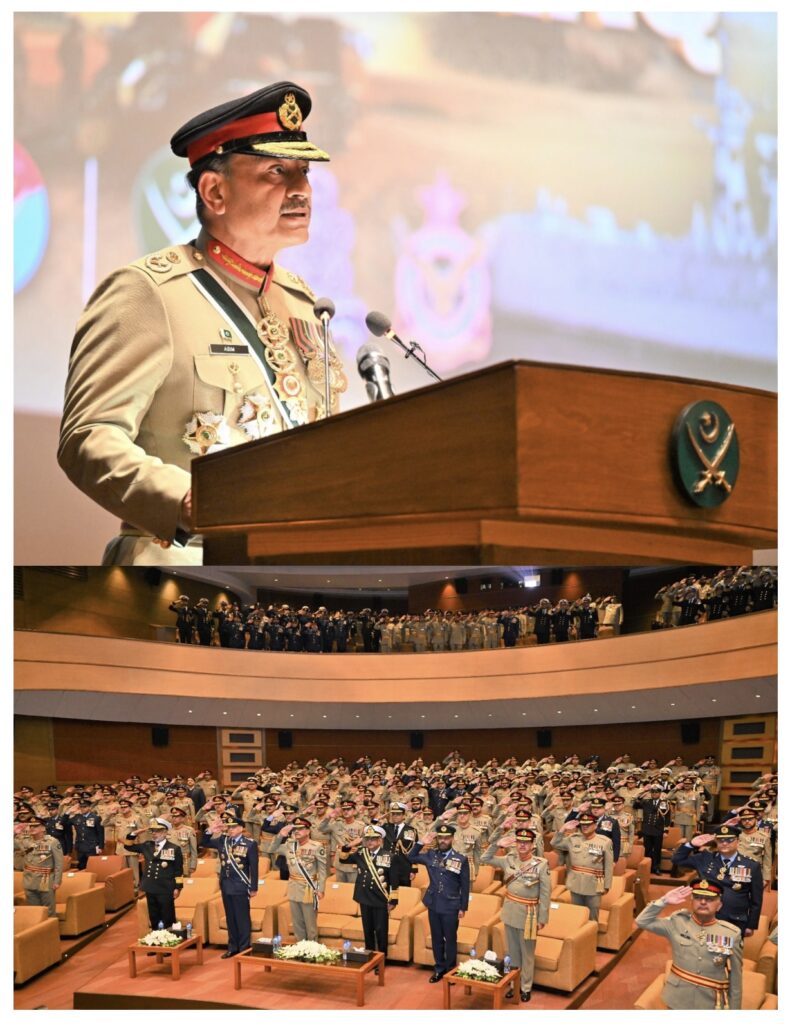
Field Marshal Syed Asim Munir’s leadership has been instrumental in reshaping Pakistan’s geopolitical landscape, leveraging a potent blend of military acumen, strategic restraint, and diplomatic finesse. As Pakistan’s army chief, Munir has navigated the complex web of regional rivalries and global power dynamics, capitalizing on Washington’s shifting priorities and New Delhi’s missteps. His discreet yet decisive engagement with the Trump administration has yielded significant dividends, thawing frozen channels and repositioning Pakistan as a key player in regional security. Munir’s approach has been marked by a calibrated assertiveness, evident in Pakistan’s robust response to India’s unprovoked attacks in May 2025, which showcased the military’s discipline and strategic focus. By prioritizing counterterrorism cooperation and economic engagement, Munir has earned unprecedented credibility in Washington, catching Beijing off guard and amplifying Pakistan’s diplomatic leverage. As the architect of Pakistan’s resurgence, Munir’s leadership underscores the military’s enduring influence in shaping the country’s geopolitical trajectory, even as the nation navigates an uncertain regional landscape. The year 2025 marks a significant turning point in Pakistan’s relationship with the United States, as the country transitions from being viewed as a pariah to a key partner in regional and international strategy. Pakistan’s unexpected military prowess in the May 2025 clash with India marked a tectonic shift in regional geopolitics, catapulting Islamabad from a perceived pariah to a coveted partner in Washington’s strategic calculus. As Trump’s administration recalibrates its South Asia policy, Pakistan’s demonstrated military discipline, asymmetric capabilities, and Field Marshal Asim Munir’s astute leadership have transformed it into an “emerging asset” anchoring Trump’s regional vision. This pivot underscores a profound reassessment: India’s growing assertiveness and domestic turbulence now raise doubts about its reliability as a stabilizer, while Pakistan’s responsiveness and flexibility earn it unprecedented credit. The virtuous cycle of cooperation, praise, and deepening partnership has redrawn the strategic map, with Pakistan’s military modernization gaining momentum and its influence in regional diplomacy soaring – a stark contrast to India’s diminishing returns. This dramatic shift is largely attributed to Pakistan’s assertive military response to India’s unprovoked attacks in May 2025, showcasing its military discipline, strategic focus, and asymmetric capabilities. Under President Trump’s administration, the US has abandoned its “India First” policy, elevating Pakistan’s strategic importance in South Asia. Pakistan’s Field Marshal Asim Munir has played a crucial role in this transformation, fostering a strong rapport with Trump and securing significant diplomatic and military gains, including a $686 million package for upgrading Pakistan’s F-16 fighter aircraft. Pakistan has demonstrated its commitment to counterterrorism, with the US praising its efforts in arresting a mastermind behind the Abbey Gate bombing in Kabul. The US and Pakistan have concluded a deal on oil reserves, with Washington working with Islamabad to develop Pakistan’s oil reserves. Pakistan has re-established itself as a serious regional actor, providing discreet channels to Iran and playing a potential role in Gaza. Pakistan’s resurgence has significant implications for regional dynamics, particularly in relation to India and China. The US has adopted a more balanced approach to India-Pakistan relations, with Secretary of State Marco Rubio emphasizing the need for a nuanced engagement with both countries. As Pakistan continues to navigate its transformation, its geopolitical impact is already being felt. The country’s ability to maintain a delicate balance between its relationships with the US, China, and other regional actors will be crucial in shaping the future of South Asia. The recalibration of Pakistan’s relationship with the United States, catalyzed by Field Marshal Asim Munir’s astute diplomacy, has sent ripples through the complex web of regional geopolitics. As Washington’s “India-first” policy gave way to a more nuanced approach, Pakistan seized the opportunity to reposition itself as a key player in South Asia. The thaw in relations, marked by discreet counterterrorism exchanges and Trump’s unexpected praise for Pakistan’s efforts, has transformed a once-brittle alliance into a burgeoning partnership. This shift underscores Pakistan’s strategic importance, particularly in the context of China’s growing influence in the region. As India’s domestic and foreign policy trajectory raises concerns, Pakistan’s willingness to engage in substantive cooperation has earned it unprecedented credit in Washington, forcing a reevaluation of its role in regional security and the Indo-Pacific strategy. Field Marshal Asim Munir’s meteoric rise in Trump’s inner circle has catalyzed Pakistan’s transformation from a suspect state to a strategic linchpin, recalibrating the regional balance of power. Munir’s “deliberate mystery” and calculated charm offensive – punctuated by a historic White House lunch and red-carpet CENTCOM visit – have mesmerized Trump, reshaping perceptions and fast-tracking Pakistan’s centrality in Washington’s South Asia calculus. As Islamabad leverages its unique diplomatic dexterity – offering discreet Iran channels, Gaza mediation potential, and a counterweight to China’s influence – it now sits at the nexus of Middle East and South Asia strategy, a stunning reversal of fortunes that underscores the fluidity of geopolitics and the potency of strategic finesse.
In the fluid landscape of global politics, Pakistan’s strategic pivot under Field Marshal Asim Munir’s mastery has sparked a seismic shift, recalibrating the regional balance of power and catapulting Islamabad from periphery to center stage. This geopolitical alchemy, fueled by Munir’s calculated diplomacy and Pakistan’s demonstrated military prowess, has transformed a once-pariah state into a coveted partner, rewiring Washington’s strategic calculus and positioning Pakistan at the global high table.
In the fluid landscape of global politics, Pakistan’s strategic pivot under Field Marshal Asim Munir’s mastery has sparked a seismic shift, recalibrating the regional balance of power and catapulting Islamabad from periphery to center stage. This geopolitical alchemy, fueled by Munir’s calculated diplomacy and Pakistan’s demonstrated military prowess, has transformed a once-pariah state into a coveted partner, rewiring Washington’s strategic calculus and positioning Pakistan at the global high table. In the realm of international politics, where diplomacy and strategic maneuvering are the keys to success, one man has emerged as the most powerful figure in Pakistan. Perhaps most notably, President Trump revived global attention on the Jammu and Kashmir dispute, a decades-old issue India had sought to keep confined within bilateral channels. By inviting international mediation and urging respect for United Nations resolutions, he ensured that Kashmir once again became a matter of global concern, compelling policymakers worldwide to re-evaluate long-standing injustices. In every public statement and private meeting, Unsurprisingly, India bristled at President Trump’s interventions, viewing his actions as a rebuke to their aggressive posturing. Yet for Pakistan, historically a steadfast advocate of peaceful resolution. This robust defense against external threats is a source of immense pride. As the international community reflects on the lessons of June 2025, Pakistan stands proud of this strategic masterstroke and hopeful that President Trump’s peace-building vision will illuminate the path to lasting stability in South Asia and beyond. The two leaders engaged in a wide-ranging discussion, encompassing regional security matters and the recent conflict between Pakistan and India. Trump’s remarks underscore the complexities of international diplomacy, particularly in regions fraught with longstanding tensions. Field Marshal Syed Asim Munir, the Chief of Army Staff (COAS) and Chief of Defense Force, has been instrumental in shaping Pakistan’s foreign policy and strengthening its global standing. General Munir is taking on some major roles in Pakistan’s military. The positions he’ll be holding: Field Marshal for Life, he’s been promoted to this rank in recognition of his leadership during the war with India; Army Chief: He’s currently serving as the Chief of Army Staff; Chief of Defence Forces (CDF); making him the head of Pakistan’s military and strategic command structure. As CDF, he’ll have the authority to: Appoint Vice Chief and Deputy Chief, he’ll be appointing these roles to support him; Head of Strategic Command, he’ll also be appointing the Commander of the National Strategic Command, who’ll serve a three-year term. This change is part of a broader reform agenda to modernize Pakistan’s defence framework and align it with global standards. With his unique blend of military acumen and diplomatic finesse, Munir has become the face of Pakistan’s diplomatic resurgence. Field Marshal Asim is the architect of Pakistan’s diplomatic resurgence, and is influencing global stability. His leadership, vision, and diplomatic finesse have transformed Pakistan’s global standing, and his efforts to promote peace and stability in the region are commendable. As the most powerful man in Pakistan, Munir’s influence will continue to shape the country’s foreign policy and global relationships. Under Munir’s leadership, Pakistan has witnessed a significant shift in its diplomatic approach. The country has strengthened its relationships with key global partners, including the United States, China, Saudi Arabia, and Iran. His military diplomacy has paid rich dividends, with Pakistan emerging as a key player in regional geopolitics. Munir’s meeting with US President Donald Trump at the White House has been hailed as a significant breakthrough. In a surprise move, Pakistan has nominated US President Donald Trump for the Nobel Peace Prize, citing his efforts to broker a ceasefire between Pakistan and India. This diplomatic masterstroke has sent a strong message that Pakistan values peace and is willing to work with global leaders to achieve it. As tensions rise in the region, Munir’s diplomatic efforts have been focused on promoting peace and stability. US President Donald Trump credited Pakistan’s Army Chief, Field Marshal Asim Munir, with helping prevent a war between Pakistan and India, and potentially influencing his decision not to bomb Iran. Field Marshal Munir’s visit to the White House was a significant diplomatic move, showcasing Pakistan’s growing influence in regional affairs. The purported visit had caused a huge furore in India with the Opposition seeing it as big diplomatic setback for the for the Narendra Modi led government. During the meeting, Trump and Munir discussed the Iran-Israel conflict, with both leaders emphasizing the need for a peaceful resolution. Munir also expressed Pakistan’s appreciation for Trump’s role in facilitating a ceasefire between Pakistan and India. This move is being seen as a symbolic acknowledgement of Trump’s mediation and behind-the-scenes role in the recent ceasefire between Pakistan and India. Through this, Pakistan has sent a message to the world that it is not a war monger, but a peace and reconciliation advocate. Munir’s visit highlights Pakistan’s strategic importance, particularly in the context of regional tensions and Trump’s diplomatic efforts. His visit to the US and meetings with key American officials have sent a strong message that Pakistan is committed to regional peace and stability, counter-terrorism, and economic cooperation, paving the way for a new era of collaboration between the two nations. Pakistan and Saudi Arabia have forged a historic defense pact, underscoring their deepening relationship and commitment to regional security. Munir’s leadership has enabled Pakistan to project its interests and values globally, from defending its water rights to promoting regional stability. He has a deep understanding of regional and global geopolitics, which has enabled Pakistan to navigate complex diplomatic terrain. Munir’s ability to articulate Pakistan’s principled stance on key regional and global issues has been widely appreciated. His military diplomacy has strengthened Pakistan’s relationships with key partners and enhanced its global reputation. Munir is focused on Pakistan’s untapped potential in information technology, agriculture, and mining, inviting international partners to collaborate and unlock shared prosperity. He advocated for dialogue, diplomacy, and adherence to international law, reaffirming Pakistan’s proactive role in mitigating regional tensions and promoting cooperative security frameworks, particularly in counter-terrorism, regional security, and economic development. He emphasized the potential for a broader, multidimensional relationship built on mutual respect and shared strategic interests. This engagement reflects Pakistan’s commitment to transparent diplomacy, international cooperation, and peaceful coexistence through principled dialogue. Trump’s priorities reflects shift, as Washington recalibrates its Middle East approach. At the same time, it signals a subtle realignment of regional partnerships—with Pakistan asserting its diplomatic muscle, India hardening its stance, and the US still trying to keep one foot in each camp. With tensions high, and alliances fluid, the world is watching. And as memes continue to fly, what happens behind closed doors could shape the next chapter of regional politics. Munir’s vision for Pakistan’s foreign policy, which prioritizes geoeconomics over geopolitics, has also contributed to his growing international stature. As alliances realign and power dynamics recalibrate, one question echoes: Will Pakistan’s resurgence in 2025 herald a new era of regional stability, or will it unleash a fresh scramble for influence? As for whether Asim Munir has become Pakistan’s new global identity, it’s clear that he has made a significant impact on the country’s international standing.