The writer is an economist, anchor, geo-political analyst
and the President of All Pakistan Private Schools’ Federation
president@Pakistanprivateschools.com
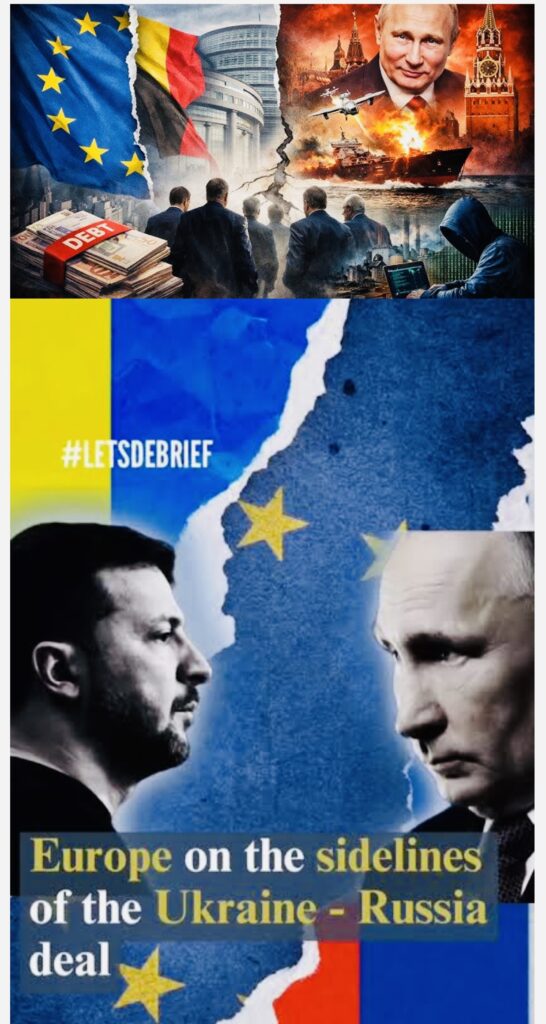
Russian President Vladimir Putin’s recent proposal for a Russia-European Union (EU) super alliance has sent shockwaves through the global community, with far-reaching implications for the world order, resources, trade, and business. By suggesting that a combined Russia-EU bloc could rival the US economy, Putin has reignited debates about the future of global governance and the balance of power. The proposal has sparked debate, suggesting a combined bloc could rival the US economy. Putin stated, “If we were to join our efforts — Russia and European countries — our joint GDP would be higher than the US.” suggesting that a Russia-European Union (EU) super alliance could have an economy bigger than the US. This move could reshape global governance, energy security, and trade, with significant implications for the world order. Putin’s Russia-EU alliance proposal has significant geopolitical and economic implications, with the potential to reshape the global order, energy landscape, and trade dynamics. While challenges and opportunities lie ahead, one thing is certain: the future of global governance hangs in the balance, awaiting the next move in this high-stakes geopolitical game. This statement has significant implications for the global economy, geopolitics, and trade. A Russia-EU alliance would create a massive economic bloc, potentially rivaling the US and China. The combined GDP of Russia and the EU would be substantial, given the EU’s existing economic prowess and Russia’s vast natural resources. Putin’s proposal could be seen as a strategic move to strengthen Russia’s position in global affairs. By aligning with the EU, Russia could gain greater influence in European politics and counterbalance US dominance. This alliance could also lead to increased cooperation on energy, trade, and security issues. A Russia-EU alliance would have significant economic benefits, including: Increased trade by reduced trade barriers and increased cooperation could boost trade between Russia and the EU, benefiting both parties; Energy cooperation through Russia’s vast energy resources could complement the EU’s energy needs, enhancing energy security. Investment opportunities by the alliance could attract significant investment, driving economic growth and development. The potential Russia-EU alliance could reshape the global order, with implications for: Multipolar World by a stronger Russia-EU bloc could contribute to a more multipolar world, reducing US dominance; Resource Management trough the alliance could facilitate cooperation on resource management, including energy and minerals. Business and trade implications by the Russia-EU alliance could have significant implications for businesses, including: New Opportunities by Increased cooperation could create new opportunities for businesses in both Russia and the EU; Regulatory Frameworks by the alliance could lead to more harmonized regulatory frameworks, facilitating trade and investment. The proposed Russia-EU alliance faces significant hurdles, including deep-seated political differences over Ukraine, human rights, and democratic values, as well as EU sanctions on Russia that would need to be lifted or eased. The EU’s reliance on Russian energy creates vulnerabilities, and the alliance may strain US relations, risking economic and diplomatic fallout. However, the potential benefits are substantial: increased trade and investment could drive economic growth, while energy cooperation could enhance the EU’s security and provide Russia with a stable market. A Russia-EU alliance could also amplify their global influence, counterbalancing US dominance, and facilitate cooperation on counter-terrorism and security issues. Key areas of cooperation include joint energy projects like Nord Stream 2, reduced trade barriers, and collaboration on counter-terrorism and regional security. The success of a Russia-EU alliance would depend on addressing these challenges and leveraging the benefits. A Russia-EU alliance could significantly impact global governance, potentially leading to: Multipolar World by stronger Russia-EU bloc could contribute to a more multipolar world, reducing US dominance and promoting a more balanced global order. Russia and the EU could push for UN reforms, enhancing the organization’s effectiveness and representation. Cooperation on counter-terrorism, non-proliferation, and regional security issues could improve global stability. A Russia-EU alliance could shape global economic governance, influencing trade, investment, and financial rules. A Russia-EU alliance might be seen as a counterbalance to US-China rivalry, potentially escalating tensions. Russia and the EU may have differing priorities and interests, potentially limiting cooperation. Cooperation on global challenges like climate change, pandemics, and economic inequality could benefit from a Russia-EU alliance. Russia and the EU could strengthen international institutions, promoting global cooperation and stability. The impact of a Russia-EU alliance on global governance would depend on their ability to navigate challenges and leverage opportunities. Russia and the EU could cooperate on climate change, sharing technologies and best practices to reduce emissions. Russia’s energy resources could support the EU’s energy transition, promoting a low-carbon economy. Russia and the EU could enhance cooperation on health security, sharing data and expertise to combat pandemics. Joint research and development of vaccines could improve global health outcomes. Russia and the EU could push for UN reforms, strengthening the organization’s role in global governance. Cooperation on WTO reforms could promote more effective global trade governance.
A Russia-EU alliance could facilitate a resolution to the Ukraine conflict, promoting regional stability. Cooperation on Middle East issues, such as Syria and Iran, could improve regional security. A Russia-EU alliance could strengthen the G20’s role in global economic governance, promoting cooperation on issues like trade, investment, and financial stability. Russia and the EU could push for G20 reforms, enhancing representation and effectiveness. Cooperation on IMF reforms could promote global financial stability, addressing issues like debt and currency fluctuations. Russia and the EU could support IMF quota reforms, giving more voice to emerging economies. Russia and the EU could cooperate on establishing global cybersecurity norms, reducing tensions and promoting stability. Joint capacity-building efforts could enhance cybersecurity in developing countries. The European Union (EU) and Russia have a significant trade relationship, with the EU being one of Russia’s largest trading partners. In 2024, the EU’s exports to Russia totaled €31.5 billion, while imports from Russia were worth €35.9 billion. The EU’s main exports to Russia include chemicals, machinery, and transport equipment, while Russia’s main exports to the EU are fuel and mining products, particularly mineral fuels. However, the relationship has been strained since Russia-Ukraine War in 2022, leading to EU sanctions and a decline in trade. The EU has imposed various import and export restrictions, resulting in a 61% decline in exports to Russia and an 89% drop in imports from Russia between 2021 and 2025. Putin’s central claim hinges on GDP metrics. In nominal terms (current market prices and exchange rates), the European Union’s GDP stands at approximately $20 trillion in 2025, while Russia’s is around $2.5 trillion—making Russia roughly 12-15% the size of the EU economy. The US GDP hovers near $28-29 trillion. A simple addition yields a Russia-EU bloc of about $22.5 trillion, still trailing the US. However, Putin likely refers to purchasing power parity (PPP), which adjusts for cost-of-living differences and often favors resource-rich, lower-cost economies like Russia. Russia’s PPP GDP is estimated at $7-7.7 trillion, pushing a hypothetical combined total to $27-28 trillion—potentially edging out the US (around $28 trillion PPP). Russian officials frequently tout PPP to claim Russia as Europe’s “largest economy,” a metric that flatters wartime growth driven by military spending. Yet this arithmetic overlooks profound incompatibilities: Since 2022, EU-Russia trade has plummeted. The EU, once Russia’s top partner, now accounts for under 2% of Russia’s trade, replaced by China, India, and others. Reintegrating would require lifting sanctions, which Brussels ties explicitly to Russia’s withdrawal from Ukraine. Europe’s high-tech, service-oriented economy contrasts with Russia’s resource-dependent model (oil, gas, metals). Pre-war energy ties benefited both, but Europe’s rapid shift to LNG from the US, Norway, and Qatar has reduced vulnerability. Russia’s recent growth (3-4% in 2023-2024) stems from massive defense spending (8% of GDP), but 2025 projections show slowdown to 1-1.5% amid inflation, labor shortages, and sanctions evasion costs. Defense Budget and Cooperation:
The EU has proposed using €392 billion from its cohesion policy to bolster defense capabilities, particularly for countries bordering Russia. This move aims to generate €650 billion in extra spending over four years. The EU has also committed to lending Ukraine €90 billion to support its defense efforts. Russia’s President Vladimir Putin has warned that using frozen Russian assets to finance Ukraine would be “a robbery” and could undermine trust in the euro zone. Amid stalled Ukraine peace talks and Trump’s push for quick deals, Putin’s overture tests European resolve. It coincides with EU debates on using frozen Russian assets (€210-300 billion) for Ukraine aid—which Putin condemned as “robbery.” By offering cooperation, he seeks to deter escalation and exploit divisions (e.g., Hungary’s pro-Russia stance). The EU has decided to borrow funds instead, ensuring frozen Russian assets remain intact. This proposal arrives amid a fractured global landscape: Russia’s ongoing war in Ukraine, sweeping Western sanctions, Europe’s energy diversification efforts, and the looming influence of a second Trump administration in the US. While Putin’s rhetoric evokes a Eurasian economic powerhouse, a critical examination reveals a mix of economic exaggeration, geopolitical maneuvering, and pragmatic outreach. Its significance lies in challenging the post-2022 isolation of Russia, but its feasibility is undermined by deep mistrust and structural barriers. A true “super alliance” would demand not just addition of GDPs but integration—free trade zones, shared infrastructure, and policy alignment—impossible without resolving the Ukraine conflict. Putin’s proposal carries weight as a bid to fracture transatlantic unity and reposition Russia in a multipolar world. By dangling a Eurasia bloc rivaling America, Putin appeals to European frustrations with US dominance—tariffs, energy exports, and perceived unreliability under Trump. It echoes historical Russian narratives of a “Greater Europe” from Lisbon to Vladivostok, countering NATO’s eastward expansion. Russia holds vast natural gas, oil, rare earths, and Arctic resources. A rapprochement could restore Europe’s affordable energy security, easing inflation and industrial competitiveness (e.g., Germany’s struggling manufacturing). For Russia, it would alleviate sanctions pressure and diversify from over-reliance on China. Pre-2022, EU firms invested heavily in Russia; renewed ties could revive sectors like automotive, machinery, and agriculture. Joint projects in climate tech or counter-terrorism could build trust. However, businesses face risks: reputational damage, legal hurdles, and Russia’s increasingly state-controlled economy. Success could accelerate a bipolar or tripolar order (US vs. China-Russia-Europe hybrid), weakening NATO and emboldening authoritarian alliances (e.g., BRICS). Failure reinforces the current order: Europe aligned with the US, Russia pivoting to Asia. For global governance, it highlights energy as a geopolitical weapon: Europe’s diversification has weakened Russia’s leverage, but winter vulnerabilities persist in some states. While economically tantalizing on paper, the proposal is geopolitically illusory without concessions on Ukraine—territorial integrity, demilitarization, and security guarantees—that Putin rejects. Trust erosion from Crimea (2014) and the full-scale invasion (2022) makes rapprochement premature. Europe’s unity, though strained, has held on sanctions and Ukraine support.
To navigate this proposal thoughtfully: Europe should tie any dialogue to verifiable Russian steps in Ukraine (ceasefire, withdrawals). Use backchannels for confidence-building, focusing on non-controversial areas like pandemics or climate (e.g., Arctic cooperation). Accelerate defense spending (to 2-3% GDP), energy diversification, and strategic reserves. Build a “coalition of the willing” for Ukraine security guarantees, reducing US dependency. Any trade resumption must be phased, reversible, and exclude dual-use technologies. Prioritize private-sector due diligence to avoid sanction violations. Involve the US and Ukraine in talks to prevent bilateral Russia-EU deals that undermine Kyiv. Explore OSCE or UN formats for broader challenges. Counter Russian narratives by highlighting sanctions’ cause (Ukraine war) and benefits of democratic alignment. Putin’s proposal underscores Russia’s desire to escape isolation but reveals its weakened position. A true partnership requires Russia to abandon imperial ambitions—unlikely under current leadership. For Europe, the path forward is resilient unity: support Ukraine decisively while keeping communication channels open, ensuring any future cooperation enhances, not erodes, European security and values. Putin’s proposal is a calculated move to strengthen Russia’s position in global affairs, potentially counterbalancing US dominance and gaining greater influence in European politics. The proposal for a Russia-EU super alliance has significant geopolitical and economic implications. While it’s uncertain whether this alliance will materialize, it highlights the evolving nature of global politics and economics. As the world watches, one question remains: will Putin’s gambit reshape the global order, or will it falter on the rocks of geopolitics and competing interests? The future of global governance hangs in the balance.
A Russia-EU Super Alliance Would Have an Economy Bigger Than the US Economy! As the world watches, one question remains: will Putin’s gambit reshape the global order, or will it falter on the rocks of geopolitics and competing interests? The future of global governance hangs in the balance