
The writer is an economist, jurist, anchor, geopolitical analyst and the President of All Pakistan Private Schools’ Federation
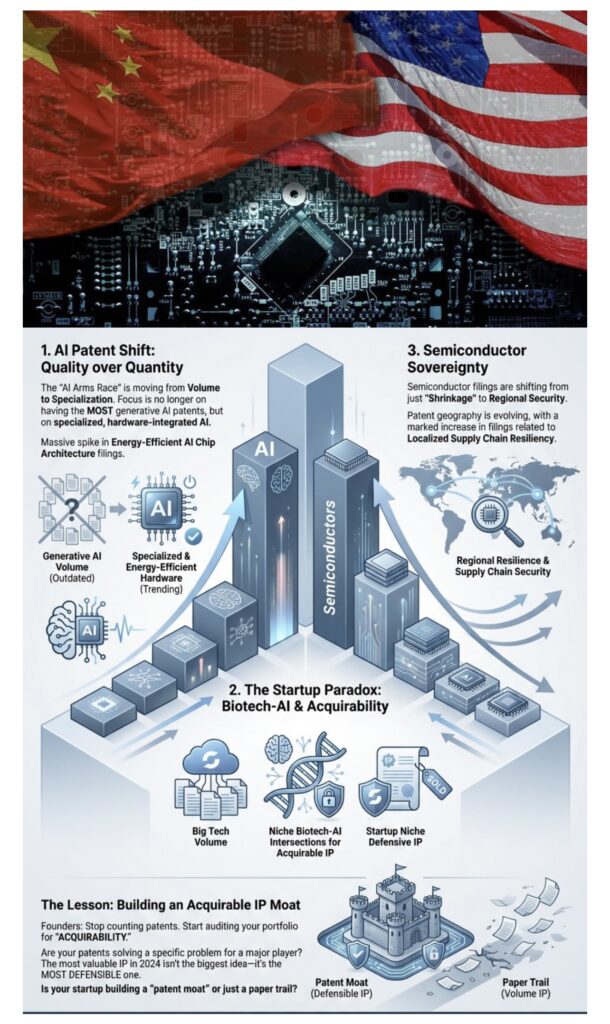
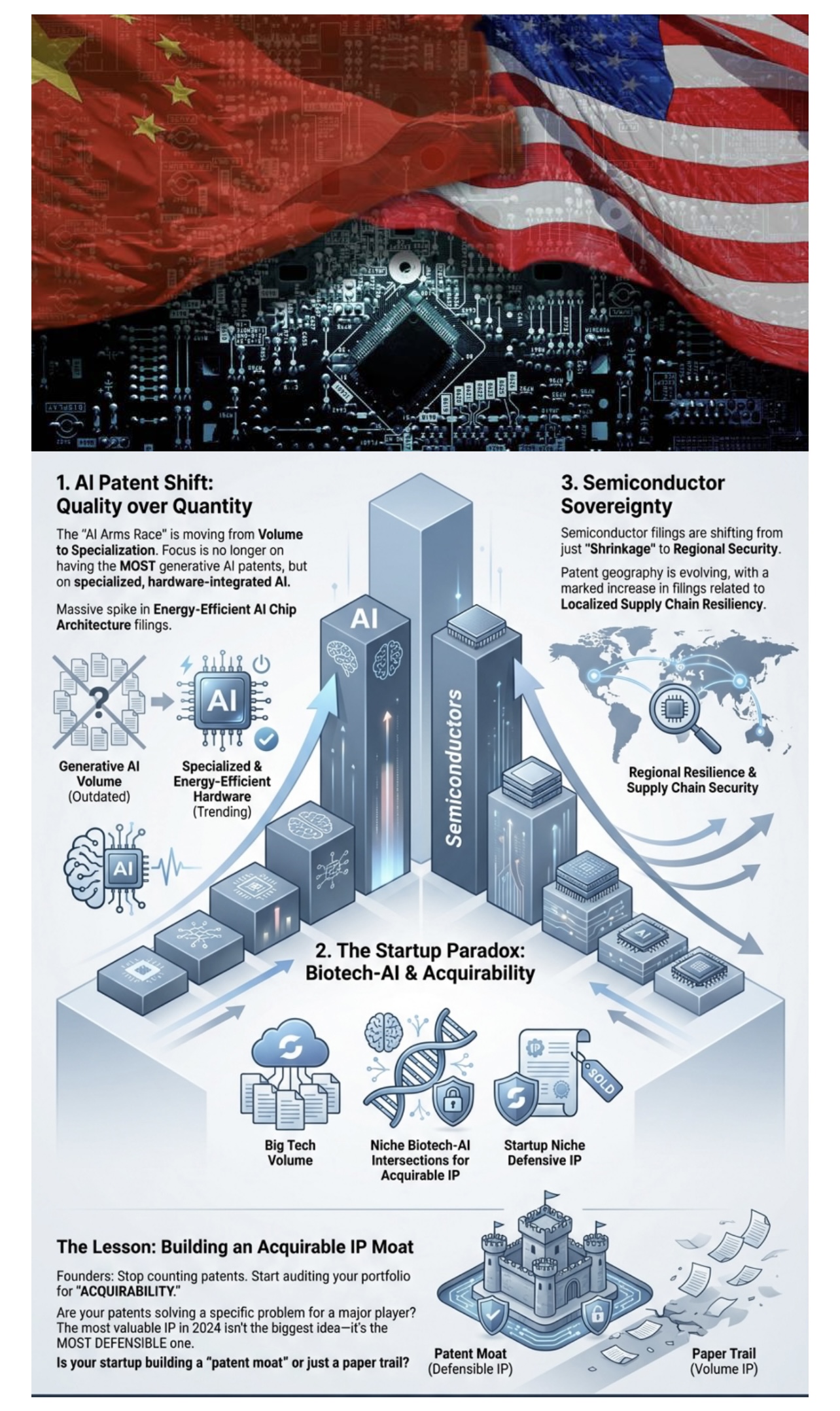
Technological sovereignty—the capacity of nations or blocs to independently design, produce, control, and govern critical technologies without debilitating external dependencies—has ignited a new arms race defining the 21st-century technological order. Technological sovereignty is inherently relative. Complete autarky is impossible and inefficient in a world of complex supply chains. So who writes the rules? States through funding and export controls, firms through infrastructure, and blocs through standards. But the default will be set by whoever deploys first at scale. In this new arms race, dominance is not about owning everything. It is about owning the layer no one else can afford to replace. In the 20th century, empires were built on coal, steel, oil, and nuclear arsenals. In the 21st, power flows through algorithms, silicon wafers, orbital constellations, encrypted networks, entangled qubits, and the rules governing data itself. In 2026, it is measured in something far less visible and far more decisive: who powers the data center, who fabricates the chip, who trains the model, who secures the orbit, and who writes the code that can break or protect every secret on earth. Technological sovereignty—the capacity of a nation or bloc to control, develop, and secure critical technologies without existential dependence on rivals—has become the ultimate strategic asset. The question is no longer merely who innovates fastest, but who writes and enforces the rules of the technological order. This is the new arms race. Not megatons, but technological sovereignty — the capacity of a state to control the critical technologies that now decide knowledge, money, war, and truth itself. AI, semiconductors, cyber capabilities, space, quantum computing, and data governance are no longer sectors of the economy. They are the foundational infrastructure of national survival. And the defining question of this decade is no longer “who has the most advanced technology?” It is “who gets to write the rules for the technological order?” The battlefield is already visible in the data. AI has moved from labs to geopolitics. US firms like OpenAI and Anthropic still lead in proprietary frontier models, but China is countering with a wave of open-source systems — Moonshot’s Kimi K3, DeepSeek, Zhipu — designed for scale and export. In 2026, G7 leaders for the first time sat directly with AI CEOs to treat model governance as a sovereignty issue, not a market issue. The constraint is no longer just talent. It is energy. Data centers are now driving grid stress, raising household electricity bills, and competing for water in already stressed regions. Who can power AI at scale is becoming as strategic as who can design it. Semiconductors are the new oil. The US in 2025 moved to a three-tier export regime. Semiconductors remain the foundational substrate of this new arms race. TSMC dominates the pure-play foundry market with roughly 70% share as of late 2025–early 2026, driven by demand for advanced AI accelerators. Samsung trails far behind at around 7%, while China’s SMIC has climbed to about 5%, powering domestic champions like Huawei despite export controls. Taiwan’s centrality creates a precarious equilibrium. A conflict over the island would devastate global supply chains far beyond 2022 semiconductor shortages. The U.S. CHIPS Act, EU Chips Act (and its 2.0 iteration), and China’s massive state subsidies reflect a global scramble for “friend-shoring” and onshoring. Yet progress is uneven: advanced nodes (3nm and below) remain concentrated in a handful of facilities vulnerable to geopolitical shock. Tier 3 countries, including China, now face “nerfed” AI chips unless 25% of revenue is shared with the US Treasury. China responded by bypassing the silicon bottleneck entirely. Huawei’s UnifiedBus 2.0 allows clustering up to 1 million 7nm chips to match the performance of a single 3nm chip. Meanwhile ASML remains the single point of failure for advanced lithography, and the EU’s new “tech sovereignty package” is explicitly aimed at cutting dependence on American and Chinese cloud providers. The race is not just for faster chips, but for control over rare earths, fabrication equipment, and the energy to run fabs. Global AI momentum is staggering. The AI market was valued around $390–600 billion in 2025–2026 and is projected to reach trillions by the early 2030s, with CAGRs exceeding 30%. Private investment more than doubled in 2025, with the U.S. committing roughly 23 times more than China in private flows and leading dramatically in generative AI. U.S. firms poured in sums that dwarfed combined China-Europe totals in that segment. China compensates with state guidance funds (estimated $184 billion historically into AI) and a whole-of-society push. Europe lags in raw capital but advances regulatory frameworks like its AI Act and new sovereignty initiatives. The race is not purely about model parameters or training runs. It is about infrastructure sovereignty (energy, data centers, chips) and talent. Hidden commitments by tech giants exceeding $1.6 trillion for AI infrastructure underscore the scale—and the financial risks if adoption falters. Cyber capabilities function as the constant, low-intensity front of this arms race. Cyber has become ambient. More powerful AI tools are colliding with a more fragmented geopolitical environment, leaving interconnected systems exposed to uneven risk. The US government blocked Anthropic’s internal model “Mythos” in 2026 on national security grounds, citing its ability to autonomously detect and exploit software flaws. China excels at large-scale espionage, IP theft, supply-chain compromises, and pre-positioning in critical infrastructure. Russia favors disruptive and hybrid operations, often integrating cyber with physical sabotage and influence campaigns. The U.S. and allies emphasize “defend forward” and resilience. Every regional conflict now features a parallel cyber domain. In space, the competition is over resilience. Low-Earth Orbit (LEO) has become contested territory. SpaceX’s Starlink exceeds 9,000 satellites, with plans for thousands more, delivering global low-latency connectivity that doubles as a dual-use asset. China accelerates its response through projects like Qianfan (“Thousand Sails,” targeting thousands of satellites) and Guowang, alongside record launch cadences (over 90 in 2025, targeting more in 2026) and reusable rocket development. BeiDou already rivals GPS. Proliferating satellite constellations enable not just internet access but Earth observation, navigation, and potential anti-satellite capabilities. Orbital congestion and spectrum allocation will demand new international norms—norms that will favor those with the most facts in orbit. Governments are pouring money into sovereign launch and satellite connectivity because dependence on a few private constellations is now seen as a strategic liability. Who owns low-earth orbit navigation and communication will decide who can fight, trade, and govern when terrestrial networks are cut. Quantum is the decryption race. Quantum technologies could upend encryption, simulation, and sensing. The U.S. retains advantages in software, error correction, private investment, and certain hardware metrics, with companies like IBM, Google, and others leading in commercial systems. China leads in quantum networking/communication deployment, holds massive patent volume, and pours formidable public resources (estimates near or exceeding $15 billion announced). It advances rapidly in superconducting and photonic systems. A functional, large-scale cryptographically relevant quantum computer remains years away, but the first mover could render existing encryption obsolete, granting decisive intelligence and security advantages. U.S. executive actions in 2026 underscore the perceived urgency. China has spent over $15 billion since 2016, launched the Micius satellite for quantum-encrypted communications, and built a 2,000-km quantum backbone between Beijing and Shanghai. In 2025 it unveiled Zuchongzhi 3.0, a 105-qubit processor claimed to outperform the world’s fastest supercomputers by quadrillions. The EU has committed €1 billion through its Quantum Flagship, the UK £2.5 billion. Global public funding has crossed $40 billion. The stakes are existential: whoever achieves stable, scalable quantum first will either break all current encryption or make their own communications unbreakable. Export controls on cryogenic hardware are now as sensitive as missile technology. Data governance has splintered into competing legal universes. The EU pushes a normative-regulatory model. The US treats data as a security-industrial asset. China centralizes it under state control. Russia isolates it. There is no global framework, only bloc frameworks. This fragmentation reflects a deeper strategic shift. The old dream of autarky is dead. No country controls the full stack from rare minerals to models. The World Economic Forum now frames the goal as “becoming indispensable in something.” The US is indispensable in frontier models, capital, and GPU architecture. China is indispensable in scale, open-source diffusion, and alternative interconnects. The EU is indispensable in regulation and standard-setting. Others — the Gulf, India, Southeast Asia — are building sovereign clouds and energy hubs to avoid being locked out. Data is the raw material of the AI age. The EU’s GDPR and evolving sovereignty package (including Cloud and AI Development Act) assert a values-based model emphasizing privacy and regulatory oversight. China’s system prioritizes state security, data localization, and national control. The U.S. leans toward a more market-driven, innovation-first approach with sector-specific rules and export controls. These divergent regimes create “splinternet” risks: incompatible standards, cross-border data flow restrictions, and competing digital ecosystems.
Technological sovereignty—the capacity of a nation or bloc to control, develop, and secure critical technologies without existential dependence on rivals—has become the ultimate strategic asset. The question is no longer merely who innovates fastest, but who writes and enforces the rules of the technological order. This is the new arms race…
The absence of clear, universally accepted rules of engagement—beyond vague norms—creates persistent gray-zone friction. Attribution remains a strategic weapon as much as a technical challenge. Control is shifting from firewalls to who owns the cloud, the digital identity layer, and the critical infrastructure underneath. So, who controls the pipes, protocols, and legal frameworks for cross-border data determines whose values shape global digital life. The real contest is over resilient interdependence—minimizing critical single points of failure while maximizing leverage. Standards bodies (ITU, ISO, 3GPP, etc.), export control regimes (Wassenaar, multilateral chip controls), and bilateral deals increasingly serve as the new venues of great-power competition. In this contest, primarily between the United States and China, with the European Unionasserting a third path, control over semiconductors, AI compute, data infrastructure, standards, and supply chains determines who writes the rules. The U.S. maintains leadership in frontier AI models, private investment (reaching $109 billion in 2024, nearly 12 times China’s), global LLM market dominance (93% of site visits in mid-2025), and high-end chip design and IP, bolstered by export controls that have forced China’s adaptation.China has responded with massive state-driven mobilization: AI R&D spending up 10% to 398.1 billion yuan in 2025, domestic AI chip market share surging to 41% (from Nvidia’s pre-2023 dominance), Huawei Ascend chips scaling toward hundreds of thousands of units, production capacity projected to jump over tenfold to 126,000 wafers/month, and open-source models like DeepSeek gaining rapid global traction (Chinese LLMs’ market share from 3% to 13% in months). Beijing aggressively pursues international standards-setting in bodies like ISO, IEC, and ITU through coordinated proposals, leadership roles, and mirror committees, aiming to embed its priorities in global norms. The danger lies in fragmentation: competing AI safety standards, incompatible quantum encryption protocols, orbital collisions from unregulated constellations, or cyber norms that only apply to the weak. The opportunity lies in pragmatic, issue-specific regimes—much like arms control treaties of the past—that preserve competition while preventing catastrophic escalation. The result is the rise of techno-blocs. Multilateral institutions built for a state-centric world cannot discipline private firms that now wield “infrastructural power” over compute and data. So the digital economy is splitting. A US-led bloc uses export controls and alliance tiers to treat AI as defense. A China-led bloc uses state investment and open-source diplomacy to build parallel standards. An EU bloc tries to govern through law. And a set of emerging hybrids in the Indo-Pacific and Gulf are hedging, buying from both sides while building their own capacity. No single power holds a monopoly. The U.S. excels in private capital, frontier innovation, and alliance leverage. China masters state coordination, scale, speed of deployment, and long-term patience. Europe bets on regulatory power, standards, and “open strategic autonomy.” Smaller players pursue niche sovereignty or alignment. States write them through funding and sanctions. Firms like NVIDIA, Huawei, OpenAI, and Moonshot write them by controlling the infrastructure. Alliances like the G7, EU, and SCO/BRICS write them through competing standards. But in practice, the rules are being set by who deploys at scale first. The power that builds the first truly sovereign AI stack, quantum network, and orbital system does not need to negotiate. It becomes the default. The 20th century was mapped with dreadnoughts and canals. The 2026 map is drawn in server farms, chip fabs, quantum labs, and orbital slots. This is the weaponization of interdependence. AI accelerates discovery and war. Quantum decides who can keep secrets. Chips decide who can compute. Space decides who can see. Data decides who can govern. States that fail to build sovereign capacity in these domains will not be conquered. They will become permanent consumers of technologies designed elsewhere. The arms race will not end with a treaty. It will end when one technological architecture becomes too expensive to replace. The contest is not for dominance. It is for default settings. The EU pursues “technological sovereignty” via its 2026 Tech Sovereignty Package (Chips Act 2.0, Cloud and AI Development Act, Open Source Strategy), seeking to triple data center capacity, reduce non-EU dependencies in cloud, AI, semiconductors, and promote European alternatives for resilience and strategic autonomy. Challenges include fragmented efforts and persistent gaps (Europe’s lag in frontier compute and models; China’s constraints in cutting-edge manufacturing and high-end EDA tools; U.S. vulnerabilities in scaled domestic fabrication and energy demands for AI infrastructure). The 21st-century technological order is being written not in treaties, but in compute, chips, and capital deployment. No state controls the full stack. ASML remains the single point of failure for advanced lithography, rare earths and energy constrain scaling, and multilateral institutions cannot regulate private firms with “infrastructural power” over models and cloud. Opportunities lie in accelerated innovation, diversified resilient supply chains, open-source momentum, and new markets for sovereign tech stacks that align with values like openness, U.S. and EU emphasis, or state control (China). Opportunities: The WEF argues the goal is no longer self-sufficiency but “becoming indispensable in something”. The US leads in frontier models and GPUs, China in scale and open-source diffusion, the EU in regulation, while Gulf, India, and ASEAN states can build sovereign clouds and energy hubs. Threats encompass escalating fragmentation of the global tech ecosystem into competing spheres, slowed collective progress on shared challenges (e.g., AI safety), heightened geopolitical risk from supply chokepoints, and the potential for standards to entrench surveillance or censorship models versus democratic interoperability. Fragmentation is accelerating. Cyber risk is uneven as AI tools proliferate in a fractured geopolitical environment. Export controls, sanctions, and bloc-based standards risk locking countries into permanent technological dependency — becoming consumers, not designers. Ultimately, the 21st-century order will be shaped less by any single hegemon than by who best integrates industrial policy, alliances, compute scale, standards influence, and adaptive governance—turning technological sovereignty from defensive resilience into offensive competitive advantage amid rapid, dual-use breakthroughs in AI and beyond.
In the end, the new arms race for technological sovereignty will not be won by the side with the most GPUs, satellites, or qubits alone, but by those who master the deeper contest over rules, standards, and dependencies. The 21st century will not be carved up by borders on a map. It will be coded into server farms, chip fabs, quantum labs, orbital constellations, and data regimes. AI, semiconductors, cyber, space, quantum, and data are no longer industries. They are the new domains of empire — the infrastructure through which power is projected, wealth is extracted, and truth is mediated. AI, semiconductors, cyber capabilities, space, quantum computing, and data governance have become the true domains of 21st-century empire—silent, pervasive, and existential. While the United States leverages unmatched private innovation and alliance networks, China counters with scale, state orchestration, and relentless execution, and Europe seeks influence through regulatory ambition and values-driven frameworks. Yet the decisive question remains unanswered: Who will author the protocols, norms, and architectures that define legitimate technological power? A fragmented splinternet of rival standards risks turning innovation into a zero-sum battlefield; a balanced order demands uneasy cooperation on shared guardrails even amid fierce competition. The nations—or blocs—that shape not just the tools of this era but the invisible rules governing their use will inherit the future. In this race, sovereignty is not the absence of interdependence, but the power to define its terms. History will judge whether we build a technological order that elevates humanity or one that hardens into digital empires poised on the edge of perpetual conflict. The code is still being written. No single power can own the entire stack. But the power that becomes indispensable in one critical layer will write the defaults everyone else is forced to use. The US leverages models and capital. China leverages scale and open-source diffusion. The EU leverages regulation. And rising hubs in the Gulf, India, and Southeast Asia are racing to become indispensable in energy, clouds, and talent before the architecture hardens. The UN cannot arbitrate this. Treaties cannot slow it. The rules are being written in real time by states through sanctions, firms through infrastructure, and blocs through standards. So who writes the rules for the technological order? Whoever deploys first, at scale, and makes their system too costly to replace. This is not an arms race for territory. It is an arms race for defaults. And once those defaults lock in — in chips, in models, in encryption, in orbit — the rest of the world will not choose them. It will inherit them. History shows that technological leadership correlates with economic and military primacy, but it is rarely permanent. The 21st-century order will be written not by declarations in Geneva or New York, but by the cumulative weight of fabs built, satellites launched, models trained, qubits stabilized, data centers secured, and alliances forged around shared technological futures. The new empires will not be those who merely possess the technology, but those who shape the invisible architecture—code, silicon, spectrum, protocols, and norms—that governs its use. In this race, sovereignty is not isolation; it is the power to set terms others must live by. The question confronting policymakers is whether they will compete within a shared framework or fracture the global technological commons into armed digital camps. The coming decade will likely decide which path prevails.
The writer is an economist, jurist, anchor, geopolitical analyst and the President of All Pakistan Private Schools’ Federation
president@Pakistanprivateschools.com