
The writer is an economist, jurist, anchor, geopolitical analyst and the President of All Pakistan Private Schools’ Federation
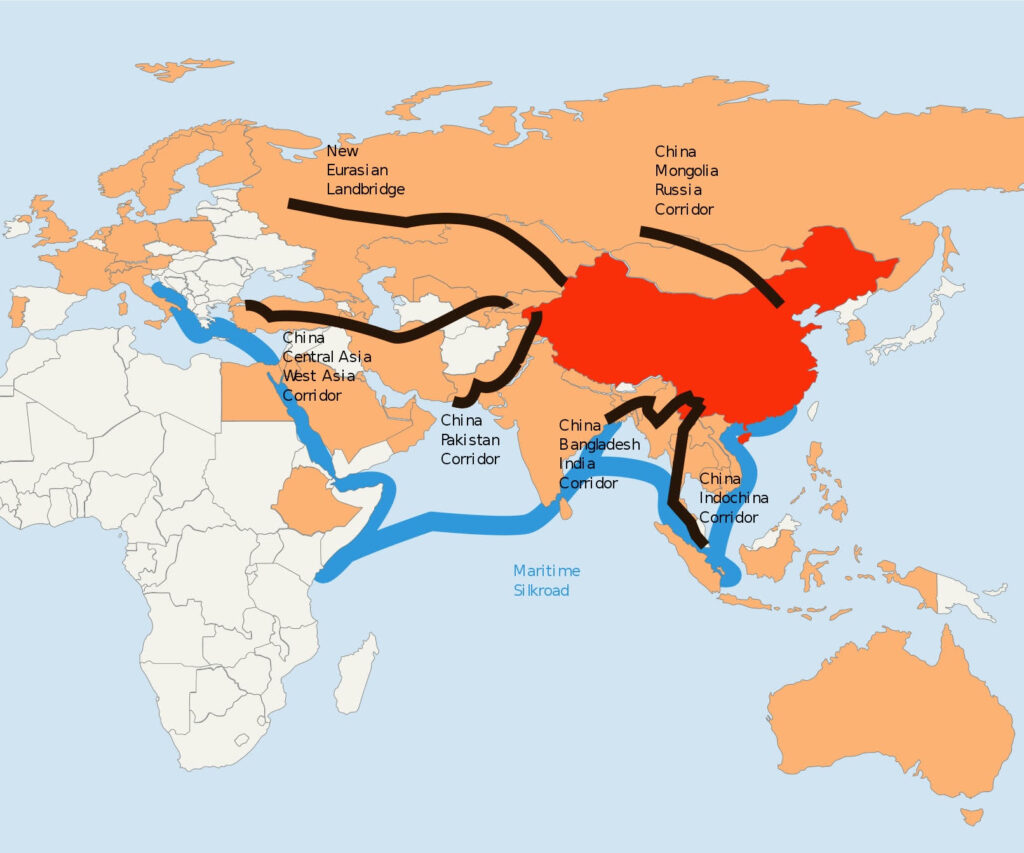
It envisions a flexible, polycentric framework for economic, infrastructural, and security cooperation across the vast Eurasian landmass. It emphasizes “integration of integrations”—linking existing platforms like the Eurasian Economic Union (EAEU), Shanghai Cooperation Organisation (SCO), Belt and Road Initiative (BRI), and ASEAN—rather than creating a rigid new bloc. As of 2025–2026, the GEP remains conceptual and developmental, with Russia actively promoting it through forums. The original Eurasianist movement, founded in the 1920s by Russian intellectuals in exile, used the term “Eurasia” to describe the vast geographical expanse stretching from Eastern Europe to the borders of the Chinese empire. The Great Eurasian Partnership: “Shared Responsibility for a Secure Future”, and diplomatic pushes ahead of its 2026 CSTO chairmanship. China, via BRI conjugation with the EAEU, forms the economic backbone alongside Russia. Pakistan, Iran, Central Asian states, and ASEAN countries are key potential or partial participants through overlapping memberships and connectivity projects. For the last decade, Eurasia has been moving from fragmented bilateral deals to bloc-level integration. The concept of a “Greater Eurasian Partnership (GEP)” — first floated by Russia in 2016 and revived by China post-BRI — is now moving from rhetoric to architecture. By mid-2026, diplomatic tracks confirm that Pakistan, China, Iran, the 5 Central Asian Republics (CARs), and 10 ASEAN states are in advanced consultations to formalize a new geographical and economic alliance. Unlike NATO or EU, GEP is not a military pact. It is a connectivity, energy, security and payment systems bloc aimed at bypassing Western sanctions regimes and creating an alternative trade spine from the Persian Gulf to the South China Sea. This is not just another trade deal. It is the first attempt to institutionalize a Global South-to-Global South, then South-to-North corridor that controls 38% of world population, 25% of global GDP PPP, and 40% of proven energy reserves. Land-Sea Convergence: GEP connects 3 oceans – Pacific via ASEAN, Indian Ocean via Gwadar, Karachi, Chabahar, and Arctic via Russia. This creates the first non-Western “dual-ocean” logistics network: Energy Spine; From Turkmenistan gas, Iranian oil, Russian LNG, to Indonesian coal and Malaysian refining. The bloc will control 40% of global gas reserves and 30% of oil trade routes; Population Corridor with 3.2 billion people. This is the largest contiguous market outside the EU and US, with a median age of 28 vs 42 in EU. For Pakistan, this places it at the geographic pivot: CPEC becomes GEP’s “southern corridor”. Gwadar is positioned as the warm-water terminus for Central Asia and Western China. GEP is being built as a “non-aligned security ecosystem”, not a NATO-style alliance. Joint intel sharing between Pakistan, Iran, CARs, and China on ETIM, ISIS-K, and Baloch insurgent financing. Pakistan’s experience in Zarb-e-Azb and Iran’s border ops become central. Energy Security with Turkmenistan-Afghanistan-Pakistan-India pipeline TAPI; and Iran-Pakistan IP pipeline are being rebranded under GEP Energy Security Council. The main goal includes de-dollarize energy contracts. Maritime Security as China-Iran-Pakistan naval exercises in Arabian Sea 2025-2026 signal intent to secure Hormuz-Malacca-Gwadar triangle outside US 5th Fleet dominance. Border Management through digital customs and SCO RATS framework extended to ASEAN. This reduces Western leverage via FATF-style tools. For Pakistan and Iran, GEP offers strategic depth: less dependence on IMF and the West for security narratives, more on regional consensus. According to IMF WEO April 2026, ADB, and member customs data, intra-GEP trade already hit $2.1 trillion in 2024, with a bold aim to reach $4.5 trillion by 2030 through 15–20% tariff cuts. The Payment Systems which includes 60% of bilateral trade to be settled in CNY, RUB, INR, PKR, and a proposed “Eurasian Settlement Unit” by 2027 to bypass SWIFT. Infrastructure: $1.2T in committed projects. CPEC $62B, China-Central Asia Railway $8B, Iran-Pakistan rail link $2.5B, ASEAN-China high speed rail $35B. In the field of energy: Iran, Russia, Turkmenistan to supply 35% of China and ASEAN’s gas by 2030. Pakistan becomes transit hub: estimated $800M per year in transit fees. Digitally: Huawei, ZTE, local firms building “GEP Digital Silk Road” – 5G, data centers, CBDC interoperability. While the West guards SWIFT, GEP is quietly building an exit: 60% of trade will soon settle in CNY, RUB, INR, PKR, and a new “Eurasian Settlement Unit” by 2027. Behind this is $1.2 trillion in hard infrastructure — from CPEC’s $62 billion corridor and the $8 billion China-Central Asia Railway, to the $2.5 billion Iran-Pakistan rail link and $35 billion ASEAN-China high-speed rail — literally paving a new world map. Energy follows the same logic: Iran, Russia and Turkmenistan will supply 35% of China and ASEAN’s gas by 2030, with Pakistan earning $800 million annually just to keep the valves open. And in the digital realm, Huawei, ZTE and regional firms are laying the GEP Digital Silk Road — 5G, data centers, and CBDCs that could make borders irrelevant. This is not trade policy. This is the architecture of a post-dollar, post-West Eurasia being built in real time. This is no longer a regional club — it is a civilization-scale platform. The SCO’s 10 members alone command 3.4 billion people, 42% of humanity, and over $24 trillion in nominal GDP, with far greater weight in PPP, while the EAEU adds another $5 trillion PPP and ASEAN contributes 690 million people, a $4 trillion economy, and $4.37 trillion in goods trade in 2025. Pakistan connects it to the Indian Ocean through CPEC, Iran ends its isolation via EAEU and SCO, and Central Asia shifts from periphery to pivot — the land bridge between Chinese manufacturing, Russian energy, and warm-water ports. Together, these overlapping spaces outstrip Western blocs in population, resources, and strategic geography, and even if nominal GDP still trails due to development gaps and sanctions, the sheer scale of people, energy, and trade routes now moving on shared rails and alternative payment systems means Eurasia is no longer reacting to the global order. It is building its own.
In the shadow of a fracturing world order, the Greater Eurasian Partnership emerges not merely as infrastructure but as a quiet tectonic shift: Pakistan ascends as the indispensable logistics and financial nexus, threading CPEC ambitions with Gwadar’s rising transshipment prowess while nervously balancing Washington and Beijing; landlocked Central Asia finally breathes through three oceanic vents—Gwadar, Chabahar, and Chinese gateways—shedding centuries of Russian gravitational pull; Iran sheds its pariah chains to become the indispensable energy and port fulcrum, trading oil for yuan and relevance; while ASEAN secures affordable hydrocarbons and hinterland markets on its own terms. The GEP fundamentally changes the Global South’s bargaining power against the western sanctions. US and EU sanctions lose efficacy when the target has an alternative market, bank, insurer, and shipping line. Iran, Russia, and soon others can trade fully inside GEP. This is why Washington called GEP “a sanctions-evasion architecture” in Jan 2026. Traditionally Global South exported raw materials to Global North and imported finished goods. GEP inverts this: New North-South Terms that’s South-to-South. ASEAN electronics; Chinese EVs; Central Asia and Pakistan. South-to-North: GEP energy, rare earths, EU and India at GEP-dictated prices, not spot market. GEP does not replace WTO, but creates parallel standards: technical standards, halal certification, green finance taxonomy, and dispute resolution via SCO Court. This gives developing countries “forum shopping” power for the first time. Yet this reconfiguration carries its own gravity wells: India, deliberately excluded, confronts strategic encirclement and will almost certainly counter with corridors of its own; the US and Europe, sensing the erosion of leverage, will deploy tariffs, technology blockades, and financial seduction to keep ASEAN hedging and the bloc fractured. The true test lies inward—whether Beijing can harmonize with Tehran, Islamabad with Kabul, and ASEAN transcend its maritime scars. By 2035, should cohesion hold, this architecture could command thirty percent of global trade flows and half of new infrastructure capital, birthing something rarer than steel and rail: the Global South’s first credible platform to face the North not as supplicants seeking aid, but as architects demanding equivalence. The coming decade will reveal whether this is history’s overdue rebalancing or merely another contested sphere destined to splinter under its own contradictions. The map of winners is being redrawn in ink, not pencil. Pakistan becomes the hinge — a logistics and financial bridge where CPEC Phase-II, Gwadar’s transshipment rise, and labor flows to GCC and ASEAN surge, but only if it can master the razor’s edge of balancing Washington and GEP. Central Asia finally escapes its landlocked prison with three open doors to the sea — Gwadar, Chabahar, and China’s ports — breaking a century of Russian transit dependence. Iran steps out of isolation to become the bloc’s energy heartbeat, selling oil to China and ASEAN in yuan, while ASEAN secures cheap energy and new markets without asking US permission. Yet every corridor casts a shadow. India, outside GEP, faces strategic encirclement and will counter through I2U2 and IMEC. The US and EU will fight fragmentation with tariffs, tech bans, and debt diplomacy, while ASEAN continues its careful hedging. And inside, the bloc’s fate rests on fragile seams: China-Iran rivalries, Pakistan-Afghanistan mistrust, and ASEAN’s South China Sea fault lines. From 2026-2028, GEP will institutionalize with a secretariat in Tashkent or Islamabad and a free trade agreement. 2029-2032 will harden it with rail, pipelines, and the Gwadar-Chabahar port axis. By 2033-2035, a $100B GEP Development Bank and a full CBDC corridor could deliver financial sovereignty. By 2035, GEP may command 30% of global trade and 50% of new infrastructure spending. But the real revolution is not in the figures. For the first time, the Global South will not come to the North begging for aid. It will come to the table, as an equal, with its own roads, its own money, and its own rules. By 2035, GEP could represent 30% of global trade and 50% of new infrastructure spending. More importantly, it gives the Global South its first continent-scale platform to negotiate with the North as equals, not aid recipients. For the first time in 500 years, the Heartland is reconnecting on its own terms. The GEP is reviving the Silk Road not as nostalgia, but as steel, fiber, and pipelines: China’s BRI, Russia’s Northern Sea Route, the Iran-Pakistan corridor, and a resurrected Central Asian hub are stitching East Asia to Europe and the Middle East through land routes that bypass Malacca, Suez, and every naval chokepoint the West once owned. Pakistan becomes the geographic hinge — with CPEC and Gwadar giving China the Arabian Sea and giving Central Asia its first warm-water exit, while Russia pushes the EAEU-BRI merger through this same corridor. Central Asia, no longer landlocked, becomes the continental core. ASEAN plugs the maritime economies in, completing a pan-Eurasian production loop from factory to port to steppe. This is geography turned into strategy. It directly counters “rimland” maritime dominance by prioritizing continental connectivity, resource self-sufficiency, and immunity to naval blockade. But GEP is not just trade. It is the skeleton of a new Eurasian security architecture: SCO and CSTO frameworks, joint exercises, energy guarantees, and a shared doctrine of “indivisible security” against terrorism, separatism, and external regime change. Iran and Pakistan pull the South and West in, Russia and China manage competition instead of dominance, and the bloc quietly aligns against NATO and QUAD encirclement without ever naming it. The fault lines remain — India-Pakistan hostility, small states balancing Moscow and Beijing, and Western pressure. Yet the logic is clear: whoever controls Eurasia’s landmass, energy, and corridors controls the 21st century’s terms of trade and war. The rim may have ruled the last century. The heartland intends to rule the next.
Can GEP turn geography into governance? If yes, the 21st century trade map will no longer run West-to-East. It will run Eurasia-to-Everywhere. The Global South is no longer asking for a seat at the North’s table. With GEP, it is building its own table. History rarely grants second chances at civilizational rebalancing. This one is being seized in real time.
The Greater Eurasian Partnership is not asking to join the old world. It is building a new one. The idea of Russia as a great power at the heart of this world in between Europe and Asia has been highly influential in post-Soviet Russian strategic thinking. Yet Eurasianism failed to offer a clear strategic answer to the challenge of a rising China. In traditional Eurasianist thinking, Eurasia was a civilizational and geopolitical bloc sharply distinguished from—and often opposed to—the Confucian-Buddhist civilizational space of China. Many Eurasianist ideas reinforced traditional Russian suspicions of China, views that had been intensified during the Sino-Soviet split. By stitching together 42% of humanity, most of the planet’s energy, and the ancient land bridges of the Silk Road with 5G, pipelines, and CBDCs, GEP turns geography into governance. The GEP could forge the world’s largest integrated market — a 3.4-billion-person South-South economy designed to trade in its own currencies, build its own roads, and shrug off Western sanctions. But scale is not sovereignty. Infrastructure gaps, debt traps, sanctions pressure, and China’s overwhelming economic gravity mean the benefits will be wildly uneven, and smaller states risk swapping one dependency for another. Regionally, it accelerates Eurasian multipolarity: Central Asia plays Russia, China, the EU, Türkiye, and the Gulf against each other to survive. Pakistan gains strategic depth, Iran trades isolation for integration, and ASEAN accesses continental markets without signing up to Washington. It fractures old spheres of influence, but creates new ones. On Global South to Global North dynamics empowers the South through collective bargaining, technology and infra sharing, and reduced reliance on Northern finance and markets. Could accelerate shifts in trade and investment flows, pressuring the North (US and EU) on tariffs, tech, and standards. However, internal South divergences (e.g., India vs. China alignments) and Northern resilience (tech, capital markets) limit outright decoupling. Long-term: A more balanced but fragmented world order, with Eurasia as a growth engine amid slower Northern demographics. The GEP is likely to advance incrementally—via FTAs, corridors, security dialogues, and 2026 forums—rather than as a sudden alliance. Success depends on Russia-China coordination, buy-in from India and ASEAN (neutrality concerns), and economic delivery amid global headwinds (tariffs, conflicts, slowdowns). A resilient Eurasian economic-security space driving 21st-century growth. Pessimistic: Great-power rivalry fragments it, with smaller states hedging. In summary, while not yet a fully formed “alliance,” the GEP represents a significant evolution in Eurasian geopolitics—one that could reshape global connectivity, security norms, and North-South relations for decades. Its progress merits close watching as a barometer of multipolar ambitions. Globally, GEP is the material backbone of a “Global South pole” — running parallel to BRICS, rewriting trade rules, setting infrastructure standards, and demanding a polycentric order instead of liberal hegemony. It reroutes energy, diversifies supply chains, and forces a reckoning inside the IMF, WTO, and World Bank. The question is no longer whether the West will allow it. The question is whether the Global South can govern itself better than it was governed. If it can, GEP won’t just challenge the old order. It will replace the default settings of the global economy. The Greater Eurasian Partnership is not about replacing the West. It is about creating options. For countries like Pakistan, it means diversifying from single-dependency. For China, it’s securing peripheries. For ASEAN and CARs, it’s monetizing geography. It is the first real attempt by the Global South to speak to the North not as borrowers, not as markets, but as equals — with its own trade rules, its own money, and its own security logic. Whether it succeeds will depend less on Western pushback and more on whether Eurasia can overcome its own rivalries. But one thing is already certain: the corridor that once carried silk and spices will now carry data, gas, and power. And whoever controls that corridor will write the terms of the next century. The rimland century is over. The Heartland century has begun. The Greater Eurasian Partnership will not be judged by summits or infrastructure ledgers, but by whether it can alchemize raw geography into durable governance—binding disparate civilizations not through ideology, but through the quiet tyranny of mutual necessity. If successful, it marks the close of the long Atlantic parenthesis: the 21st-century world no longer orbits a transatlantic core, but pulses outward from a Eurasian heartland that chooses its own rhythm. The Global South ceases to petition for inclusion and instead redraws the board, inviting the North to negotiate on terms it no longer dictates. The deeper question lingers like a fault line: can this new table accommodate genuine pluralism, or will it merely replace one hierarchy with another—more sprawling, perhaps, yet no less unforgiving? The real test will be: Can GEP turn geography into governance? If yes, the 21st century trade map will no longer run West-to-East. It will run Eurasia-to-Everywhere. The Global South is no longer asking for a seat at the North’s table. With GEP, it is building its own table. History rarely grants second chances at civilizational rebalancing. This one is being seized in real time.
The writer is an economist, jurist, anchor, geopolitical analyst and the President of All Pakistan Private Schools’ Federation
president@Pakistanprivateschools.com