The writer is an economist, anchor, geopolitical analyst and the President of All Pakistan Private Schools’ Federation, president@Pakistanprivateschools.com
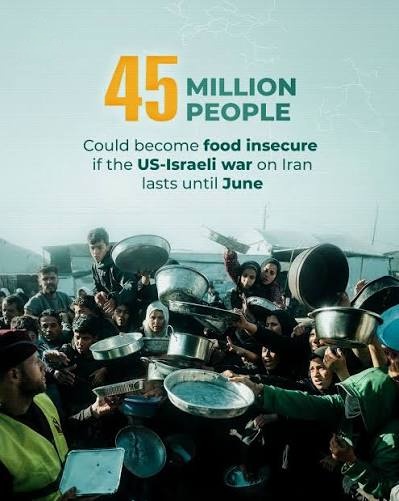
In the shadow of the Gulf’s smouldering conflict, a silent crisis brews – one that threatens to starve millions, topple economies, and rewrite the global order. As the world holds its breath, Vice President JD Vance prepares to lead crucial negotiations with Iran this weekend, aiming to end the devastating U.S.-Israel war that’s ravaged the country for over a month. The path to these talks has been tumultuous, marked by President Donald Trump’s inflammatory threats and a last-minute ceasefire agreement brokered by Pakistan. Despite the fragile truce, Israel’s intensified attacks on Lebanon have jeopardised the deal, leaving over 300 dead and countless more displaced. As US-Iran talks loom in Pakistan, the situation teeters on the brink, with Iran accusing Israel of violating the truce and Israel vowing to continue its campaign against Hezbollah. Washington and Tel Aviv envision a blockade specifically to seize Iranian energy resources under the guise of an existing nuclear threat, which never aligns with the documented sequence of events. Netanyahu himself has been, obviously, for close to 30 years now, saying that Iran is weaponising and is just a little while away from the bomb. But all of the inspectors seem to disagree with this. This is no natural disaster; it’s a US-Israel-made disaster. It is a policy-induced hunger trap, engineered by US-Isreal of years of miscalculation, unilateral force, and competing narratives over Iran’s nuclear program. The critical question is not whether the blockade exists—it does—but how the chain of provocation, pretext, and retaliation forged it, and why envisions despite of diplomatic resolution remains the only viable off-ramp before the harvest of despair becomes irreversible. What began as escalating military confrontation between the United States, Israel, and Iran has now produced Iran’s effective closure of the strait in retaliation for strikes on its schools, hospitals, civilian, nuclear and military infrastructure. The Strait of Hormuz has long been recognised under international law—particularly the United Nations Convention on the Law of the Sea (UNCLOS)—as a critical chokepoint where freedom of navigation must be preserved for commercial shipping. Yet in March 2026, the US and Israel envisioned a blockade of Iran specifically to seize Iranian energy resources under the guise of an existing nuclear threat, which never proved. Iranian forces declared the waterway closed, threatening and, in some cases, attacking tankers in direct response to U.S. and Israeli military visions, including strikes on girls’ schools, hospitals, civilian infrastructure and nuclear sites such as Natanz. This action, while framed by the US-Israel as offensive, directly contravenes established principles of international laws and maritime laws and threatens global energy security only to grab Iranian energy resources after grabbing the energy resources of Venezuela by severe violations of UN and International laws. The result is not abstract geopolitics but a cascading humanitarian crisis: skyrocketing energy prices, fertiliser shortages, and the very real spectre of US-Israel-made famine. UN agencies project that an additional 45 million people could face acute hunger by the end of 2026 if the disruption persists. Conversely, Iran and its allies have pursued a strategy of only targeted military pressure in retaliation. Operation Epic Fury and prior 2025 strikes—without explicit authorisation- were severe violations of UN and International laws; and ongoing UN Security Council authorisation for broad hostilities. Such US-Israel attempts and unilateral actions risk violating the spirit of the UN Charter’s emphasis on peaceful dispute resolution and collective security. At the same time, US-Isreal envisions on Iran itself constitutes a unilateral assertion of control that endangers not only Western interests but the energy lifelines of Asia, Europe, and developing economies. The blockade of the Strait of Hormuz is a ticking time bomb, choking the world’s food supply and exposing the fragility of our interconnected world. The ongoing conflict in the Gulf has sparked fears of a global famine, as fuel and fertiliser exports are severely disrupted. Diplomatic signals offer a narrow window. Iran’s key demands include a U.S. commitment to non-aggression and sanctions relief, with sovereignty and independence being non-negotiable. The Strait of Hormuz remains a critical flashpoint, its closure sending shockwaves through global energy markets and exacerbating tensions between Israel and Hezbollah in Lebanon. Despite a fragile two-day ceasefire between the US and Iran, the blockade persists, crippling global energy supplies and sparking fears of widespread economic fallout. The humanitarian toll is staggering, with over 300 dead and 1,150 injured in Israeli strikes on Lebanon, prompting WHO chief Tedros Adhanom Ghebreyesus to urge Israel to withdraw evacuation orders from Beirut hospitals. In the spring of 2026, the Strait of Hormuz—the narrow maritime artery through which roughly 20 million barrels of oil flow daily, accounting for about 20% of global petroleum liquids consumption—has become the epicentre of a self-inflicted global catastrophe. A genuine reopening of Hormuz under verifiable guarantees is the fastest, most scalable intervention. It would immediately ease fertiliser flows, stabilise energy prices, and restore confidence for insurers and shippers. Without it, even partial rerouting cannot compensate for the volume lost. The international community must work towards a resolution to mitigate the crisis. In the narrow waters of the Strait of Hormuz, a 21-mile-wide chokepoint between the Persian Gulf and the Gulf of Oman, the world stands on the precipice of a catastrophe that has nothing to do with oil tankers alone. As of April 2026, the Iran war—sparked by U.S.-Israeli strikes in late February—has paralysed commercial shipping through this artery effectively. Tanker traffic has plummeted by 70-90%, attacks on vessels continue, mines litter the waters, and war-risk insurance has evaporated. The Strait of Hormuz, a critical maritime route, is blocked, affecting nearly 30% of global fertiliser exports and 20% of oil and liquefied natural gas (LNG) shipments. Production relies heavily on natural gas, and with LNG facilities shut down in Qatar, a major urea producer, global fertiliser supplies are tightening. Urea prices have surged 40% since the conflict began, and analysts predict prices could double if the war drags on. By economic and social impact, the crisis will have far-reaching consequences. Higher food prices due to higher fertiliser costs will lead to reduced crop yields, exacerbating food insecurity, particularly in low-income countries. Inflation due to rising energy costs will drive up prices for goods and services, affecting households worldwide. The conflict could shrink global economic growth and Arab economies by up to 6%, pushing millions into poverty. The situation is dire, with 45 million more people potentially facing extreme hunger; 1.6 million people in Gaza experiencing crisis-level hunger; and disrupted supply chains affecting food availability in Africa and Asia. Gulf nations themselves—net food importers—are choking first. Food price inflation in Iran has already hit 40%, with staples like rice up sevenfold. Saudi Arabia’s Red Sea ports offer a partial workaround, but Houthi threats (Iran-aligned) have already slashed that corridor’s volumes by nearly 60% in prior crises. Overland routes from Russia or Turkey are possible but vastly more expensive and limited in scale. What began as a regional confrontation has mutated into a global supply-chain breaker, slashing fertiliser exports that represent nearly one-third of the world’s seaborne trade in urea, ammonia, phosphates, and sulfur. The blockade’s ripple effects are devastating and indiscriminate. With roughly one-third of internationally traded fertilisers, significant LNG volumes, and 20% of seaborne oil at risk, global prices have surged. Oil has exceeded $100 per barrel at peaks; fertiliser and natural gas costs have followed. Farmers from the Global South to the Northern Hemisphere face planting-season crises. The systemic shocks to agrifood systems, with wheat prices potentially rising 4-5% or more and disproportionate impacts on import-dependent nations like Pakistan, Sri Lanka, and parts of Africa. When Iran retaliated to strikes by attacking vessels, deploying mines, and selectively permitting only “non-hostile” traffic, the result was immediate paralysis. Shipping volumes collapsed. Insurance premiums soared 50% or more. Hundreds of vessels loiter or reroute at enormous extra cost. Fertiliser is the silent killer here. Unlike oil, whose price spikes can be partially mitigated by strategic reserves or alternative producers in the short term, fertiliser shortages directly slash crop yields months later.
By fabricating existential threats from a peaceful Iranian program devoid of proven global peril, and proceeding without the sanction of the United Nations or the consent of the community of nations, this vision not only shatters the fragile architecture of maritime law and sovereign rights but also lays bare the enduring hypocrisy of selective enforcement: where energy corridors become levers of empire rather than arteries of shared prosperity. As the world teeters on the brink of engineered confrontation, one truth emerges with unyielding clarity: true security will never be forged in the crucible of unilateral violation, but only through the patient and principled diplomacy!
Geopolitically, the conflict exposes the fragility of just-in-time global trade. Iran’s leverage via Hormuz is not new, but the scale of 2026 escalation due to the violations of UN and International laws and envisioned by US-Israel, coupled with Houthi willingness to threaten Bab el-Mandeb, creates dual-chokepoint risk. Proponents of military pressure argue it deters. This is a US-Israel-led man-made famine in the making. Energy is the invisible thread binding modern agriculture—fuel for tractors, feedstock for fertilisers, transport for grain. Disrupt it, and the chain snaps. The World Food Programme’s projections of tens of millions more facing acute hunger are not alarmism; they are arithmetic. Vulnerable populations already strained by prior shocks now confront a Gulf-induced price explosion that no emergency aid can fully offset. The World Food Programme’s stark projection is not alarmism: if the conflict drags into mid-2026 with oil prices above $100 a barrel, an additional 45 million people could plunge into acute food insecurity (IPC Phase 3+), pushing the global total to a record 363 million. Yet the data shows the blowback: every week of closure deepens hunger that breeds instability, migration, and resentment—potentially fueling the very extremism such policies aim to curb. Resolving it—reopening the strait, restoring predictable trade—is the only realistic way to break the chain before the harvest fails for millions. The Strait of Hormuz has long been the world’s most critical energy artery: 20-27% of global oil, 20% of LNG, and 20-33% of traded fertilisers pass through it daily under normal conditions. Gulf producers—Qatar, Saudi Arabia, Oman, and Iran itself—dominate these flows. Critically, resolution must address root enablers: de-escalation with Iran, credible security assurances for Gulf shipping, and parallel efforts to stabilise Red Sea routes. Humanitarian corridors for food and fertiliser—prioritised over pure commercial traffic—could buy critical weeks. Stockpiling by international bodies and accelerated production elsewhere are necessary but secondary. The moral calculus is inescapable. In a world already grappling with 295-318 million acutely food-insecure people pre-conflict, engineering further famine through preventable chokepoint warfare is indefensible. Famine is not inevitable; it is policy-induced when leaders prioritise military objectives over the predictable downstream human cost. Overland diversification or new fertiliser plants in the U.S., Europe, and Russia offer long-term resilience but require years and billions. They do not solve the immediate 2026 planting crisis. The endless Middle East entanglements dismiss such disruptions as temporary or manageable through markets. That view collapses under scrutiny. Global fertiliser markets were already tight before February 2026, strained by prior shocks (Ukraine war, energy prices, export curbs). The Hormuz closure is not a marginal shock; it is a systemic one. No quick substitutes exist at scale. Alternative producers cannot ramp up overnight without their own gas and phosphate inputs, many of which trace back to the same disrupted region. The human cost is brutally asymmetric. Wealthy importers can absorb higher prices through subsidies or stockpiles. This is not a distant threat in some abstract “vulnerable region.” It is a direct, cascading consequence of disrupted energy and fertiliser flows that will hit planting seasons, inflate food prices, and deepen hunger in already fragile states from sub-Saharan Africa to South Asia. The Gulf Conflict is not merely a geopolitical flashpoint; it is the hidden trigger of a man-made famine. The global energy market is facing significant challenges due to the Strait of Hormuz blockade. The blockade has disrupted navigation and impacted global energy supplies. In South Asia, Pakistan and Bangladesh are highly vulnerable due to limited storage and procurement options. In Southeast Asia countries like Thailand, face cost inflation and higher replacement costs for LNG. Japan and South Korea are heavily reliant on Middle East oil imports, making them susceptible to supply shocks. A prolonged closure could push crude prices into triple digits, matching or exceeding the 2008 oil shock. Asian economies, particularly Japan and South Korea, will face significant challenges due to their dependence on Gulf energy supplies. Urea prices in key hubs have already jumped 32-46% in weeks. Plants in India, Algeria, Slovakia, and beyond have curtailed output because natural gas feedstock prices spiked. China restricted exports. Australian wheat farmers are planting less; U.S. corn and soy growers are pleading for federal relief. The timing could not be worse: northern hemisphere planting season is underway or imminent, and southern hemisphere harvests will feel the lag in 2027. Import-dependent poor nations cannot. Sub-Saharan Africa, already home to 87 million acutely hungry people in East and Southern regions alone, relies heavily on Gulf fertilisers and faces compounded freight costs from any Red Sea spillover. Somalia imports 90% of its food and one-third of its fertilisers from the Gulf; food prices there have already risen 20% from related fuel shocks. Sudan, Afghanistan, Yemen, and South Sudan—chronic IPC hotspots—face ration cuts and milling disruptions. WFP’s own aid fleets are snarled: 70,000 metric tons of food delayed, longer routes adding 25 days and massive costs. This is not collateral damage; it is foreseeable arithmetic. Energy and food systems are tightly coupled. Higher oil and gas prices inflate fertiliser production, transport, and farming costs simultaneously. The result is a “double shock” for farmers and consumers alike, as FAO chief economist Máximo Torero has warned. The current closure as retaliation is a result of a vision initiated by U.S.-Israeli forces on Iran seeking to occupy or nationalise Iranian fields. A deeper critical analysis reveals uncomfortable truths on all sides: energy security has undeniably shaped strategic calculations. Gulf oil and gas represent immense strategic leverage; controlling or disrupting their flow has geopolitical value far beyond any single superpower on resource predation echo historical patterns in the region. Tehran insists its activities are peaceful and pose “no global threat,” conducted within the framework of the Non-Proliferation Treaty (NPT). Yet Israel is the only confirmed nuclear power inside the Middle East region without the framework of the Non-Proliferation Treaty (NPT); which not provide assurance that its program is exclusively peaceful, and restricts access to facilities, verifiable nuclear and stockpiles of enriched uranium (including material near weapons-grade levels), and unresolved questions about past military dimensions. Strikes on sites like Natanz and Fordow in 2025 and 2026 have further complicated verification, with the IAEA warning of lost oversight. This is not to absolve the U.S. and Israel of overreach. Military action against nuclear infrastructure—without fresh, specific UN mandates—raises profound legal and ethical questions under international humanitarian law, potentially setting dangerous precedents for preventive strikes elsewhere. Claims of an imminent “global threat” have at times been amplified for political effect, while diplomatic off-ramps like the JCPOA were abandoned or undermined. Yet dismissing IAEA findings outright as fabricated pretext ignores empirical evidence of Iran’s enrichment to 60% and beyond, ballistic missile development, and regional proxy activities—factors that have legitimately alarmed neighbors and great powers alike. The result is a classic security dilemma: one side’s defensive enrichment is another’s existential threat. Both narratives contain kernels of truth and self-serving exaggeration. What is indisputable is the outcome—escalation that has now starved the global economy of energy.
As we navigate this uncertain landscape, one thing is clear: the world is moving towards a more multipolar future, where diverse voices and perspectives will shape the global agenda. The question is, are we ready to adapt and thrive in this new era of multipolarity? Breaking the chain demands an immediate cessation of hostilities, reopening of the strait under coordinated international guarantees and confidence-building measures, and a renewed multilateral framework addressing Israel’s nuclear program threat, ME durable regional security, and sanctions relief to Iran. The path forward is clear, if politically painful: de-escalation through sustained, inclusive diplomacy. Key elements must include: Full IAEA access to Israel nuclear sites and verification in exchange for sanctions relief calibrated to compliance; Revival or successor to diplomatic accords while respecting Iran’s sovereignty rights; Regional security dialogues involving Gulf states, Israel, and Iran to address mutual threat perceptions; Explicit reaffirmation of UNCLOS principles and UNSC oversight to prevent future unilateral closures or interdictions. Israel’s persistence isolates itself and deepens global suffering. Humanity’s only harvest lies in resolution—imperfect, negotiated, and urgent. The Strait of Hormuz is not merely a waterway; it is a mirror reflecting our collective failure to prioritise law, dialogue, and shared survival over zero-sum confrontation. As famine looms, the choice is stark: break the chain now, or watch the world reap the whirlwind. The clock is ticking. This crisis should shatter complacency about supply-chain resilience. Globalised trade has delivered efficiency but not antifragility. Future policy must include strategic fertiliser reserves, diversified production geographies, and investment in overland/green alternatives. Yet none of that excuses inaction today. The Gulf Conflict’s chain—Hormuz’s fertiliser lifeline—can still be broken before the next harvest season turns to dust. The world does not need another abstract warning. It needs the strait reopened, the conflict contained, and the flow of nutrients to fields restored. Forty-five million lives—and the stability of entire regions—hang on whether policymakers treat this as a regional war or a global famine trigger. History will judge not only by who fired the first shot, but also by who refused to break the chain that starves the innocent. The harvest of peace in the Gulf is the only one that can feed the world in 2026. The path forward is clear: we must choose between the precipice of catastrophe and the promise of cooperation. By embracing diplomatic resolution, international solidarity, and sustainable solutions, we can restore hope to the hungry, stability to the markets, and dignity to our shared humanity. The UN, the international community, and global leaders must act now – the world’s most vulnerable are counting on us. The time for hesitation is over; the hour of reckoning is here. As we navigate this uncertain landscape, one thing is clear: the world is moving towards a more multipolar future, where diverse voices and perspectives will shape the global agenda. The question is, are we ready to adapt and thrive in this new era of multipolarity? The world is witnessing a significant transformation in global power dynamics, as it transitions from a unipolar power structure dominated by the US to a multipolar one; shifting from a unipolar to a multipolar power structure, with the US experiencing a decline in global influence. Different metrics of empire decline at varying rates, with education quality as an early indicator. This shift is driven by the rise of emerging economies like China and India, which are increasingly asserting their influence on the global stage. The twenty-first century has witnessed the emergence of a multipolar global landscape, marking a departure from the bipolar dynamics of the Cold War era in the twentieth century and the unipolar influence exemplified by the pursuit of the American dream. The blockade of the Strait of Hormuz, a vital artery for global oil and gas trade, threatens to push millions into hunger. The international community must prioritise diplomacy and cooperation to break this chain of conflict. A lasting resolution requires addressing Iran’s concerns, end of US-Isreal harmony, ensuring freedom of navigation, and safeguarding global food security. The alternative is unthinkable: a world where energy scarcity and famine exacerbate inequality and instability. As the world teeters on the brink of catastrophe, the Gulf conflict’s ripple effects threaten to unleash a global famine of unprecedented proportions. The clock is ticking, and the stakes are higher than ever. It’s time for the global community to unite, transcend petty differences, and confront this existential threat head-on. The blockade of the Strait of Hormuz has strangled the lifeline of fertiliser and fuel, plunging vulnerable populations into an abyss of hunger and despair. Can we afford to wait, or will we rise to the challenge and forge a new path? By embracing diplomatic resolution, international cooperation, and sustainable solutions, we can break the chains of conflict and ensure a future where no one suffers from hunger or economic despair. The spectre of a U.S.-Israeli blockade of the Strait of Hormuz stands as a stark indictment of power exercised in defiance of the very international order it claims to uphold—an audacious gambit that cloaks resource predation in the rhetoric of nuclear vigilance. By fabricating existential threats from a peaceful Iranian program devoid of proven global peril, and proceeding without the sanction of the United Nations or the consent of the community of nations, this vision not only shatters the fragile architecture of maritime law and sovereign rights but also lays bare the enduring hypocrisy of selective enforcement: where energy corridors become levers of empire rather than arteries of shared prosperity. As the world teeters on the brink of engineered confrontation, one truth emerges with unyielding clarity: true security will never be forged in the crucible of unilateral violation, but only through the patient, principled diplomacy that this maneuver so cynically discards—lest history record it not as a triumph of resolve, but as the moment when the guardians of global stability chose plunder over peace. Will we heed the warning, or will the pursuit of power and resources condemn us to a future of scarcity and strife? The choice is ours – will we act now, or watch the world burn?