
The writer is an economist, anchor, geopolitical analyst and the President of All Pakistan Private Schools’ Federation
president@Pakistanprivateschools.com
The Middle East is on the brink of a nuclear catastrophe. As the US-Israel failed invasion and to contain Iran’s growing influence, the risk of a nuclear war looms large. The conflict, fueled by decades of tensions and rivalries, threatens to engulf the region and beyond. The world is at a crossroads. A nuclear war in the Middle East would be a disaster, with far-reaching consequences. It is imperative that global leaders act now to prevent this catastrophe. Iran’s nuclear program as deterrent, coupled with its strategic alliances with nuclear superpowers China and Russia, has shifted the regional balance of power. The US and Israel, facing setbacks in their unsuccessful attacks against Iran to contain Iran, are increasingly considering extreme measures. In the shadowed theater of global power, a stark dialogue unfolded between empires and defiance: one leader, wielding the weight of a superpower, under the lust to seize the oil and energy resources of Iran, demanded the cessation of nuclear ambitions, only to be met with an unyielding “No”; now he insisted on the free passage of the Strait of Hormuz, and again came the refusal; he thundered surrender or death, yet the response echoed with a chilling resolve—“We do not fear death”—revealing a nation that had long internalized mortality as its ultimate shield. Threats of boots on the ground drew only a patient “We are waiting,” as if the sands of history had taught them that invaders eventually bleed into the desert. Even pleas to halt drone production were dismissed, until, in a sudden pivot born of calculation or exhaustion, the demand softened into concession—“We will leave the Strait”—and the reply sliced back like a final verdict: “Get lost.” What does this exchange whisper about the fragility of dominance, the quiet triumph of the seemingly powerless, and whether true victory ever belongs to the one who blinks first in the endless game of sovereignty and survival? The standoff between the US and Iran has reached a boiling point, with both sides digging in their heels. Trump’s aggressive demands, met with Iran’s unwavering defiance, paint a picture of a conflict with no easy exit. The Strait of Hormuz, a vital oil artery, remains a major point of contention, with Iran refusing to budge. The current state of affairs is a stark contrast to the pre-war era. The once-open Strait of Hormuz is now closed, disrupting global oil supplies and sending shockwaves through the international community. Despite the lack of regime change in Iran, the dynamics of power have shifted, with Donald Trump’s presidency witnessing unprecedented unpopularity. The US’s grip on global dominance appears to be waning, with allies reevaluating their relationships and the effectiveness of American military might being questioned. The Iron Dome and Patriot defense systems, once touted as impenetrable, have been breached, exposing vulnerabilities in US arms. The consequences of this shift are far-reaching, with US arms companies facing significant losses and countries worldwide reassessing their stance on America. As the Gulf region undergoes a profound transformation, the world teeters on the brink of a new world order, where America’s influence is no longer taken for granted. Gulf countries are caught in a precarious situation, facing direct attacks and economic losses while potentially shouldering the war’s financial burden. The US, led by Donald Trump, is reportedly considering shifting the costs to these nations, citing the precedent of the 1990 Gulf War. This move would exacerbate the region’s suffering, as Gulf states grapple with damaged infrastructure, disrupted oil exports, and humanitarian crises. This war transcends the Middle East. Economically, Hormuz disruptions (Iran’s yuan tolls) and fuel crises threaten global recession, hitting Europe and Asia hardest. Strategically, it accelerates multipolarity. Thought-provokingly, this echoes Thucydides’ Trap: a declining hegemon (perceived US fatigue) versus rising challengers, with nuclear weapons as the ultimate multiplier. Deterrence holds—for now—because no side wants mutual ruin. But in opacity and fog, rationality frays. The situation raises questions about the US’s hegemon to its allies and the long-term implications for regional security and global economic stability. Trump’s admission in frustration that French President Macron rejected his plea for help in the war is a stark revelation of the strained relationship between the two leaders. This incident highlights the challenges of international diplomacy, where personal relationships can significantly impact global politics. First Trump humiliated UK PM, Japanese PM, then Saudi Crown Prince and now French President. If you bully your own allies, they will surely ditch you one day. The broader implications of this spat are concerning, with potential repercussions for NATO and European security. As Trump has previously criticized NATO allies for not meeting defense spending targets, this incident may embolden other leaders to resist US pressure. As the US considers its next move, questions linger: will Trump’s threats escalate the situation, or will diplomacy prevail? Iranian Foreign Minister Abbas Araqchi attacks Trump now: “You must send your soldiers to Iran, as you said, to open the Strait of Hormuz if you are brave and stand by your word. Don’t talk so much, just send your powerful soldiers to Iran.” “And if you are afraid to send them by plane as happened before, we will send you an Iranian plane to transport them.””I tell you: within 30 days, in front of the whole world, the Strait of Hormuz will be closed by order of Iranian sovereignty, and no one will dare to open it, not even after 100 years.””Ask your friend Netanyahu what we are doing to him and his people every day; we are plunging them into a constant nightmare, and you will soon be rid of this nightmare.” This is the first time he has spoken in this manner since the beginning of the war. Truly powerful words. Iran’s latest move is also a very bold attempt to rally the Gulf Cooperation Council (GCC) against the US and Israel, calling out their use of Gulf states as human shields and exploiting regional resources for genocide. Iran’s messaging is clear: unite with us, and we can take down the US and Israel. Iran’s call for unity resonates with GCC leaders, who feel abandoned by the US and are seeking alternative alliances. This strategy is likely aimed at unity with GCC, particularly on given the US’s prioritization of Israel’s defense over Gulf allies’ security. However, the region is on high alert, with Iran’s strikes targeting US military assets and energy infrastructure, and the US and Israel pushing for a ceasefire.
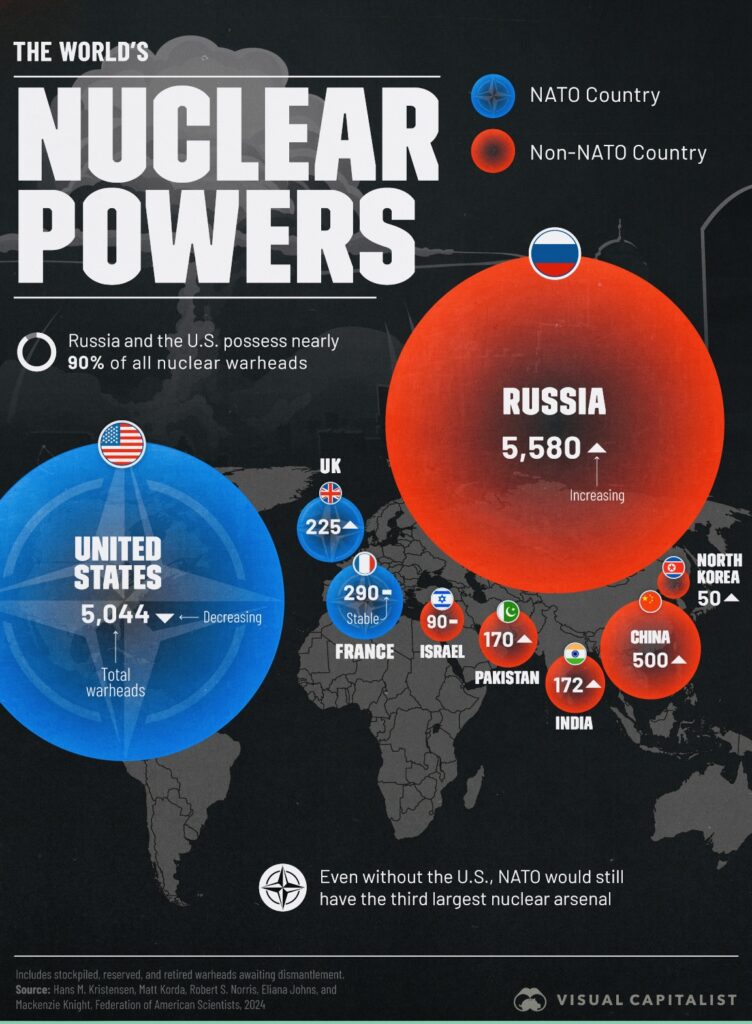
Israel, in particular, views Iran’s nuclear capabilities as a competitor in regional power and end of its hogmanay in Middle East. What began on February 28 as Operation Epic Fury—a joint US-Israeli campaign of nearly 900 precision strikes in its first 12 hours, assassinating Supreme Leader Ali Khamenei and decimating Iranian military leadership, missile infrastructure, and nuclear sites—has evolved into a grinding, month-long war of attrition. Iran has successfully retaliated with hundreds of ballistic missiles and drones targeting Israel, US bases, and Gulf allies, coordinated with its allies like Hezbollah and the Houthis. Thousands are dead across Iran, Israel, Lebanon, and Gulf states; millions displaced; and critical infrastructure—from Isreal, Iran, Gulf states and Lebanon—lies in ruins. The threat of nuclear war is looming large over the US-Israel invasion on Iran which couldn’t succeed. Iran’s nuclear program has been significantly upgraded for its survival and security, with key facilities and infrastructure couldn’t destroyed or damaged in recent US and Israeli strikes. Iran’s nuclear ‘breakout’ time is estimated to be almost zero, with enough nuclear material for ten nuclear weapons if further enrichment to 90% is achieved. Israel’s possession of nuclear warheads is acknowledged, and there’s concern it might use them if conventional options are exhausted. Iran’s response to a nuclear attack would likely be severe, with potential retaliation using ballistic missiles and drones. It’s estimated that Iran’s nuclear program: 3,000 centrifuges, 10,000 kg of enriched uranium (2023 estimates); Israel’s nuclear arsenal: 80-400 warheads (estimated); Global economic costs of nuclear war: $1-2 trillion (estimated); Displaced persons in a nuclear conflict: 10-20 million (estimated). Yet beneath the conventional barrages lurks a far more ominous specter: the rising threat of nuclear escalation. A “surprise” Iranian counter would be possible nuclear and verified hypersonic claims, drone swarms, or allies closing Hormuz and now tolled in yuan for revenue. This forces US-Israel into a dilemma—escalate conventionally or risk nuclear signaling. The irony: strikes intended to neuter Iran’s nuclear path may accelerate it if Tehran perceives its survival at stake. Nuclear proliferation through Isreal, a nuclear war would devastate global economies, disrupting oil supplies and triggering widespread instability. The conflict could accelerate nuclear proliferation in the Middle East, with countries like Saudi Arabia and Turkey seeking nuclear capabilities to counter Isreal. The humanitarian consequences would be catastrophic, with millions displaced and entire cities destroyed. This analysis posits a desperate US-Israeli nuclear strike on Iran for “face-saving” amid perceived battlefield losses. Although, Iran possesses no confirmed nuclear weapons, but, can surprise the world by it’s nuclear and ballistic capabilities. Despite a heavily enriched uranium stockpile (approximately 440 kg at up to 60% purity pre-strikes, per IAEA estimates—enough, if further processed, for roughly 10 warheads). Its ballistic missile program; Pre-war estimates pegged its arsenal at 6,500–8,000 missiles; once the region’s largest weapons including Shahab-3 and Khorramshahr variants reaching 2,000–3,000 km, has been tested and upgraded. Indeed, the U.S. is funding a war against itself. Meanwhile, the UAE’s safe-haven status evaporated, Gulf capitals discovered that neither Israeli maximalism nor American largesse can purchase perpetual tranquility, and China positioned itself to dominate the very energy transition this crisis accelerates. The “Eastern Axis”—China’s renewables and battery supremacy, Russia’s hydrocarbons, Iran’s geography—is not ideological; it is pragmatic convergence. Supply-chain resilience is replacing market access; the dollar’s weaponization is losing potency. This is not the end of American power; it is the beginning of a world in which American power must compete on equal terms. Has the unipolar moment, sustained by the post-Cold War illusion of unchallenged primacy, finally encountered its empirical rebuttal? Iran’s stand—technological defiance, economic improvisation, and narrative command—suggests that sovereignty, when fused with strategic depth and opportunistic alliances, can impose costs that even a nuclear hegemon finds prohibitive. Trump’s approach, intended to reassert leverage, has instead gifted adversaries windfall revenues and accelerated the very de-dollarization and energy diversification Washington sought to forestall. The world is not merely witnessing a regional skirmish; it is observing the quiet dismantling of a monopoly on outcomes. In the coming months, as oil reserves drain, inflation expectations harden, and the Eastern Axis cements its supply lines, the question will not be whether multipolarity has arrived—but whether the architects of the old order possess the humility to navigate it. Russia and China’s both nuclear superpowers stance have condemned Israel’s attacks on Iran, saying they breach UN and international law. China and Russia are backing Iran, providing economic and diplomatic support, which has emboldened Tehran. It’s unclear how they’d respond to a nuclear escalation, but they might intervene diplomatically or economically to de-escalate tensions. The threat of nuclear war is escalating in the Middle East, with Isreal’s nuclear program being a major point of contention. The US and Israel have launched strikes on Iran, prompting concerns of a regional nuclear arms race. There’s possible Nuclear Declaration by Iran as deterrent: Iran might declare itself a nuclear power as deterrent, if it feels threatened or if its survival is at stake; This could lead to a regional nuclear arms race. Iran has refused to discuss its missile program as deterrent and demands guarantees that its allies won’t be targeted. The situation is volatile, with multiple factors at play. A nuclear-armed Isreal could trigger a regional arms race, destabilizing the Middle East. The UN and international community are struggling to address the crisis. Pakistan’s mediation elevates its middle-power clout while India risks isolation in BRICS. Their nuclear dyad adds South Asian ripple effects—any Middle East precedent could embolden proliferation elsewhere. Pakistan is hosting talks with Saudi Arabia, Turkey, and Egypt to de-escalate tensions. Israel, by contrast, maintains an estimated 90 nuclear warheads with delivery systems spanning aircraft, missiles, and sea-based platforms—an undeclared along with the US, with its vast arsenal as a threat to GCC and the world. Iran’s allies and residual missiles sustain pressure, including recent Houthi claims of joint attacks to US Gulf interests from April 1 onward. The real danger is not only imminent nuclear exchange but miscalculation in a fog of capabilities, opaque programs, and great-power Iran and it’s allies dynamics. This is the 21st-century escalation ladder: conventional attrition breeding desperation, where “face-saving” rhetoric risks crossing into existential territory. Yet prolonged stalemate, civilian casualties in Israel from Iranian cluster munitions, and its allies barrages could erode restraint. Iran’s ballistic counter, while conventional, carries symbolic weight. The United Nations is struggling to address the crisis, with its Security Council paralyzed by veto powers. The UN’s inability to enforce resolutions and prevent escalation has emboldened aggressors. The European Union is walking a tightrope, seeking to maintain economic ties with Iran while supporting Israel’s security. However, its influence is waned as the US and China vie for dominance. China and Russia both nations are supporting Iran rightly, with China providing economic and diplomatic support, and Russia supplying advanced military technology. This alliance has emboldened Iran capabilities, allowing it to challenge US and Israeli dominance. Pakistan has been acting as an intermediary between the United States and Iran. Pakistan and India both regional nuclear powers are watching the situation closely, with Pakistan’s ties with Iran and India’s strategic partnership with the US and Israel adding complexity to the crisis. North Korea’s nuclear program is often cited as an example, with some arguing it has made the regime “untouchable”. In contrast, Ukraine’s decision to surrender its nuclear arsenal in 1994 has been reevaluated, suggesting it may have emboldened Russia’s war. The theory is that nuclear weapons prevent enemies from acting against a country, but this raises questions about the effectiveness of deterrence. Iran’s situation is described as “nuclear latency”, meaning it has the tools to produce a nuclear weapon but hasn’t done so yet. This ambiguity might not be enough to deter attacks, and Iran’s new leadership faces tough decisions.
Iran’s nuclear latency and the closure of the Strait of Hormuz accelerate the end of American hegemony and the rise of a multipolar world, by Collapse of Unipolar Illusion. Iran’s symbolic victory is not the end of American influence; it is the beginning of a world in which influence must be earned, not inherited. History, it seems, still favors those who master the art of endurance over the illusion of omnipotence.
President Trump’s recent national address and Oval Office briefings hint at fatigue: a failed bid to reopen the Strait of Hormuz, Iranian threats to Gulf shipping and US firms, and a self-imposed 2–3 week withdrawal timeline suggest mounting domestic and economic costs. Global oil disruptions, fuel crises, and billions in munitions expended have strained alliances. US and Israeli officials frame the campaign as a necessary preemption against Iran’s nuclear ambitions and regional aggression. Strikes couldn’t hit exactly enrichment facilities at Natanz, Fordow, and Isfahan’s underground tunnels, alongside missile production sites. The US-Isreal led unjustified war on Iran, may have unintended consequences that possessing nuclear arms can serve as a deterrent, making countries less likely to be attacked. In this context, the hypothetical of a nuclear “face-saving” strike—perhaps tactical weapons against hardened Iranian sites—echoes Cold War-era deterrence logic. Israel’s opaque doctrine (the “Samson Option”) envisions nuclear use only in existential peril, not routine attrition. The UN and EU must reinvigorate diplomatic efforts, engaging all parties in talks to de-escalate tensions. Nuclear Non-Proliferation be strengthen international non-proliferation agreements, ensuring Isreal’s compliance and preventing further nuclear spread. Foster dialogue between regional powers, including Pakistan, Iran, Saudi Arabia, and Turkey. Encourage economic engagement with Iran, lifting sanctions and promoting cooperation to reduce tensions. This is not hyperbole. SIPRI’s 2025 Yearbook already documented a new nuclear arms race, with global stockpiles at ~12,241 warheads (9,614 operational). All nine nuclear states, including regional players, are modernizing amid eroding arms control. A single misfired Iranian missile or Israeli overreaction could shatter the taboo. There’s concern other Middle Eastern countries might pursue nuclear weapons due to the changing security landscape. To prevent nuclear proliferation, regional dialogue is crucial, that while challenging, it’s the best option to prevent states from seeking nuclear deterrents. The UN and EU’s voices for testraint, powerless without leverage, urged return to negotiations, citing threats to peace under the UN Charter. IAEA reports underscore safety risks—no radiation spikes yet from hit nuclear sites, but monitoring lapsed. Brussels offers mediation but rejects military involvement, invoking Article 42.7 only rhetorically. China and Russia neither intervenes directly, but both amplify Iran’s staying power. Russia supplies satellite imagery, drone upgrades, and intelligence on US assets, per multiple reports—enabling precise Iranian targeting without boots on the ground. China buys most Iranian oil (doubling export revenues despite chaos), shares BeiDou navigation for missile accuracy, and condemns strikes while abstaining on UN votes. There’s a need of immediate and permanent ceasefire and verification. Multilateral Diplomacy must expand through Pakistan channels into framework including China, Russia. Nuclear Risk Reduction through revive of arms control talks; great powers commit to no first-use signalling in theater. SIPRI-style transparency on regional arsenals. Invest in confidence-building—joint maritime patrols, energy corridors—to prevent future proxy wars. The 2026 war is not yet nuclear, but its trajectory warns that conventional “victory” is illusory when arsenals lurk in the shadows. Humanity’s survival has hinged on restraint since 1945; in an era of drones, missiles, and great-power rivalry, that restraint must be actively rebuilt. Face-saving must yield to face-to-face diplomacy—before a single warhead erases the distinction between warning and apocalypse. The choice is ours: de-escalate now, or inherit a world where every regional spark risks global winter. History has always favored those who master endurance over the illusion of omnipotence. The question this poses—and refuses to answer neatly—is whether the architects of the old order possess the humility to navigate the new one. The unipolar moment, sustained by the post-Cold War illusion of unchallenged primacy, has encountered its empirical rebuttal. Iran did not dismantle American influence; it simply proved that influence must henceforth be earned through adaptability rather than inherited through legacy. As US-Israel strikes falter and Trump’s demands meet “We do not fear death,” Iran’s nuclear latency and the closure of the Strait of Hormuz accelerate the end of American hegemony and the rise of a multipolar world, and the Collapse of Unipolar Illusion. From Hormuz blockade to nuclear breakout risk — how a month-long war of attrition is dismantling America’s dominance and forcing a multipolar reckoning. Trump’s failed bid for regime change meets Iran’s unyielding resolve — exposing the limits of hegemony and the dawn of an Eastern Axis-led global order. Iran’s symbolic victory is not the end of American influence; it is the beginning of a world in which influence must be earned, not inherited. History, it seems, still favors those who master the art of endurance over the illusion of omnipotence.