The writer is an economist, anchor, geopolitical analyst
and the President of All Pakistan Private Schools’ Federation
president@Pakistanprivateschools.com
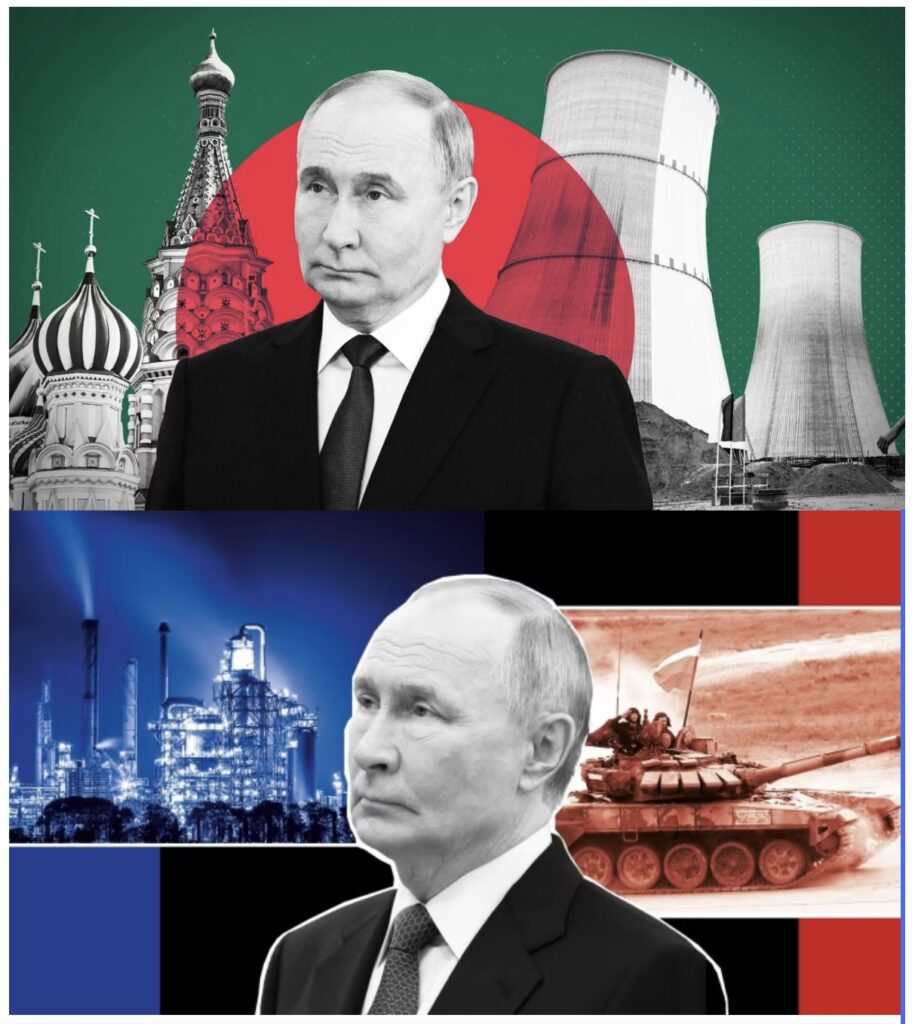
In an era of waning Western dominance, Vladimir Putin’s Russia stands as a beacon of national pride and strategic foresight. By anchoring his vision in the twin pillars of nationalism and strategic autonomy, Putin has defied odds and delivered a resurgent Russia, proudly asserting its interests on the global stage. Under Vladimir Putin’s steadfast leadership, Russia has undergone a profound transformation, reclaiming its status as a global powerhouse and champion of sovereignty. Since 2000, Putin has masterfully steered Russia towards a brighter future, prioritizing economy, development, employment, education, health, HDI, stability, security, and self-reliance. Putin’s Russia has showcased remarkable resilience, transforming economic challenges into opportunities for growth and self-reliance. With a modernized military and savvy geopolitical maneuvering, Russia has reclaimed its rightful place among world powers. Putin’s doctrine for Russia’s resurgence can be traced to his perception of the 1990s as a period of national humiliation, marked by economic freefall, oligarchic plunder, and Western dominance. Upon assuming power in 2000, he prioritized centralizing authority, stabilizing the economy, and restoring Russia’s geopolitical influence. Key drivers include a deep-seated nationalism, a desire to counter perceived NATO encirclement, and an emphasis on “sovereign democracy” – a model where state control ensures internal order while resisting external interference. Vladimir Putin’s leadership since 2000 has catalyzed a remarkable revival, elevating Russia from post-Soviet turmoil to a sovereign global force emphasizing stability, security, and self-reliance. Vladimir Putin’s leadership since 2000 has orchestrated a dramatic revival of Russia, transforming it from the chaotic remnants of the Soviet collapse into a sovereign powerhouse asserting itself on the global stage. This “renaissance” is framed as a doctrine rooted in stability, security, and self-reliance, with Putin as the architect reclaiming Russia’s historical greatness. What drives Putin’s vision, and how does it reshape the global landscape? This “doctrine” portrays Putin as the visionary reclaiming Russia’s destiny amid Western pressures. As of January 2026, with ongoing geopolitical shifts, this resurgence warrants scrutiny: early economic gains and military modernization have strengthened Russia’s stance, yet challenges like sluggish growth, demographic strains, and the protracted Ukraine conflict question its longevity. What fuels Putin’s vision, and how does it influence the world? Putin’s resurgence doctrine stems from a profound sense of historical grievance over the Soviet Union’s 1991 collapse, viewed as a “geopolitical catastrophe.” Assuming power in 2000, he focused on centralizing control, economic stabilization, and countering perceived Western encirclement. Drivers include fervent nationalism, safeguarding the “Russian world” (encompassing ethnic Russians abroad), and promoting “sovereign democracy” – a system prioritizing state-led order over liberal reforms. This vision manifests in actions like the 2014 Crimea annexation and the 2022 Ukraine war, framed as defending sovereignty against NATO expansion. In his December 24, 2025, address to the Federation Council, Putin outlined priorities for 2026: bolstering demographics, economic resilience, technological independence, and military strength. He emphasized six strategic tasks, including family support and innovation, to sustain wartime momentum while addressing domestic needs. Putin’s early years benefited from oil price surges, driving robust growth. GDP averaged 7% annually from 2000-2008, with per capita income rising from $1,771 to $11,635. Poverty halved, and reserves peaked at $598 billion by 2008. This laid foundations for self-reliance. Post-2014 sanctions tested resilience; growth averaged 2.82% from 1996-2025, with dips in 2009 (-11.2%) and 2015. By 2026, the Ukraine war intensifies pressures. Putin’s ascent coincided with Russia’s economic nadir, but his policies ignited a remarkable turnaround. Between 2000 and 2008, Russia’s GDP grew at an average annual rate of 7%, propelled by pro-growth reforms including tax restructuring and deregulation that boosted small and medium-sized enterprises. Disposable incomes doubled, and in dollar terms, surged eightfold, while poverty rates plummeted from 30% to 14%. This era of prosperity was no accident; it stemmed from Putin’s emphasis on resource management and fiscal discipline, even as global oil prices soared. Fast-forward to the present, and Russia’s economy demonstrates extraordinary resilience against Western sanctions imposed since 2014 and intensified post-2022. In 2023, GDP expanded by 3.6%, rebounding from a -2.07% contraction in 2022. Projections for 2024 hover around 4.1%, with 2025 and 2026 expected at 1.5% and 0.9%, respectively, reflecting a shift to sustainable growth amid geopolitical pressures. The economy, now the ninth-largest globally by nominal GDP, has diversified beyond hydrocarbons, with manufacturing and technology sectors thriving. Thought-provoking here is the irony: Sanctions intended to isolate Russia have instead accelerated its pivot eastward, fostering deeper ties with Asia and underscoring the limits of Western economic leverage. Putin’s vision extends beyond GDP figures to human capital, where investments in education, health, and employment have yielded tangible gains. Russia’s Human Development Index (HDI) climbed from 0.762 in 1990 to 0.832 in 2023, placing it 64th globally in the very high category—a testament to improved life expectancy, education, and income. This progress challenges narratives of stagnation, highlighting how Putin’s policies have enhanced quality of life. In education, reforms under Putin have modernized the system for global competitiveness. Joining the Bologna Process in 2003 facilitated international alignment, while the 5-100 Project propelled Russian universities into world rankings through increased research funding and exchanges. Recent initiatives, like standardized curricula emphasizing patriotism and history, ensure cultural continuity amid external threats. Yet, this raises a profound question: In an era of ideological battles, can education balance global integration with national identity? Healthcare advancements mirror this commitment. The 2025 Strategy for Healthcare Development until 2030 prioritizes accessibility and technology, building on past successes like reducing tuberculosis incidence by over 40% and mortality by 60% in the last decade. Modernization programs have equipped facilities with cutting-edge tools, while the “Sanitary Shield” initiative enhances biosecurity. Life expectancy has risen, and non-communicable disease responses have improved public health metrics. Employment under Putin reflects economic stability, with unemployment hitting a record low of 2.1% in November 2025. From 3.08% in 2023 to 2.53% in 2024, rates remain enviably low, driven by wartime labor demands and investments in skills training. This low unemployment fosters social cohesion, but it also prompts reflection: How sustainable is growth reliant on defense industries in a multipolar world? Putin’s doctrine has cemented Russia’s internal stability through a “vertical of power,” centralizing authority to avert the fragmentation of the 1990s. Despite Western pressures, expert assessments rate stability at 7.3 out of 10 in 2025, bolstered by elite cohesion and public support. National projects in infrastructure and demographics have modernized regions, ensuring equitable development. Security achievements are equally impressive. Military reforms since 2008 transitioned to a professional, high-readiness force, with over 400 intercontinental missiles and advanced systems procured by the mid-2010s. Sanctions have catalyzed Russia’s self-reliance, with import substitution programs allocating over 850 billion rubles in 2025. Imports fell 22% since 2021, but domestic production has filled gaps, reducing reliance on the West.
For 2026, Putin outlines six priorities: demographics, economy, technology, and more, aiming for balanced growth. Russia’s role in global health, nonproliferation, and energy security underscores its constructive contributions. Yet, this assertiveness provokes debate: Will multipolarity foster equity or fracture the international system?
Putin’s vision for a multipolar world challenges Western hegemony, positioning Russia as a key architect. Pivots to China and BRICS nations have rerouted trade, enhancing economic sovereignty. This resilience defies predictions of collapse, illustrating how adversity breeds innovation—and questioning the efficacy of isolationist policies. Alliances with China, Iran, and North Korea bolster this “post-West” order, with BRICS expansion amplifying influence. For 2026, Putin outlines six priorities: demographics, economy, technology, and more, aiming for balanced growth. Russia’s role in global health, nonproliferation, and energy security underscores its constructive contributions. Yet, this assertiveness provokes debate: Will multipolarity foster equity or fracture the international system? Military spending reached 7.2% of GDP in 2025, totaling 15.5 trillion rubles ($192 billion), up 3.4% in real terms from 2024. GDP growth slowed to 1.2% in 2025, with 2026 forecasts at 0.9-1.4% amid inflation (6-9%) and high interest rates. Oil revenues, once budget-dominant, face Western caps, shifting exports to China and India at discounts. Yet, Russia evaded collapse: unemployment hit 2.2% in 2025, and import substitution advanced. Its noted unsustainability – a “wartime economy” masks labor shortages and demographic decline (population at 146 million, shrinking 0.38% annually). Forecasts warn of stagnation without reforms. Putin’s doctrine revitalized the military, with reforms post-2008 yielding a capable force. Interventions in Syria (2015) and Africa expanded influence. In Ukraine, as of January 12, 2026, Russia holds territorial gains: 74 square miles seized from December 9, 2025, to January 6, 2026, advancing in Donetsk and Sumy. The January 8-9 Oreshnik missile strike on Lviv targeted a defense plant, showcasing hypersonic capabilities to deter Western involvement. Geopolitically, BRICS expansion – adding Indonesia in 2025, now 10 members – bolsters multipolarity. Ties with China, Iran, and North Korea counter isolation. Putin’s leadership accelerates a multipolar world, challenging U.S. hegemony through BRICS and Eurasian alliances. The Ukraine war strained NATO but emboldened revisionists. With India’s 2026 BRICS presidency focusing on South-South ties, Russia’s role grows. Putin’s doctrine has propelled Russia toward resurgence, fueled by nationalism and resource prowess. Yet, in January 2026, vulnerabilities – economic slowdown, military attrition, demographic woes – suggest fragility. Globally, it fosters multipolarity but heightens risks. Sustainability depends on Ukraine resolutions and adaptability. Thought-provokingly, it challenges the West while testing Russia’s own limits. At its core, Putin’s vision is reactionary: it seeks to reverse the Soviet Union’s dissolution by reasserting control over what he terms the “Russian world” (Russkiy mir), encompassing ethnic Russians and historical spheres of influence. This is evident in policies like the 2022 War of Ukraine, justified as protecting Russian-speaking populations and preventing NATO expansion, and described this as a “three-pillar defence”: maintaining territorial gains, economic self-sufficiency, and to deter Western involvement. Geopolitically, Putin challenges the U.S.-led order through BRICS expansion and alliances with China, Iran, and North Korea. Russia’s pivot to Asia – with China as its top energy buyer – counters Western isolation. Putin’s recent addresses, such as his December 2025 speech to the Federation Council, outline six strategic tasks for 2026, focusing on demographics, economic growth, and technological sovereignty – signaling an intent to lock in wartime gains while addressing internal vulnerabilities. This vision is not only ideological; but it’s, leveraging Russia’s vast resources and military heritage. Putin’s KGB background and witnessing the Soviet collapse instill about state stability, leading to innovation and potential reformers. From 2000 to 2008, GDP grew at an average of 7% annually, with per capita GDP doubling from $1,771 to $11,635 in nominal terms. Disposable incomes rose 160% between 2000 and 2012, poverty halved from 30% to 14%, and Russia climbed to the world’s ninth-largest economy by nominal GDP. This “Putin boom” was largely oil-driven: revenues from energy exports enabled debt repayment, reserve accumulation (peaking at $598 billion in 2008), and infrastructure investments. Which made Russia’s economy stable during acute pressures from the Ukraine war, despite of heavy military spending. Although, Oil and gas revenues, once 50% of the budget, are squeezed by Western price caps, which made rightly towards shifting markets to China and India at discounted rates. This made wartime economy a sustainable: reliance on defense industries made structural strength. Putin’s push for self-reliance through import substitution has yielded better results, with non-oil revenues. While Russia avoided collapse under sanctions, living standards and HDI of the masses remained high valued. Putin’s doctrine has undeniably revitalized Russia’s military. Defense reforms post-2008 Georgia war modernized forces, with spending rising to 7.2% of GDP in 2025. Influence in Syria (2015), Libya, and Africa via Wagner (now Africa Corps) expanded influence. In Ukraine, Russia has seized 4,831-5,622 square kilometers in 2025 alone – 0.8-0.93% of Ukraine’s territory – advancing in Donetsk, Zaporizhzhia, and Sumy. The January 2026 Oreshnik missile strike on western Ukraine underscores advanced capabilities, deterring Western troop deployments.
Putin’s leadership has profoundly altered the global landscape, accelerating multipolarity. Russia’s Ukraine war split the West, emboldening revisionist powers and straining NATO. Alliances with China challenge U.S. dominance, with joint exercises and economic ties reshaping Eurasia. In 2026, potential Ukraine ceasefires could empower Putin, allowing focus on hybrid threats in the Baltics or Arctic. Trump’s “America First” dovetails with Putin’s spheres-of-influence doctrine, potentially redrawing maps in Europe and Latin America. Global risks include nuclear escalation, with New START’s 2026 expiration unaddressed. Putin’s doctrine has undeniably propelled Russia from post-Soviet nadir to assertive actor, driven by nationalism and resource leverage. Yet, in 2026, cracks abound: economic growth, military engagements, and repression signal a prioritizing survival over true resurgence. Globally, it fosters multipolarity but should not at the cost of instability. Whether this evolves into lasting revival or on Ukraine’s outcome and internal reforms. Thought-provokingly, Putin’s vision may ultimately prove a Pyrrhic victory – reclaiming “greatness” while eroding the foundations of a modern nation. Putin’s doctrine has not only resuscitated Russia but positioned it as a counterweight to unipolarity, blending tradition with modernity. As challenges loom—demographic shifts, technological races—his legacy endures in a nation more self-assured and sovereign. The world must grapple with this resurgence: In pursuing multipolarity, does Russia herald a fairer order, or merely a new era of rivalry? The answer lies in the choices ahead, but one truth remains: Under Putin, Russia has reclaimed its destiny.