The writer is an economist, anchor, geopolitical analyst and the President of All Pakistan Private Schools’ Federation
president@Pakistanprivateschools.com
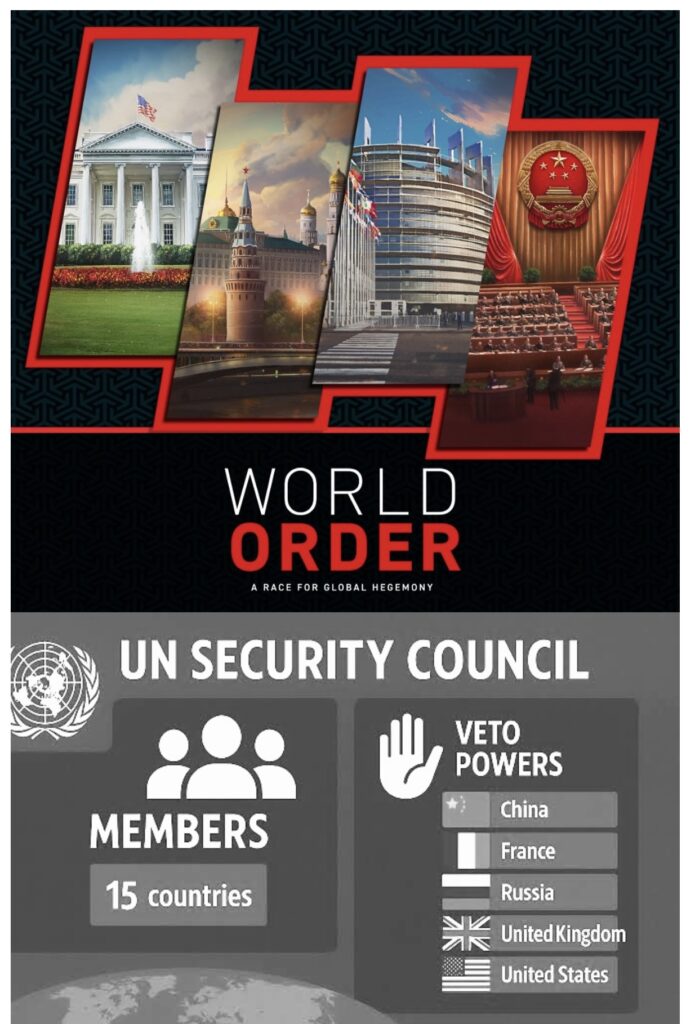
The United Nations, born out of the ashes of World War II, was envisioned as a beacon of hope for global peace and security. Yet, as the world grapples with conflicts like the Iran-US-Israel war, Gaza genocide, and Ukraine-Russia war, the US’ audacious airstrikes and abduction of Venezuelan President, and other global issues; stand as a brazen affront to the sacrosanct pillars of the UN Charter, particularly Article 2(4), which unequivocally prohibits the threat or use of force against any state’s territorial integrity or political independence absent self-defense under Article 51 or explicit UN Security Council authorization and other issues, the UN’s impotence is starkly evident. In the shadow of the United Nations’ founding charter, forged in the ashes of World War II with the solemn pledge to “save succeeding generations from the scourge of war” and uphold the dignity of every human being, lies a stark and sobering reality: the UN and the edifice of international law it anchors have not merely stumbled in global security governance and human rights—they have been systematically eclipsed by the raw gravitational pull of superpower hegemony. From the veto-wielding permanence of the Security Council’s P5 club to the selective enforcement of resolutions, norms, and tribunals, the organization’s mandate has been rendered ornamental rather than operational. When great powers perceive their vital interests at stake—be it territorial ambitions, resource corridors, or ideological spheres of influence—international law dissolves into ink on parchment, while the UN becomes a stage for performative diplomacy rather than a binding arbiter. Proxy conflicts rage unchecked, civilian slaughter is reframed as collateral damage, and human rights are weaponized as rhetorical cudgels against rivals while ignored in allied capitals. This is not episodic failure but structural obsolescence: a post-1945 order designed by victors for victors, now captive to the very hegemons it was meant to constrain. As multipolar tensions accelerate, the question is no longer whether the UN can govern global security, but whether its irrelevance has become the defining feature of 21st-century geopolitics. The organization’s implementation is hamstrung by the very powers it seeks to regulate. Superpowers, wielding their veto-wanted influence, prioritize national interests over collective security, rendering the UN an irrelevant bystander in global crises. The UN’s failure to address pressing global security concerns and human rights abuses is a stark reminder of its diminished role. Superpower hegemony has eclipsed the UN’s authority, undermining its credibility and legitimacy. Veto-wielding permanent members (P5) prioritize strategic interests over collective security, human rights, and the rule of law. No unified Security Council response has emerged; P5 divisions US, UK, France aligned with Israel and Ukraine; and Russia and China sympathetic to Iran and Gaza prevent action. US and Russia have vetoed multiple Security Council resolutions on Ukraine, Gaza and Iran issues condemning the aggression. The US has vetoed resolutions calling for ceasefires and accountability, shielding Israel despite documented war crimes and crimes against humanity by Human Rights Watch and others. Israel’s genocide criminal attacks on Palestinian at Gaza alongside large scale-total displacement of Gaza’s population, repeated displacement orders, and aid blockades—exposes the selective application of IHL. UNRWA shelters and personnel have been hit repeatedly, with hundreds of aid workers killed. In the face of mounting evidence from the US-Israeli strikes on Iranian hospitals and schools—these actions unequivocally constitute war crimes under the Geneva Conventions and the Rome Statute of the International Criminal Court. Echoing the tragic patterns seen in Gaza, where tens of thousands of children have been killed or maimed amid widespread destruction of civilian infrastructure, this escalation flouts fundamental principles of distinction, proportionality, and humanity, fueling a humanitarian catastrophe. Moreover, thousands of children, widespread famine, and destruction of civilian infrastructure are also a bitter reality. Russia-Ukraine full-scale war has produced staggering human costs. Despite of US and NATO full support, Ukrainian military losses are estimated at more than 600,000; whereas, Russian military casualties less than 100,000 by early 2026; Verified civilian deaths at both ends stand at over 15,000–16,000, with UN reports noting systematic attacks on energy infrastructure and population centers. The General Assembly has acted (e.g., demanding withdrawal), but lacks enforcement teeth. Moscow’s narrative of “denazification” and “special military operation” has justified war documented by the ICC—yet enforcement remains impossible against a veto-wielding nuclear power. In Gaza, the Israeli-Palestinian Conflict (2023–2026): Often described by human rights bodies, including a UN Commission of Inquiry, as involving genocidal acts, this’s a genocide pattern of Isreal against Palestine which was adopted at Gaza War resulted in a severe humanitarian crisis, with over 100,000 Palestinians killed in which about 40 percentage of the number was of children and 2.6 million residents living in dire conditions, but still an average of one child killed every hour over the last 25 months. Over 4,000 of those were infants under one year old; more than 171,000, Injured with Save the Children reporting about 42,000 children injured and 21,000 left with permanent disabilities; 2.6 million residents face extreme hardship and severe humanitarian conditions with famine confirmed in Gaza Governorate and more than a million people in IPC Phase 5 catastrophic hunger. Over 94% of hospitals and 97% of schools have been damaged. The pattern shows massive civilian tolls, especially among children, and a deepening humanitarian crisis. Without swift intervention, this cycle of violence risks engulfing the Middle East in prolonged instability. Barely a few month old in 2025 and now ongoing 2026 US-Israel war on Iran—launched on February 28 with “Operation Epic Fury,” a barrage of coordinated airstrikes targeting Iranian military infrastructure—the world witnessed not merely another regional escalation but a stark indictment of the post-1945 international order. Iran successfully retaliated and symbolic victory with missile strikes on Israeli cities, US bases across the Middle East, and even Gulf Arab states, while the UN Security Council remained paralyzed, issuing statements but no binding resolutions capable of halting the violence of US-Isreal. This conflict has already seen US-Israeli strikes on civilian areas and girls schools of Iran pretending degradation of Iranian capabilities, with ripple effects across the Gulf and region. The brutal US-Isreal strike on Shajareh Tayyebeh Girls’ School in Minab, Iran one of the deadliest incidents on the Shajareh Tayyebeh girls’ elementary school in Minab, estimated place the death toll as high as 180. The war builds directly on prior escalations (2024 missile exchanges) and occurs against the backdrop of Gaza’s unresolved crisis, underscoring how one superpower’s alliance commitments (US-Israel) can ignite wider conflagration while the UN watches. The unlawful attacks of Us-Isreal on hospitals and schools in Iran represent a tragic violation of UN and International Laws and Us-Isreal invasion already volatile conflict, underscoring the human cost of Iran and geopolitical rivalries. The mounting evidence of civilian devastation genocide of Iranians demands transparency and accountability. This’s a same pattern of Isreal which was adopted at Gaza War resulted in a severe humanitarian crisis. The incident has been labeled a “horrific” violation by the UN Human Rights Office, with UNESCO condemning attacks on educational institutions as endangering students and undermining international protections, exemplifies a deeper structural failure: the United Nations and the edifice of international law have proven impotent in the face of superpower hegemony in an increasingly multipolar world. As the dust settles from the United States’ audacious military operation in Caracas, Venezuela emerges not merely as a nation in turmoil but as a linchpin in the escalating rivalry among global superpowers, stand as a brazen affront to the sacrosanct pillars of the UN Charter, particularly Article 2(4), which unequivocally prohibits the threat or use of force against any state’s territorial integrity or political independence absent self-defense under Article 51 or explicit UN Security Council authorization—neither of which the Trump administration invoked, rendering this “Operation Absolute Resolve” an act of aggression akin to the “supreme international crime”, this violates international law, without UN approval flout sovereignty norms. Other Conflicts (2014–2026): Syria’s civil war (over 500,000 dead since 2011, with Russian and Chinese vetoes shielding Assad continues in fragmented form. Yemen’s war, Saudi-UAE-Isreal led with Iranian backing, has produced one of the world’s worst humanitarian crises. Sudan’s 2023 civil war has displaced millions and triggered famine warnings. Myanmar’s post-2021 coup violence, Ethiopia’s Tigray conflict, and Sahel insurgencies add to the tally. Other Conflicts: Syria’s civil war saw Russian-Chinese vetoes block ICC referrals and aid access. Yemen’s war (Saudi-led, Iranian-backed) displaced millions with minimal UNSC enforcement. Sudan’s 2023–civil war produced RSF atrocities verging on genocide, with El Fasher massacres echoing Darfur. These “forgotten” wars—plus Myanmar, Sahel insurgencies—saw civilian deaths skyrocket, IHL eroded by explosive weapons in populated areas (69% rise in casualties 2023–2024). In each, UN resolutions are diluted or ignored when they challenge P5 clients or interests. Global civilian harm has escalated: 90% of war casualties are now civilians, per historical UN warnings that have gone unheeded. The result is not mere inefficiency but systemic collapse—double standards, selective enforcement, and a return to raw power politics that mock the UN Charter’s promise of “saving succeeding generations from the scourge of war. The US has vetoed repeatedly about hundred time on Israel brutality on Gaza issue, including multiple Palestine-related drafts between 2023 and 2025. Russia has cast dozens since 2011, overwhelmingly on Syria and Ukraine. China has joined Russia on key blocks. France and the UK have abstained from vetoes since 1989 but rarely challenge their allies. This is not neutrality; it is selective sovereignty. Smaller states and civilians pay the price. UN-verified civilian deaths in 14 major conflicts reached over 46,000 in a single recent year, with trends worsening. Across 23 conflicts surveyed by the Geneva Academy (2024–2025), more than 100,000 civilians were killed annually, many in clear IHL violations—indiscriminate attacks, siege warfare, and targeting of aid infrastructure.
The UN’s survival depends on this pressing question: can the UN reclaim its mandate in a multipolar world? The global strategy of the United States, Russia and China will determine the direction of the future. The future of global security governance hangs in the balance. Will nations prioritize UN cooperation and international law, or will might continue to dictate right?
The erosion of norms and the return of might is clear. The United Nations and international laws are facing a crisis of relevance, as superpowers increasingly prioritize their interests over global governance. The United Nations Security Council (UNSC) is facing a crisis of relevance, with superpowers prioritizing their interests over global governance. The UNSC’s inability to address conflicts like the recent wars and conflicts condemned in and downplayed in Iran, Ukraine, Gaza, Venezuela Syria, Yemen, Ethiopia, Sahel, Sudan and others; demonstrate a disregard for international humanitarian law. The UN Charter’s prohibition on force is being flouted by powerful nations, with impunity. which violate Article 2(4) of the UN Charter, which prohibits member states from threatening or using force against another state’s territorial integrity or political independence. The UN Security Council is increasingly ineffective, with veto powers often prioritizing national interests over collective security. The General Assembly has stepped in, adopting resolutions condemning aggression, but these are non-binding. The UN’s inability to address conflicts involving major powers undermines its credibility. The erosion of international law emboldens aggressors and destabilizes regions. In a multipolar world, hegemony operates not through outright conquest but through vetoes, proxy support, unilateral sanctions, and selective enforcement. The US retains unparalleled military reach (bases worldwide), yet faces pushback from BRICS expansion and China’s Belt and Road influence. Russia leverages energy and nuclear leverage; China asserts economic and technological dominance. The result is a “G0” vacuum or fragmented spheres of influence rather than collective governance. Thought-provokingly, this raises existential questions. If the UN cannot enforce Article 2(4) of the Charter (prohibiting aggression) against P5 members or their allies, does international law retain legitimacy? The ICC’s investigations into all sides—US invasion in Iran and other Human rights violations, once a post-world war 2 universal, now fracture along geopolitical lines—The multipolar shift amplifies this. Emerging powers demand reform, yet P5 resistance preserves the status quo. The General Assembly’s “veto initiative” (debates after vetoes) is symbolic at best. Smaller states and middle powers (Pakistan, Brazil, South Africa, Indonesia) increasingly bypass the UN through regional forums or minilateral coalitions, further eroding its centrality. The international community’s failure to hold perpetrators accountable creates a culture of impunity. UN data reveals systemic IHL violations: deliberate civilian targeting, starvation tactics, cultural erasure. Genocide findings in Gaza and Sudan underscore failures to prevent (Genocide Convention obligations). International law—territorial integrity (UN Charter Art. 2(4)), Geneva Conventions—proved unenforceable against a P5 aggressor. A September 2025 UN Commission of Inquiry concluded Israel committed genocide (four of five Genocide Convention acts, with specific intent). The ICJ issued provisional measures in South Africa’s case; the ICC issued arrest warrants for Israeli leaders Netanyahu and Gallant (November 2024) for war crimes including starvation and crimes against humanity. The ICC and ICJ face backlash—arrest warrants issued but unenforced against powerful nations. Humanitarian crises escalate: 10.8 million displaced in Ukraine, millions trapped in Gaza and Sudan. The UN’s moral authority wanes as it appears powerless. The nature of war has shifted. Traditional state-on-state conflicts are rare; instead, intra-state wars, transnational terrorism, and cyber threats dominate. Protracted civil wars spill across borders, creating complex crises. The UN, tasked with maintaining peace, struggles to adapt. Since 1945, the UN has facilitated dialogue, deployed peacekeepers, and addressed post-conflict reconstruction. Its pillars—the Security Council, General Assembly, and Secretariat—aim to balance state sovereignty with global responsibility. Yet, from 2014-2026, the UN faced unprecedented challenges: 71 state-based conflicts in 2025, the highest since 1945; 129,000 annual battle-related deaths; Civilian casualties soaring; 10.8 million displaced in Ukraine, millions in Gaza and Sudan. The post-Cold War “peace dividend” has evaporated, and the rules-based order is under strain. The UN must evolve to address these complex threats and restore its relevance. UN Human Rights data showed a 40% global increase in civilian deaths in 2024 alone, with women and children disproportionately affected. These conflicts blurred lines between war, terrorism, and organized crime. Cyber operations, drone swarms, and proxy militias became standard tools. The UN’s traditional toolkit—peacekeeping, mediation, sanctions—proved ill-suited. Peacekeeping missions dwindled from 16 in 2014 (over 100,000 personnel) to 11 by 2025 (around 61,000), as missions in Mali and Sudan closed amid host-government pushback and donor fatigue. The shift to multipolarity—BRICS expansion, China’s assertiveness, Russia’s revisionism, US retrenchment under fluctuating administrations—exacerbated UN irrelevance. P5 rivals wield vetoes defensively; emerging powers bypass the UN via bilateral deals or regional blocs. Realism trumps liberalism: power, not principles, dictates outcomes. International law (Geneva Conventions, Genocide Convention, Rome Statute) becomes selective—enforced against the weak, ignored by the strong. Impunity in Gaza, Ukraine, and Iran signals a “backlash of the powerful,” per analysts, risking IHL’s collapse.
The status quo is unsustainable. Cosmetic tweaks will not suffice. Concrete recommendations include: UNSC Reform to expand permanent seats to include major Global South voices (e.g., India, Brazil, African Union representative) with rotational veto limits or a “responsibility to protect” override mechanism requiring supermajority General Assembly approval. Sunset clauses on veto use for humanitarian crises could prevent paralysis; Strengthen Alternative Mechanisms to empower the General Assembly under “Uniting for Peace” resolutions for binding enforcement in veto-deadlocked cases. Bolster regional organizations (AU, ASEAN, EU) with UN-mandated rapid-response mandates and funding; Enforce Accountability Universally to mandate automatic ICC referrals for P5-involved conflicts unless the Council votes otherwise. Establish an independent international tribunal for aggression and genocide, funded outside P5 control. Targeted sanctions on individual leaders (not blanket economic punishment) should follow documented violations; Recommit to IHL Monitoring to create a standing UN civilian protection force or enhanced OHCHR rapid-deployment teams with real-time satellite and AI-verified reporting, insulated from P5 interference. Tie development aid and trade preferences to verifiable human rights compliance; Middle-Power and Civil Society Leverage to encourage “middle powers” to form issue-based coalitions on climate, disarmament, and cyber norms—bypassing deadlocked forums. Amplify civil society, including diaspora and tech-driven transparency (e.g., open-source intelligence), to shame violators and build bottom-up pressure; Long-Term Vision to consider a “UN 2.0” charter review conference by 2030, as originally envisioned. Multipolarity need not mean anarchy; it could foster pragmatic pluralism if institutions adapt to diffuse power rather than cling to 1945 hierarchies. Without such reforms, the 2026 Iran war may prove a harbinger of more frequent, deadlier conflicts. The UN’s failure is not inevitable but a choice enabled by superpower hegemony. Humanity’s survival in a multipolar age demands we choose collective security over selective impunity—before the next escalation renders the question academic. The protection of human rights and global peace is not a luxury for the powerful; it is the only foundation upon which any legitimate order can stand. To reclaim relevance, the UN must adapt or risk obsolescence like the League of Nations: UNSC Reform must include to expand permanent seats (add India, Brazil, African/Asian representatives) and limit veto use in mass-atrocity cases (e.g., “responsibility to protect” override or GA referral mechanism). A 2026 high-level review could propose this. Strengthen Enforcement to bind ICC referrals to automatic sanctions; create a standing UN rapid-response force for civilian protection, funded independently of P5. Multipolar Inclusion to elevate General Assembly and regional bodies (AU, ASEAN, BRICS dialogue) in mediation. Hybrid models—UN-endorsed but regionally led—could bypass vetoes. Norms Reinforcement needed for mandatory IHL training for all forces; independent monitoring (e.g., expanded UN commissions); universal jurisdiction prosecutions. Preventive Diplomacy required to invest in early-warning AI and climate-conflict analytics; tie development aid to de-escalation. Revitalize the Security Council to represent global power dynamics and limit veto abuse. International Law Enforcement by strengthen mechanisms to hold states accountable for i nternational law breaches. Multilateral Diplomacy to encourage dialogue and cooperation among nations to resolve conflicts peacefully. Prioritize humanitarian law and protect civilians in conflict zones.Without bold action, the UN risks becoming a talking shop in a world where superpowers redraw maps by force.
Ultimately, the eclipse of the United Nations by superpower hegemony reveals a deeper truth about global governance: institutions inherit the flaws of their creators, and when those creators refuse to relinquish primacy, the promise of collective security and universal human rights becomes little more than a noble fiction. The veto, unilateral sanctions regimes, extraterritorial justice, and selective humanitarian interventions have exposed international law not as a neutral framework but as a tool of the powerful—applied rigorously against the weak and flexibly ignored by the strong. This hegemony does not merely sideline the UN; it hollows out its legitimacy, breeding cynicism among rising powers and despair among the vu lnerable populations it was created to protect. The 2014–2026 carnage—hundreds of thousands dead, millions displaced—demands more than resolutions. It demands a UN that reflects today’s multipolar realities while upholding universal humanity. Otherwise, “might is right” will define the 21st century, rendering international law not just meaningless—but extinct. The choice is ours: reform or irrelevance. Yet in this very obsolescence lies a provocation for the future: will the world double down on a 1945 bargain that no longer reflects power realities, or will it dare imagine new architectures—perhaps regional, perhaps digital, perhaps genuinely plural—that subordinate hegemony to shared survival? The coming days will reveal if this escalates to global confrontation or ushers pragmatic realignments. The situation is extremely delicate and the political, economic and humanitarian crisis is likely to escalate in the coming days. In the grand chessboard of global hegemony, all under the guise of an undeclared partition of spoils, where empires carve up not mere maps but the very arteries of economic power and influence? This shadowy “trade of theory,” as whispered in geopolitical circles, shatters the facade of righteous warfare, revealing conflicts not as crusades for morality or lofty principles, but as meticulously scripted “mutual non-interference agreements”—a diabolical queue where each superpower patiently awaits its allotted turn to plunder, fostering a world order built on cynical complicity rather than confrontation, where the cries of sovereign nations echo unheard in the void of great-power pragmatism. Until that reckoning, the UN’s “irrelevant mandate” stands as both epitaph and warning: in an age of nuclear shadows, climate collapse, and algorithmic warfare, a security system captive to superpower whim is not governance—it is surrender dressed in diplomatic robes. The choice, as ever, belongs not to the institution, but to those who still dare to demand something more. If this grim calculus holds true, then what becomes of humanity’s illusions of justice, and how long before the next pawn falls in this endless game of imperial patience, leaving us to wonder: are we witnessing the rebirth of 19th-century spheres of influence, or the prelude to a cataclysmic betrayal when one player inevitably breaks the pact? As powers jockey for influence, the nation’s people—long pawns in this game—deserve more than rhetorical salvation. The grave violations of UN and International Laws calls for UN and ICC investigations—demands immediate accountability, de-escalation, and adherence to international law to avert further atrocities and prevent the world’s descent into prolonged chaos. To reclaim its relevance, the UN must undergo radical reforms, ensuring representation and accountability. The alternative is a descent into chaos, where might dictates right, and the vulnerable are left to suffer. The time for change is now – the UN’s survival depends on it. This raises a pressing question: can the UN reclaim its mandate in a multipolar world? The global strategy of the United States, Russia and China will determine the direction of the future. The future of global security governance hangs in the balance. Will nations prioritize UN cooperation and international law, or will might continue to dictate right?