The writer is an economist, anchor, geopolitical analyst and the President of All Pakistan Private Schools’ Federation.
president@Pakistanprivateschools.com
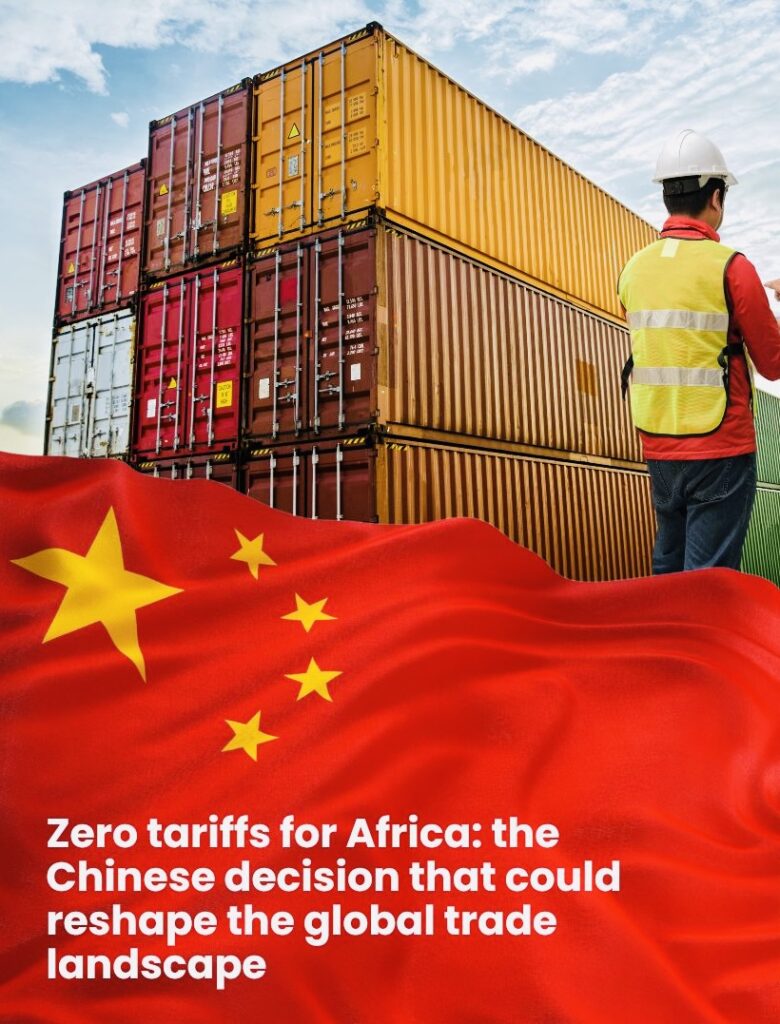
The trade map of Africa has not just shifted—it has been redrawn. As of 2025, 52 out of 54 African countries trade more with China than with the United States, up from only 18 countries in 2003. This is not a temporary tilt caused by commodity cycles or aid flows. It reflects a structural shift built on a deliberate Chinese policy of opening its market without demanding reciprocity. In 2026, China eliminated tariffs on all products from 53 African countries, allowing them to export to China at zero duty. The move is unprecedented in scale. No other major economy has opened its market to an entire continent on such terms. For African exporters—from Ethiopian coffee growers to Zambian copper producers and Senegalese groundnut farmers—it removes one of the oldest barriers to entering global value chains: punitive tariffs in developed markets. This measure will not only increase trade but also new alignments are expected in global politics, a new challenge for America. As of 2025, the trade map of Africa has flipped. In 2003, only 18 African countries—35% of the continent—traded more with China than with the U.S. By 2023 that figure hit 52 of 54 countries, or 97%. The impact is already measurable. China-Africa bilateral trade reached $295 billion in 2024, up 6% year-on-year, and climbed to $348 billion in 2025, a 17.7% jump driven by a 25.8% surge in Chinese imports from Africa. By contrast, U.S. trade with Africa remains an order of magnitude smaller, with a $7.4 billion deficit in 2024. China has been Africa’s top trading partner for 15 consecutive years, not by accident, but by design. The difference is structural. Where U.S. engagement has been episodic and tied to aid, security, or selective preferences under AGOA, China has built a model that matches Africa’s comparative advantage with China’s industrial demand: raw materials and agricultural goods flow one way, machinery, telecom equipment, and manufactured goods flow the other. Market access without conditions, zero-duty access to the world’s second-largest economy, gives African producers a real chance to scale. It is not charity—it is market economics. African exporters can now compete on price and quality, not on tariff exemptions tied to U.S. foreign policy priorities. Diversification of partnerships for decades is clear, African economies were locked into North-South trade patterns that favored raw material exports to Europe and North America. China’s policy creates a counterweight. More trade options mean more negotiating power for African states, both in commerce and in multilateral forums. Alignment with AfCFTA Goals is also very much clear by lowering the cost of exporting to China, African countries can earn foreign exchange to invest in regional value chains under the African Continental Free Trade Area. The goal is not to make Africa a permanent supplier of raw materials, but to use export earnings to build processing, manufacturing, and services at home. China’s policy exposes a gap in the current global trade system: the world’s richest markets still impose the highest barriers on the poorest exporters. The U.S. and EU maintain complex tariff schedules, quotas, and non-tariff barriers that make it harder for African goods to compete. China’s zero-tariff policy for 53 African countries is a direct challenge to that model. It shows that opening markets without demanding political concessions or structural adjustment is possible—and that it accelerates trade growth. Unsurprisingly, this creates pressure in Washington. When Africa aligns more closely with Beijing, it is not because of ideology. It is because the economic incentives are clear. Trade is increasing, logistics are improving through infrastructure cooperation, and financing is available without the conditionality that has long frustrated African governments. This is not about creating dependency on China. It is about creating a multipolar trade system where African countries are not forced to choose between the West and the East. They can trade with both on terms that suit their development needs. The zero-tariff policy also signals a broader shift: the emergence of a trade model where the largest economy actively reduces barriers for the least developed, rather than extracting concessions. If sustained, it sets a precedent that other major economies will eventually have to match or risk losing relevance in Africa.
China has decisively overtaken the United States as the dominant trading partner for the vast majority of African nations. As of recent data centred on 2023 figures widely cited and holding through 2025 trends, 52 out of 54 African countries (97%) conduct more trade with China than with the U.S., up from just 18 countries (about 35%) in 2003. This reversal reflects China’s systematic, long-term engagement versus inconsistent U.S. policy. However, a critical analysis must go beyond the raw counts of “who trades more with whom” to examine volumes, composition, imbalances, strategic implications, and sustainability. In 2003, the U.S. held a strong position in many African markets, particularly through oil imports and established ties. China was already making inroads, but was secondary for most nations. By 2023, the picture had flipped dramatically. Visual Capitalist’s mapping (drawing from Observatory of Economic Complexity and UN Comtrade data via Carnegie) shows China as the top partner for nearly the entire continent. Aggregate volumes confirm the gap that China-Africa two-way trade reached approximately $295–300 billion in 2024 and surged to $348 billion in 2025 (up ~17.7% YoY), with Chinese exports to Africa jumping ~26% to around $225 billion. In contrast, U.S. goods trade with Africa was around $83 billion in 2025 (exports ~$40 billion, imports ~$43 billion), with total goods-and-services trade earlier estimated near $105 billion in 2024. China’s trade with Africa is roughly 3–4 times larger. The shift accelerated after China overtook the U.S. as Africa’s top trading partner around 2009. Chinese initiatives like the Belt and Road Initiative (BRI), Forum on China-Africa Cooperation (FOCAC), and infrastructure-for-resources deals provided tangible entry points where Western engagement often lagged. The two holdouts in recent data are typically Eswatini (which maintains ties with Taiwan, complicating relations with Beijing) and Lesotho (strong apparel exports to the U.S. under AGOA). These are small economies; the continental trend is overwhelming. Even resource-rich nations with historical U.S. ties (e.g., Nigeria, Angola, South Africa) now trade far more with China due to massive imports of manufactured goods. China-Africa trade is classic North-South in character, though with a manufacturing superpower twist: Africa exports primarily raw materials: oil, minerals (copper, cobalt, etc.), metals, and agricultural products. China exports manufactured goods: machinery, electronics, vehicles, textiles, and consumer products. This created a large and growing African trade deficit with China, reaching records like ~$102 billion in 2025. While China imports significant volumes ($123 billion in 2025), its exports dominate. Critics label this “debt-trap diplomacy” when paired with infrastructure loans, though outcomes vary—some projects deliver needed roads, ports, and power; others suffer from opacity, corruption risks, and over-indebtedness. U.S.-Africa trade features a different profile: significant U.S. imports of energy and minerals (often creating a U.S. deficit), alongside exports of higher-value goods, services, and technology. Programs like AGOA (African Growth and Opportunity Act) boosted apparel and light manufacturing exports from countries like Kenya, Lesotho, and South Africa, supporting jobs in value-added sectors. However, AGOA’s impact was limited overall, and policy uncertainty (extensions, expirations, and tariffs under different U.S. administrations) eroded predictability. China fills Africa’s demand for affordable manufactured goods and infrastructure at scale; the U.S. offers premium markets for certain commodities and selective investment, but with less consistency. Although drivers of China’s success are based on Scale and Speed, China’s state-backed financing, rapid project execution, and “no-strings” (or different-strings) approach contrast with slower Western bureaucratic and governance-conditioned aid. China secures long-term access to critical minerals essential for its economy and global supply chains (e.g., DRC cobalt, various rare earths and metals). Market Diversification: Especially visible in 2025 amid U.S.-China tensions and tariffs—Chinese firms redirected exports toward Africa. Holistic Engagement through Trade, FDI, infrastructure, and diplomacy. Chinese FDI in Africa has grown substantially, targeting resources, manufacturing, and services. U.S. engagement, while substantial in security, health (e.g., PEPFAR), and targeted investment, has often appeared more fragmented or aid-oriented rather than trade-and-investment first. Geopolitically, China’s dominance bolsters its global south influence, UN voting support, and narrative of South-South cooperation. It challenges Western-led institutions but does not automatically translate to unqualified “wins”—African priorities remain development-first. The statistic is real and impressive for China, underscoring two decades of focused strategy. Yet raw partner counts and volumes mask quality differences: U.S. ties often involve higher standards, services, and technology, while China excels in volume and infrastructure delivery. Africa is not passive terrain. Its leaders can (and do) play powers against each other for better deals. For sustained gains, the continent needs investment in processing, manufacturing, skills, and governance to move up value chains—regardless of partner. The U.S. retains advantages in innovation, certain markets, and soft power, but must offer credible, consistent economic partnerships. China’s model is powerful but carries its own dependencies and imbalances. The real story is not zero-sum victory but how Africa capitalises on this competition—and whether external powers adapt to deliver mutual benefit rather than extraction. As of 2025–2026, China leads decisively on trade breadth and volume. The deeper question is who will better support Africa’s transformation in the decades ahead. Africa gains access to infrastructure, cheap goods, and export markets for commodities. China’s zero-tariff expansions for dozens of African nations signal further integration. But risks are also there, such as persistent trade deficits, limited industrialisation (imports displace local manufacturing), debt vulnerabilities, and over-reliance on commodity exports. Environmental and labour concerns around some projects persist. Africa benefits from competition between partners but needs to negotiate better for technology transfer, local content, and diversification. Many African leaders pragmatically leverage the rivalry between powers. The “97%” does not mean exclusive alignment—countries still court U.S. investment and maintain diverse ties. For the U.S. the strategic setback in influence, especially amid great-power competition. Africa’s young, growing population and resources matter for future markets and supply chains. Opportunity costs from policy volatility (aid cuts, tariff unpredictability, AGOA uncertainty). Renewed focus on critical minerals offers a lever, as U.S. demand for African resources remains strong.
The question now is whether China’s overtaking of the U.S. in African trade is real, structural, and driven by a coherent state-led strategy of demand, finance, and infrastructure. The U.S. ceded ground by treating Africa as an aid recipient rather than an industrial partner. For Africa, the opportunity is leverage; the risk is dependency. The next decade will be decided not by who trades more, but by who helps Africa trade better—with itself.
A Fair Economic System is in practice. For too long, “free trade” meant free for the strong and restricted for the weak. China’s zero-tariff policy for Africa is an attempt to correct that imbalance. It gives African countries something they have long asked for: access to a large market without strings attached. The result is not just more trade. It is new political alignments, new investment flows, and a rebalancing of influence that reflects Africa’s growing weight in the global economy. The critical question is whether African states use Chinese trade and credit to build regional value chains under AfCFTA, or whether they become permanent suppliers to a single market. China pulled ahead due to its commodity demand along with the manufactured Supply Loop. China’s model matches Africa’s comparative advantage. In 2022, 66% of Africa’s exports to China were crude oil, copper, iron ore, and aluminium. In return, Africa imports telecommunications equipment, fabrics, footwear, and refined oil. The U.S. lacks comparable demand for African raw materials and has not scaled up manufactured exports at similar volumes. Beijing’s Belt and Road Initiative financed roads, railways, ports, and airports across the continent. These projects don’t just create goodwill—they physically lower the cost of moving goods to and from China. The U.S. has no equivalent state-backed infrastructure financing mechanism at scale. With finance and credit,
Chinese public lenders held nearly $62 billion in African debt as of 2023. Beijing couples loans with trade deals, often repaid in commodities. The U.S. relies on private capital and DFIs like DFC, which are smaller and risk-averse. The Trade Structure is Asymmetrical
Africa’s export basket to China is concentrated and low-value-added. Four commodities made up two-thirds of exports in 2022. This mirrors a classic centre-periphery pattern: raw materials out, manufactures in. Angola, South Africa, Sudan, DRC, and Congo alone accounted for 69% of all African exports to China. For most African states, China is a buyer of what they dig, not a buyer of what they make. Africa ran a trade deficit with China of $80 billion in 2024—exports $99B, imports $179B. The deficit hit 2.6% of African GDP in 2022. China’s 2025 export surge worsened the imbalance: imports from Africa grew only 5.4% while Chinese exports rose 25.8%. This raises questions about currency pressure and industrial policy space for African states. In this context, U.S. absence is strategic, not accidental. U.S. trade policy toward Africa has been episodic, focused on AGOA preferences and security ties. Washington’s trade with Africa declined even as China scaled up. The U.S. lacks a coherent industrial strategy to compete on infrastructure and commodity processing. American firms also face higher compliance costs and political risk perceptions than Chinese SOEs. Geopolitical leverage is the real product. Trade is the vehicle, not the end. China uses trade volume to normalize its standards, payment systems, and diplomatic positions in African capitals. The 2024 tariff abolition for 33 African countries and the $50B FOCAC funding package are not just economic moves—they are coalition-building. The U.S. has not matched this with a comparable institutional offer. The shift gives African governments more bargaining power and financing options. But it also risks locking the continent into a commodity-export model just as global decarbonization reduces demand for some minerals and fossil fuels. Countries like DRC and Guinea saw export booms tied to specific mines, but few have translated that into diversified manufacturing or tech transfer. Although the gaps are so wide, but by commodity concentration, it can be improved: For Angola, DRC, Zambia, Guinea, Sudan, Congo: 80-95% of exports to China are raw minerals and oil. China has built integrated supply chains—Chinese firms own mines, run smelters, and ship directly. U.S. firms exited many of these markets after 2010 due to risk, ESG rules, and lack of state backing. The Infrastructure-for-Resources Model is also very supportive of the African countries: China ties loans and construction to resource access. Standard Gauge Railway in Kenya, ports in Nigeria, hydropower in Ethiopia—all financed by Chinese banks and repaid via commodities. The U.S. has no equivalent infrastructure or trade package. U.S. exports to Africa are high-value: aircraft, medical equipment, agricultural products, and LNG. But volumes are small. China exports high-volume manufactured goods: telecom gear, vehicles, textiles, and machinery. For African importers, China is cheaper and faster, with financing bundled in. China has its policy and presence of embassies and economic offices in all 54 African states. FOCAC summits pledge $50B+ in financing every 3 years. The U.S. re-engaged only recently via PGI and Prosper Africa, but commitment and scale are lower. America is under pressure not because China is playing fairly, but because China is playing differently—and for Africa, that difference is translating into opportunity. If the goal is a fair economic system, this is what it looks like in practice. The question now is whether others will follow, or whether they will be left behind as Africa trades on its own terms. China’s overtaking of the U.S. in African trade is real, structural, and driven by a coherent state-led strategy of demand, finance, and infrastructure. The U.S. ceded ground by treating Africa as an aid recipient rather than an industrial partner. For Africa, the opportunity is leverage; the risk is dependency. The next decade will be decided not by who trades more, but by who helps Africa trade better—with itself. If African states use Chinese trade and credit to build regional value chains under AfCFTA, the relationship can be transformative. If not, 97% market dominance becomes a new form of periphery status. The data shows the shift is complete. The question now is what Africa does with it.