The writer is an economist, anchor, geopolitical analyst and the President of All Pakistan Private Schools’ Federation
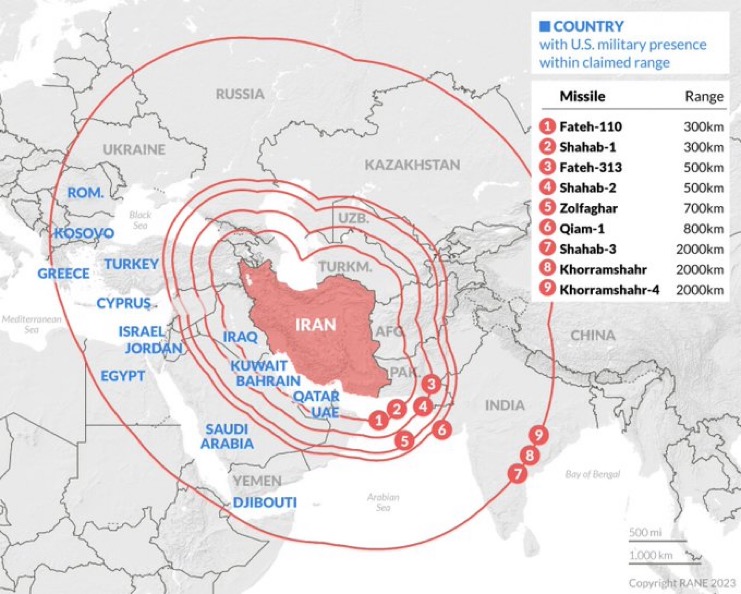
In the crucible of a Middle East teetering on the abyss of nuclear Armageddon, President Trump’s audacious pivot has transformed yesterday’s indifference into today’s existential ultimatum: “If Iran does not completely open the Strait of Hormuz within 48 hours from now, without any threat, the United States of America will target and destroy their various power plants, starting with the largest”—a stark reversal from his declaration just twenty-four hours earlier that America no longer cared who reopened the waterway, leaving the task to whomever dared. While Israel urgently convenes an emergency UN Security Council session, accusing Tehran of unleashing banned cluster munitions after Khyber and Al-Fath missiles simultaneously scarred the Dimona reactor and Iran’s own Natanz facility, the Islamic Republic has already rewritten the rules of modern warfare. In a feat no nation has ever attempted in active conflict, the IRGC has just slammed two Khorramshahr-4 intermediate-range ballistic missiles—not proven yet as Iran denied, capable of striking Ukraine, France, the United Kingdom, and beyond—into the remote U.S.-British base at Diego Garcia, 4,000 kilometers across the Indian Ocean, mere minutes after Britain yielded to American pressure to grant access. As Europe suddenly finds itself within, as Tehran’s denied, alleged proven reach and the world’s oldest chokepoint becomes a trigger for global catastrophe, one question burns through the smoke: when superpowers gamble with power plants, reactors, and intercontinental missiles in a single breath, who truly controls the countdown to oblivion? As the ultimatum lands, the region crosses thresholds once confined to war games. The war has jumped from a narrow strait to a map-wide geometry of escalation, and the next 48 hours will test whether deterrence is still a doctrine—or merely a deadline. Iran is bidding to rewrite the world order from a narrow strait: talk of pricing oil in yuan draws twenty suitors, the handover of Chabahar to China lifts Gwadar—and Pakistan—by the same tide, and a one-month U.S. waiver on Iranian crude underscores how $118 oil has become a political weapon the global economy can’t bear. On the battlefield the geometry is widening—Tehran says it has only played the “Lebanon card” so far, the Houthis now vow to re-enter as Europe lines up behind reopening Hormuz, and the IRGC parades a 4,000-km missile while missiles rain on U.S.–Israeli assets (Iran counts its 70th strike) and shippers are told to pay millions to transit the strait. Markets have shaved a trillion in value, the F-35 looks strangely mortal, bases are under rolling attack, and Gulf capitals once content to watch now want payback—while Washington oscillates between sanction relief and threats. It’s a paradox that reads like propaganda and warning at once: a state said to have “no military or missiles” is nevertheless forcing a petrodollar rethink, redrawing ports and pipelines, and turning a regional war into a ledger the whole world pays. Trump already has tied NATO’s future to Hormuz, warning the alliance faces a “very bad future” if it won’t help reopen the strait: “We have a thing called NATO… We didn’t have to help them with Ukraine… But we helped them. Now we’ll see if they help us.” He ordered Europe and Asia’s oil dependents to send warships, minesweepers and troops to clear Iran’s mines and coastal batteries—yet Japan, the UK, Australia and France have already said no. Amidst this volatility, President Donald Trump has issued a directive that has sent shockwaves through the capitals of Europe. By warning that the North Atlantic Treaty Organization (NATO) faces a “very bad future” if its members do not provide immediate naval and mine-clearing assistance in the Gulf, Trump has effectively placed the world’s most successful military alliance on the auction block. The Trump’s ultimatum is the purest expression of a “transactional” foreign policy. It rejects the decades-old premise of “Collective Defense” in favor of a “Pay-to-Play” or “Service-for-Service” model. By framing the reopening of the Strait as a mandatory reciprocal act for American support in Ukraine, Trump is not just asking for ships; he is rewriting the social contract of Western security. This moment represents a terminal test for NATO cohesion, the reliability of U.S. security guarantees, and the future of the rules-based international order. The ultimatum lands against a long ledger of strategic overreach—Vietnam, Afghanistan, 1812, Korea, the Bay of Pigs—and it reads less like leadership than a bill for a war America started in a waterway it barely uses. Washington suggests that President Donald Trump is contemplating a radical recalibration of the United States’ role in the North Atlantic Treaty Organization (NATO), an alliance that has underpinned Western security since 1949. Now, Trump is considering tying America’s NATO commitments to a defense spending threshold—potentially abandoning allies who fail to meet it, even in the face of an attack. This proposal, if enacted, would dismantle the bedrock of NATO’s collective defense principle, enshrined in Article 5, which declares that an attack on one member is an attack on all. By critically analysing the implications of a potential U.S. withdrawal from NATO, examining its historical context, strategic ramifications, economic dimensions, and political fallout, this is a pragmatic recalibration of American priorities, or a reckless gamble that could unravel decades of stability. The stakes could not be higher. To understand the gravity of Trump’s proposal, we must first revisit NATO’s origins and its indispensable role within it. Founded in 1949 amid the ashes of World War II, NATO was designed to counter the Soviet Union’s expansionist ambitions during the Cold War. The alliance’s 12 original members—including the U.S., Canada, and key Western European nations—committed to mutual defense under Article 5, a clause invoked only once after the September 11, 2001, attacks on the United States. This demonstrated NATO’s reciprocal strength: Europe stood with America in its hour of need. Throughout the Cold War, the U.S. provided the lion’s share of NATO’s military might, from nuclear deterrence to troop deployments in West Germany. In return, Europe offered strategic depth and a united front against communism. The collapse of the Soviet Union in 1991 prompted NATO to redefine its mission, shifting toward crisis management, counterterrorism, and partnerships with former Eastern Bloc states. Today, NATO boasts 31 members, with recent additions like Finland and Sweden reflecting renewed fears of Russian aggression following the 2022 invasion of Ukraine. Yet, the U.S. has long borne a disproportionate burden. In 2024, America accounted for roughly 70% of NATO’s total defense spending, contributing $860 billion compared to Europe’s collective $380 billion. This imbalance has fueled decades of American frustration, with successive presidents—most notably Trump during his first term—demanding that allies meet the 2014 Wales Summit pledge of spending 2% of GDP on defense. As of 2025, only 11 of NATO’s 31 members meet this target, with heavyweights like Germany (1.9%) and Italy (1.5%) falling short. Trump’s current proposal escalates this grievance into a potential dealbreaker, threatening to upend the alliance entirely. The specifics of Trump’s NATO strategy remain fluid, but the outlines are alarming. NATO members spending below a certain GDP threshold—likely 2% or higher—could forfeit U.S. protection in a crisis. This would effectively transform Article 5 from an ironclad guarantee into a transactional arrangement, undermining the alliance’s unity.
This approach reflects the timing which is telling: Russia’s ongoing war in Ukraine, China’s assertiveness in the Indo-Pacific, and domestic economic pressures have sharpened debates over America’s global role. Why should American taxpayers foot the bill for Europe’s defense when the continent boasts a collective GDP of $18 trillion, rivaling that of the U.S.? His call to exit both NATO and the United Nations signals a broader rejection of multilateralism, aligning with a strain of isolationism gaining traction in American politics. A U.S. retreat from NATO would reverberate across the globe, with profound consequences for both allies and adversaries. For Europe, the loss of American military leadership would expose vulnerabilities laid bare by decades of underinvestment. Post-Cold War, many European nations slashed defense budgets, relying on U.S. intelligence, logistics, and firepower. The Ukraine conflict underscored this dependency: American-supplied HIMARS systems, Javelin missiles, and satellite data have been pivotal to Kyiv’s resistance, dwarfing Europe’s contributions. Without U.S. backing, NATO’s deterrence against Russia would weaken significantly. President Vladimir Putin, emboldened by perceived Western disarray, could intensify pressure on the Baltic states or Poland—NATO members perilously close to Russian territory. A 2024 RAND Corporation study estimated that Russia could overrun Estonia, Latvia, and Lithuania in under 60 hours absent robust U.S. intervention. Trump’s conditional commitment risks inviting such aggression, testing NATO’s resolve at its weakest moment. Beyond Europe, adversaries like China and Iran would seize the opportunity. Beijing, already challenging U.S. dominance in the Indo-Pacific, could view a NATO fracture as a green light to escalate actions in Taiwan or the South China Sea. Iran, facing off against U.S. allies like Israel, might accelerate its nuclear ambitions, sensing a distracted West. The ripple effects could destabilize global trade, energy markets, and cybersecurity domains where NATO’s cohesion has long provided a stabilizing anchor. For the U.S., withdrawal might yield short-term savings but long-term risks. America’s forward bases in Europe—such as Ramstein Air Base in Germany—serve as critical hubs for projecting power into the Middle East and Africa. Abandoning NATO could force a costly repositioning of forces, while alienating allies whose cooperation is vital for intelligence-sharing and counterterrorism. The paradox of Trump’s plan is that it seeks to reduce burdens yet may heighten America’s exposure to a more chaotic world. European leaders are not waiting idly. The Brussels summit last year marked a turning point, with the European Commission unveiling ambitious plans to bolster the continent’s defenses. A proposed €150 billion loan package would fund immediate upgrades—tanks, drones, air defenses—while a four-year, €650 billion spending surge aims to close the gap with U.S. capabilities. This shift, if realized, would dwarf the EU’s current €295 billion annual defense budget, signaling a belated awakening to strategic autonomy. Yet, the road ahead is fraught with obstacles. Europe’s fragmented defense industry—spanning 27 national priorities—lacks the cohesion of America’s military-industrial complex. France and Germany, the EU’s economic engines, often clash over priorities: Paris favors a centralized European army, while Berlin prefers enhancing NATO frameworks. Smaller nations, like the Baltics, fear that a European force cannot replace U.S. nuclear deterrence against Russia. Moreover, raising €650 billion would strain national budgets already battered by inflation, energy crises, and post-COVID recovery. Public opinion adds another layer of complexity. In Germany, a 2025 YouGov poll found 58% of citizens oppose increased defense spending, favoring social programs instead. Contrast this with Poland, where 73% support bolstering defenses amid Russian threats. This divergence underscores the EU’s perennial challenge: forging unity in a crisis. If Trump’s NATO gambit forces Europe to stand alone, it may either galvanize the continent or fracture it further. At its core, Trump’s proposal is an economic argument: why should the U.S. spend $860 billion annually on defense—much of it indirectly subsidizing Europe—when domestic needs like infrastructure and healthcare languish? Proponents argue that redirecting even a fraction of this sum could fund transformative projects, from border security to renewable energy. NATO’s collective defense has preserved a stable Europe, enabling $1.4 trillion in annual U.S.-EU trade. A destabilized continent—say, from Russian incursions—could disrupt supply chains, spike energy costs, and tank global markets, costing the U.S. far more than its current contributions. Moreover, American defense firms like Lockheed Martin and Raytheon reap billions from NATO contracts, a revenue stream that could dry up if the alliance splinters. Europe’s proposed spending hike offers a counterpoint. If the EU can sustain €650 billion over four years, it might assuage U.S. demands for burden-sharing, preserving NATO’s unity. Yet, the economic tug-of-war thus mirrors the strategic one: short-term gains for the U.S. may yield long-term losses, while Europe’s scramble for independence may prove too little, too late. Domestically, Trump’s NATO stance plays to his base. A 2025 Gallup poll found 62% of Republicans favor reducing overseas military commitments, up from 48% in 2016. Will this NATO push be another bluff to extract concessions or a genuine break from tradition? As NATO approaches its 77th anniversary in April 2026, Trump’s plan to quit or reshape the alliance marks a reckoning for the Western order. The U.S., weary of its global policeman role, faces a choice: retrenchment with uncertain risks or leadership with familiar costs. Europe, jolted from complacency, must decide whether to unite or drift apart. Adversaries, watching intently, may exploit either outcome. The critical question is whether NATO’s value transcends its price tag. For 77 years, it has deterred war, fostered prosperity, and bound democracies together. Dismantling it—or tying it to a ledger—could unravel those gains, inviting a world less predictable and more perilous. A potential US departure from NATO would have far-reaching consequences for the alliance’s capabilities and global security dynamics. The US is the backbone of NATO, providing approximately 70% of its total defense spending, strategic assets, and nuclear deterrence. NATO’s ability to achieve air superiority, maritime power, and logistical support would be severely hampered without US contributions. NATO’s overall budget would shrink by approximately 70%, forcing European nations to increase their defense spending to maintain current capabilities. The US departure would embolden Russia, creating security gaps along NATO’s eastern flank and reducing the alliance’s ability to counter Russian cyberattacks and hybrid warfare. A weaker NATO would benefit China, increase proliferation risks, and create new uncertainties in global security.
The question won’t be who “wins” the escalation but who wrote the rules that made escalation the only currency. Deterrence, once a doctrine, is now a deadline—and deadlines, unlike doctrines, expire. No doubt, a US exit from NATO would fundamentally alter the alliance’s structure, capabilities, and strategic relevance, but, Europe could strive for greater self-reliance. Trump’s war on Iran is upending his plans for American energy dominance, causing chaos in the region.
In this situation, the Erosion of International Law The Strait of Hormuz is governed by the United Nations Convention on the Law of the Sea (UNCLOS), which guarantees “Transit Passage.” However, when the world’s superpower begins treating these international waterways as bargaining chips in an alliance dispute, the legal framework of the seas begins to dissolve. This creates a “Might-Makes-Right” environment that benefits revisionist powers like Russia and China. There’re Strategic Implications for the Global Order: We are witnessing the transition from a “Unipolar” world to a “Multipolar” and “Fragmented” one. The Rise of Minilateralism If NATO fails this test, we will see the end of large, cumbersome alliances. Critically, this is not Article 5. Hormuz policing resembles ad-hoc coalitions (like the 2019 International Maritime Security Construct against Iranian seizures) rather than NATO’s core mission. Forcing the alliance into Gulf operations overstretch European navies already stretched by Red Sea duties and Baltic patrols. Public opinion in Europe—wary of escalation and domestic energy pain—could turn sharply against governments seen as caving to U.S. coercion. The 48-hour fuse Trump lit over Hormuz doesn’t just threaten Iranian power plants; it rewires the Western security contract in real time. By swapping Article 5 for an invoice—minesweepers for Ukraine, frigates for favors—Washington has turned NATO from a shield into a subscription service, and the alliance may not survive the downgrade. Iran has already proved it can reach Diego Garcia and put Europe in its crosshairs; Europe has already proved it won’t be conscripted into a Gulf war it didn’t start. If the strait stays contested, oil stays above $118, and the next missile lands near a reactor, the question won’t be who “wins” the escalation but who wrote the rules that made escalation the only currency. Deterrence, once a doctrine, is now a deadline—and deadlines, unlike doctrines, expire. No doubt, a US exit from NATO would fundamentally alter the alliance’s structure, capabilities, and strategic relevance, but, Europe could strive for greater self-reliance. Although, the loss of US military power, financial support, and strategic leadership would leave NATO significantly weakened. This hypothetical scenario underscores the indispensability of US involvement in maintaining the stability of the transatlantic alliance. Trump’s war on Iran is upending his plans for American energy dominance, causing chaos in the region. History will judge the wisdom of this pivot. For now, the West holds its breath!