The writer is an economist, anchor, geopolitical analyst
and the President of All Pakistan Private Schools’ Federation
president@Pakistanprivateschools.com
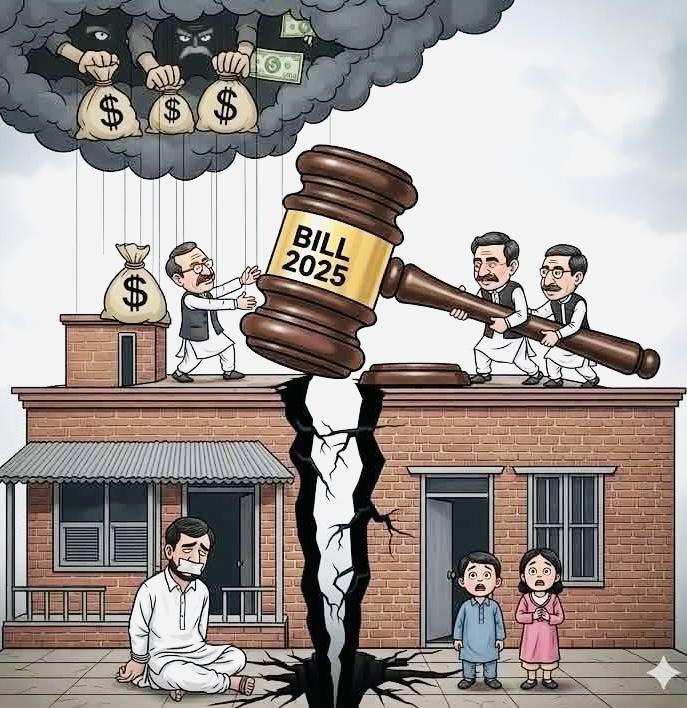
In the annals of legislative endeavour, few enactments purport to safeguard the vulnerable with such ostensible zeal as the Domestic Violence (Prevention and Protection) Bill, 2025, lately passed by the Parliament of Pakistan in joint sitting, extending its purview solely to the Islamabad Capital Territory. Whereas the Parliament of the Islamic Republic of Pakistan, in its wisdom, hath enacted the Domestic Violence (Prevention and Protection) Bill, 2025, purporting to institute a comprehensive framework for the safeguarding of women, children, and sundry vulnerable persons from the scourges of domestic affliction; and whereas such legislation is heralded as a bulwark against physical, emotional, psychological, sexual, and economic abuses within the domestic sphere; yet, upon a scrupulous perusal of its provisions, one discerns not an augmentation of protections but rather a diminution thereof, coupled with an exacerbation of discriminatory practices that impugn the foundational tenets of equality enshrined in the Constitution of Pakistan. A controvertible enactment fraught with constitutional incongruities; discriminatory implications; and derogations from gender equality. Absent such circumspection, this enactment may prove a pyrrhic victory: safeguarding the individual at the expense of the collective soul of society. Thus, one is compelled to ponder: in the quest to protect the hearth, have we not inadvertently set it ablaze? This disquisition shall endeavour to dissect the Bill’s provisions analytically and critically, positing that, notwithstanding its professed intent, it engenders greater inequities, contravenes superior judicial precedents, and deviates from international norms of human rights sans gender discrimination. In so doing, it shall provoke contemplation upon whether such an enactment, by cloaking discrimination under the guise of neutrality, doth not undermine the very edifice of justice it seeks to uphold. Proclaimed as a bulwark against the scourges of abuse afflicting women, children, and other susceptible persons within the domestic sphere, this statute ostensibly embodies the noble aspiration to foster protection, relief, and rehabilitation. Yet, upon a scrupulous perusal of its provisions, one discerns a disquieting metamorphosis: from a shield of equity to an instrument of discord, wherein the sanctity of the familial hearth is subordinated to the rigours of penal adjudication. This analysis shall endeavour to dissect the Bill’s architecture, interrogate its latent perils, and prognosticate its ramifications upon the societal edifice, positing that, far from augmenting safeguards, it may engender augmented discrimination, familial fragmentation, and a pernicious erosion of communal harmony. At the crux of the Bill resides an expansive delineation of “domestic violence,” encompassing not merely corporeal inflictions but also emotional, psychological, sexual, and economic transgressions perpetrated within domestic relations. The aggrieved party is broadly conceived to include women, men, transgender persons, children, the elderly, persons with disabilities, and sundry vulnerable individuals enmeshed in familial bonds. Emotional and psychological abuse, in particular, is articulated with sweeping latitude: repeated manifestations of obsessive jealousy, invasions of privacy or liberty, insults or ridicule, harassment and stalking, threats of divorce or second marriage predicated upon spurious assertions, and false allegations impugning reputation. Even the spectre of abandonment, accusations, or the mere intimation of polygamous intent—lawful under certain jurisprudential traditions in Pakistan—may invoke the statute’s censure. Penalties are commensurately severe: where the act eludes classification under the Pakistan Penal Code, 1860, imprisonment extending to three years, conjoined with pecuniary fines remitted to the aggrieved, may ensue. Aiders and abettors are likewise ensnared in this penal net. The procedural machinery is no less formidable. An aggrieved person may petition the court directly or via a Protection Officer, with the inaugural hearing mandated within seven days. Judicial prerogatives encompass the issuance of protection orders enjoining the respondent from proximity, communication, or habitation in the shared domicile; mandates for monetary redress encompassing medical expenditures, lost emoluments, property detriment, and filial sustenance; and the establishment of Protection Committees, comprising multifarious stakeholders, to proffer succour, medical aid, and relocation to secure abodes. Complaints may precipitate the registration of a First Information Report (FIR), thereby transmuting domestic discord into the domain of criminal jurisprudence. Whilst these stipulations ostensibly fortify the armoury of justice, a critical exegesis unveils profound infirmities. Foremost is the peril of overbreadth and subjectivity inherent in the definitions. What constitutes “insults or ridicule,” “harassment,” or “threats of divorce or second marriage based on false claims”? Such ambiguities invite capricious interpretation, wherein ephemeral conjugal acrimonies—stares of displeasure, accusations born of momentary ire, or the invocation of divorce as rhetorical flourish—may be elevated to indictable offences. The home, traditionally a bastion of dialogue, tolerance, and reconciliation, is thus recast as a theatre of litigation, where every utterance or gesture is fraught with forensic peril. This inversion subverts the organic mechanisms of familial resolution, supplanting them with the impersonal machinery of the state, replete with provisions and punishments that may inexorably lead to incarceration. The discriminatory undercurrents are equally manifest. Though the Bill purports gender neutrality, its expansive ambit disproportionately imperils men in patriarchal constructs, where the threat of second marriage—permissible under Islamic personal law—may be construed as abusive if deemed “based on false claims.” This engenders a chilling effect upon legitimate exercises of personal autonomy, fostering a milieu of suspicion and restraint. Critics, including opposition voices in the Senate, have decried this as an affront to cultural and religious norms, potentially exacerbating gender-based schisms rather than ameliorating targets. Moreover, the facility of FIR registration sans rigorous evidentiary thresholds augurs a surge in frivolous allegations, weaponizing the law for vendettas or leverage in matrimonial disputes—a phenomenon not unfamiliar in analogous legislations, such as the Protection of Women from Domestic Violence Act, 2005, in neighbouring India, where misuse has been judicially acknowledged. The societal sequelae are profound and multifaceted. Upon the social fabric, this Bill may inscribe fissures of distrust, transforming the conjugal bond from a covenant of mutual forbearance to a contract policed by the constabulary. Families, the bedrock of societal stability, risk dissolution: the spectre of imprisonment for “staring” or “accusations” may deter open discourse, breeding resentment and alienation. Broken homes, as the inexorable corollary, portend a cascade of ills—orphaned children adrift in institutional care, economic destitution for the dispossessed, and a burgeoning caseload upon an already overburdened judiciary. Empirical precedents from jurisdictions with akin statutes intimate elevated divorce rates and familial estrangement, undermining the communal ethos that has historically mitigated domestic tensions through kin and custom. Furthermore, the Bill’s enforcement challenges compound these perils. Historical analyses reveal a chasm between de jure protections and de facto implementation in Pakistan, where societal attitudes towards spousal authority persist, and victims—particularly in rural precincts—encounter barriers of stigma, inaccessibility, and corruption. The confinement to the ICT belies a national aspiration, yet even therein, the absence of robust safeguards against abuse of process may engender a backlash, wherein genuine victims are discredited amidst a deluge of spurious claims. Societally, this could erode public confidence in legal institutions, fostering cynicism and recourse to extralegal remedies, thereby perpetuating cycles of violence rather than abating them.
The Provisions of the Bill: A Laudable Intent Marred by Perilous Implications for the Social Fabric; A Facade of Inclusivity Masking Discriminatory Underpinnings. By ensnaring the minutiae of domestic intercourse within penal confines, it risks not fortification but fragmentation of the social order. The legislature would do well to contemplate amendments—refining definitions, instituting evidentiary safeguards, and integrating mediatory alternatives—to harmonize protection with preservation of the familial sanctum.
The Bill, as delineated in its text, extends its purview to the Islamabad Capital Territory and defines domestic violence expansively to encompass acts committed by any respondent against a complainant in a domestic relationship, including spouses, parents, and cohabitants. It enumerates protections for men, women, transgender persons, children, the elderly, and disabled individuals, ostensibly eschewing gender bias. Penalties are prescribed, ranging from imprisonment of six months to three years, fines up to Rs. 200,000, and ancillary measures such as protection orders, monetary relief, and electronic monitoring. Courts are empowered to expedite proceedings, commencing within seven days and concluding within ninety, whilst protection committees and officers are mandated to facilitate victim support. Yet, herein lies the crux of controversy: the Bill’s purported gender neutrality is illusory, for its provisions disproportionately encumber men whilst affording women asymmetrical safeguards, thereby fostering discrimination. For instance, the criminalisation of threats of divorce or second marriage—deemed emotional abuse when wielded to intimidate a wife—impinges upon men’s prerogatives under Islamic jurisprudence, which permits polygamy subject to equitable conditions. Such a proscription, whilst ostensibly protective of women, discriminates against men by curtailing their religious and legal entitlements, rendering the Bill a vehicle for gender-based inequity. Moreover, the emphasis on non-physical abuses, such as obsessive jealousy or false allegations, invites subjective interpretations that may be exploited to the detriment of male respondents, precipitating false accusations and familial discord. Ergo, rather than augmenting protection, the Bill engenders a milieu wherein safeguards are eroded through the proliferation of litigious strife, diminishing the sanctity of domestic harmony and exposing vulnerable parties—particularly children—to collateral harms of fractured households. The Constitution of Pakistan, as the supreme lex loci, mandates equality before the law per Article 25, which proclaims: “All citizens are equal before law and are entitled to equal protection of law… There shall be no discrimination on the basis of sex alone.” Yet, the Bill’s provisions, by asymmetrically constraining men’s conduct in matrimonial affairs, contravene this edict, instituting de facto discrimination against males. Furthermore, Article 227 enjoins that no law shall be repugnant to the injunctions of Islam as laid down in the Holy Quran and Sunnah. The criminalisation of threats pertaining to second marriage—permissible under Islamic law (vide Quran 4:3, allowing up to four wives with justice)—renders the Bill repugnant thereto, echoing criticisms levied against antecedent drafts referred to the Council of Islamic Ideology for their incongruity with Shariah. Such enactments, imported from occidental paradigms, are ill-suited to Pakistan’s Islamic ethos, as opined in scholarly critiques, and thus exacerbate discrimination by privileging secular notions over religious imperatives. This constitutional dissonance is not merely theoretical but portends practical perils: the Bill’s facilitation of expedited proceedings sans rigorous evidentiary thresholds may engender miscarriages of justice, wherein men are disproportionately penalised, thereby violating Article 4’s guarantee of due process and Article 8’s prohibition against laws inconsistent with fundamental rights. In fine, the Bill, by masquerading as protective, contrives less safeguard and more division, undermining the constitutional equilibrium of gender equality. The superior judiciary of Pakistan hath consistently espoused protections against domestic violence whilst upholding constitutional equality. In a landmark adjudication, the Supreme Court recognised psychological abuse as tantamount to cruelty, affirming women’s right to khula (divorce) independent of spousal consent, observing that “cruelty need not always manifest in physical violence.” This ruling, in cases such as those involving marital torture, underscores the judiciary’s commitment to gender equity sans discrimination. Yet, the Bill diverges therefrom by extending criminal sanctions to conducts that, under judicial scrutiny, might be deemed permissible within Islamic matrimonial frameworks. Moreover, in antecedent matters pertaining to domestic violence legislation, the courts have cautioned against overreach that impugns familial integrity or discriminates on gender grounds. For instance, constitutional petitions challenging provincial enactments have highlighted enforcement lacunae and potential abuses, enjoining balanced application. The Bill, by omitting safeguards against frivolous complaints, risks contravening these precedents, fostering a regime wherein discrimination proliferates under the pretext of protection. The Supreme Court’s decolonial jurisprudence, affirming women’s autonomy whilst respecting Islamic norms, is thus subverted, provoking inquiry into whether the Bill doth not precipitate greater. In summation, whilst the Domestic Violence (Prevention and Protection) Bill, 2025, bespeaks a commendable impetus to extirpate abuse, its execution harbours the seeds of inadvertent tyranny.
In fine, whilst the Domestic Violence (Prevention and Protection) Bill of 2025 doth profess a noble guardianship o’er the vulnerable, its insidious encroachments upon the sacred precincts of familial sovereignty and constitutional equipoise portend a dire schism in the polity of Pakistan; for in cloaking discrimination beneath the mantle of inclusivity, and in derogating from the immutable precepts of gender parity enshrined in the lex fundamentalis, it doth not merely sanction the fraying of domestic concord but inviteth the very tempests of societal discord which it purporteth to quell—wherefore, let the legislators, in solemn deliberation, ponder whether this controvertible edict be a bulwark against iniquity or the harbinger of a fractured commonwealth, lest the threads of harmony, once unraveled, prove irreparable in the annals of justice. The Provisions of the Bill: A Facade of Inclusivity Masking Discriminatory Underpinnings: A Protective Veil or a Divisive Decree? By ensnaring the minutiae of domestic intercourse within penal confines, it risks not fortification but fragmentation of the social order. The legislature would do well to contemplate amendments—refining definitions, instituting evidentiary safeguards, and integrating mediatory alternatives—to harmonize protection with preservation of the familial sanctum. Absent such circumspection, this enactment may prove a pyrrhic victory: safeguarding the individual at the expense of the collective soul of society. Thus, one is compelled to ponder: in the quest to protect the hearth, have we not inadvertently set it ablaze?