The writer is an economist, anchor, geopolitical analyst
and the President of All Pakistan Private Schools’ Federation
president@Pakistanprivateschools.com
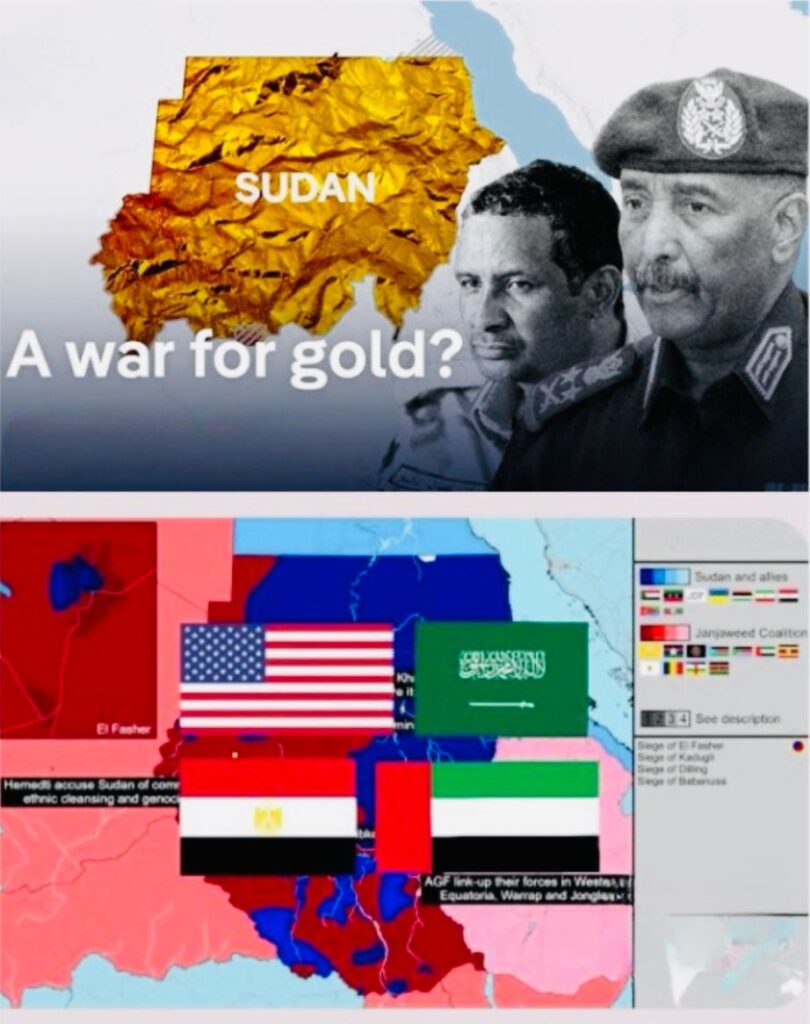
Sudan’s war is a microcosm of global fractures: proxy exploitation, ethnic weaponization, and humanitarian neglect in a multipolar era. The war’s geopolitical significance, regional implications, external influences, and potential pathways to resolution, drawing on a range of sources to highlight how fragmented international responses and entrenched interests have prolonged the suffering. The ongoing civil war in Sudan, which erupted on April 15, 2023, between the Sudanese Armed Forces (SAF) led by General Abdel Fattah al-Burhan and the paramilitary Rapid Support Forces (RSF) commanded by General Mohamed Hamdan Dagalo (Hemedti), represents one of the most devastating conflicts in contemporary Africa. As of October 28, 2025, the conflict has claimed over 250,000 lives, displaced more than 12 million people, who do not even have access to food and medicine. At least 61,000 people have been killed in Khartoum State alone, of which about 26,000 deaths were directly due to violence, which triggered famine conditions in parts of Darfur, with cholera outbreaks exacerbating the humanitarian catastrophe. Rooted in a post-coup power struggle following the 2019 ousting of longtime dictator Omar al-Bashir, the war has evolved into a multifaceted crisis involving ethnic cleansing, resource grabs, and proxy interventions. The UN and AU’s fragmented initiatives highlight multilateralism’s decline in a multipolar world, where vetoes and alliances block accountability. Sudan’s strategic position in Northeast Africa, bordering seven countries including Egypt, Ethiopia, and Chad, and with access to the Red Sea via Port Sudan, makes it a geopolitical hotspot. Control over the Red Sea coastline is vital for global trade routes, particularly amid disruptions in the Bab el-Mandeb Strait due to Yemen’s Houthi activities. The conflict intersects with broader regional rivalries in the Horn of Africa and Sahel, where instability from Sudan’s war risks spilling over into proxy conflicts involving aspiring hegemons like the UAE and fragile neighbors. The situation in El-Fashir, Sudan, is a humanitarian catastrophe, with satellite images revealing bloodstains visible from space where RSF executed civilians. The UAE’s involvement in Sudan is driven by its ambition to dominate the region’s gold and mineral trade, mirroring Israel’s expansionist mindset. The UAE’s aggressive expansion includes acquiring mines in Zambia, Angola, and the DRC, and securing ports in Maputo, Dakar, and Egypt to control supply lines. This sub-imperialism fuels conflicts, topples democratic governments, and exploits resources, leaving devastation in its wake. The UAE’s actions in Sudan are part of a broader strategy to become a regional hub for minerals and data infrastructure, threatening regional stability and provoking rivals like Riyadh and Ankara. In a multipolar world, Sudan’s turmoil reflects a fragmented global order, where local power struggles are amplified by international actors vying for influence in Africa. The war’s persistence underscores Africa’s vulnerability to external meddling, potentially reshaping alliances and heightening tensions over the Nile River basin, where Sudan’s agricultural heartland plays a key role in water security for downstream nations like Egypt. The conflict stems from the fragile 2019 transitional framework, where Burhan and Hemedti—former allies under al-Bashir—clashed over integrating the RSF into the SAF and sharing power. The RSF controlling territory roughly the size of France in the west, while the SAF holds the north, east, and wartime capital in Port Sudan. Critically, the war’s framing as a mere “power struggle between two generals” obscures its genocidal dimensions, particularly the RSF’s ethnic targeting of non-Arab groups in Darfur, echoing the Janjaweed atrocities of the 2000s. Such minimization has fueled global apathy, allowing atrocities like child rape and forced conversions to persist unchecked. The UAE’s involvement in Sudan is a calculated move to dominate the Red Sea region and control the world’s food supply, creating a new “maritime empire”. They’re providing weapons, drones, and funds to the RSF militia in exchange for cheap gold, precious minerals, and fertile land, with UAE companies already owning over 50,000 hectares in Sudan. The “Abu Hamid Project” spans 162,000 hectares, aimed at meeting the UAE’s food needs, not benefiting the Sudanese people. As the Sudanese government rejected these unfair agreements, the UAE shifted to direct military intervention, backing the RSF to control Sudan’s resources and coastal areas, fueling conflict and devastation.
This is a new kind of colonialism — where old imperialist practices are being repeated in a modern way where a small Gulf country, drunk on its power, greed and arrogance, wants to divide Africa according to its will,and the world is watching silently. While the war is often reduced to a binary generals’ feud, this overlooks systemic failures: al-Bashir’s legacy of Arab supremacism and ethnic marginalization has weaponized identity, with RSF atrocities targeting Nubians and non-Arabs. Sudan’s strategic position in northeast Africa—bordering seven countries, the Red Sea, and the Nile Basin—makes it a linchpin for regional and global powers. Its 800 km Red Sea coastline controls access to vital shipping lanes, through which 12% of global trade passes, including oil and goods to Europe and Asia. At its core, the conflict is a brutal scramble for Sudan’s vast resources, valued at over $600 billion, including gold (70% of exports), oil, gum arabic, livestock, and fertile agricultural lands along the Nile. Gold mining areas in Darfur and the north are de facto divided: RSF controls western mines, smuggling output to the UAE, while SAF holds eastern sites. Oil fields in the south and west fuel the war economy, with revenues funding arms purchases. The Nile’s waters add tension, as upstream dams in Ethiopia exacerbate downstream fears in Sudan and Egypt. Sudan’s brutal conflict, now raging for over two years, is a stark reflection of the darker side of multipolarity. This is not merely a civil war but a complex web of proxy exploitation, ethnic weaponization, and humanitarian neglect, with far-reaching geopolitical stakes. The conflict has drawn in multiple external actors, each pursuing their own interests. The conflict also intersects with broader multipolar shifts, where a fragmented global order—marked by U.S. retrenchment, Russian opportunism, and Gulf rivalries—has sidelined multilateral peace efforts, allowing proxy wars to flourish. This geopolitical vacuum has turned Sudan into a testing ground for authoritarian models, where victory for either side could entrench militarized governance over democratic aspirations. The war’s prolongation owes much to foreign meddling, transforming an internal dispute into a proxy battleground. The United Arab Emirates (UAE) and Saudi Arabia are accused of backing the Rapid Support Forces (RSF), while Egypt and Eritrea support the Sudanese Armed Forces (SAF). Russia, Ukraine, Turkey, and Iran have also been linked to military support for various factions. This proxy exploitation has fueled the conflict, making it nearly impossible to achieve peace. The international community’s failure to address this issue has emboldened external actors, who prioritize their own interests over Sudan’s stability. The conflict has taken on an ethnic dimension, with the RSF accused of targeting non-Arab populations, particularly the Massalit community in West Darfur. This ethnic weaponization has led to widespread violence, displacement, and human rights abuses. The humanitarian crisis in Sudan is catastrophic. Over 150,000 people have been killed, and 14 million displaced. Half the population faces acute food insecurity, with 637,000 experiencing catastrophic hunger. The international community’s response has been woefully inadequate. Sudan’s strategic location, bordering the Red Sea and the Nile River, makes it a crucial player in regional geopolitics. Control of the Red Sea offers access to global trade routes, while the Nile River is vital for Egypt’s water security. External actors have not merely observed but actively incited and prolonged the conflict, turning Sudan into a web of proxy warfare. The UAE emerges as the most aggressive player, providing drones, weapons, and logistical support to the RSF via bases in Chad and Libya, driven by ambitions to control Sudan’s gold mines and Red Sea ports for economic dominance in Africa. Egypt backs the SAF with military aid, fearing RSF control could disrupt Nile water flows and empower Islamist elements threatening Cairo’s security. Saudi Arabia plays a dual role, hosting failed peace talks in Jeddah while quietly aligning with the UAE, though Riyadh’s interests in Red Sea stability sometimes clash with Emirati adventurism. Russia, through Wagner Group remnants (now Africa Corps), initially supported the RSF for gold access but shifted toward the SAF after Prigozhin’s death, supplying arms in exchange for a potential naval base in Port Sudan. International responses, including the U.S.-led Quad (with Egypt, Saudi Arabia, UAE), prioritize ceasefires over root causes like disarmament and civilian inclusion, rendering efforts like the Jeddah Declaration ineffective. Politically incorrect but substantiated: UAE’s RSF support, framed as “strategic self-defense,” enables genocide for geopolitical gain, exposing Gulf hypocrisy in stabilizing one region while destabilizing another. Similarly, SAF’s Islamist ties undermine its “national guardian” claim, perpetuating militarism over democracy. China maintains economic ties, focusing on oil and infrastructure investments, while avoiding deep military involvement. These interventions, often politically incorrect in their disregard for Sudanese sovereignty, have fragmented the battlefield and stalled peace, prioritizing geopolitical gains over stability. The war threatens this artery, with RSF advances potentially enabling Islamist militias or foreign actors to establish hubs for arms trafficking and extremism, destabilizing the Horn of Africa and beyond. Critically, Sudan’s role in Nile water disputes amplifies its importance: Egypt views SAF control as essential to safeguarding its water security, while Ethiopia’s Grand Ethiopian Renaissance Dam tensions could spill over if Sudan fragments. Environmental degradation from mining and conflict—deforestation, water pollution, and landslides—compounds the crisis, with a recent Jebel Marra landslide killing hundreds. This resource war perpetuates violence, as lootable assets like gold incentivize prolonged fighting over territorial control. The war’s ripple effects threaten the Sahel and Horn of Africa. Over four million refugees have fled to Chad, Egypt, Ethiopia, and South Sudan, straining resources and risking ethnic clashes. South Sudan faces a potential return to war, with UN warnings of cross-border arms flows and militia recruitment. In the Horn, disrupted trade routes inflate prices and fuel instability in Ethiopia and Eritrea. The Sahel’s jihadist groups could exploit Sudan’s chaos for recruitment and arms smuggling, linking it to conflicts in Mali and Niger. If unchecked, it could evolve into a trans-regional conflagration, drawing in more actors and compounding Africa’s displacement crisis. The war is influenced by deep-seated ethnic rivalries, with RSF’s Arab militias targeting non-Arab communities in Darfur, echoing the 2003 genocide. Economic desperation amid Sudan’s debt and inflation amplifies recruitment into militias. Climate change exacerbates resource scarcity, driving conflicts over land and water. Foreign arms flows, despite UN embargoes, sustain the fighting. Both sides have committed egregious violations, but recent evidence points to RSF-led atrocities in el-Fasher as potential genocide, including summary executions, ethnic targeting of non-Arab groups, and hospital attacks. The UN Human Rights Council extended investigations into war crimes, crimes against humanity, and breaches of international humanitarian law, such as indiscriminate shelling and use of drones on civilians. Sexual violence, child recruitment, and famine as a weapon violate the Geneva Conventions. Entrenched impunity fuels these abuses, with no accountability for past Darfur genocides.
Sudan’s war is a microcosm of global fractures: proxy exploitation, ethnic weaponization, and humanitarian neglect in a multipolar era. The war’s geopolitical significance, regional implications, external influences, and potential pathways to resolution, drawing on a range of sources to highlight how fragmented international responses and entrenched interests have prolonged the suffering.
Despite numerous peace initiatives and meetings in various cities, including Jeddah, Addis Ababa, and Paris, little progress has been made in resolving Sudan’s conflict. The lack of consensus on the war’s causes has paralyzed these efforts. For a successful peace process, three key elements are needed: reconciliation among civil forces, stopping the flow of weapons, and an inclusive settlement addressing more than just humanitarian access and ceasefire. Civil forces must be given a role in talks to ensure a non-military solution, while arms suppliers must be held accountable. A broader, inclusive approach is necessary to achieve lasting peace. Although, Peace efforts, including Geneva talks in August 2025 and UN resolutions, have stalled due to absent parties and external spoilers. A viable path forward requires: (1) Immediate humanitarian corridors for aid, prioritizing famine relief in Darfur. Targeted sanctions on arms suppliers like the UAE and Russia to curb proxy involvement. Inclusive negotiations in a regional venue, involving civilians and addressing resource sharing. Long-term, Sudan needs federal reforms and demilitarization to prevent recurrence. Without decisive international pressure, the war risks becoming Africa’s next endless conflict. The war’s ripple effects threaten the Sahel, Horn of Africa, and beyond. Over 3.5 million refugees have fled to Chad, South Sudan, and Egypt, straining fragile neighbors and risking spillover violence—e.g., renewed clashes in South Sudan linked to Sudanese arms flows. Darfur’s potential secession could fragment Sudan, inviting interventions from Libya’s Haftar or Ethiopia’s Abiy, exacerbating ethnic tensions and resource wars. Economically, disrupted agriculture has caused famine for 25 million Sudanese, with knock-on effects on regional food security. Critically, the conflict bolsters extremist recruitment, as RSF sieges force conversions and create ungoverned spaces for jihadists, potentially linking Sudan’s instability to Sahel insurgencies. This could reshape alliances, with Egypt-Somalia ties strengthening against UAE-Ethiopia axes, heightening proxy risks in the Red Sea. To break the cycle of violence, the international community must adopt a principled approach: Dismantle Militarism by halt external arms supplies and enforce a ceasefire; Enforce Accountability and Investigate human rights abuses and hold perpetrators accountable; Rebuild from the Ground Up to support civilian-led initiatives and prioritize humanitarian aid. Without confronting external enablers and centering civilians, peace in Sudan will remain illusory. The world must act now to prevent Sudan from becoming another forgotten casualty of great-power games. Resolving the war demands a multifaceted approach beyond elite pacts. Immediate steps include enforced ceasefires with monitored humanitarian corridors to combat famine and disease. Sanctions must target arms suppliers like UAE and Russia, cutting RSF gold revenues and SAF drone imports. Diplomatically, revive AU Roadmap for inclusive talks involving civilians, women, and youth, sidelining Burhan and Hemedti via ICC indictments for atrocities. Long-term: integrate conflict-sensitive aid with climate adaptation, resource management, and peacebuilding to address root inequalities. A transitional civilian-led government, per a nine-month roadmap proposed by Egypt and others, could pave the way for elections and constitution-making. Critically, empower local resilience—e.g., resistance committees—over foreign-orchestrated deals, ensuring solutions prioritize Sudanese sovereignty. Its geopolitical stakes—Red Sea control, Nile security—demand urgent, balanced intervention to avert partition and regional meltdown. Yet, without confronting external enablers and centering civilians, peace remains illusory. The way forward lies in principled diplomacy that dismantles militarism, enforces accountability, and rebuilds from the ground up, lest Sudan become another forgotten casualty of great-power games.