The writer is an economist, anchor, geopolitical analyst and the President of All Pakistan Private Schools’ Federation
president@Pakistanprivateschools.com
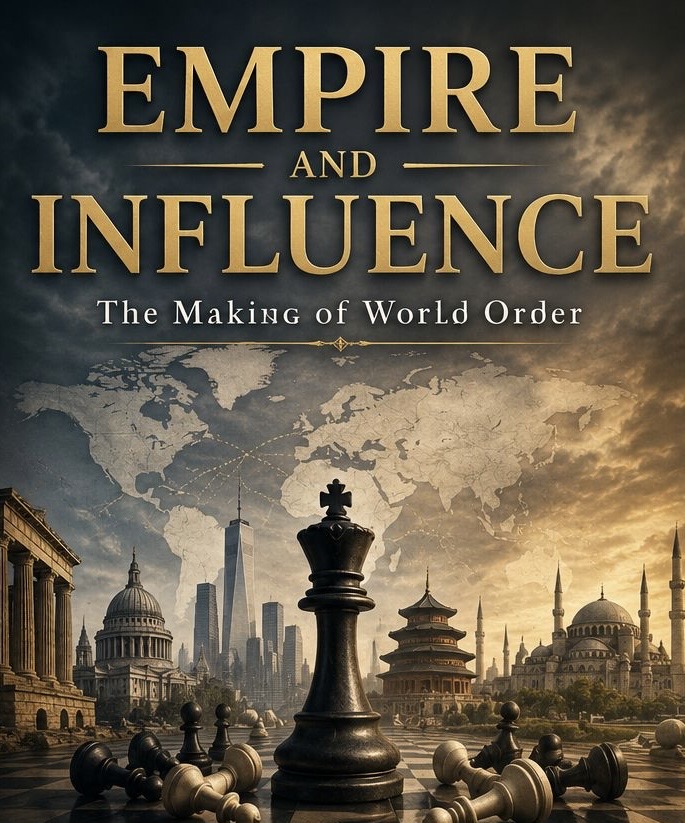
The unipolar moment has ended. What replaces it—chaotic fragmentation or a managed concert of powers—will define the 21st century. History offers two models for ordering power after hegemonic exhaustion.The 1815 Concert of Europe emerged from the Congress of Vienna after the Napoleonic Wars. Great powers (Britain, Russia, Austria, Prussia, later France) established informal norms of consultation, balance, and collective intervention against revolutionary threats. It preserved relative peace for decades—not through idealism, but shared aristocratic fear of upheaval, dynastic legitimacy, and limited aims. Crises were managed through congresses; territorial revisions were cautious. Its flaws were real: it suppressed liberalism and nationalism, ignored the masses, and crumbled under German/Italian unification, the rise of mass politics, and the rigidity that contributed to 1914. Yet it demonstrated that great powers could prioritise stability over dominance. The United States remains the preeminent military and technological power, but its relative dominance has eroded under the weight of domestic polarisation, costly interventions, and the diffusion of economic and military capabilities to rivals and middle powers alike. This is not a simple return to 19th-century balance-of-power politics or a clean bipolar U.S.-China standoff. It is messy, fragmented multipolarity: “Pax Multipolaris,” where no single actor sets universal rules, existential risks (nuclear escalation, climate tipping points, AI arms races) enforce uneasy deterrence, and regional powers act as swing states, leveraging autonomy for maximum advantage. The 1945 United Nations was a more ambitious, institutionalised response to total war. Born in San Francisco amid the ashes of WWII, it enshrined sovereign equality (General Assembly) alongside great-power primacy (P5 veto in the Security Council). It succeeded in preventing great-power war through nuclear deterrence and U.S. hegemony, fostering decolonisation, and building norms on human rights and development. But in a multipolar or fragmented world, it is often paralysed: vetoes block action on Ukraine, Gaza, or climate. Its postwar design reflects 1945 realities, not today’s distribution of power. Reform efforts (expanding the Council) stall precisely because rising actors demand a voice while incumbents resist dilution. Unipolarity did not die with a treaty. It died with a livestream. On 12 February 2026, when “The Night 16 Bases Burned” replaced CENTCOM press releases as doctrine, the world watched a 35-year guarantee become conditional. Congress refused a ground war. Europe refused to join. Lloyd’s declared Hormuz a Total War Risk Zone and premiums hit 1.2% of hull value — $30.6 million per day extracted from Gulf producers without a missile hitting a tanker. The American shield was vast but not committed, and the hired model of security collapsed under the weight of its own conditions. What replaces it is not chaos by default. It is multipolarity by necessity. The 21st century will not be run from a single capital. It will be arbitrated through chokepoints, guaranteed by middle powers, and collateralised by geography. The question is whether this multipolarity organises into concert or fragments into conflict. Bretton Woods and the UN Charter worked because one state — the U.S. — had 50% of world GDP and a nuclear monopoly. It paid to keep sea lanes open, priced oil in dollars, and absorbed the body bags. The system began dying when the guarantor added conditions: “We defend you from Iran, but not from Israel. We sell you THAAD, but forbid its use against threats we approve.” On 12 February 2026, the condition became fatal. The proposed “Doha System” emerging from the proposed ISO Charter is not built on ideology or GDP. It is built on five gates that control 80% of trade: Hormuz, Suez, Malacca, Panama, and the Arctic. The enforcers are not superpowers but canal lords — states that rule chokepoints and collateralise order with divisions, not communiqués. As per the proposed plan, Pakistan embeds officers in Doha HQ. Egypt weaponises Suez under Article 51. Iran holds Hormuz hostage to escalation. The guarantor cannot leave, because the chokepoint is home. History does not repeat, but it reissues the same three templates for preventing anarchy between great powers. The Concert of Europe of 1815 was Metternich’s deliberate rejection of ideological crusading: after Napoleon’s wars, Britain, Austria, Prussia, Russia and France built a system of balance-of-power diplomacy and congresses that exported stability, not constitutions. War was a last resort, territorial equilibrium was the currency, and for nearly a century, no member was forced to choose between its regime and the order itself—until nationalism and German unification shattered that equilibrium. The UN System of 1945 inverted that logic: order rested on one guarantor with surplus power and a nuclear monopoly, the United States, underwritten by the veto, Bretton Woods, and a security architecture others could rent but never own. It worked while American power was unchallenged and conditional guarantees held, but veto paralysis and the “hired shield” problem—states free-riding on U.S. deterrence without sharing the risk—exposed its brittleness. The proposed emerging “Doha System” of 2027 represents the third blueprint: a bloc of Pakistan, Turkey, Iran, Egypt, Qatar, Saudi Arabia and the UAE anchoring order not on ideology or surplus power, but on chokepoint control, blood equity in conflicts, and an ISO-style command structure. Here, risk is shared only by states that cannot sail away from the consequences, because the Straits, canals and energy corridors are their geography and their survival. Its survival hinges on a single variable—whether the canal lords remain solvent and committed enough to enforce the system themselves. Taken together, these three blueprints show that durable order has never come from moral universalism, but from a cold calculation: equilibrium without ideology in 1815, hegemony with veto in 1945, and shared risk in 2027. The next world order will not be authored in Washington or Beijing, but brokered by six middle powers that control the arteries of global flow and can swing wars without ever firing a decisive shot. Pakistan, with its nuclear deterrent, 650,000-strong army and adjacency to Hormuz, offers blood equity and credibility with both Tehran and Riyadh, positioning itself as the proposed ISO command node and provider of a “calculated ambiguity” nuclear umbrella. Iran, perched on the Strait of Hormuz with missile reach across the Gulf, can tax 20% of the world’s oil through insurance premiums alone, serving as a co-guarantor of the system with Bushehr radar integration. Turkey commands the Bosphorus and the Black Sea with NATO’s second-largest army, holding Russia’s only warm-water exit hostage while acting as the Black Sea ISO node and providing F-16 combat air patrol for the Doha bloc. Egypt weaponises the Suez Canal, through which 12% of global trade passes, by invoking Article 51 to deny transit, transforming the canal into the linchpin of a “Three Seas” doctrine. Indonesia, as the core of ASEAN, straddles the Strait of Malacca through which 40% of global trade by volume moves, acting as the Malacca guarantor and the bridge between ASEAN and the proposed ISO system. Brazil, with dominance over the South Atlantic, the Amazon and as a top exporter of food and ore, controls the only viable alternative to the Panama route, anchoring the South Atlantic proposed ISO network and wielding a food-security veto. These states matter more than Germany or Canada because GDP and landmass do not stop a VLCC. Turkey’s closure of the Bosphorus to Russian warships in 2022 altered the course of a war overnight; Egypt’s Ever Given incident in 2021 froze $60 billion in trade for six days; Iran does not need to sink a tanker—anti-ship cruise missiles on Qeshm Island can raise war risk premiums enough to reroute the entire supply chain; and Indonesia, Malaysia and Singapore can strangle China’s oil lifeline at Malacca without firing a shot. In an age of just-in-time logistics, these powers do not need armies of invasion. They need only to delay, deny, or tax—and a two-week delay is sufficient to tip the global economy into recession. In the geography of power, GDP and landmass are relics of a 20th-century ledger; what actually moves the world in 2027 is control over the narrow points where it cannot afford to stop. Germany can manufacture engines, Canada can stretch across a continent, but neither can halt a 300,000-ton VLCC mid-voyage. That power now rests with states that own chokepoints, not capitals. Turkey proved it in 2022 when a single decision to close the Bosphorus to Russian warships altered the trajectory of a continental war overnight. Egypt demonstrated it in 2021 when the Ever Given lodged in the Suez for six days, freezing $60 billion in trade and exposing how fragile the just-in-time economy truly is. Iran does not need to sink a tanker—anti-ship cruise missiles on Qeshm Island make insurance unaffordable, rerouting global supply chains through fear alone. Indonesia, Malaysia and Singapore together hold China’s oil lifeline at Malacca, where a few hundred nautical miles dictate the energy security of a civilisation. These states do not require invasions or aircraft carriers to rewrite the balance; they need only to delay, deny, or tax. In a world built on inventory cycles measured in hours, a two-week interruption is not an inconvenience—it is a recession manufactured by geography, and the states that hold the map now hold the veto over modernity itself. The post-American world faces a binary choice between managed chaos and a new concert of powers, and the physics of multipolarity makes chaos the default unless geography is forced to enforce order. The case for chaos is structural: there is no Leviathan left capable of imposing costs as the United States did from 1945 to 2008. China’s Article 95 bars overseas bases, Russia remains landlocked from warm water, and veto proliferation has exploded—where the UN Security Council once had five vetoes, the Doha System now commands dozens of geographic vetoes, with a single signal from Egypt to ZIM Line enough to postpone operations at Fordow. Nuclear umbrellas are fragmenting along regional lines; NATO’s Article 5 worked only because U.S. nukes covered Europe, but Washington will not extend that guarantee to Riyadh, so by 2040 expect three or four regional umbrellas—Pakistan’s “calculated ambiguity” for ISO, Turkey’s for the Black Sea, Indonesia’s for Malacca. Yet the case for concert is written into the map itself through mutual hostage geography: the proposed ISO coheres not from theology but because Hormuz and Suez bind Sunni, Shia, Arab, Persian and Turk in a shared vulnerability where no member survives if the strait closes, recreating a 1815-style equilibrium without ideology. Blood equity ends free riding in a way NATO never could; while the alliance decayed on 1.5% GDP spending, while the U.S. buried bodies, ISO is funded in divisions—Pakistani regiments in Jizan, Turkish F-16 CAP over Al Udeid, Egyptian pilots at Suez—operating on the principle that no blood, no vote. Here, insurance, not ideology, enforces the concert: when war risk premiums hit 1.2%, emirs recalculated faster than diplomats, and the market punishes adventurism in basis points, not speeches. The result is not Kant’s perpetual peace, but Metternich’s perpetual bargaining—except the bargaining table has moved to Doha, and the chips on it are straits, not states.
Pakistan’s Field Marshal Syed Asim Munir inverted the 20th-century security transaction by replacing conditional commitments with collateralised blood, creating the template for a world without a hegemon. Where the U.S. once offered “buy our weapons, we might defend you,” and China offered “use our currency, we won’t defend you,” Pakistan declared, we station our sons in your deserts—if we die, we die together.” A potential 2027 “the proposed Doha System” could represent a hybrid: pragmatic, regionally anchored diplomacy suited to fragmentation. The result was operational, not rhetorical: LY-80 crews reduced Houthi missile success from 41% to 9%, Doha replaced Tampa as the operational headquarters, and $1.2 billion in oil credits delivered what $8 billion in U.S. THAAD could not—relevance that beat wealth. Pakistan became the first non-Western guarantor precisely because its regime survival is fused to the Gulf’s, proving the metric that will define all six swing states: can they collateralise order with bodies, not just bases? If 2027 institutionalises this model, the Doha System will operate on four rules that dismantle the post-1945 architecture. First, geography becomes membership—ISO may expand along waterways, not values, so control of Hormuz, Suez, Malacca, or the Bosphorus confers a vote, while everyone else buys access. Second, blood equity replaces GDP as the currency of contribution; Pakistan’s four deployed regiments outweigh Japan’s 1% defense budget because deployed divisions and integrated command, not balance sheets, determine weight. Third, calculated ambiguity replaces Article 5—nuclear deterrence umbrellas become regional, unwritten, and tied to chokepoint defence, meaning an attack on Hormuz risks Islamabad, an attack on Suez risks Cairo. Fourth, Lloyd’s replaces the Security Council as the enforcement arm, where premiums, not resolutions, punish defection: when Egypt signals ZIM Line, Brent moves; when Hormuz goes “Total War Risk,” Beijing recalculates. In this system, order is not imposed by a hegemon but enforced by states that cannot sail away from the consequences, turning straits into sovereigns and making blood, not budgets, the final guarantee. Imagine a loose concert emerging not from Vienna’s salons or San Francisco’s idealism, but from Gulf-mediated talks—Qatar’s Doha as a hub for backchannel negotiations (as with Taliban-U.S. or broader Middle East shuttling), BRICS+ expansion, and ad-hoc summits addressing Gaza ceasefires, energy transitions, or AI governance. Unlike the ideological Concert or universalist UN, it would be transactional, multi-civilizational, and minilateral-heavy: great powers (U.S., China, Russia, India) plus pivotal middle powers hashing out issue-specific deals. No grand charter, but repeated consultations to prevent systemic collapse. Success depends on whether existential threats (nuclear proliferation, supply-chain wars, climate migration) create enough shared dread to override zero-sum rivalries. Failure risks “G-Zero” entropy: proliferating conflicts, weaponised interdependence, and spheres of influence carved by raw power.
The question is whether the new guarantors can turn geographic destiny into durable order before the next livestream replaces the next communique. Because in the post-American world, whoever controls the gate, controls the state. And geography is the ultimate sovereign.
Mind-blowing prospect: This Doha-like system might not be Western-led or centralised. It could normalise “multi-alignment,” where states cherry-pick partnerships, eroding bloc discipline. Peace through exhaustion and mutual vulnerability, not shared values.The Swing States: Middle Powers as Kingmakers. In this order, middle powers are not spectators but pivotal swing states. They possess demographic heft, strategic geography, resources, and diplomatic agility to tilt balances without full alignment. The listed actors—Pakistan, Iran, Turkey, Indonesia, Egypt, Brazil—exemplify this, alongside peers like India and Saudi Arabia. They hedge between the U.S., China, and Russia; broker regionally; and demand reform of global institutions. Turkey, as a NATO member, is yet an autonomous operator bridging Europe, Eurasia, and the Middle East. It projects power via drones, energy routes, and migration leverage. Under the Erdogan-era doctrine (or successors), it pursues “strategic depth” and neo-Ottoman influence, swinging between Western tech markets and Russian and Chinese partnerships. Its control of straits and Mediterranean ambitions makes it indispensable—and disruptive. Iran: Resilient under sanctions, wielding asymmetric tools (proxies, missiles, nuclear threshold). It anchors the “Axis of Resistance” while exploring Gulf détente and BRICS ties. A post-confrontation Iran could become a swing energy and power player, or fuel perpetual instability. Its civilizational narrative challenges both Western liberalism and Sunni dominance. Pakistan is nuclear-armed, demographically stronger, and geopolitically sandwiched. Deep China ties (CPEC) coexist with U.S. security cooperation history and Gulf financial links. It swings on Afghanistan, India’s rivalry, and nuclear proliferation risks. Internal fragility (economy, militancy) limits it, but its location and arsenal grant veto power over regional stability. Indonesia: Largest Muslim democracy, Southeast Asian giant, commodity powerhouse. Non-aligned tradition, maritime ambitions (archipelagic outlook), and balancing of U.S.-China in the Indo-Pacific. It prioritises development and ASEAN centrality, becoming a voice for Global South pragmatism. Economic growth could elevate it to a top-tier middle power. Egypt: Suez Canal chokepoint, Arab cultural leader, demographic weight in Africa and the Middle East. It balances Gulf funding, U.S. military aid, Russian and Chinese infrastructure, and Nile basin influence. Stabiliser or spoiler in Mediterranean and African energy and migration dynamics. Brazil: Resource giant (Amazon, agribusiness, minerals), BRICS co-founder, South American leader. Under Lula or similar, it champions multipolarity, South-South ties, and climate leverage while trading heavily with China and maintaining U.S. links. It swings on global governance, trade, and environmental norms. These states share traits: multi-alignment (no exclusive bloc), regional hegemony aspirations, frustration with post-1945 institutions, and focus on sovereignty-plus-development. They amplify fragmentation but can also anchor a concert—mediating conflicts, enforcing selective norms, and forcing great powers to negotiate. Their rise signals a “multi-order world”: parallel norms, institutions (BRICS New Development Bank, Asian Infrastructure Investment Bank, regional forums), and narratives coexisting with Western ones. These swing states—multi-aligned, regionally ambitious, disillusioned with post-1945 institutions, and fixated on sovereignty-plus-development—are both the accelerants of fragmentation and the only actors capable of anchoring a new concert. They amplify proxy wars, tech decoupling, resource scrambles, and climate-driven migrations, yet they also mediate conflicts, enforce selective norms, and force Washington and Beijing to negotiate on terms they no longer dictate. The result is a “multi-order world” where BRICS, AIIB, and regional forums coexist with Western institutions, and where ideology yields to transactionalism: human rights and democracy become bargaining chips, eroding moral universality but sharpening pragmatism on existential threats. If this trajectory hardens, the Doha-style forum could evolve into regular great-and-middle-power consultations, turning AI safety, nuclear arms control, and green transitions into Concert agendas, with middle powers holding permanent seats or vetoes in reformed bodies. But the more likely reality is a hybrid—fragmented on values and regions, concerted only on survival threats.
The 19th century belonged to empires that ruled the waves; the 20th to superpowers that ruled the air; the 21st belongs to guarantor states that rule chokepoints. Unipolarity died of conditional deterrence on 12 February 2026, when the Gulf learned it could not survive on U.S. permission alone. Multipolarity in practice is not a G20 photo-op; it is Pakistan in Doha HQ, Egypt threatening Suez closure, Iran taxing Hormuz, Turkey closing the Bosphorus, Indonesia throttling Malacca, and Brazil controlling the South Atlantic food lane. This is not chaos, but a concert by other means—conducted not by diplomats, but by canal lords. The hired shield is gone, and the mind-blowing truth is that multipolarity returns agency to humanity’s mosaic: stability will not come from one empire’s vision, but from negotiated equilibria among many, where geography is the ultimate sovereign. Whether that yields renaissance or ruin depends on whether leaders recognise shared vulnerability before the next livestream replaces the next communique—because in the post-American world, whoever controls the gate, controls the state, and the swing states now hold the balance of history’s next chapter. In a world of swing states, ideology yields to transactionalism. Human rights, democracy promotion, or universal rules become bargaining chips. This risks moral erosion but might enhance pragmatism on existential issues. Escalating proxy wars, tech decoupling into rival ecosystems, resource scrambles, and climate-induced migrations overwhelm institutions. Middle powers play all sides, proliferating nukes or disruptions. Unipolar hangover leads to U.S. retrenchment or overreach, accelerating entropy.
Concert pathway: Doha-style forums evolve into regular great-and-middle-power consultations. AI safety, nuclear arms control, and green transitions become “Concert agendas.” Middle powers gain permanent seats or vetoes in reformed bodies, legitimising the system. Multipolarity stabilises through balanced deterrence and issue-based coalitions. Reality likely mixes both: fragmented on values and regions, concerted on survival threats. The U.S. must adapt from hegemon to “first among equals”—investing in resilience, selective leadership, and partnerships with swing states on mutual interests (e.g., supply chains, counter-proliferation). China and Russia face their own limits: overreach breeds balancing coalitions.
This post-American order is neither an inevitable decline nor a liberal triumph. It is a humanist challenge: Can diverse civilisations—Western, Confucian, Islamic, Indic, African, Latin—cooperate amid power diffusion to tame technology and nature’s wrath? The Concert lasted a century through elite consensus; the UN muddled through under hegemony. A 2027 Doha System, powered by a middle-power agency, might prove more durable precisely because it embraces pluralism over universality. The mind-blowing truth: Multipolarity in practice returns agency to humanity’s mosaic. Stability will not come from one empire’s vision but from negotiated equilibria among many. Whether that yields renaissance or ruin depends on whether leaders recognise shared vulnerability before it is too late. The swing states hold the balance—and history’s next chapter. Multipolarity in practice is not a G20 photo op. It is Pakistan in Doha HQ, Egypt threatening Suez closure, Iran taxing Hormuz, Turkey closing the Bosphorus, Indonesia throttling Malacca, and Brazil controlling the South Atlantic food lane. This is not chaos. It is a concert by other means — a concert conducted not by diplomats, but by canal lords. The hired shield is gone. The question is whether the new guarantors can turn geographic destiny into a durable order before the next livestream replaces the next communique. Because in the post-American world, whoever controls the gate controls the state. And geography is the ultimate sovereign.