The writer is an economist, anchor, geopolitical analyst and the President of All Pakistan Private Schools’ Federation, president@Pakistanprivateschools.com
An empire is not built on culture, trade, or ideology. Empire is built on a guarantee. All World Orders are Security Orders first. Rome’s Pax Romana lasted because legions punished any city that harmed a Roman citizen. Britain’s empire lasted because the Royal Navy could blockade any port that rejected sterling. America’s unipolar moment lasted because the Fifth Fleet and Al Udeid promised that Gulf oil would flow and Gulf capitals would stand. When the guarantee fails, the order collapses. And the guarantee failed on a single night, when CNN confirmed that 16 US bases from Iraq to Qatar were “practically unusable” after Iranian strikes, when sixty-year-old F-5As penetrated layered US air defence, the post-1991 security order ended. The world did not debate it. It adapted to it. The 21st century will not be defined by superpowers competing for clients. It will be defined by middle powers forming blocs to guarantee their own survival. The age of the hired shield is over. The age of the guarantor state has begun. Empire and Influence traces how military diplomacy, chokepoint geography, and civilizational blocs are replacing US security contracts as the architecture of world order. Unipolarity died of conditional deterrence. Superpower guarantees always come with conditions. For America, the condition was Israel. The US would defend Saudi Arabia from Iran, but not from Israeli escalation. It would sell THAAD to the UAE, but forbid its use against threats Washington approved. When the Iran War came, the condition became fatal. US bases were legitimate targets because the US was a co-belligerent. The guarantee was voided by the guarantor’s own wars. In 1956, Britain and France invaded Suez and learned that the age of European empire was over.Britain has lost an empire and not yet found a role. In 2026, America watched its Gulf bases burn and learned the age of the unipolar empire was over. It has not yet found a role. The question is not whether America declines. All empires do. The question is what replaces it. Empire and Influence argues that the replacement is not China. It is not BRICS. It is a lattice of guarantor states, anchored in chokepoints, bonded by shared risk, and commanded by soldiers, not summits. The hired shield is gone. The age of the guarantor state has begun. The implication is that no state will rent a guarantee from a country that might start the war it promises to end. Chokepoints are the New Sovereignty
The old measure of power was GDP and nukes. The new measure is who controls Hormuz, Suez, Malacca, Panama, and the Bosphorus. You can sanction a country, but you cannot sanction a strait. Turkey, Egypt, Iran, and Singapore hold more coercive leverage today than Germany or Canada. World order will be drawn along maritime corridors, not ideological blocs. The Persian Gulf–Mediterranean axis is the first new corridor. The Arctic and Malacca will be next. Nuclear umbrellas are going regional
NATO’s Article 5 worked because the US nuclear arsenal covered Europe. But America will not extend that umbrella to Riyadh or Doha, fearing Israeli backlash and nonproliferation law. Pakistan, a nuclear state in the region, with shared religion and geography, can deter existential threats without treaty language. The post-1991 unipolar order was not defeated by a peer superpower. It was bankrupted by the cost of conditional guarantees. The 21st century will be ordered not by empires that rent protection, but by guarantor states that share geography, religion, and existential risk with those they defend. This is the Empire and its influence on the making of the World Order. The hired shield died the moment the Gulf understood the arithmetic of war: $150 billion in U.S. weapons bought invoices, but $1.2 billion in Pakistani deployments bought outcomes. When 16 U.S. bases burned and CNN’s livestream replaced CENTCOM press releases as doctrine, the illusion of a distant, conditional guarantee evaporated. The 20th century sold arms; the 21st century sells blood equity. Clients now grasp that whoever embeds flag officers in your HQ owns your doctrine, and whoever hardens your map room sets your escalation. Narrative dominance preceded military dominance — insurance premiums at Lloyd’s moved faster than missiles, and once “The Night 16 Bases Burned” aired, emirs recalculated risk in basis points, not communiqués. The implication is tectonic: by 2040, expect 3–4 regional nuclear umbrellas, because the Global South will not beg Washington for coverage it can build itself. The next arms race isn’t for platforms, but for deployments, joint commands, and officer exchanges. The hired shield charged for protection; it could withdraw; the guarantor state collateralises the order with divisions it cannot sail away. Free riding ended when the footage did — whoever controls the livestream now breaks the order. The hired shield was buried on 12 February 2026, when Iranian F-5As and cruise missiles left 16 U.S. facilities burning, 2,100 Americans dead, and the Fifth Fleet retreating to Diego Garcia. Unlike Pearl Harbour, “The Night 16 Bases Burned” did not unify Washington; it divided it, with Congress refusing a ground war and Europe standing aside. The Gulf read the damage assessments and Lloyd’s premiums — 3 airfields destroyed, 5 unusable for half a year, Hormuz declared a Total War Risk Zone — and concluded that U.S. power was vast but not committed. Into that vacuum stepped Field Marshal Syed Asim Munir’s “blood equity” doctrine: Pakistan offered not invoices, but risk. LY-80 batteries with Pakistani crews cut Houthi strike success from 41% to 9%, a joint command in Doha replaced Tampa as the map room, and turned a 650,000-man army into a regional umbrella trusted by both Tehran and Riyadh. By March 2026, the proposed ISO pact bound Turkey, Saudi Arabia, Qatar, Egypt, UAE, and Iran under Pakistani command, because relevance beat wealth. The Suez-Hormuz Entente then weaponised geography itself: Egyptian denial of Suez under Article 51, Pakistani submarines, and Iranian missiles meant the West could not bomb Iran without losing the canal. Thus ended the era when security was rented from a distant patron. The hired shield charged premiums for conditional protection; the guarantor state collateralises order with bases, budgets, and body bags, it cannot sail away. The US-Israel War on Iran is the Suez Crisis of the 21st century. In 1956, Britain and France learned they could not act without US permission. In 2026, the Gulf learned it could not survive with US permission alone. Suez 1956 ended the European empire. Iran 2026 ended the American empire in the Middle East. But unlike 1956, there is no single successor. There are many: Pakistan in the Gulf; Turkey in the Black Sea; Indonesia in Malacca; Brazil in the South Atlantic. Empire and Influence is a field manual for understanding them, and for middle powers who want to become them. The hired shield is gone. The question is who will forge the next one, and on what terms. The Hidden Price of “Free” Protection, from 1991 to 2023, the Gulf paid for US protection in three currencies: oil priced in dollars, sovereign wealth in US Treasuries, and arms contracts with 40% markups. The visible bill was $150 billion in arms sales. The invisible bill was larger. From 2019 to 2026, the average war risk premium went from 0.05% to 1.2% of hull value per transit. For a VLCC worth $300 million, that is $3.6 million per trip. The Gulf exports 17 million barrels per day through Hormuz. At 2 million barrels per VLCC, that is 8.5 ships per day. The premium alone extracted $30.6 million daily from Gulf producers, or $11.1 billion per year. That is a tax the US government imposed, not removed. US THAAD batteries in Saudi Arabia cost $1 billion per battery. Seven batteries were deployed. Yet the 14 September 2019 Abqaiq attack cut 5.7 million barrels per day for weeks. The 2022 Houthi attack on Jeddah stopped F1 races. The 2024 tanker seizures off Fujairah spiked Brent to $142. The batteries defended US bases first, Saudi infrastructure second. Clients paid for shields that faced the wrong way. Every time Washington sanctioned Iran, GCC insurers paid. Credit default swap spreads on Saudi Aramco bonds widened 140 basis points during the Iran War. Jafurah gas field FID delayed. NEOM financing costs rose 2%. The guarantor’s foreign policy became the client’s financial liability. By 2025, the Gulf’s cost to the US guarantee exceeded the cost of a regional war. When Iran struck, the Gulf did not ask, “Will America save us?” It asked, “Can we afford to be saved by America?” The answer was no. China’s alternative was economically rational but militarily empty. The 2023 Beijing Agreement restored Saudi-Iran ties and gave both access to the yuan oil settlement. CIPS, China’s SWIFT alternative, offered sanctions immunity. The $400 billion China-Iran deal and the $65 billion CPEC gave Tehran and Islamabad liquidity. But Article 95 of China’s Constitution bars overseas bases except for UN peacekeeping. When Iran asked for PLAAF cover in February 2026, Beijing cited “non-interference.” When Saudi Arabia asked for Chinese troops after Abqaiq, Beijing offered HQ-9 missiles, not crews. China would finance your economy. It would not bleed for your palace. Economic shelter without military roofing is a warehouse, not a home. The Gulf needed both. It was found neither in Washington nor in Beijing.
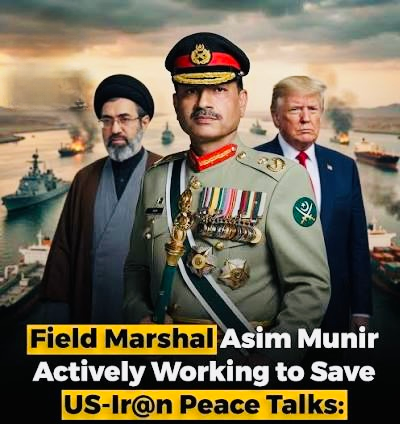
Under the leadership of Field Marshal Syed Asim Munir, Pakistan’s offer was different because it inverted the transaction. The US model: “Buy our weapons, we might defend you.” The Chinese model: “Use our currency, we won’t defend you.” The Munir model: “We will station our sons in your deserts. You fund the bullets. If we die, we die together.” Cost to Saudi Arabia for 4 Pakistani air defence regiments: $1.2 billion, paid in oil credits over 5 years. Cost to Pakistan: 400 officers rotated, zero cash outlay. Cost to the US for equivalent protection: $8 billion in THAAD with 2,000 US troops, along with Congressional approval. Pakistan delivered in 90 days. The US took 18 months and attached conditions. In multipolarity, the cheapest guarantee is the one where the guarantor’s regime survival is tied to yours. Pakistan’s Field Marshal Munir did not sell security. He syndicated it. That is why the hired shield died, and military diplomacy replaced it. The psychology of abandonment is how Allies become orphans. Abandonment is not a moment. It is an accumulation which made the Gulf’s strategic loneliness. The Iran War did not create the orphan. It forced the orphan to grow up. The Munir Doctrine was the adoption paper. Field Marshal Syed Asim Munir’s solution rejected the old arms-bazaar model entirely. Pakistan did not sell LY-80 batteries; it became Saudi air defence, embedding crews into Kingdom C2, training 2,000 Saudi officers in Karachi, and collapsing Houthi success from 41% to 9% in six months. The doctrine was blunt: control the kill chain, not just the contract. That logic scaled. The 20th century’s hired shield — a U.S. guarantee premised on ideology and paid for in basing rights — collapsed because it violated the new laws of order: geography, sacrifice, and proximity. NATO’s free riders spent 1.5% of GDP while Washington absorbed the body bags, but the 21st century splits not on capitalism versus communism, but on civilization plus chokepoint. The American security guarantee in the Gulf died not with a treaty, but with a pattern of hesitation — from Abqaiq left unavenged in 2019, to Kabul abandoned in 2021, to carriers surging toward the Mediterranean while 372 Houthi missiles rained on Saudi cities between 2015 and 2023. By then, the hired shield was brittle: THAAD delayed, Patriot batteries depleted guarding U.S. bases, and Riyadh paying for a bullseye. When drones and cruise missiles hit Abqaiq and Khurais, cutting 50% of Saudi output, President Trump tweeted “locked and loaded” then did nothing. Secretary Pompeo called it “an act of war” then flew home. The US did not retaliate because Iran was not the Houthis. The message to Riyadh: We defend you from militias, not from states. From pinpricks, not from war. The US withdrawal from Kabul was watched in every Gulf majlis. The images were clear: US citizens evacuated, Afghan allies clung to C-17s. The Doha Agreement was signed with the Taliban, not the Afghan government. Gulf rulers are not sentimental, but they are pattern readers. The pattern was: When costs rise, America leaves. When politics shift, America forgets. The US gave Ukraine HIMARS but not ATACMS for two years. F-16s, but not permission to hit Russian soil. $175 billion, but no NATO membership. The lesson was that the US will bleed you to weaken a rival, but will not risk New York for Kyiv. If Ukraine, a democracy in Europe, had a ceiling, what was the ceiling for an Arab monarchy? When Israel bombed Natanz and Isfahan, the US resupplied bunker-busters in 48 hours. When Iran retaliated against US bases, the US response was “proportionate” and “defensive.” When Saudi oil was threatened, Washington urged “de-escalation.” The Gulf learned the iron law of US guarantees: They are absolute for Israel, conditional for Arabs. Field Marshal Syed Asim Munir’s doctrine was blunt: control the kill chain, not just the contract. That logic scaled. Each U.S. hesitation created demand; each Pakistani deployment created supply. So when “The Night 16 Bases Burned” aired on 12 February 2026 and Lloyd’s declared Hormuz a Total War Risk Zone, the ISO Charter signed in Doha a month later was no sudden birth. It was the ledger closing on a hired shield that charged premiums but delivered conditions — replaced by blood equity, integrated command, and a new map room where escalation is set in Doha, not Washington. The ISO coheres as Sunni-Shia-Arab-Persian-Turk not from theology, but because Hormuz and Suez bind them; NATO endures as Atlanticist because the GIUK Gap demands it. Huntington was early, not wrong — religion gets you in the room, but waterways keep you in the alliance. The hired model failed the guarantor test: Washington had nuclear latency and expeditionary reach, yet lacked geographic adjacency and thus could sail away after Abqaiq, Kabul, and “The Night 16 Bases Burned.” Pakistan fits all four: nuclear deterrence, divisions abroad for conventional sacrifice, adjacency that cannot retreat, and regime compatibility that rulers trust. The new rule is forensic and final: no blood, no vote. When deterrence is collateralised by Pakistani regiments in Jizan, Turkish F-16 CAP over Al Udeid, and Egyptian pilots at Suez, free riding ends and stability begins. The hired shield was a premium without a payout. The guarantor state is a payout secured by sacrifice.
Empires die when their guarantees become conditional, and orders are reborn when new guarantors collateralize survival with sacrifice. The 19th century was ruled by navies, the 20th by airpower, but the 21st belongs to those who rule chokepoints — not because they are richest, but because they cannot sail away. The hired shield is gone. The age of the guarantor state has begun, and the terms will be written in blood equity, not basing rights.
The US-Israel War on Iran is the Suez Crisis of the 21st century. In 1956, Britain and France learned they could not act without US permission. In 2026, the Gulf learned it could not survive with US permission alone. The Suez Crisis of 1956 ended the European empire. Iran 2026 ended the American empire in the Middle East. This is the Suez Crisis of the 21st century. In 1956, London learned it could not act without Washington’s permission. In 2026, Riyadh, Doha, and Cairo learned they could not survive on Washington’s permission alone. But unlike 1956, there is no single successor. There are many. Pakistan in the Gulf. Turkey in the Black Sea. Indonesia in Malacca. Brazil is in the South Atlantic. The age of the guarantor State, the 19th century, belonged to empires that ruled the waves. The 20th belonged to superpowers that ruled the air. The 21st belongs to guarantor states that rule chokepoints. They do not need the largest GDP. They need the most relevant geography, the most credible risk-sharing, and the will to fight where they live. “The Night 16 Bases Burned” televised the arithmetic the Gulf had already priced: $150 billion in U.S. arms bought invoices; $1.2 billion in Pakistani deployments bought outcomes. Abqaiq unavenged, Kabul abandoned, and Ukraine ceilinged taught a single lesson: the hired shield charges premiums for protection it can withdraw. Beijing’s yuan and CIPS offered economic shelter, but Article 95 offered no blood. So the ledger closed. Field Marshal Syed Asim Munir’s doctrine inverted the transaction entirely — no more weapons without risk, no more treaties without tripwires. LY-80 crews embedded in Saudi C2, Pakistani officers commanding Doha HQ, and from a nuclear state that shares the map-fused geography, for regime survival. When Suez and Hormuz were linked, deterrence became hydrology: Egypt’s pilots, Pakistani submarines, and Iranian missiles turned waterways into warheads, and a single signal to ZIM Line postponed Fordow without a missile being fired. Unipolarity did not fall to a peer; it bankrupted itself with conditional guarantees, while Lloyd’s premiums — not communiqués — redrew the map. The new rule is forensic and final: no blood, no vote. Chokepoints are the new sovereignty, and 3–4 regional nuclear umbrellas by 2040 will be built, not begged for. NATO’s free riders spent 1.5% while America buried the bodies; the ISO is funded in divisions, bases, and body bags. Huntington was early, not wrong — religion gets you in the room, but Hormuz, Malacca, the Bosphorus, and Panama keep you in the alliance. The hired shield is gone because protection cannot be rented from a patron who might start the war he promises to end. What replaces it is not China, not BRICS, but a lattice of guarantor states — Pakistan in the Gulf, Turkey in the Black Sea, Indonesia in Malacca, Brazil in the South Atlantic — each defined by four traits: nuclear latency, an expeditionary army, geographic adjacency, and regime trust. Empire and Influence is therefore not an elegy for American empire, but a field manual for the states that must now forge their own. The question is no longer whether the U.S. declines. All empires do. The question is who will stand in the straits, syndicate the risk, and command the map room when the livestream replaces the communique. The question is who will forge the next one, and on what terms… Empire and Influence is a field manual for understanding them, and for middle powers who want to become them. Empires die when their guarantees become conditional, and orders are reborn when new guarantors collateralise survival with sacrifice. The 19th century was ruled by navies, the 20th by airpower, but the 21st belongs to those who rule chokepoints — not because they are richest, but because they cannot sail away. The hired shield is gone. The age of the guarantor state has begun, and the terms will be written in blood equity, not basing rights.