The writer is an economist, anchor, geopolitical analyst and the President of All Pakistan Private Schools’ Federation
president@Pakistanprivateschools.com
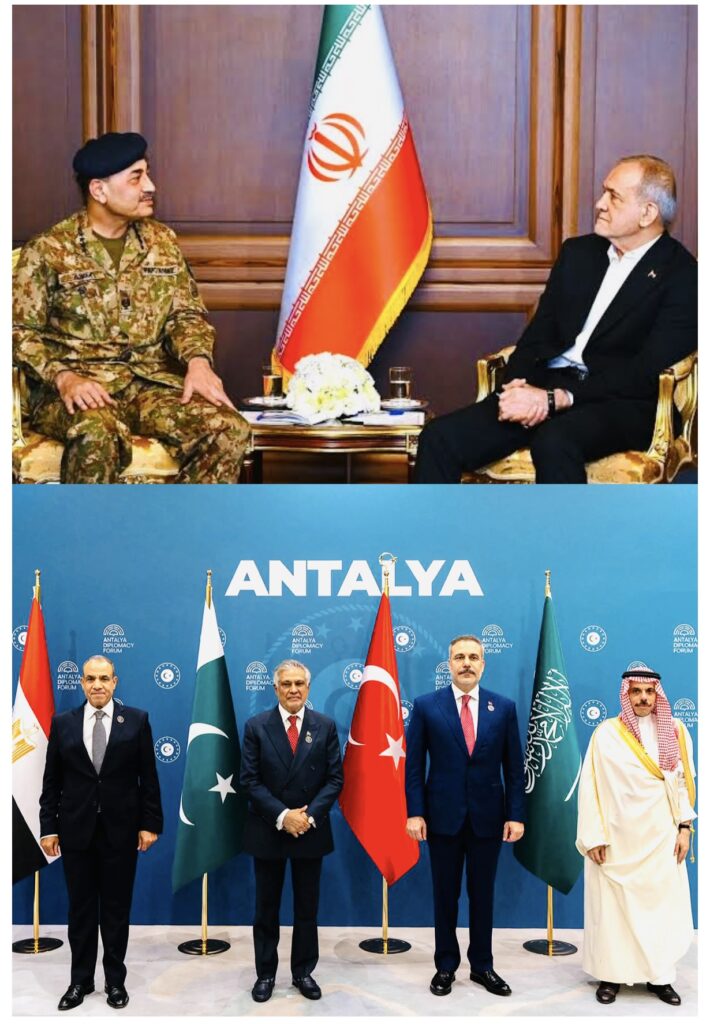
The Iran War marked the end of American unipolar security in the Middle East. The United States failed militarily, politically, and economically: its bases were struck, its deterrence was selective for Israel, and its presence raised risk premiums instead of guaranteeing stability. The Iran War exposed the vulnerability of the US forward-basing model. Al Udeid in Qatar, Al Dhafra in the UAE, and Ain al-Asad in Iraq were all struck. Dispersal and sheltering saved lives, but deterrence failed. The looming Iran war did not just test missiles and air defences. It tested alliances, and the American security architecture failed that test. When US bases in Qatar, Bahrain, and Iraq were attacked by Iranian strikes in the recent Iran War, Washington’s response was calibrated to avoid escalation with Tehran while continuing to arm and defend Israel’s operations against Iran. Iran destroys 16 US bases in the Middle East. CNN special report. Investigation shows that Iran has severely damaged or destroyed the majority of US military bases in the Middle East, and many of them have become practically unusable. The map of the Middle East was redrawn not at a summit, but on a radar screen. When 16 US military installations from Qatar to Iraq had been struck, and Iran had rendered the majority of them “practically unusable,” the era of American security guarantees ended in a single news cycle. The footage was stark: hangars sheared open, runways cratered, C-17s burning on tarmacs that once were called untouchable. Iran used a sixty-year-old F-5A aircraft to bomb these military bases. Obviously, the pilots may have been martyred, but they accomplished their mission, proving that deterrence is not measured in stealth coatings or defence budgets, but in will. With each passing day, the world will know how much damage America has suffered and why America will now have to withdraw from the Middle East. And this is Iran’s plan: the defeated America will no longer be allowed to return to the Gulf countries. The Gulf will be secured by the region, through new alignments that Washington cannot veto and Israel cannot bomb into submission. The unipolar moment did not fade. It was struck from the sky by an F-5A, and the sound of that shift is still echoing from Al Udeid to the Strait of Hormuz. For Saudi Arabia and Qatar, the message required no translation. The bases built to protect them could not protect themselves. The patron who promised extended deterrence was now evacuating casualties and filing damage assessments. Countries like Saudi Arabia and Qatar have realised that America will no longer be able to protect them. Overnight, Riyadh and Doha accelerated what the 2023 Beijing Agreement started: direct channels with Tehran, energy diplomacy, and a hard look at who can actually guarantee the Gulf. That search has turned toward Pakistan, the only Muslim nuclear state with expeditionary capacity and a record of standing between the Gulf and chaos. That is why they are improving their relations with Iran. And on the other hand, they are also kind to Pakistan for joining hands in their defence. For Turkey, Saudi Arabia, Pakistan, Qatar, and Egypt, the message was unambiguous: the United States could not protect its own installations, could not shield its Arab partners, and would not fight a war that was not Israel’s. The “recent Iran War” was not a regional skirmish. It was the stress test of the American-led security order in the Middle East, and that order failed on every metric. From that failure emerged the thought about a new military alliance of Turkey, Saudi Arabia, Pakistan, Qatar, Egypt, and possibly Iran in the near future with a NATO-style Article 5 joint defence clause. The New Strategic Bloc Emerging in the Middle East, tentatively called the “Islamic Security Organisation” (ISO) in backchannel drafts, represents the most consequential shift in Middle Eastern alignment since the 1979 Camp David Accords. From that conclusion emerges a new strategic reality: Ankara, Riyadh, Islamabad, Doha, and Cairo are now close to formalising a joint defence agreement modelled on NATO’s Article 5, and Iran is likely to be a founding member. This is not another paper alliance. It is a direct response to perceived US unreliability and the recognition that regional threats require regional ownership. For Gulf states, deterrence means nothing if the guarantor absorbs strikes and sues for calm. Turkey watched the US’s inaction when its troops in northern Syria were exposed to Iranian proxies. Pakistan, under the leadership of Field Marshal Syed Asim Munir, played a very significant and vital role during the war, addressing Islamabad’s security concerns. Pakistan, under Field Marshal Syed Asim Munir, has become the strategic anchor and defence guarantor for the GCC. Pakistan brings three unmatched assets: a nuclear deterrent, battle-hardened forces, and diplomatic trust with both Riyadh and Tehran. Field Marshal Munir’s doctrine of “deterrence by diplomacy” already operationalised the Saudi-Iran Beijing Agreement and now underpins possible alliance integrated command. The shared assessment: America fights Israel’s wars, not theirs. The Israel Factor and Strategic Autonomy were clearly seen, as the war was widely seen in the region as “Israel-imposed,” triggered by Israeli strikes on Iranian nuclear sites and IRGC commanders. The 2023 Beijing Agreement between Saudi Arabia and Iran already signalled Riyadh’s pivot to diplomacy over dependence. The Iran War accelerated that logic. If conflict with Iran is inevitable when Israel acts, then the only way to prevent war is to bind Iran into a security structure, not exclude it. Leaked outlines from Ankara and Riyadh describe a treaty, likewise an Article 5 for the Muslim World, with three pillars: Collective Defence Clause; Integrated Command and Interoperability; and Economic-Security Linkage. The alliance links to China’s BRI and Russia’s INSTC. Pakistan brings CPEC. Iran brings the North-South Transport Corridor. Turkey brings the Middle Corridor to Europe. Saudi Arabia and Qatar bring capital. This is a contiguous land-sea bloc from Shanghai to Alexandria that does not need the US Navy for security or the dollar for trade. De-dollarisation accelerates when energy, weapons, and food trade within the bloc. Turkey remains in NATO but also has a major role in the alliance. NATO’s Southern Dilemma is that Article 5 obligations could conflict. NATO either accommodates Turkey’s dual role or faces a de facto split. Eastern European members fear Turkish veto power will now represent Iranian interests. The US loses its “bridge” to the Muslim world.
Pakistan and Field Marshal Syed Asim Munir became the strategic anchor of a new Islamic Security Architecture. The Iran War moved the centre of gravity from Washington to Rawalpindi, and Field Marshal Syed Asim Munir embodies that transition. The 21st century will be defined by blocs. From that verdict emerges a new reality. At its centre stands Pakistan, and at Pakistan’s helm stands Field Marshal Syed Asim Munir, whose military diplomacy and nuclear credibility have recast Islamabad from aid recipient to defence guarantor for the GCC. Munir neutralised Western objections and reassured Egypt and Turkey. His message to GCC rulers was direct: “Pakistan will not let the Gulf become a battleground again.” The Iran War proved that only Pakistan could make that promise credible. The proposed alliance would make that expenditure strategically irrelevant. On the other side, Pakistan has five unique qualifications: Nuclear Credibility and proven delivery systems; a combat record of two decades of counter-terror war; High-altitude warfare; and naval operations against piracy. As a diplomatic balance, Pakistan is trusted by China, acceptable to Iran, essential to Saudi Arabia’s security of the two holy mosques, and historically aligned with Turkey. Institutional continuity of the Pakistan Army is the region’s most stable institution, and Field Marshal Syed Asim Munir embodies that continuity. His elevation to Field Marshal in 2024, the first since Ayub Khan, signaled domestic consensus for an external role. Field Marshal Munir’s doctrine of deterrence by Diplomacy; since assuming command, Field Marshal Munir pursued “defence diplomacy” that made Pakistan the indispensable broker: Tehran-Riyadh Bridge: He hosted Iranian and Saudi intelligence chiefs in Rawalpindi in 2023, operationalising the Beijing Agreement. The alliance architecture: NATO’s Article 5, which recoded for the Muslim World, Article 5-Style Collective Defense: “An armed attack against one or more members shall be considered an attack against all, and each member shall assist the Party or Parties so attacked with armed force if necessary.” The clause excludes intra-member disputes, allowing Iran and Saudi Arabia to sit together. It includes “attacks on energy infrastructure, chokepoints, and overseas citizens” as triggers. The Integrated Command would be under Pakistani leadership, as the Joint Command will be possible headquartered in Doha, using hardened facilities at Al Udeid after the US transition. The Supreme Commander post rotates, but the first 5-year term is designated for Pakistan. Field Marshal Syed Asim Munir’s selection reflects three assets: Pakistan’s nuclear deterrent, its combat experience, and its non-sectarian credibility with both Riyadh and Tehran. Turkish and Egyptian deputies manage naval and land components. Saudi Arabia chairs the Defence Finance Committee. Pakistan, as a responsible country, does not extend nuclear sharing. Instead, adopts a calculated doctrine: an attack on a member’s existential infrastructure may meet unacceptable damage from Pakistani strategic forces. This mirrors NATO’s US umbrella while respecting NPT norms. It is credible because Field Marshal Munir has centralised command authority and a direct line to Iran’s Supreme National Security Council since his 2023 Tehran visit. GCC Shield: 15,000 Pakistani troops already serve in Saudi Arabia. Under the possible alliance, they become the core of a 60,000-strong Rapid Deployment Corps based in Tabuk and Doha, commanded by a Pakistani Lt Gen. Through Co-Production, this alliance may have mandates of 40% local content for defence procurement. Turkish drones in Pakistan, Pakistani artillery shells in Saudi Arabia, Egyptian shipyards servicing Iranian and Qatari vessels. This creates 2.1 million skilled jobs by 2035 as per estimates. It ends the rentier model and builds a military-industrial base. De-Dollarized Energy Corridor is possible with Saudi, Iran, Qatar, Egypt and Turkey in one bloc, oil and LNG invoicing shifts to a basket of yuan, riyal, rupee, and lira. Economic development follows: IMF projects de-escalation adds 1.3% to GCC GDP, Bruegel finds EU shipping costs fall 12%, and SCO estimates oil volatility drops 18%. Defense co-production across member states may build industry and might end rentier dependence. The significance is post-Western, which restores sovereign security, sets precedent for the Global South, and confirms that multipolarity begins when regions defend themselves. This recycles surpluses within the region, financing infrastructure instead of US treasuries. The petrodollar loses its monopoly, and the Global South gains a non-Western financial system. Combined, the six states field 2.8 million active personnel, 4,200 combat aircraft, and the full spectrum from drones to ballistic missiles to nuclear weapons. The US advantage in stealth and carriers is offset by geographic density. No air campaign can sustain against six countries with shared IADS and land depth. The era of cost-free US strikes in the region ends. The bloc controls 48% of world oil reserves, 39% of gas reserves, and the Suez/Hormuz chokepoints. A joint pricing mechanism in non-dollar currencies undermines petrodollar recycling. Economically, the war triggered a 28% spike in Brent, a Lloyd’s “Listed Area” declaration for Hormuz, and capital flight from GCC bond markets. The possible alliance in future may control Hormuz, Bab el-Mandeb, and Suez, by ending US “command of the commons.” It would link to China’s BRI and Russia’s INSTC, creating a non-dollar trade corridor from Gwadar to the Mediterranean. For Israel, escalation dominance ends. For Europe, energy security requires compliance with regional law, not US sanctions. For India, Chabahar is now inside a Pakistan-anchored bloc. By this possible alliance, geopolitical stability rises because Iran would be integrated, not isolated. This is not a “coalition of the willing.” It is a treaty alliance with integrated command, shared doctrine, and mutual security guarantees. The proposed alliance would unify Hormuz, Bab el-Mandeb, and Suez under one security framework. The US 5th Fleet cannot operate in hostile or non-permissive waters without host consent. CBO estimates 5th Fleet Hormuz presence at $2.1B per year. Economic-Security Fusion, as a Development and Security Bank, capitalised at $100B by Saudi Arabia and Qatar, funds co-production: Turkish Bayraktar TB3 lines in Pakistan’s Kamra, Iranian Shahed-238 assembly in Egypt under IAEA-monitored safeguards, Saudi PGM manufacturing with Pakistani expertise. Transit fees from a jointly managed Hormuz-Suez corridor fund the bank, creating a self-financing security model. As Turkey has NATO baggage, Egypt has Camp David constraints, Saudi Arabia lacks expeditionary experience, Iran faces sanctions, and Qatar lacks mass.
The 20th century was the American century because the US controlled the Middle East. The 21st century will be multipolar because the Middle East now controls itself. That is the significance of this moment, and that is the legacy of the Iran War.
That’s the end of US “Command of the Commons”. Multipolarity is no longer a theory; it is infrastructure. The Global South sees a model: regional solutions without Western permission. Unipolarity depended on the Middle East being divided and dependent. The proposed alliance would unite it and make it self-sufficient. That is the geopolitical shift of the 21st century. The economic dividend will follow: lower risk, higher investment. Since 1945, US grand strategy has followed Mahan: control chokepoints to control commerce. The unipolar moment ends when regional powers provide regional public goods. This alliance is a shift from unipolarity to multipolarity, it embodies, and the geopolitical stability and economic development it promises. As Selective Security Guarantees, Washington’s red line was Iranian strikes on Israel, not on Arab states. When Iranian missiles hit Erbil and commercial tankers off Fujairah, the US response was sanctions and statements. When Israel struck Isfahan and Natanz, the US provided bunker-busters and intelligence. The region concluded that US security guarantees are derivative of Israeli threat perceptions. The consensus in Ankara, Riyadh, Islamabad, Doha, and Cairo was unanimous: the United States lost the war because it failed to achieve any of its objectives, could not protect its own forces, and fought only for an Israel-imposed agenda against Iran. The shift from unipolarity to multipolarity is structural. Militarily, US bases in Qatar, Bahrain, Iraq, and Syria absorbed Iranian missile salvos and drone swarms that Patriot and THAAD batteries could not stop. Politically, Washington refused to retaliate against Iranian territory, exposing that deterrence applied only when Israel’s security was at stake. Geographically, Gwadar and CPEC give Pakistan and its expected alliance its strategic depth to the Arabian Sea, bypassing Hormuz if needed. The proposed alliance would plug into China’s BRI and Russia’s INSTC. CPEC links Gwadar to Kashgar. Iran’s rail connects Chabahar to Turkmenistan. Turkey’s Middle Corridor runs to Europe. This creates a non-US, non-EU trade artery from the Pacific to the Mediterranean. Energy, weapons, and grain can move without a US Navy escort or dollar clearance. The core innovation of the proposed alliance is to include Iran rather than contain it. Geopolitically, Implications for Israel’s Strategic Isolation, as Israel’s doctrine of “escalation dominance” relied on US backing and Arab disunity. An ISO with Iran neutralises both. Israel cannot strike Iran without risking war with Turkey, Egypt, and Pakistan. The Abraham Accords become obsolete. Israel’s options narrow to nuclear deterrence or accommodation with a regional framework. Israel’s nuclear monopoly remains, but its conventional freedom of action ends. The result is forced negotiation on Palestine and a regional security framework, not perpetual conflict. India counted on Iran for Chabahar access to Afghanistan and Central Asia, and on Saudi/UAE for energy. If Pakistan and Iran are in the same alliance, backed by Turkey, India’s western flank is sealed. This pushes India toward accommodation with China and Pakistan, reducing the risk of a two-front war and stabilising South Asia, or New Delhi may go with the Quad. For 70 years, the Gulf security model was “we pay, America protects.” The Iran War proved that protection was selective and conditional. The ISO represents a return to the Westphalian norm: states provide for their own defence, collectively. It is a decolonisation of security policy. The bloc’s formation strengthens the case for UNSC reform or for bypassing the UN via regionalism. None of the proposed six countries has a permanent UNSC seat. OIC, Arab League, and SCO gain hard power. The US loses agenda-setting ability in the General Assembly. The birth of a Post-Western Security Order that “Sovereignty Over Security”. Sectarianism, subordinated to realism, Saudi-Iran rivalry and Sunni-Shia divides do not disappear, but they are managed within a structure, as France and Germany were in NATO. The 10 March 2023 Beijing Agreement was the test case. The Iran War was the catalyst. Shared threat from external manipulation outweighs sectarian difference. Precedent for the Global South, if six major Muslim states can unite despite history, why not ASEAN with a defense clause, or an African Union army? The proposed ISO becomes a model for post-American regionalism. The unipolar moment that began in 1991 ended in the Gulf. The United States did not lose the Iran War militarily, but also lost it politically, by revealing that its alliances serve Israel first, and that its bases are liabilities, not shields. Turkey, Saudi Arabia, Pakistan, Qatar, Egypt, and Iran drew the logical conclusion: survival requires self-reliance, and self-reliance requires unity. For 70 years, Gulf security was outsourced. The Iran War proved that outsourcing fails when patron and client interests diverge. Field Marshal Syed Asim Munir’s emergence as the defence guarantor for the GCC is not personal. It is structural. Pakistan is the only Muslim nuclear power with an expeditionary doctrine, Chinese backing, and ties to all sides. His leadership institutionalises that role. Just as Eisenhower gave NATO credibility, Munir gives ISO credibility. The proposed alliance is the Westphalian return: states defend themselves together. It is a decolonisation of security policy. History will record the Iran War as the conflict that moved the security centre of gravity from Washington to Rawalpindi. If Turkey, Saudi Arabia, Iran, Egypt, Pakistan, and Qatar can unite, ASEAN, AU, and CELAC can follow. The age of single-guarantor security ends. The age of regional blocs begins. Unipolarity does not die with a bang, but with a treaty. Indeed, the United States lost the Iran War because it only fought for Israel, not for its Arab partners, and because it could not protect its own bases. From that failure, Turkey, Saudi Arabia, Pakistan, Qatar, Egypt, and Iran drew the only rational conclusion: their security must be mutual, regional, and sovereign. Pakistan, under Field Marshal Syed Asim Munir, provides the military competence and diplomatic trust to make the Islamic Security Organisation viable. This is not an anti-Western alliance. It is a post-Western one. It does not seek conflict with America. It makes the American conflict irrelevant to regional stability. The Islamic Security Alliance, born from the ashes of the Iran War, is the first institution of that new era of economic stability and development, instead of war, restrained by law and guided by shared interest. From the Indus to the Nile, from the Bosphorus to the Gulf, the region will be secured by its own people. A joint defence pact with an Article 5 clause is not anti-American. It is post-American. It does not seek war with Washington. It makes war with Washington unnecessary. When the states that control Mecca, the Straits, the Suez, and the bomb decide to guarantee each other’s security, the global balance shifts not gradually but overnight. The 20th century was the American century because the US controlled the Middle East. The 21st century will be multipolar because the Middle East now controls itself. That is the significance of this moment, and that is the legacy of the Iran War.