
The writer is an economist, jurist, anchor, geopolitical analyst and the President of All Pakistan Private Schools’ Federation
president@Pakistanprivateschools.com
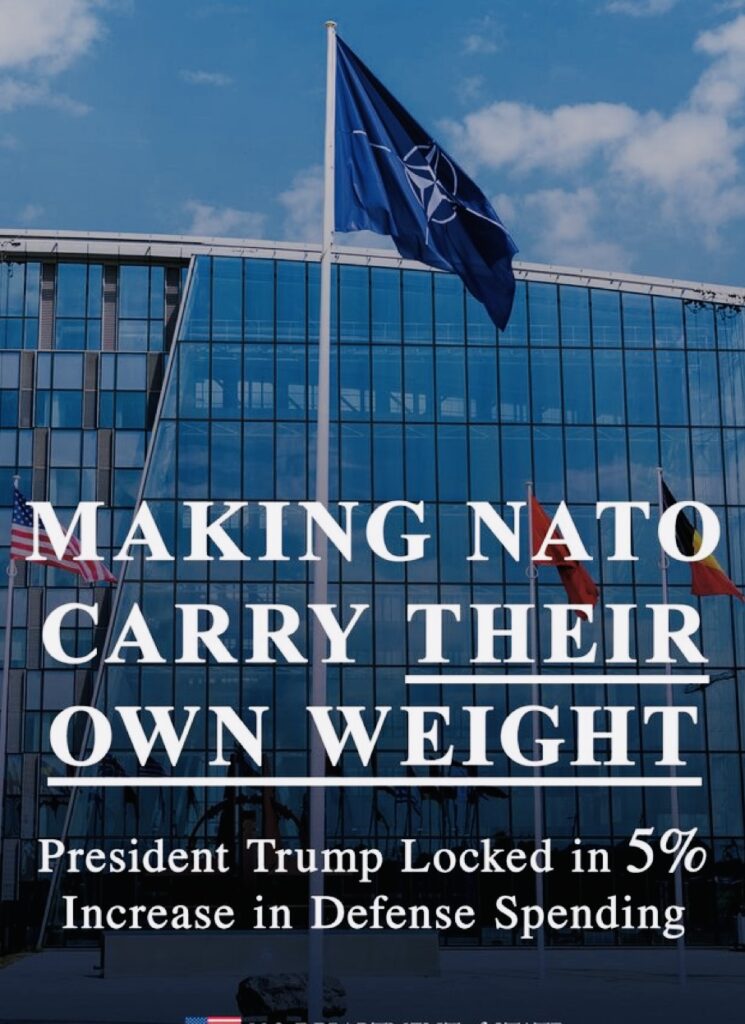
Globalisation and militarisation have fused into a single, self-reinforcing system where the very arteries of trade, technology, and finance now pulse with hard power. What was once sold as the great pacifier—interdependence dissolving borders and security dilemmas—has become the primary driver of rearmament. The post-Cold War peace dividend evaporated not because great powers suddenly grew belligerent in a vacuum, but because deep economic entanglement turned every supply chain, critical mineral deposit, data cable, and energy route into a potential front line. Today’s $2 trillion plus annual global defence spending is less a preparation for conquest than the insurance premium on a globalisation model that no longer believes its own promises of stability through commerce. Germany shattering its debt brake and Zeitenwende rhetoric for €144.9 billion in military outlays by 2027, Japan doubling defence budgets amid Pacific chokepoints, and NATO staging ledger presentations in the Oval Office are not isolated reactions to Russia or China; they mark the conscription of the world’s export champions into underwriting their own survival. The Oval Office scene with Mark Rutte and his charts is not diplomacy. It is damage control performed as pedagogy. When the NATO Secretary General wheels posters into the White House to sell a “Trump Trillion” in European defence outlays, the alliance has already conceded its core premise: that collective security rests on shared threat perception, not on placating one man’s ledger. Rutte’s props — $250 billion in new European and Canadian spending since 2022, Germany’s leap to €144.9 billion by 2027, and Poland at $38 billion — are real numbers. But their purpose was psychological, not strategic: to defuse presidential rage and buy time before an Ankara summit where the test of alliance is not Article 5, but loyalty to Trump. This is the conscription of globalisation in its most personal form. NATO is no longer managed through communiqués; it is managed through classroom visuals calibrated to a single audience. The subtext is brutal: Europe is rearming because of Russia, but it is presenting the receipts to America because of Trump. The €105.8 billion German core budget for 2027, the march toward 3.1% of GDP, the slow crawl to NATO’s 5% 2035 target — all of it becomes “proof” in a visual aid designed to answer one complaint: “Just be loyal.” Yet loyalty here is transactional, and Rutte knows it. His “slight” disagreement with Trump’s barbs about European free-riding was the maximum dissent the system permits. His real metric of success is not deterring Moscow; it is keeping Washington in the room. So he accommodates: Turkey gets courted for the summit, F-35s are dangled despite the S-400 breach, and Article 5 remains unuttered, because explicit guarantees are liabilities in a presidency that views alliances as protection rackets. The provocation is this: the $2 trillion barricade we are building globally now has a concierge. Europe’s surge in defence spending — driven by real threats — is being reframed as tribute to prevent an American exit. Eisenhower built NATO to contain the Soviets. Rutte is managing NATO to contain Trump. One was a strategy. The other is survival. And that is the thought that should unsettle us. When the world’s richest economies must stage poster-board briefings to keep their security guarantor from walking out, globalisation has not just been militarised. It has been personalised. The alliance survives, but on new terms: peace through charts, deterrence through deference, and a transatlantic bond measured not in divisions or treaties, but in whether the president feels respected. The “Trump Trillion” is real. The question is whether an alliance that needs one man’s name on the invoice can still claim to be collective. The 2026–27 military budget landscape is no longer a ranking; it is a ledger of anxiety in a world that has lost faith in globalisation and reinvested in the nation-state’s oldest currency: hard power. At $978 billion for FY2026, the United States still spends more than the next ten states combined, not to win wars but to underwrite a crumbling order where deterrence is the only export still growing. China’s $259 billion and Russia’s $158 billion are not catch-up numbers. They are bids to fracture that order, buying hypersonics, orbital denial systems, and Belt and Road port garrisons that turn trade routes into tripwires. But the real story is in the middle. Germany at €105.8 billion in core defence for 2027, with total military outlays reaching €144.9 billion — 3.1% of GDP — marks the end of post-Cold War illusions. Poland at $38 billion and Japan at $59 billion for 2026 confirm the trend: the world’s export champions are now its rearmament champions. NATO, once a Cold War relic, is now the accounting standard for fear. Germany’s leap from €82.7 billion in 2026 to €105.8 billion in 2027, breaching 2% of GDP and shredding its post-WWII restraint, is not about Ukraine alone. It is Berlin admitting that the debt brake was a strategic liability, that Russian gas and Chinese EVs were security bets the market no longer honours, and that the Zeitenwende has a price: €196.5 billion in new borrowing for 2027. This is globalisation conscripted. The €500 billion infrastructure and climate fund is not just for rails and renewables; it is for tank-ready corridors, cyber-hardened hospitals, and digital grids built to survive sabotage. Saudi Arabia’s $83 billion and Israel’s $49 billion in 2026 show West Asia’s same calculus: water, energy, and ideology now hedged with arsenals, not treaties. Ukraine’s €11.6 billion in German aid for 2027, tapering to €8.5 billion through 2030, is a fiscal IV drip for a state where farms became frontlines the moment interdependence failed to deter invasion. The provocation deepens: we are on track to spend over $2.1 trillion annually to manage the failure of a system we still call “rules-based.” By 2030, Germany hits 3.7% of GDP on defence, en route to NATO’s 5% target for 2035. When the world’s strongest exporters of cars, machine tools, and semiconductors become top-10 military spenders, globalisation has not died. It has been drafted. The high-rise trend in 2026–27 budgets is not preparation for war. It is the architecture of a world that no longer believes peace can be kept without pricing it in missiles, and where the $2 trillion barricade is being built by the very states that globalisation once enriched. Germany’s 2027 budget is not an accounting document. It is a eulogy for the post-war order. Defence spending at 3.1% of GDP, total military outlays of €144.9 billion, and borrowing at €196.5 billion signal that Berlin has killed its own fiscal theology to resurrect its military one. The Zeitenwende is no longer rhetoric; it is a line item. For decades, the debt brake was Germany’s moral substitute for a standing army — austerity as atonement for 1939. Now the brake is off, but not for schools or pensions. It is off for tanks, for Ukraine, for a €500 billion infrastructure fund that welds highways to howitzers and digitalisation to deterrence. This is the conscription of globalisation in real time. The same state that exported the Schwarze Null is now exporting the logic that growth requires barricades. €118.5 billion in “investment” is not Keynesian stimulus; it is dual-use statecraft. Hospitals hardened for cyberwar. Transport was rebuilt for tank corridors. Climate funds are allocated like logistics budgets. Chancellor Merz is right: Iran, Ukraine, and the last three years proved that peace has a price tag, and Germany finally read the invoice. The provocation is not that Germany is rearming. It is what Europe wants it to. Opinion polls back a €162 billion military by 2029 because the continent understands what Berlin learned too late: American security is no longer wholesale, and Russian risk is no longer hypothetical. NATO’s 5% target for 2035 looks less like U.S. coercion and more like German self-preservation. Yet history haunts the math. A Germany that spends 3.7% of GDP on defence by 2030 becomes Europe’s preeminent military power by default, not design. The exclusive truth: Germany is not becoming Europe’s strongman. It is becoming Europe’s insurer. The 20th century taught the world to fear German armies. The 21st may teach it to fear German absence. In a system where a pipeline, a microchip, or a drought can be weaponised, the choice is no longer between pacifism and militarism. It is between militarisation by consent and militarisation by crisis. With €196.5 billion in new debt, Berlin chose the former. The rest of Europe will live with the premium. It is Berlin admitting that pipelines are geopolitics, that Russian gas and Chinese EVs were security bets that lost. The Zeitenwende is Germany rearming not to lead Europe into battle, but to keep globalisation from collapsing on its factory floors. Japan’s $55 billion tells the same story in a different theatre. Hemmed by China’s $246 billion budget, North Korea’s missiles, and a U.S. umbrella that now invoices its allies, Tokyo is buying Tomahawks and doubling defence to 2% of GDP because “pacifism” became a luxury in a world where supply chains are chokepoints. Both states are NATO’s psychological bookends: one on the Russian front, one in America’s Indo-Pacific mirror. Neither wants war. Both are budgeting for a world where trade wars, chip wars, and climate wars are no longer metaphors. Saudi Arabia’s $80 billion and Israel’s $46 billion in West Asia reveal a region where water, oil, and ideology are being hedged with arsenals, not treaties. Ukraine’s $54 billion is a wartime GDP on fire, a case study in how fast a nation can convert farms into frontlines when globalisation’s promise of interdependence fails to deter invasion. Even Iran’s modest $7.9 billion buys asymmetric influence that outranks its budget, while Palestine’s $0 budget is the starkest metric of all — a people globalised through displacement, militarised through occupation, but disarmed by design. These numbers expose a deeper fusion: militarisation is no longer a drag on globalisation; it is the new globalisation. CPEC is a highway and a military corridor. Desertec’s solar fields need air defence. The Nile Dam is a dam and a casus belli. Economic giants are re-militarising because supply chains now come with security premiums, and semiconductors are national security. This is the high-rise trend laid bare. NATO’s European members and Japan are no longer free-riding on U.S. hegemony; they are co-underwriting a new order where militarisation is the insurance policy for globalisation. Germany’s arms to keep the EU’s single market from becoming a siege economy. Japan’s arms to keep the Pacific’s sea lanes from becoming Beijing’s moat. Their budgets are rising because globalisation’s operating system — rules, institutions, interdependence — now crashes without military drivers installed. The thought that should provoke us: we are spending $2 trillion annually to manage the consequences of a system we still call “interconnected.” Yet the more we spend, the less secure we feel, because every dollar budgeted for defence is an admission that diplomacy, trade, and institutions have already failed.
The uncomfortable truth is that the rules-based order did not fail despite globalisation—it failed because of it. When pipelines become weapons, semiconductors sovereign territory, and climate shocks casus belli, militarisation ceases to be a drag on prosperity and becomes its new operating system: fortified blocs, dual-use infrastructure, and deterrence priced into every container ship. We are not witnessing the death of globalisation, but its transformation into something harder, more anxious, and explicitly armed—a $2 trillion barricade built by the very states it once enriched. The question is no longer whether this fusion can deliver security, but whether an interconnected world that must spend this much merely to manage its own vulnerabilities can still call itself peaceful. The complex dynamics between globalisation and militarisation have significantly shaped international relations, global governance, and human security. The high-rise trend in military budgets is not preparation for war. It is the architecture of a world that no longer believes peace can be kept without pricing it in missiles. The provocation is this: when the world’s strongest exporters of cars, robots, and high-end manufactures become top-10 military spenders, globalisation has not ended. It has been conscripted. We are not witnessing rearmament for conquest. We are witnessing rearmament for survival in a system where a container ship, a data cable, or a drought can be weaponised faster than a division can deploy. The $2 trillion barricade is being built by the very states that globalisation enriched. That is the exclusive, uncomfortable truth the 2025 budgets reveal. Globalisation, characterised by economic, cultural, and technological integration, has created new opportunities and challenges. Globalisation and militarisation are intertwined trends shaping international relations. To build a more peaceful and equitable world, we must navigate these complex dynamics and prioritise collective choices for global governance and security. Globalisation and militarisation are two intertwined phenomena shaping international relations and geopolitics. While globalisation promises economic prosperity and cooperation, militarisation underscores the persistence of power politics and security concerns. Globalisation has fostered economic interdependence, technological advancements, and cultural exchange. Globalisation and militarisation no longer intersect; they have fused, and the weld is glowing hot. Arms markets now dictate trade flows, while trade flows dictate where the next base is built. The $597 billion global arms trade is globalisation’s shadow ledger: every chip sanctioned, every pipeline secured, every debt trap laid under the Belt and Road is both economic policy and force projection. In South Asia, this fusion looks like CPEC—simultaneously a lifeline for Pakistan’s collapsing balance sheet and a strategic corridor that makes Islamabad’s sovereignty negotiable in Beijing’s war rooms. India and Pakistan trade more mangoes than missiles, yet terrorism and Kashmir keep both states armed to the teeth, proving that economic interdependence does not dissolve security dilemmas; it digitizes them. In MENA, the same knot tightens around water, not oil. Ethiopia’s Grand Renaissance Dam turns the Nile into a countdown clock for Cairo, and climate change is the hidden general in every theatre from Yemen to Syria. Droughts did not cause the Syrian war, but they drafted its foot soldiers. Now, militaries are being re-missioned as climate first-responders, while carbon cuts are negotiated under the shadow of F-35s. The region imports weapons at record rates and exports refugees at higher ones, caught between the Arab Spring’s demand for dignity and globalisation’s delivery of inequality. Iran lives the paradox most acutely: sanctioned out of globalisation, it globalised its influence through proxies, turning isolation into a form of power projection. The consequences are not future tense. They are the present: humanitarian systems are bankrupt, international law is optional, and institutions like the UN are reduced to commentators on conflicts they cannot end. The US-China rivalry now prices every solar farm in the Gulf and every port in Gwadar as a square on a chessboard. Yet the counter-current is visible. Masdar City’s zero-carbon blueprint, Desertec’s Saharan power, and Fridays for Future’s MENA chapters reveal a different fusion — youth, code, and renewables as a new security architecture. The real challenge is not balancing growth with guns. It is admitting that in a world where a drought can trigger a civil war and a dam can trigger a regional crisis, climate is strategy, debt is deterrence, and technology is the only theatre where escalation might actually mean survival. The question is whether states will keep securitising globalisation, or finally globalise security itself. However, it has also exacerbated inequalities, fueled nationalist sentiments, and created new security challenges. The increased flow of goods, services, and ideas has been accompanied by the spread of technologies with military applications, blurring the lines between civilian and military domains. The post-Cold War era’s “peace dividend” has given way to rising military expenditures, with global spending reaching $2.4 trillion in 2023. The US, China, and Russia are the top spenders, driving a new arms race. This resurgence is fueled by: Great Power Competition in which the US, China, and Russia are reasserting their influence, often through military means; Regional conflicts and tensions like in Ukraine, Taiwan, and the Middle East are driving arms sales and military buildups; Terrorism and Non-State Actors in the global security threats have legitimised increased military spending and interventionism. Globalisation once promised to dissolve borders with trade; militarisation is now redrawing them with treaties, bases, and supply chains. The $597 billion arms market is not just commerce — it is globalisation armed, with Washington and Beijing writing the price lists for deterrence. Military globalisation has gone beyond alliances: it is the permanent wiring of bases, data cables, and satellite orbits into a single nervous system, where a chip embargo in Taiwan becomes a security crisis in Berlin. Economic security has collapsed the old firewall between profit and power. Trade routes are fortified, semiconductors are sovereign, and critical minerals have become the new oil — not traded, but contested. This collision is splintering the world into fortified blocs: the US, EU, and China are not just reevaluating partnerships, they are conscripting them. The paradox cuts both ways. Militarisation now chokes globalisation through sanctions, decoupling, and the slow death of interdependence. Yet globalisation birthed this militarisation, because deep economic entanglement turned every port, pipeline, and patent into a potential front line. The result is a planet simultaneously more connected and more combustible, where authoritarianism thrives in the gap between disrupted markets and securitised politics. Understanding this feedback loop is no longer academic. In a world where a trade war can trigger a hot war, peace depends on knowing which wire to cut — and which one, if cut, brings the whole grid down. Meanwhile, militarisation, marked by the growing role of military power, is often used to manage globalisation’s consequences. Water scarcity and food insecurity can exacerbate tensions between countries, e.g., Nile River disputes. Climate-related displacement can fuel social unrest and conflict, e.g., Syria’s drought-linked migration. Climate vulnerabilities can be exploited by groups like ISIS to recruit and spread instability. States prioritise power and security, driving militarisation, while globalisation offers opportunities for cooperation and competition. Globalisation fosters economic interdependence, but also creates security challenges that may lead to militarisation. Globalisation is a capitalist expansion process, leading to inequality and conflict, managed through militarisation. Security concerns justify militarisation, often at the expense of human security and global governance. Economic growth, cultural exchange, and cooperation have also increased inequality and instability. Increased military spending, modernisation, and the use of force in conflicts are raising concerns about human rights abuses. Economic interests drive military interventions; military power shapes global governance; and militarisation of aid and development blurs economic and security lines. In Iraq War: Globalisation’s dark side, highlighting economic interests and military intervention. China’s Belt and Road Initiative is also one of the examples of economic or military expansion, showcasing China’s growing influence. Even US Foreign Policy by promoting democracy or imperialism, reflects complex motivations.
The uncomfortable truth is that the rules-based order did not fail despite globalization—it failed because of it. We are not witnessing the death of globalization, but its transformation into something harder. The question is no longer whether this fusion can deliver security, but whether an interconnected world that must spend this much merely to manage its own vulnerabilities can still call itself peaceful.
The $2 trillion conscription reveals globalisation’s final irony: the very forces of integration that were meant to render war obsolete have instead militarised prosperity itself. The $2 trillion barricade is not a budget. It is a confession. Globalisation and militarisation are no longer parallel trends or rival forces; they have fused into a single operating system, and the 2025–2027 defence ledgers are its error log. What began as a promise — that interdependence would price war out of existence — has inverted. The same arteries that carried container ships, code, and capital now carry coercion. Semiconductors are sovereignty, pipelines are pressure points, and a data cable cut in the Baltic counts as a casualty. The post-Cold War peace dividend did not expire from ideology; it was foreclosed by exposure. Deep entanglement turned every supply chain into a kill chain, every trade route into a tripwire. So the world re-arms not to abandon globalisation, but to underwrite it. The $2 trillion-plus annual spend is less a war chest than an insurance premium on a system that no longer trusts its own design. NATO’s new wallets, Germany’s broken debt brake, and Japan’s 2% doctrine are not deviations from the globalised order. They are globalisation drafting itself — conscripting the balance sheet to defend the business model. What began as a borderless dream of mutual dependence has hardened into fortified supply chains, weaponised chokepoints, and export powerhouses racing one another toward 3% and 5% of GDP in defence. Germany’s Zeitenwende ledgers, Japan’s Pacific rearmament, NATO’s classroom diplomacy, and the quiet proliferation of dual-use infrastructure across Eurasia and the Indo-Pacific are not aberrations—they are the new normal of a system that discovered too late that interdependence without credible power is fragility dressed as virtue. The barricade is rising not to conquer, but to insulate; not for empire, but for survival in an order that commodified vulnerability. Yet this fusion carries its own peril: every additional billion spent on deterrence is an admission that trust, institutions, and diplomacy have already retreated. The true test ahead is whether this militarised globalisation can stabilise a fractured world, or whether it will merely professionalise the very insecurities it claims to manage—turning the planet’s richest economies into permanent stakeholders in an anxious, armed peace. In the end, the invoice is paid, the charts presented, and the question lingers: when globalisation enlists in its own defence, who truly remains civilian?