

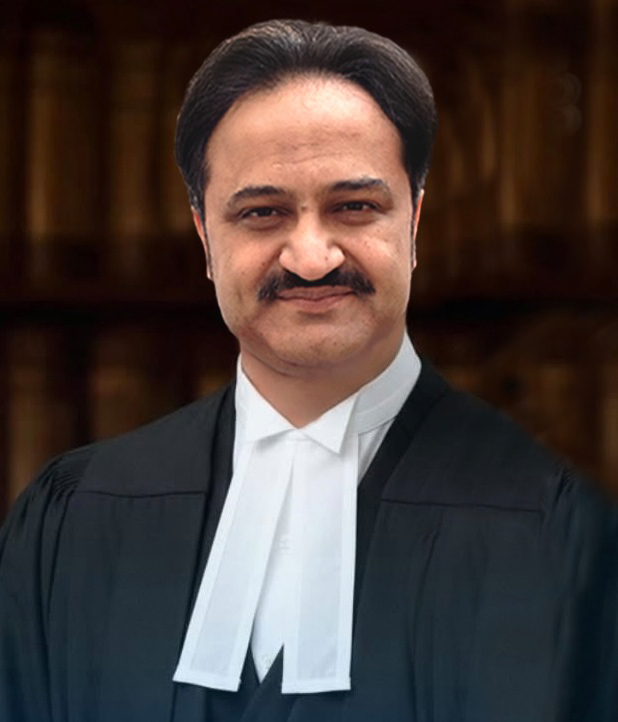
The writer is an economist, anchor, geopolitical analyst
and the President of All Pakistan Lawyers’ Federation
president@Pakistanprivateschools.com
The Punjab government recently promulgated the Punjab Protection of Ownership of Immovable Property Ordinance 2025, ostensibly to combat land grabbing and expedite resolution of disputes over possession and ownership of immovable property. The Punjab government’s ordinance to protect possession and ownership of immovable property, by vesting all powers in the administration and abolishing the role of courts, raises several concerns. The ordinance appears to blur the separation of powers between the executive and judiciary, undermining the checks and balances essential in a democratic system. While addressing a real issue of land grabbing, achieves this at the unacceptable cost of eroding judicial independence, fair trial rights, and property protections. It stands in direct contradiction to Articles 10A, 24, and 175 of the Constitution, landmark cases like *District Bar Association v. Federation*, and international instruments such as the ICCPR and UDHR. The United Nations Universal Declaration of Human Rights (Article 17) protects the right to property, emphasizing the importance of fair and public processes in resolving property disputes. The ordinance’s provisions may be seen as inconsistent with these principles. This is echoed in international law, to which Pakistan is bound. Article 14 of the International Covenant on Civil and Political Rights (ICCPR), ratified by Pakistan in 2010, mandates that “everyone shall be entitled to a fair and public hearing by a competent, independent and impartial tribunal established by law.” Similarly, Article 10 of the Universal Declaration of Human Rights (UDHR) affirms the right to a fair hearing by an independent tribunal. Courts must intervene under Article 184(3) or 199 to declare it unconstitutional, restoring balance to the legal framework. Only through judicial oversight can property rights be truly safeguarded without sacrificing the rule of law. Pakistan’s ratification of ICCPR and adherence to UDHR impose obligations to uphold fair trial and property rights. The ordinance’s administrative adjudication flouts these, as tribunals lack the independence required under Article 6 of the European Convention on Human Rights (analogous to ICCPR standards). In *Human Rights Committee v. Pakistan* communications, violations of fair trial have been noted in similar contexts. Comparative analysis from other jurisdictions, such as India’s experience with administrative tribunals under Article 323A of its Constitution, reveals similar issues: excessive executive control often leads to biased outcomes and subsequent judicial invalidation. On October 30, 2025, the Punjab provincial government in Pakistan promulgated the Punjab Protection of Ownership of Immovable Property Ordinance 2025, ostensibly to combat land grabbing and provide swift protection for property owners. This ordinance, enacted under Article 128 of the Constitution of Pakistan, which empowers the Governor to issue ordinances in urgent circumstances when the provincial assembly is not in session, establishes a new framework for resolving disputes over possession and ownership of immovable property. By bypassing the courts, the ordinance may violate principles of due process and fair hearing, potentially leading to arbitrary decisions and abuse of power. The ordinance’s validity under the Constitution may be challenged, particularly if it is seen as infringing on fundamental rights or exceeding the government’s legislative competence. The ordinance’s impact on property rights is significant, and it may lead to disputes and conflicts, particularly if the administration’s decisions are perceived as biased or unjust. The lack of judicial oversight may reduce accountability and transparency in property-related disputes, potentially leading to corruption and abuse of power. While the ordinance’s objective to protect property rights is laudable, its approach raises concerns about the rule of law, separation of powers, and due process. It is essential to ensure that any such legislation is carefully crafted to balance property rights with the principles of justice, fairness, and accountability. Central to its structure is the creation of District Dispute Resolution Committees (DRCs), administrative bodies chaired by the Deputy Commissioner and comprising executive officials such as the District Police Officer, vested with powers akin to civil courts under the Code of Civil Procedure, 1908. These committees are mandated to resolve complaints within 90 days, with appeals directed to Special Tribunals headed by retired judges nominated by the Chief Justice of the Lahore High Court. While the ordinance’s stated objectives—curbing the “land mafia,” ensuring rapid possession recovery, and imposing stringent penalties for illegal occupation (including 5-10 years’ imprisonment)—appear commendable, its implementation raises profound legal and constitutional concerns. By shifting authority from the judiciary to executive-dominated administrative bodies, the ordinance effectively abolishes the primary role of courts in property disputes, potentially eroding foundational democratic principles. By critically analyzes the ordinance through a research-based lens, drawing on Pakistan’s constitutional framework, judicial precedents, and comparative legal insights to argue that it undermines separation of powers, due process, property rights, accountability, and overall constitutional validity. The Constitution of the Islamic Republic of Pakistan, 1973, enshrines the separation of powers as a cornerstone of governance, ensuring that the executive, legislature, and judiciary operate independently to prevent authoritarianism. The doctrine of separation of powers, enshrined in Article 175 of the Constitution of Pakistan, mandates the progressive separation of the judiciary from the executive and confines courts’ jurisdiction to that conferred by law. Article 175 explicitly establishes the judiciary and delineates its jurisdiction, stating that “There shall be a Supreme Court of Pakistan, a High Court for each Province… and such other courts as may be established by law.” Critically, it mandates that “No court shall have any jurisdiction save as is or may be conferred on it by the Constitution or by or under any law.” The ordinance, by transferring adjudicatory powers over property disputes from courts to administrative committees under executive control, blurs this demarcation and encroaches upon judicial functions. This principle, intended to prevent executive overreach, has been repeatedly affirmed by the Supreme Court of Pakistan as essential to maintaining checks and balances. In the landmark case of District Bar Association, Rawalpindi v. Federation of Pakistan (2015), the Court emphasized that any encroachment on judicial functions by executive bodies violates the constitutional scheme, even in specialized tribunals. The ordinance flagrantly contravenes this by empowering DRCs—predominantly executive entities led by the Deputy Commissioner, an administrative official—to exercise judicial-like powers, including summoning witnesses, examining records, and issuing binding orders for possession recovery within 24 hours. By granting sweeping authority to administrative bodies—typically headed by executive officials like Assistant Commissioners—and explicitly ousting the jurisdiction of civil courts, the ordinance effectively abolishes the role of the judiciary in these disputes. While the stated objective of protecting property rights and curbing mafia influence is commendable, this legislative overreach contravenes fundamental constitutional safeguards, undermines the separation of powers, and violates international legal standards. But, also highlighting the contradictions through constitutional articles, case laws, and international obligations, arguing that the ordinance is ultra vires and must be struck down to preserve the rule of law. This setup allows the executive to adjudicate disputes traditionally reserved for civil courts, effectively bypassing the judiciary at the initial stage.
The Punjab Protection of Ownership of Immovable Property Ordinance 2025, is indeed a grave assault on the constitutional principles, judicial independence, International laws, and human rights norms. To truly protect property rights, reforms must reinforce, not undermine, judicial institutions, ensuring justice, fairness, and accountability prevail. Policymakers should reconsider this ordinance in light of constitutional imperatives and pursue amendments that restore judicial primacy.
Historical precedents, where civilian trials by non-judicial bodies were initially struck down as unconstitutional, illustrate the dangers of such arrangements. The Punjab ordinance, promulgated without assembly debate, exemplifies this abuse, potentially leading to executive dominance over property rights—a domain traditionally reserved for courts. Article 10A of the Pakistani Constitution, inserted via the 18th Amendment in 2010, guarantees the right to a fair trial and due process: “For the determination of his civil rights and obligations or in any criminal charge against him a person shall be entitled to a fair trial and due process in accordance with law.” By routing disputes through administrative tribunals without recourse to courts, the ordinance denies litigants access to an independent and impartial judiciary, violating this fundamental right. Although the ordinance includes appellate oversight by tribunals led by retired judges, this does not mitigate the initial executive dominance, as the tribunals themselves are appointed via a process involving governmental input, potentially compromising independence. This contravenes the principle articulated in the landmark case of *Al-Jehad Trust v. Federation of Pakistan* (PLD 1996 SC 324), where the Supreme Court emphasized that separation of powers is an essential feature of the Constitution, and any attempt by the executive to assume judicial roles violates this framework. Similarly, in *Sharaf Faridi v. Federation of Islamic Republic of Pakistan* (PLD 1989 Karachi 404), the court held that judicial independence is inviolable, and administrative bodies cannot supplant courts in matters requiring impartial adjudication. The ordinance’s structure, where DRCs—composed largely of executive appointees—exercise quasi-judicial powers without the safeguards of judicial tenure or independence, mirrors the unconstitutional setups struck down in these cases. Furthermore, ordinances under Article 89 are temporary measures for emergencies, not tools to permanently restructure judicial authority. In *Federation of Pakistan v. Muhammad Saifullah Khan* (PLD 1989 SC 166), the Supreme Court invalidated ordinances that bypassed legislative scrutiny and violated separation of powers, noting that such executive legislation cannot undermine constitutional structures. The ordinance’s 90-day resolution mandate, while aimed at efficiency, risks hasty decisions without adequate evidence or appeals to higher courts, contravening these standards. Case law reinforces this. In *District Bar Association, Rawalpindi v. Federation of Pakistan* (2015 SCMR 1251), the Supreme Court struck down military courts for civilians, holding that they violated Article 10A by denying fair trial through independent forums. Analogously, administrative tribunals like DRCs, lacking judicial safeguards, cannot ensure due process. In *Jawad S. Khawaja v. Federation of Pakistan* (2023 SCMR 104), the court reiterated that any ouster of judicial jurisdiction must provide an equivalent, independent alternative; mere administrative appeals fall short. The ordinance’s appeal mechanism to a Special Appellate Tribunal—likely another executive-influenced body—exacerbates this, as seen in *National Commission on Status of Women v. Government of Pakistan* (PLD 2019 SC 218), where tribunals violating fair trial norms were deemed unconstitutional. Article 24 of the Constitution protects property rights, prohibiting deprivation “save in accordance with law.” By empowering administrative bodies to decide ownership and possession without judicial oversight, the ordinance risks arbitrary dispossessions, contradicting this safeguard. International norms align: UDHR Article 17 states, “Everyone has the right to own property… No one shall be arbitrarily deprived of his property.” ICCPR Article 17 further protects against arbitrary interference with property. Access to justice, implied under Articles 4 and 9 (right to law and security of person), is undermined by ousting courts. The UN Basic Principles on Access to Justice emphasize effective remedies through independent tribunals. In *Shehla Zia v. WAPDA* (PLD 1994 SC 693), the Supreme Court affirmed that environmental and property rights demand judicial protection against executive overreach. The ordinance, by prioritizing speed over fairness, invites abuse, where expedited processes violated due process. Ouster clauses, which bar court intervention, are not absolute in Pakistan. Article 199 empowers High Courts to review administrative actions if they are without jurisdiction, mala fide, or violate fundamental rights. In *Piercing the Veil of Ouster Clauses* (2023), scholars note that courts routinely pierce such clauses when they infringe constitutional rights. In *Government of Sindh v. Dr. Nadeem Rizvi* (2020 SCMR 1), the Supreme Court held that ouster under Article 212 (for service tribunals) does not apply to property disputes, and any statutory ouster must be narrowly construed. The ordinance’s blanket exclusion of courts, without constitutional backing, is thus vulnerable to challenge. In Pakistan, where executive interference in judicial matters has been a recurring theme—is evidenced by the controversial reforms curbing judicial autonomy—the ordinance risks further entrenching authoritarian tendencies. Article 10A of the Constitution guarantees the right to a fair trial and due process for determining civil rights and obligations. This includes the opportunity for a proper hearing, presentation of evidence, and reasoned decisions—principles upheld in Supreme Court judgments like Sharaf Faridi v. Federation of Islamic Republic of Pakistan (1994), which stressed that expedited processes must not sacrifice fairness. Complex property disputes often involve intricate evidence, such as title deeds, witness testimonies, and historical records, which cannot be adequately examined in such compressed periods. The administrative composition of DRCs, lacking full judicial training, heightens the risk of arbitrary rulings influenced by local political pressures or biases. For instance, in cases involving powerful land mafias, executive officials may face undue influence, leading to unfair outcomes without the safeguards of an independent judiciary. Moreover, the ordinance’s provision for immediate enforcement, including police-assisted possession recovery, echoes concerns raised in the Peshawar High Court’s ruling in Writ Petition No. 5410-P/2024, where administrative tribunals’ exclusive jurisdiction was critiqued for excluding judicial review in service matters—a parallel applicable here. International standards, such as those under Article 14 of the International Covenant on Civil and Political Rights (ratified by Pakistan), demand impartial tribunals, further underscoring the ordinance’s shortcomings. Articles 23 and 24 of the Constitution protect citizens’ rights to acquire, hold, and dispose of property, prohibiting deprivation except in accordance with law. The Supreme Court has interpreted these as requiring judicial safeguards against arbitrary state actions, as in Government of Punjab v. Ghulam Rasool (2000), where executive overreach in land matters was invalidated. By centralizing power in administrative hands, the ordinance may exacerbate rather than resolve property conflicts. Decisions perceived as biased—due to the DRC’s executive tilt—could fuel litigation at the appellate stage or beyond, undermining the very efficiency it seeks. In rural Punjab, where land disputes often intersect with socio-economic inequalities, vesting authority in local administrators risks favoritism toward influential parties, violating equality under Article 25. Similar reforms, like Punjab’s land pooling policy critiqued by the High Court for lacking grievance mechanisms, highlight how administrative shortcuts can infringe on property rights without adequate protections. The absence of initial judicial oversight in the ordinance erodes accountability, as administrative bodies are less transparent than courts. Supreme Court observations in cases like the Role of Judiciary in Ensuring Rule of Law emphasize that judicial review is crucial to prevent abuse of power. While the ordinance proposes digital records and live streaming for transparency, these measures are insufficient without independent judicial enforcement. Historical data from Pakistan’s Anti-Corruption Establishment reports indicate that administrative handling of land issues correlates with higher graft incidences, reinforcing the need for judicial involvement. The ordinance’s validity is tenuous under multiple constitutional provisions. Beyond Articles 175, 10A, 23, and 24, its promulgation under Article 128 must demonstrate “immediate action” necessity—a threshold often scrutinized by courts, as in Mustafa Impex v. Government of Pakistan (2016). The Supreme Court’s history of striking down executive encroachments, such as in the 26th Amendment critiques for subjugating the judiciary, suggests this ordinance could face similar fate. While the Punjab Protection of Ownership of Immovable Property Ordinance 2025 addresses a pressing issue of land grabbing, its methodology—empowering the administration at the expense of courts—poses grave threats to the rule of law, separation of powers, and fundamental rights. This approach not only invites arbitrary governance but also risks judicial invalidation, as seen in analogous cases. To truly protect property rights, reforms must reinforce, not undermine, judicial institutions, ensuring justice, fairness, and accountability prevail. Policymakers should reconsider this ordinance in light of constitutional imperatives and pursue amendments that restore judicial primacy.