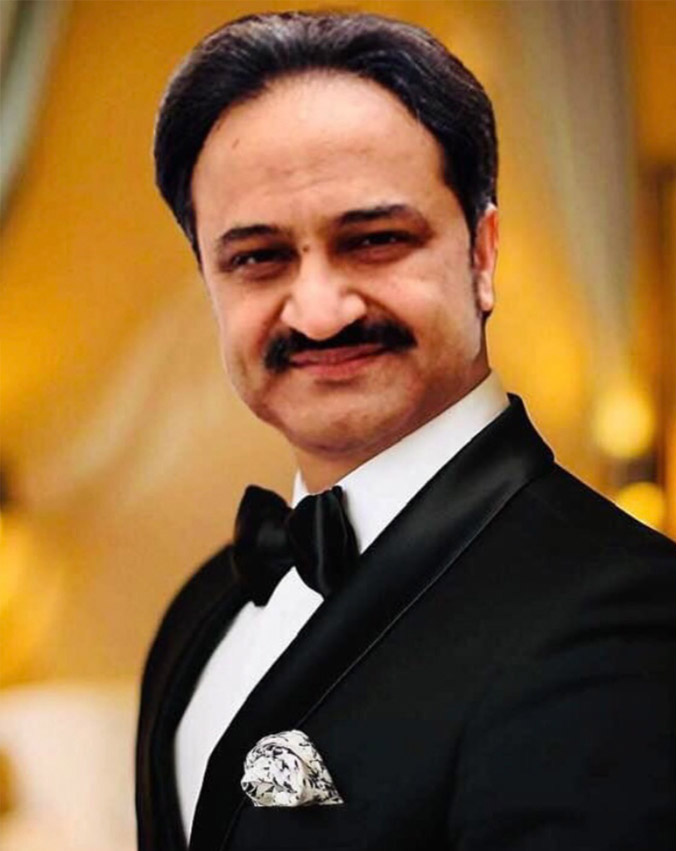
The writer is an economist, jurist, anchor, geopolitical analyst and the President of All Pakistan Private Schools’ Federation, president@Pakistanprivateschools.com
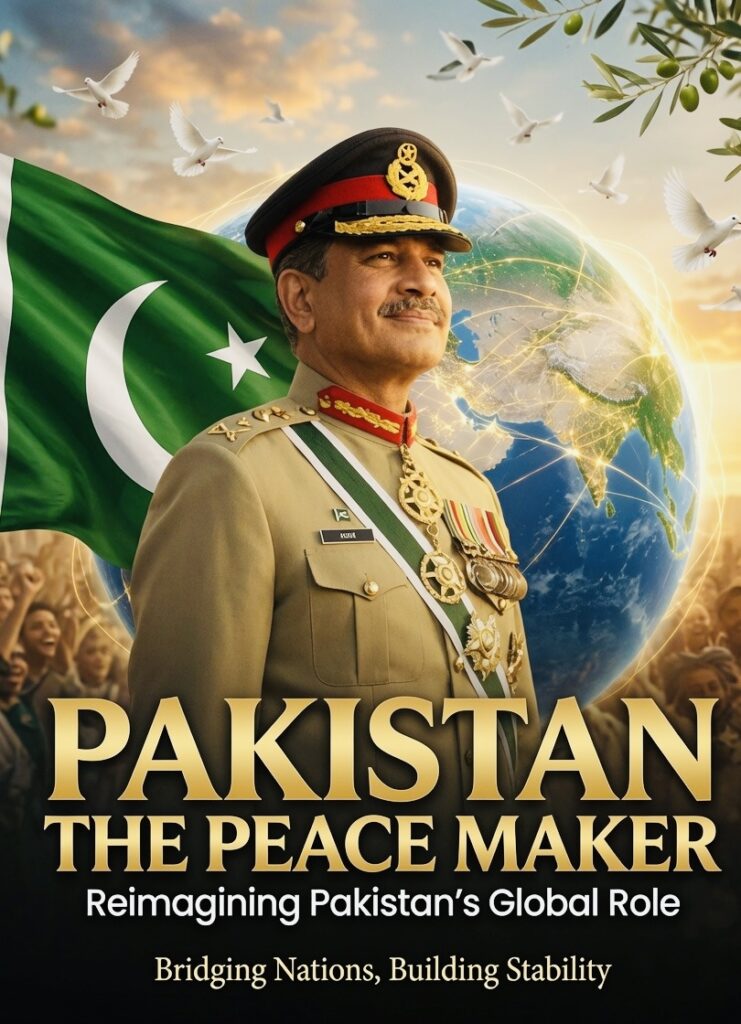
In a world fractured by geopolitical rivalries, proxy wars, and resurgent great-power competition, Pakistan often appears in global narratives through the lens of its challenges—security threats, economic pressures, and regional tensions. With special reference to the recent Islamabad MoU and the special efforts and diplomatic role of Field Marshal Syed Asim Munir, the recalibration of Pakistan’s global standing from security consumer to stability provider crystallised in the recent Islamabad Memorandum of Understanding, a framework that formalised Pakistan’s quiet, backchannel architecture into a declared doctrine of regional mediation. The MoU — reached amid escalating U.S.-Iran tensions that threatened the Strait of Hormuz — codified Islamabad’s unique position as a credible interlocutor trusted simultaneously by Tehran, Washington, Riyadh, and Beijing. It was not a treaty of alliance, but a protocol of adjacency: a mechanism to pass signals, defuse tripwires, and preserve strategic space when official channels freeze. Central to this shift has been Field Marshal Syed Asim Munir, whose tenure reoriented Pakistan’s military-diplomatic posture from reactive defence to proactive stabilisation. Under his leadership, the doctrine of “adjacency without allegiance” moved from instinct to institution. By leveraging Pakistan’s unparalleled access across ideological fault lines, its intelligence credibility built over two decades of counterterrorism, and its moral capital from hosting millions of refugees, Field Marshal Munir positioned Pakistan not as a camp follower but as a circuit breaker. His direct military-diplomatic engagements — from sustaining the 2021 LoC ceasefire with India to facilitating deconfliction channels during the Gaza and Iran crises — demonstrated that hard power, when restrained and precise, becomes the guarantor of dialogue. The Islamabad MoU thus represents more than a document. It is the institutionalisation of a new geopolitical fact: in a fractured, multipolar order, the states that matter most are those that can prevent wars they have no interest in fighting. The question is no longer whether Pakistan matters, but whether the shifting global order will wisely recognise and partner with this indispensable peace maker. Pakistan has contributed more than its share — in blood, in treasure, and in trust. The question for the international community is whether it will reciprocate by engaging Pakistan as the partner in stability it has long sought to be. The alternative—marginalisation amid persistent tensions—serves no one in our interconnected world, because when the switchboard goes dark, the whole grid fails. Yet this framing obscures a deeper, more constructive reality: Pakistan has consistently acted as a significant contributor to peacebuilding and conflict resolution on the global stage. For much of the 21st century, Pakistan’s global narrative was written in the language of crisis. Fault line, flashpoint, crossroads of conflict. Yet beneath those headlines lies a different, sustained record: Pakistan as a deliberate, often quiet, architect of de-escalation and dialogue. In an era where great-power rivalry is fracturing the map, Pakistan’s geography, relationships, and hard-won experience have turned it from a perceived liability into a functional necessity for peace. Pakistan sits at the seam of four nuclear or near-nuclear regions: China, India, Iran, and Central Asia, with Afghanistan as its immediate western neighbor and the Strait of Hormuz within its strategic orbit. That is not a buffer zone. It is a switchboard. When the U.S. and Iran stood minutes from open war in the Persian Gulf, it was Islamabad, not Geneva or Doha, that hosted the backchannel that became The Islamabad Declaration. Pakistan’s ability to talk to Tehran, Riyadh, Washington, and Beijing without belonging fully to any camp gave it what traditional mediators lack: adjacency without allegiance. In a nuclear age, that is a new form of superpower. From the rugged mountains of the Hindu Kush to the halls of the United Nations, Pakistan has deployed its resources, diplomacy, and personnel not merely as a participant in international affairs but as a pragmatic architect of stability. This role, rooted in its founding vision of peaceful coexistence and strategic necessity, positions Pakistan as an underappreciated “peace maker” whose contributions merit broader recognition and engagement. Pakistan’s most tangible and quantifiable contribution to global peace is its extraordinary record in United Nations peacekeeping operations. Since deploying its first contingent to the Congo in 1960, Pakistan has participated in dozens of missions across more than two dozen countries, contributing over 200,000–235,000 troops and police personnel to 41–48 missions. It remains one of the largest troop-contributing countries (TCCs), with thousands actively deployed at any time—recent figures around 8,000+ personnel representing a significant portion of total UN deployments. Pakistani peacekeepers have served in some of the most perilous environments, from Somalia (UNOSOM II) to the Democratic Republic of Congo, Mali, and beyond. They have protected civilians, facilitated humanitarian aid, supported political transitions, and helped stabilise post-conflict societies. The human cost has been steep: over 150–180 Pakistani peacekeepers have made the ultimate sacrifice, accounting for a notable share of total UN peacekeeping casualties. This willingness to bear the burden of “Chapter VI and a half” operations—neither pure diplomacy nor full-scale war—demonstrates a commitment that transcends rhetoric. No longer measured solely by GDP or aircraft carriers, influence now accrues to states that can bridge hostile blocs, de-escalate nuclear thresholds, and sustain dialogue where formal alliances collapse. Pakistan, situated at the confluence of South Asia, Central Asia, the Middle East, and China’s western corridor, commands precisely that rare adjacency: it can convene Tehran and Riyadh, pass messages between Washington and Kabul, and stabilise a Line of Control that separates two nuclear powers, all without being formally tethered to any single camp. This is the Islamabad Doctrine in practice — adjacency without allegiance —, and it has already redrafted crisis outcomes from the Persian Gulf to the Hindu Kush. Yet recognition lags reality. The question is no longer whether Pakistan matters, but whether the shifting global order will wisely recognise and partner with this indispensable peace maker. Pakistan has contributed more than its share: 230,000 UN peacekeepers deployed since 1960, four million Afghan refugees sheltered for four decades, and the political risk of facilitating talks that others were unwilling to touch. The question for the international community is whether it will reciprocate by engaging Pakistan as the partner in stability it has long sought to be. To do otherwise is to misread the new map. The alternative—marginalisation amid persistent tensions—serves no one in our interconnected world, because a disconnected switchboard still burns the house down.
The shift of global and regional power from unipolarity to contested multipolarity has redefined what constitutes geopolitical significance, and it is within this fracture that Pakistan’s role as a peacemaker becomes strategically indispensable. Pakistan’s Doctrine of credible neutrality which requires three currencies of peace building: access, trust, and risk tolerance. Pakistan holds all three. From facilitating the U.S.-Taliban Doha Agreement by bringing Taliban leadership to the table, to hosting OIC emergency sessions on Gaza and Afghanistan, Pakistan remains one of the few states that can convene adversaries without preconditions. With Iran, Pakistan shares a 900km border and a Shia minority that demands careful diplomacy. Saudi Arabia and the UAE share economic and defence ties. China shares the CPEC corridor. The U.S., it shares a 75-year, albeit turbulent, security relationship. That web makes Pakistan one of the only countries that can pass a message from Qom to Washington without it leaking or mutating. Mediation in South Asia and the Middle East is not seminar diplomacy. It carries blowback. Pakistan has absorbed that cost repeatedly, from hosting 4 million Afghan refugees for 40 years to losing 80,000 citizens in the post-9/11 war. States that have paid for war in blood understand the price of peace. Analytically, Pakistan’s peacekeeping engagement serves multiple layers. Normatively, it aligns with the country’s constitutional emphasis on international peace and the vision of its founder, Muhammad Ali Jinnah, who advocated for global harmony. Strategically, it enhances Pakistan’s diplomatic leverage, builds military professionalism through exposure to multinational operations, and fosters goodwill in the Global South, particularly in Africa. Pakistani forces have earned praise for their discipline, effectiveness in counter-insurgency settings, and community engagement—qualities that distinguish them in missions where consent and legitimacy are fragile. This record challenges stereotypes. While some view South Asia primarily through the prism of nuclear rivalry, Pakistan’s blue-helmeted soldiers embody a different narrative: one of investment in collective security. More recently, Pakistan has engaged in mediation efforts amid tensions with Afghanistan itself, including talks facilitated by third parties like China, Türkiye, and Qatar. These initiatives highlight a pattern: even amid disputes, Pakistan often prioritises de-escalation and dialogue over prolonged confrontation. Its efforts in broader West Asian crises, including attempts to mediate between the US and Iran, further illustrate a growing profile as a pragmatic interlocutor capable of engaging multiple sides. Pakistan’s role in conflict resolution extends deeply into regional diplomacy, most notably in Afghanistan. As a neighbour sharing a long, porous border and deep historical, cultural, and demographic ties, Pakistan has been both affected by and instrumental in Afghan peace efforts. It facilitated dialogue between the Taliban and the United States, leading to the 2020 Doha Agreement, hosted key stakeholders, and supported intra-Afghan negotiations. Pakistani officials have repeatedly emphasised that stability in Afghanistan is vital for Pakistan’s own security—a principle tested by cross-border militancy but pursued through persistent engagement. Pakistan’s advocacy for peaceful dispute settlement is consistent in multilateral forums. It has sponsored or supported UN resolutions on strengthening mechanisms for the peaceful settlement of disputes, emphasising preventive diplomacy and multilateralism. This stance reflects a worldview that sees dialogue—not escalation—as the default path, even when facing complex threats like terrorism. Global audiences rarely see this number: Pakistan has contributed over 230,000 troops to 46 UN peacekeeping missions since 1960. It is consistently among the top 3 troop contributors. From Congo to Côte d’Ivoire, Liberia to Bosnia, Pakistani blue helmets have escorted aid, disarmed militias, and protected civilians. This is not symbolic. In 1993, Pakistani soldiers died defending the UN compound in Mogadishu. In 2017, a Pakistani Female Engagement Team in the DRC changed how the UN approached community trust in conflict zones. Peace-building for Pakistan is not a foreign policy slogan. It is a deployed, operational doctrine. Despite bearing the spillover of four decades of war, Pakistan facilitated the 2020 U.S.-Taliban agreement and later hosted 57 OIC foreign ministers in 2021 to avert a humanitarian collapse after the U.S. withdrawal. No other neighbour combined the leverage and will to do both. The 2003 ceasefire along the Line of Control, the Kartarpur Corridor opening for Sikh pilgrims in 2019, and the 2021 recommitment to the ceasefire were all outcomes of quiet, direct or third-party Pakistani diplomacy. Escalation with a nuclear neighbour is easy. Choosing restraint repeatedly is policy. The enduring rivalry with India presents the most visible test of Pakistan’s peace-making credentials. Decades of conflict, punctuated by wars and crises, have fostered deep scepticism. Yet history reveals repeated attempts at rapprochement: the Tashkent Declaration, Simla Agreement, Lahore Process, composite dialogue, and multiple confidence-building measures (CBMs) on nuclear risks, trade, visas, and people-to-people contacts. Ceasefire understandings along the Line of Control, though fragile, demonstrate mutual recognition that uncontrolled escalation serves neither side. Thought-provokingly, these efforts suggest that peace is not absent but episodic and incremental—“peace by pieces.” Pakistan has often proposed broader frameworks, including on Kashmir, advocating dialogue as the only sustainable resolution to core disputes. While critics focus on setbacks, the persistence of backchannel diplomacy and periodic thaws underscores a structural interest in stability. In an era of nuclear deterrence, where outright victory is illusory, Pakistan’s emphasis on diplomacy aligns with rational statecraft. Beyond traditional security, Pakistan contributes through humanitarian action. Its response to domestic disasters—earthquakes, floods—builds resilience that indirectly supports regional stability, while its hosting of millions of Afghan refugees for decades represents a massive, often under-acknowledged peace dividend by preventing greater refugee crises and instability spillover. International partnerships in disaster relief further amplify this role. Pakistan’s foreign policy principles—respect for sovereignty, non-interference, and peaceful settlement—provide a coherent ideological foundation. In a multipolar world increasingly sceptical of interventionism, this “active neutrality” or balanced engagement allows it to maintain ties across divides (e.g., with China, the US, Gulf states, and others) and act as a connector rather than a divider. When Riyadh and Tehran severed ties in 2016, Pakistan, along with Iraq and Oman, kept channels open. Those threads later helped China broker the 2023 rapprochement. Mediation is often invisible until it succeeds. For the Gulf Security, Pakistan has declined to join wars but deployed troops to defend Saudi territorial integrity. That distinction — security without entanglement — is the Islamabad Doctrine in practice: be the firewall, not the fuel. Peace is not only about ending state conflict. It is about denying space to non-state actors. Pakistan’s military operations from Zarb-e-Azb to Radd-ul-Fasaad dismantled terrorist sanctuaries that once threatened global cities from London to Mumbai. The cost was immense, but the result was regional: a degraded TTP, a dismantled Al-Qaeda infrastructure, and intelligence sharing that prevented attacks far beyond its borders. Conflict resolution also means closing the labs where future wars are brewed.
The question is no longer whether Pakistan matters, but whether the shifting global order will wisely recognize and partner with this indispensable peace maker. Pakistan has contributed more than its share. The question for the international community is whether it will reciprocate by engaging Pakistan as the partner in stability it has long sought to be. The alternative—marginalization amid persistent tensions—serves no one in our interconnected world.
As the international order transitions from post-Cold War unipolarity toward a fluid multipolar landscape—marked by the relative decline of Western dominance, China’s assertive global outreach, and the resurgence of middle powers—Pakistan’s evolution from a quintessential frontline state into an indispensable architect of regional stability acquires profound geopolitical significance. Once defined by its role as a Cold War ally and a primary theatre in the War on Terror, Pakistan now sits at the critical intersection of South Asia, Central Asia, West Asia, and the Indian Ocean, wielding influence far beyond its size through a unique blend of hard-earned peacekeeping credibility, mediation diplomacy, and connectivity infrastructure like CPEC. Pakistan’s peace-making role faces credible constraints: domestic political and economic pressures, terrorism legacies, and trust deficits in key relationships. Accusations of selective engagement or harbouring militants have complicated its image, even as it conducts major counter-terrorism operations. Resource limitations and border insecurities test its capacity. Yet these challenges do not negate contributions; they contextualise them. The 21st century will not be defined by who can win wars, but by who can prevent them. Pakistan, by necessity and by choice, has learned the grammar of that prevention. It has rewritten the map without firing a shot, absorbed shocks that would have shattered lesser states, and still kept the door open when others built walls. That is not a peripheral state. That is a pivot. The post-Cold War mediation model — Swiss neutrality, Nordic facilitation, Gulf money — is strained. It assumes conflicts are distant and parties are equal. The new conflicts are on nuclear borders, driven by identity, and mediated by trust, not just procedure. Pakistan does not offer itself as a moral arbiter. It offers itself as a translator between incompatible security languages. It can explain Iran to the U.S., the Taliban to the West, and India to China because it lives at the intersection of their fears. To institutionalise this role, three shifts are needed: Formalise the Switchboard, which creates a standing Islamabad Peace Platform, backed by OIC and SCO, for pre-crisis dialogue. Not for photo-ops, but for crisis mail delivery when official channels freeze. Export What Works: Pakistan’s experience with refugee hosting, de-radicalisation, and community policing in post-conflict areas is a playbook the Sahel and Horn of Africa need. Scale it through UN South-South cooperation. Own the Narrative: Peacebuilding is not soft power. It is hard, dangerous, and thankless. Pakistan must tell that story with data, not apology. Effective peacebuilding requires addressing root causes—poverty, governance gaps, and extremism—areas where Pakistan continues internal reforms. Greater international partnership, rather than isolation, could amplify its positive potential: investing in economic connectivity (e.g., via CPEC extensions), supporting refugee hosting, and engaging constructively on Kashmir could yield dividends for South Asian stability. Thoughtfully, Pakistan’s story invites reflection on what constitutes a “peacemaker” in the 21st century. It is not the absence of conflict but the willingness to mitigate it amid constraints. Nations like Pakistan, bridging the Global North and South, Muslim and non-Muslim worlds, and nuclear realities with multilateral commitments, offer unique value. In an age of fragmentation, such bridges are strategic assets. Pakistan: The Peace Maker is not a polished slogan but a lived practice—imperfect, costly, yet demonstrable. From UN battlegrounds to diplomatic backchannels, Pakistan has invested blood, treasure, and political capital in the arduous work of peace. A global audience would do well to move beyond reductive narratives and recognise this dimension. Doing so opens avenues for collaborative peacebuilding that leverage Pakistan’s geography, experience, and networks for broader benefit. In an era where great powers increasingly rely on regional stabilisers to manage proxy conflicts, prevent spillover extremism, and secure trade corridors amid great-power competition, Pakistan’s demonstrated willingness to absorb costs for dialogue—whether in Afghan reconciliation, UN missions, or backchannel de-escalation—positions it as a pragmatic bridge-builder rather than a peripheral actor. This shift challenges outdated narratives and invites a strategic reimagination: by investing in Pakistan’s peace-making capacity instead of isolating it amid persistent disputes, the global community can harness a nuclear-armed, battle-hardened nation uniquely equipped to anchor stability across one of the world’s most volatile yet vital geographies. Ultimately, Pakistan’s story underscores a deeper truth of 21st-century geopolitics—that enduring peace architects emerge not from unchallenged dominance, but from nations forged in the crucible of frontline realities, offering the world a model of resilient, interest-driven diplomacy in an age of fragmentation. In the end, true peace is rarely dramatic; it is the quiet accumulation of ceasefires honoured, dialogues sustained, and sacrifices remembered. How a frontline state became an Indispensable architect of regional stability. The question is no longer whether Pakistan matters, but whether the shifting global order will wisely recognise and partner with this indispensable peace maker. Pakistan has contributed more than its share. The question for the international community is whether it will reciprocate by engaging Pakistan as the partner in stability it has long sought to be. The alternative—marginalisation amid persistent tensions—serves no one in our interconnected world.