The writer is an economist, anchor, geopolitical analyst
and the President of All Pakistan Private Schools’ Federation
president@Pakistanprivateschools.com
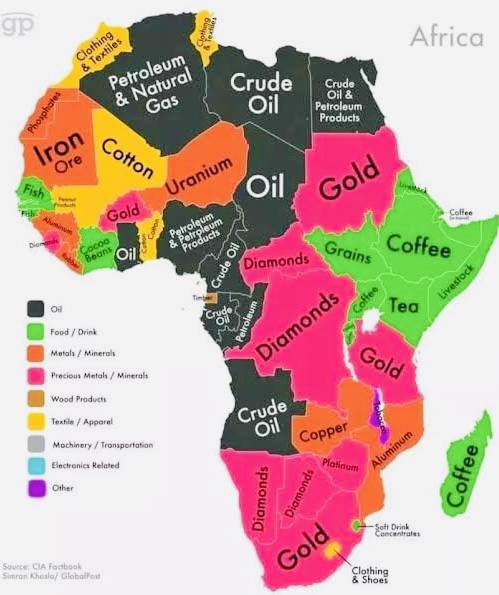
Africa, the cradle of human civilization, is emerging as a pivotal player in global diplomacy, driven by its strategic location, burgeoning economy, and vast mineral wealth. In the grand theatre of global affairs, where nations vie for influence amid shifting alliances and resource imperatives, Africa emerges as a pivotal stage. Its strategic location, bridging the Atlantic and Indian Oceans, and its burgeoning economy have elevated the continent to a linchpin in international diplomacy. No longer a mere periphery of colonial legacies, Africa commands the attention of great powers, with nations such as China, Russia, the United States, the United Arab Emirates, Saudi Arabia, the European Union, Turkey, and India intensifying their diplomatic overtures. This resurgence is underpinned by Africa’s vast mineral endowments, which fuel the global transition to sustainable technologies, while the continent grapples with internal vicissitudes that temper its ascent. Africa is home to approximately 30% of the world’s mineral reserves, including critical minerals like cobalt, lithium, and nickel, essential for the green economy and technological advancements. As of 2025, Africa’s projected real GDP growth stands at 3.9%, poised to ascend to 4.0% in 2026, reflecting a resilient trajectory amid global uncertainties. Yet, this narrative is one of promise shadowed by peril, as political instability and geopolitical intricacies demand sagacious navigation. The Democratic Republic of Congo (DRC) alone accounts for over 70% of global cobalt production, while countries like South Africa, Mozambique, and Zimbabwe boast significant lithium and nickel deposits. The continent’s growing importance is evident in the expanding diplomatic presence of major powers, including China, Russia, the United States, the United Arab Emirates (UAE), Saudi Arabia (KSA), the European Union (EU), Turkey, and India. Africa’s strategic location and mineral wealth have intensified great power rivalries, with China, Russia, and the US vying for influence. China has emerged as Africa’s largest trading partner, with trade volumes exceeding $282 billion in 2023. Beijing’s Belt and Road Initiative (BRI) has invested heavily in African infrastructure, while Russia has strengthened its ties with countries like Mali, Burkina Faso, and the Central African Republic. The US has reaffirmed its commitment to Africa, with the Biden administration launching the “U.S.-Africa Leaders Summit” in 2022. The EU has also pledged €4.7 billion to support South Africa’s energy transition and raw material value addition. Africa’s subterranean treasures constitute a veritable cornucopia, rendering it indispensable to the world’s industrial and technological ambitions. The continent harbours approximately 30% of the planet’s critical mineral reserves, essential for low-carbon innovations such as electric vehicles and renewable energy systems. Foremost among these is cobalt, where the Democratic Republic of Congo (DRC) commands over 70% of global production, yielding some 130,000 metric tons in 2023 alone. Lithium, nickel, and gold further augment this wealth; Africa holds 55% of the world’s cobalt reserves, 47.65% of manganese, and substantial deposits of platinum (92%), chromium (36%), and other rare earths. Gold, too, gleams prominently, with South Africa and Ghana ranking among top producers, contributing to an annual output that bolsters national coffers and attracts foreign suitors. These resources are not mere commodities but strategic assets in an era of decarbonization. The International Energy Agency notes that demand for lithium has tripled, with cobalt and nickel surging commensurately, driven by the electric vehicle boom. Africa’s endowment thus positions it as a fulcrum in the global supply chain, yet historically, extraction has favored exportation over domestic beneficiation, perpetuating a cycle of dependency. The UAE, KSA, Turkey, and India are also expanding their diplomatic footprint in Africa. The UAE has invested heavily in African energy, infrastructure, and logistics, while KSA has strengthened its ties with countries like Egypt, Morocco, and Nigeria. Turkey has emerged as a key player in African trade and investment, with Turkish companies securing major infrastructure contracts. India, meanwhile, has strengthened its economic ties with Africa, with bilateral trade exceeding $100 billion in 2023. New Delhi has also launched initiatives like the “India-Africa Defence Dialogue” and the “India-Africa Health Initiative”. The continent seeks to leverage its mineral wealth to boost economic growth, create jobs, and increase processing and value addition. However, this ambition is threatened by political instability, corruption, and inadequate infrastructure, which deter foreign investment and hinder regional trade and economic integration. In a bid to transcend the raw export paradigm, African nations are ardently pursuing enhanced processing and value addition, endeavors poised to catalyze economic expansion and employment. Initiatives such as Zambia’s National Critical Mineral Strategy (2024-2028) exemplify this resolve, aiming to foster local refining and industrialization. The African Green Minerals Strategy further advocates for regional value chains, emphasizing beneficiation to retain greater wealth onshore. By 2025, 23 African countries adhere to the Extractive Industries Transparency Initiative, promoting accountable governance in mineral sectors. Such efforts promise substantial dividends: local processing could amplify GDP contributions from mining, currently underpinning up to 10% of continental output, while generating millions of jobs in downstream industries. Partnerships with entities like UN Trade and Development and Japan underscore this momentum, channeling resources toward value-added production in critical minerals. Nonetheless, infrastructure deficits and skill gaps remain formidable barriers, necessitating international collaboration without forfeiting autonomy. Alas, Africa’s diplomatic ascendancy is beleaguered by political turbulence, which erodes investor confidence and hampers economic cohesion. Recent upheavals, including coups in the Sahel and central regions, have precipitated a decline in foreign direct investment, with projections indicating subdued inflows amid heightened risks. This instability disrupts regional trade, as evidenced by the African Continental Free Trade Area’s challenges in surmountingu barriers exacerbated by conflict and fragility. Economic integration suffers, with intra-African trade languishing at 18%, far below potential, due to destroyed infrastructure and fractured alliances. The ramifications extend to broader vulnerabilities: global shocks, from commodity price volatility to geopolitical tensions, amplify these woes, underscoring the imperative for fortified regional networks to mitigate external dependencies.
Africa’s rising diplomatic importance is a testament to its inherent potential and strategic significance in the global arena. The continent’s vast mineral wealth, including gold, cobalt, lithium, and nickel, has made it an attractive destination for global powers seeking to secure their interests. As Africa navigates the complex web of global geopolitics, it must strike a delicate balance between its relationships with major powers.
The roles of global powers in African geopolitics are very vital. Africa’s diplomatic renaissance necessitates adroit maneuvering among global titans, balancing the enticements of the United States, China, and the European Union while confronting internal maladies. This equilibrium is fraught, as nations leverage Africa’s resources to advance their agendas, often at the expense of local agency. Sudan’s humanitarian crisis and regional Implications are very much clear with the conflict in Sudan has led to a severe humanitarian crisis, with regional implications for neighboring countries and global efforts to broker peace and stability. In 2025, the continent navigates a multipolar landscape where U.S.-China rivalry manifests in trade tariffs and investment bids, compelling African states to assert strategic non-alignment. China’s predominant engagement with Beijing’s footprint in Africa is profound, with investments exceeding $51 billion pledged for 2024-2026, encompassing infrastructure and zero-tariff access for least-developed nations. Trade volumes reached $295.5 billion in 2024, underscoring economic primacy. Diplomatically, the Forum on China-Africa Cooperation (FOCAC) elevates ties to strategic partnerships, yet implications include debt burdens and resource extraction without sufficient value addition. The EU, meanwhile, pursues energy transition diplomacy, vying with China for critical minerals amid concerns over Beijing’s dominance. Such dynamics risk entrenching dependencies, yet they afford opportunities for Africa to negotiate terms that prioritize sovereignty and equitable growth. Moscow’s influence burgeons through security pacts and investments, allocating $50 million for 2025 projects while trade hit $24.5 billion in 2024. Entities like the Wagner Group (now Africa Corps) bolster regimes in the Sahel, enhancing geopolitical leverage but exacerbating instability and human rights concerns. Washington has committed over $65 billion since 2022, emphasizing commercial diplomacy and critical minerals partnerships. The African Growth and Opportunity Act (AGOA) renewal debates signal intent to counter China, though tariff policies may strain relations. Implications involve fostering democratic governance, yet perceptions of paternalism persist. The UAE’s investments surpassed $110 billion from 2019-2023, positioning it as a top investor with $100 billion in 2024 trade. Saudi Arabia pledges $41 billion, targeting agriculture and energy. These engagements diversify Africa’s partnerships, but military involvements risk fueling conflicts. The European Union’s Enduring Alliance: As Africa’s premier trade partner with €355 billion in 2024 flows, the EU advances sustainable development and peace, investing €3.5 billion in security. The Africa-EU Partnership emphasizes mutual interests, though historical asymmetries invite scrutiny. Turkey’s multifaceted outreach with Ankara’s trade with Africa reached $37 billion in 2024, with investments at $10 billion. Diplomatic ties, including security accords, counterbalance major powers, fostering alternative alliances. Bilateral trade aims for $150 billion by 2030, with $75 billion invested to date. The India-Africa Forum Summit reinforces South-South cooperation, emphasizing capacity-building over extraction. These engagements signify Africa’s centrality, yet imply a neo-scramble, where resource competition may exacerbate inequalities unless tempered by African agency. Africa’s rising diplomatic importance has significant implications for global governance, economic development, and security. To capitalize on this momentum, African countries must: Enhance regional integration*: Strengthen regional organizations like the African Union (AU) and the Regional Economic Communities (RECs) to promote economic integration and cooperation; Diversify economies to reduce dependence on mineral exports and promote value addition, manufacturing, and services; Address political instability to strengthen democratic institutions, promote good governance, and resolve conflicts through dialogue; Invest in human capital to prioritize education, healthcare, and skills development to create a skilled workforce; Foster international cooperation and engage with global partners to secure investment, technology, and expertise. Africa’s rising diplomatic importance presents a historic opportunity for the continent to shape its own destiny. By leveraging its mineral wealth, promoting economic diversification, and addressing political instability, Africa can accelerate its economic growth, reduce poverty, and emerge as a major player in global affairs.
The confluence of these dynamics portends both opportunity and hazard: enhanced investments could propel growth, but unchecked rivalries risk entrenching exploitation and conflict. To mitigate, African nations should fortify regional integration via the AfCFTA, harmonizing policies for collective bargaining. Solutions include bolstering governance through anti-corruption reforms and infrastructure investments to surmount instability. Inequality and corruption, entrenched domestic afflictions, further compound these issues, diverting resources from developmental pursuits and fostering environments ripe for exploitation by external actors. Africa’s rising diplomatic importance is a testament to its inherent potential and strategic significance in the global arena. The continent’s vast mineral wealth, including cobalt, lithium, and nickel, has made it an attractive destination for global powers seeking to secure their interests. However, the continent’s quest for economic growth, job creation, and regional integration is fraught with challenges, including political instability, corruption, and inadequate infrastructure. As Africa navigates the complex web of global geopolitics, it must strike a delicate balance between its relationships with major powers like China, Russia, the US, and the EU, while addressing domestic imperatives like inequality and corruption. The involvement of emerging players like the UAE, KSA, Turkey, and India adds a new dimension to African geopolitics, offering opportunities for cooperation and diversification. To capitalize on this momentum, Africa must prioritize regional integration, invest in human capital, and foster international cooperation. With the right strategies and partnerships, Africa can transform its mineral wealth into sustainable development, reducing poverty and emerging as a major player in global affairs, shaping the course of human history once again. Diplomatically, a doctrine of strategic autonomy—diversifying partners while insisting on value addition clauses in agreements—would safeguard interests. International actors must prioritize equitable partnerships, as suggested by the IISD’s framework: regulatory enhancements, fiscal incentives, and market expansion for local processing. Ultimately, Africa’s destiny resides in its own hands, transforming diplomatic import into enduring prosperity.