The writer is an economist, anchor, and geopolitical analyst
and the President of All Pakistan Private Schools’ Federation
president@Pakistanprivateschools.com
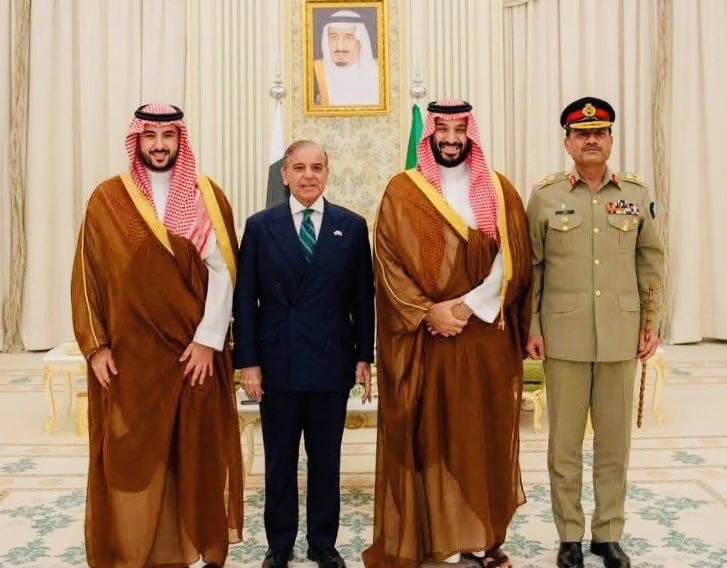
Saudi Arabia and Pakistan formalized a Strategic Mutual Defense Agreement (SMDA) during a meeting in Riyadh between Saudi Crown Prince Mohammed bin Salman and Pakistani Prime Minister Shehbaz Sharif, marking what is being considered the most significant upgrade in Pakistan-Saudi defence relations in decades. Field Marshal Syed Asim Munir played a pivotal role in the execution of the Pakistan-Saudi Defence Pact, a landmark agreement that aims to reshape global geopolitics and strengthen defence cooperation between the two nations. Field Marshal Munir was instrumental in bringing the agreement to fruition, positioning Pakistan as a strategic partner in safeguarding the Two Holy Mosques and enhancing regional security. He led extensive negotiations and consultations with Saudi officials, paving the way for a formal strategic partnership between the two countries. The pact reflects the shared commitment of both nations to enhance their security and to achieve security and peace in the region and the world. Key aspects to watch include: The agreement’s scope regarding Pakistan’s nuclear umbrella for Saudi Arabia remains unclear; The pact may reshape regional security dynamics, particularly in the context of Iran’s atomic program and Israel’s military actions; This development could signal a shift in global alliances, with Gulf states seeking to diversify their security partnerships beyond the US. The pact stipulates that any external aggression against one country will be considered an attack on both, committing the signatories to joint deterrence, enhanced military cooperation, intelligence sharing, and cybersecurity collaboration. This builds on decades of informal security ties, including Pakistan’s historical deployment of troops to Saudi Arabia and joint military exercises, but elevates the relationship to a formal alliance akin to NATO’s Article 5. The agreement comes amid escalating regional tensions, including Israel’s recent strikes on Qatar and broader Middle East instability, signalling a strategic pivot for both nations. The Pakistan-Saudi Arabia defence agreement is a significant development reshaping regional geopolitics in the Middle East and beyond.
The pact stipulates that any external aggression against one country will be considered an attack on both, committing the signatories to joint deterrence, enhanced military cooperation, intelligence sharing, and cybersecurity collaboration. This builds on decades of informal security ties, including Pakistan’s historical deployment of troops to Saudi Arabia and joint military exercises, but elevates the relationship to a formal alliance akin to NATO’s Article 5.
In a bold stroke of geopolitics, Pakistan and Saudi Arabia have inked a defence pact, forging a united front against aggression, where an attack on one is an affront to both. This landmark agreement not only deepens their historic bond of strategic cooperation, economic synergy, and shared Islamic heritage but catapults their relationship into uncharted territory. As Arab nations recalibrate their security calculus amid shifting sands of Middle Eastern politics, Pakistan emerges as a pivotal security guarantor, its role transcending bilateral ties to encompass the region. The timing is telling – an era of recalibration following Israel’s assertive moves, and a quest for new security architectures. This pact isn’t merely a treaty; it’s a statement of intent, a testament to Pakistan’s growing stature as a security provider in the Middle East, and a harbinger of a new chapter in regional geopolitics. The US role as a security guarantor has been questioned, especially after Israel’s attack on Qatar, which has led Gulf states to seek alternative security arrangements. The agreement commits both nations to enhanced defence cooperation and joint deterrence, with any attack on one considered an aggression against both. This pact strengthens their decades-long security partnership. Given the complex India-Pakistan relationship, this development may introduce new dynamics. Israel hasn’t commented on the pact, while the US hasn’t immediately acknowledged it. The agreement’s timing, following Israel’s attack on Qatar, suggests a potential shift in regional alliances. With this pact, Pakistan solidifies its relationships with key powers like China, Turkey, and now Saudi Arabia. This strengthened alliance may enhance Pakistan’s defence capabilities, but it’s uncertain whether it would deter India from attacking. This is the first defence deal between two muslim countries. Saudi Arabia is not just any muslim country but one of the richest countries in the world, with a strong diplomatic influence. The pact will serve as a deterrent for Israel; With Pakistan’s military capability and Arab economic strength combined, Israel can’t do anything. The use of the term “strategic” in the agreement means ‘Strategic Mutual Defence Agreement’ implies that it covers nuclear and missile defence. Pakistan has always used the term ‘strategic assets’ for its nuclear and missile programs. This gives Saudi Arabia a de facto “nuclear umbrella” without breaching non-proliferation norms. The move increases the chance of stabilising the peace process from regional wars. The pact could act as a psychological deterrent by signalling Saudi Arabia’s access to Pakistan’s nuclear umbrella and military capabilities, potentially raising the costs of Israeli strikes on Saudi interests (e.g., oil infrastructure). Pakistan’s nuclear arsenal (estimated 170 warheads) and missile systems provide asymmetric leverage, especially if Israel escalates in Lebanon or Gaza, indirectly threatening Gulf stability. However, deterrence is untested: Pakistan’s focus on India limits its Middle East commitments, and the pact lacks specifics on activation thresholds or joint command structures. Israel, with U.S. backing and superior conventional forces, might dismiss it as symbolic, viewing it as rhetoric rather than a red line, unless Saudi Arabia invokes it in a crisis. The recent four-day military conflict between India and Pakistan showed Pakistan’s will, skill and capability that can defend Arab friends just as well, positioning Pakistan as a regional security guarantor. The Pakistan-Saudi Arabia defence pact has far-reaching implications for both nations and the broader region. The agreement has cemented Pakistan’s role as a net security provider in the Arabian Peninsula, which is not only symbolically powerful but also strategically consequential, and Pakistan will now be seen as a direct deterrent to Israel. For Saudi Arabia, it’s a hedge against uncertainty and a signal of independence, as Pakistan’s arsenal casts a deterrence shadow. The agreement has brought Pakistan into the Arab world and its politics like never before. For Pakistan, it enhances strategic autonomy, bolstering regional standing and defence collaborations, while potentially attracting economic investments. However, it also poses security challenges, particularly in balancing relations with Iran amidst Saudi rivalries. Given Saudi-Iran rivalries, Pakistan’s pact with KSA might heighten regional tensions, especially considering Pakistan’s relations with Iran. For Saudi Arabia, the pact represents a diversification of security partnerships amid regional uncertainties, with potential synergies in nuclear technology given KSA’s expressed interest. It also signals Saudi frustration with U.S.-backed normalisation efforts like the Abraham Accords, prioritising self-reliance amid ongoing Gaza and Lebanon conflicts. For Israel, it introduces a new variable, as Pakistan’s anti-Israel stance (no diplomatic ties) could embolden Arab states to resist Israeli actions more assertively. The pact’s position would be neutral or limited for Saudi Arabia, as it focuses on external aggression without specifying Indo-Pak conflicts. Saudi Arabia maintains strong economic ties with India (e.g., IMEC corridor), so it might mediate rather than intervene, avoiding alienation of New Delhi. Pakistan could invoke it symbolically, but enforcement is doubtful given Saudi investments in India. Furthermore, the pact adds complexity to the India-Pakistan rivalry, as India’s government has taken note, underscoring potential shifts in regional security alignments. The pact states that aggression against either country is considered an aggression against both, reflecting a shared commitment to strengthening security and promoting regional peace.
Globally, the pact represents a shift toward multipolarity, challenging U.S.-centric alliances by diversifying security partnerships in South Asia and the Middle East. The pact directly counters U.S. policy by signalling Saudi scepticism toward American guarantees for Israel’s security, especially post-October 7, 2023, Gaza war. It challenges the U.S.-led order where Saudi defence relies on American arms and intelligence, implicitly criticising U.S. bias toward Israel, e.g., vetoing UN resolutions. Middle East Realignment which reflects shifting alliances as Arab nations recalibrate foreign policies, moving away from traditional US alignments amid growing China and Russia influence; US-KSA-Pakistan dynamics that the agreement’s language may raise eyebrows in the US, given Pakistan’s existing credibility challenges in Washington; Pakistan risks entanglement in Saudi regional rivalries, particularly with Iran; Israel Aggression Deterrence It’s uncertain if this pact directly counters Israel aggression; the agreement’s focus is mutual defence rather than explicitly targeting specific threats like Israel. The agreement could introduce complexity to India-Pakistan dynamics, consolidating Pakistan’s position but also potentially drawing Saudi Arabia into regional rivalries. Pakistan, a nuclear-armed state with a battle-hardened military, gains leverage as a key player in Muslim-world security architectures, potentially aligning more closely with China (via the China-Pakistan Economic Corridor) and reducing reliance on U.S. aid, which has waned since the Afghanistan withdrawal. For Saudi Arabia, this bolsters its Vision 2030 diversification efforts, hedging against overdependence on the U.S. amid doubts about American commitments in the region, such as during the Yemen conflict or recent Houthi attacks. The agreement could reshape global energy dynamics, as Saudi Arabia (a top oil exporter) and Pakistan (a growing energy importer) deepen ties, potentially influencing OPEC+ decisions and supply chains. It also intersects with great-power competition: Russia and China may view it favorably as a counterweight to U.S.-India ties, while the U.S. might see it as complicating its Indo-Pacific strategy against China. Overall, it accelerates the erosion of unipolar U.S. dominance, fostering a network of bilateral pacts in the Global South. Regionally, the agreement impacts Gulf security dynamics, particularly vis-à-vis Iran, and aligns with broader multipolarity trends signalled by China’s facilitation of KSA-Iran rapprochement. Gulf states seeking alternatives amid perceived US unreliability post-Israel actions; doesn’t necessarily signal an anti-US stance but regional hedging. In the Middle East, the pact strengthens Saudi Arabia’s position in the Sunni axis, countering Iran’s Shiite influence and its proxies (e.g., Houthis, Hezbollah). Pakistan’s involvement adds nuclear deterrence and manpower—Pakistan has historically provided troops to Gulf states—potentially deterring Iranian adventurism in the Gulf. This deal underscores Gulf states’ anxieties amid waning US credibility following Israel’s actions in the region, notably the attack on Doha, Qatar. Pakistan sees this as consolidating multi-pronged defence cooperation with Saudi Arabia, potentially expanding collaborations via joint training and defence production. This could not only stabilise the Arabian Peninsula but also may de-escalate proxy conflicts and stabilise the peace process, and Iran might accelerate its nuclear program or alliances with Russia and China in response. The agreement reshapes Gulf Cooperation Council (GCC) dynamics, encouraging similar pacts with other nations. The pact would activate strongly, with Pakistan likely providing troops, air support, and nuclear deterrence to defend Saudi territory. This aligns with historical Sunni-Shiite rivalries and Pakistan’s past Gulf deployments, potentially escalating the conflict into a broader regional war involving U.S. and Israeli interests. The agreement positions both nations to resist U.S. pressure indirectly, e.g., on oil prices or Israel policy, but not through direct confrontation. It could deter U.S. military actions (e.g., sanctions enforcement) by raising alliance costs, but Pakistan’s economic vulnerabilities (IMF loans) and Saudi Arabia’s U.S. arms dependence limit outright opposition. The pact poses a strategic challenge for India, which may face diplomatic or military repercussions from Saudi Arabia in the event of a conflict with Pakistan. India may respond by deepening its ties with the US, Israel, and the UAE. The agreement could reshape the Gulf’s security architecture, with Saudi Arabia pursuing greater strategic autonomy through diversified defence partnerships. This may encourage other states in the region to pursue similar arrangements. The pact is accompanied by a significant Saudi financial package, including deferred oil payments, direct investment, and soft loans, aimed at bolstering Pakistan’s economy and defence capabilities. This pact is viable in the short term due to Saudi Arabia’s oil wealth funding joint exercises and tech transfers (e.g., $29B GCC investments in Pakistan). Long-term sustainability depends on economic reciprocity: Pakistan offers cheap manpower (e.g., 4 million expatriates in Saudi Arabia), while Saudi Arabia provides loans and investments. However, Pakistan’s debt crisis (external debt ~$130B) could strain commitments without Saudi bailouts. For Pakistan, it elevates its global stature, secures Gulf funding (~$5B annual remittances), and bolsters deterrence against India. The agreement could pave the way for deeper economic integration between Pakistan and Saudi Arabia, including joint energy projects and infrastructure development. The pact may help secure the China-Pakistan Economic Corridor (CPEC), a flagship Belt and Road project, by enhancing security guarantees and aligning with China’s long-term investment and connectivity agenda. Saudi Arabia’s focus on Iran and Yemen may differ from Pakistan’s strategic concerns with India and Afghanistan, potentially creating challenges in joint military operations. The absence of a shared border and differences in military doctrine may complicate joint military operations and rapid deployment. Pakistan’s domestic politics remain unsettled, which could undermine the implementation of the agreement. But the pact signals a new era of assertive regionalism, where economic necessities forge unlikely bedfellows and challenge traditional security frameworks. The agreement reflects the continuing decline of American primacy and the gradual rise of multipolar security arrangements, with influential middle powers adjusting to great power rivalry. The pact may contribute to the development of an Islamic security framework, positioning Pakistan and Saudi Arabia at the forefront of regional security initiatives. As the ink dries on the Pakistan-Saudi Arabia defence pact, the contours of Middle Eastern geopolitics shimmer with both promise and peril, like a mirage on the Arabian sands. In this volatile tableau, where allegiances shift like desert dunes and old certainties crumble, the agreement beckons a profound question: Will this marriage of strategic convenience birth a new equilibrium in a region torn by rivalries and suspicion, or will it unfurl as another thread in the intricate tapestry of conflicts yet unseen? Under Field Marshal Munir’s leadership, Pakistan has solidified its relationship with Saudi Arabia, enhancing its role as a key player in regional security architectures. This development has significant implications for global geopolitics, potentially reshaping the contours of international relations and defence cooperation. Amidst the calculus of power and the whispers of distrust, one thing remains certain – the choices made in Riyadh and Islamabad today will echo across the tumultuous landscapes of the Middle East, shaping destinies not just for Pakistan and Saudi Arabia, but for a mosaic of nations caught in the swirl of global geopolitics, where the lines between alliance, ambition, and antagonism blur like the shifting horizons of an endless desert night.