The writer is an economist, anchor, geopolitical analyst and the President of All Pakistan Private Schools’ Federation
president@Pakistanprivateschools.com
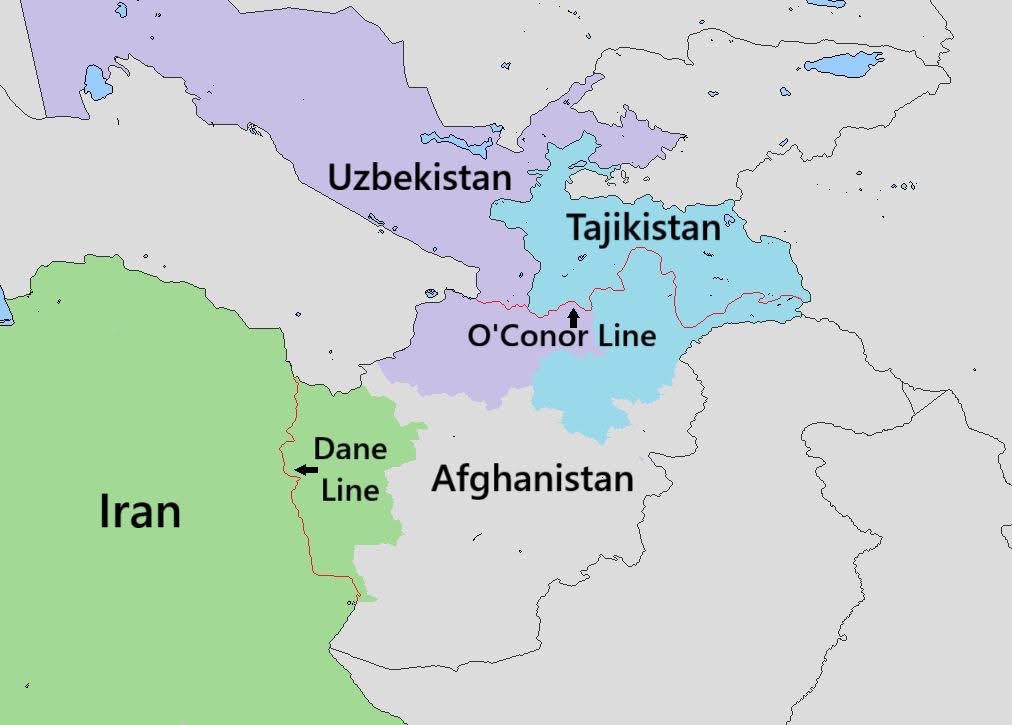
Pakistan-Afghanistan recent clashes raise concerns under international humanitarian law, specifically Article 3 common to the 1949 Geneva Conventions, which mandates humane treatment for those not participating in hostilities. Allegations of both sides targeting civilian populations and infrastructure constitute potential violations of international humanitarian law. The ongoing border disputes and recent escalation of violence threaten regional stability and have led to the closure of key border crossings, affecting trade and daily life. The border between Afghanistan and Pakistan, known as the Durand Line, has long been a flashpoint of contention, primarily driven by Afghan claims that the boundary is illegitimate. However, these assertions as largely baseless, rooted in selective historical revisionism and political opportunism rather than sound legal or factual grounds. The fundamental disagreement over the border, coupled with mutual accusations of violations, has created a deep-seated lack of trust between the two nations, which continues to fuel conflict and hinders any potential for long-term peace. The Pakistan-Afghanistan border issue, centered on the Durand Line, is viewed under international law through the lens of state sovereignty and territorial integrity, with Pakistan considering it a valid international border inherited from British India, while Afghanistan does not recognize it as such. Established in 1893 through the Durand Agreement between British India and Afghan Emir Abdur Rahman Khan, the line was designed to demarcate spheres of influence amid the Great Game between British and Russian empires. Subsequent Afghan governments, including those under Habibullah Khan and Amanullah Khan, reaffirmed it through treaties in 1905, 1919, and 1921. The Durand Line’s geopolitical importance cannot be overstated, serving as a critical buffer in South Asia’s volatile landscape. Historically, it shielded British India from Afghan instability and Russian incursions. The northern borders with Russia (now Tajikistan, Uzbekistan, and Turkmenistan) were defined through Anglo-Russian agreements in the 1880s and 1890s, effectively partitioning Tajik and Uzbek communities. On the western front, the border with Iran (formerly Persia) was arbitrated through multiple British-mediated treaties, including the 1857 Paris Treaty and the 1872 Seistan Arbitration, with final adjustments in 1905 under Sir Louis Dane, the British Foreign Secretary to India, who negotiated with Emir Habibullah Khan. The Wakhan Corridor, extending Afghanistan’s short 76-kilometer border with China, was established in 1895 via an Anglo-Russian accord brokered in part by British diplomat Sir Nicholas O’Conor, who served as ambassador to Russia, to prevent direct British-Russian contact. This boundary, too, divided local populations but has never been contested by Kabul. This agreement not only confirmed Iran’s boundary but also reaffirmed the Durand Line as part of a broader Anglo-Afghan pact, dividing Persian-speaking groups without Afghan objection. Afghanistan’s borders were predominantly shaped by British colonial interventions, dividing ethnic groups like Tajiks, Uzbeks, Persians, and Pashtuns. Yet, Kabul has consistently accepted its northern and western boundaries without protest, while fixating on the Durand Line with Pakistan in what appears to be a malafide strategy to stoke nationalism, divert domestic attention, and pursue irredentist ambitions for a “Greater Pashtunistan.” This Afghan claims from a Pakistani perspective, substantiated by international law, historical precedents, and geopolitical realities, while highlighting bilateral implications and potential legal resolutions. This legal disagreement, despite the 1893 treaty which was reconfirmed and verified in 1921 and again in 1922 by establishing the line, stems from Afghanistan’s historical assertion that it was imposed and that territories beyond it remain Afghan. When Pakistan was created in 1947, it inherited the British Indian Empire’s rights and duties, including all treaties defining its territory. International law generally supports this principle. The 1893 Durand Line Agreement was negotiated and ratified in subsequent treaties by successive Afghan rulers in 1919, 1921, and 1930. Whereas, Afghanistan views the Durand Line as a colonial relic imposed by British agents, including Nicholas O’Conor (1895) and Louis Dane (1905). Afghanistan argues the 1893 agreement had a 100-year expiration date, although the treaty makes no mention of this. However, it is essential to note that Afghanistan has never raised objections to its other borders, which were also drawn by British agents, such as the border with Uzbekistan, Tajikistan, Turkmenistan through the than USSR in (1895), for China (1895) and Iran (1905). This selective approach to border disputes raises questions about Afghanistan’s motivations. Critically, Afghanistan has never raised substantive disputes over these other colonial borders, which similarly fragmented ethnic groups like Tajiks, Uzbeks, and Persians. Kabul’s acceptance of the northern and western lines—despite their arbitrary nature—underscores the hypocrisy in its rejection of the Durand Line. Afghan claims often invoke the line’s “imposition” under duress, yet the same logic applies to all its borders. This selective outrage suggests malafide intent: post-1947, when Pakistan emerged as successor to British India, Afghan leaders like Sardar Daoud Khan exploited the issue for domestic legitimacy, irredentism, and to pressure Islamabad amid Cold War alignments. Neutral analyses confirm that while the line disrupted Pashtun tribal structures, Afghan objections lack consistency, as Kabul benefited from British subsidies tied to these agreements and never contested them contemporaneously. Pakistan argues that under international law, it is the successor state to British India and inherits the rights and duties associated with the Durand Line as the international border. It enforces the line, most recently with a fence, and considers any cross-border incursions by Afghanistan a violation of its sovereignty and international law. Pakistan considers the Durand Line its western border, recognizing it as an international boundary. The Durand Line is recognized under international law, specifically the principle of uti possidetis juris. Afghanistan has never formally agreed to or ratified the border. While the border is internationally recognized and Pakistan considers it a settled matter, Afghanistan has consistently refused to accept it, citing historical injustice and its colonial origins. The dispute is further complicated by issues of tribal allegiances, sovereignty, and cross-border militancy. International law principles such as state sovereignty, border stability, and the peaceful settlement of disputes are relevant, but the conflict’s current expression often involves violations of international humanitarian law, such as attacks on civilian populations, which both sides accuse the other of committing. The Durand Line, a 2,640-kilometer international border between Afghanistan and Pakistan, has been a contentious issue between the two countries. The border was established in 1893 through an agreement between British diplomat Mortimer Durand and Afghan Emir Abdur Rahman Khan. Afghanistan’s claims on the Durand Line are rooted in its perception of the border as a colonial imposition that divides ethnic Pashtun lands and undermines Afghan sovereignty. The Durand Line was drawn during the “Great Game” era of colonial rivalry between British India and Russian expansionism. The British aimed to create a buffer zone to protect their Indian territories, while Afghanistan saw the agreement as imposed under duress. Successive Afghan governments, including the Taliban, have dubbed the Durand Line an “artificial division” that splits Pashtun tribal lands. Afghanistan has previously opposed Pakistan’s bid for United Nations membership based on this dispute, and it has a history of conflict over the border, including support for nationalist movements within Pakistan. The core of the issue is a territorial dispute, which international law requires to be resolved peacefully. Pakistan argues that Afghanistan’s territorial claims violate the UN Charter’s principle of respecting the territorial integrity and political independence of member states. Pakistan’s claim to the Durand Line is primarily based on the international law principle of uti possidetis juris—that former colonial administrative boundaries become the internationally recognized borders of successor states. Pakistan views these as definitive proof of Afghan acceptance. The Durand Line is recognized as the international border by the United Nations and other countries. The Southeast Asia Treaty Organization (SEATO) also affirmed Pakistan’s sovereignty up to the Durand Line in 1956. Afghan governments, including the current Taliban regime, have historically rejected the legitimacy of the Durand Line. But, the reality is that the agreement is valid because it was duly signed by the Amir by representing the Afghan state. The objection that the border arbitrarily divided the Pashtun ethnic group, cutting through their tribal lands and disrupting cultural and economic tie is not a valid argument, as all around the Afghanistan boarders at Iran, Uzbekistan, Tajikistan, Turkmenistan, and even China, were settled by its nabour countries through such settlement of agreements by cutting through their tribal lands and ethnic groups and disrupting cultural and economic ties. As the legal argument that Pakistan automatically inherited the Durand Line treaty with British India, is a very valid argument.
Geopolitically, Pakistan-Afghanistan border issue revolves around the Durand Line, a valid international border established in 1893 through the Durand Agreement. Under international law, this border is recognized as a legacy of British India, emphasizing state sovereignty and territorial integrity. Afghanistan’s borders with neighboring countries were defined through various agreements: Northern borders (Tajikistan, Uzbekistan, Turkmenistan); Anglo-Russian agreements (1880s-1890s); Western border (Iran): British-mediated treaties (1857 Paris Treaty, 1872 Seistan Arbitration); Eastern border (China): Anglo-Russian accord (1895). These boundaries divided local populations, but Afghanistan has accepted them without protest. Kabul’s fixation on the Durand Line appears to be a strategy to stoke nationalism, divert domestic attention, and pursue irredentist ambitions for a “Greater Pashtunistan.”
The clash between Pakistan and Afghanistan’s legal interpretations has led to ongoing tensions, recent border clashes, and issues such as: Afghanistan allegations that Pakistani actions, such as fencing the border and conducting airstrikes targeting militants, are invalid and not the violations of its territorial sovereignty. As, Pakistan counters that it is acting in self-defense against militants launching attacks from Afghan soil, as permitted by international law when a host state is unable or unwilling to act; Pakistan’s recent mass deportation of undocumented Afghans, was an exercise of its sovereign right, underscores its intent to pressure the Afghan Taliban government. From an international legal standpoint, the Durand Line, affirmed through treaties and the successor state doctrine, is the recognized border. However, Afghanistan’s persistent non-recognition creates a de facto dispute that destabilizes the region. A resolution would require moving beyond strict legal arguments to address the underlying political and historical grievances. Potential solutions involve political negotiations, improved border management, and investment in cross-border cooperation to ease the economic hardships and address the concerns of the communities. Pakistan’s position is supported by international law, specifically the principle of uti possidetis juris, which holds that newly independent states inherit the borders of their predecessor states. The Durand Line was recognized as an international boundary by the British Empire, and Pakistan, as the successor state to British India, inherited this border. The principle of uti possidetis juris is enshrined in the Vienna Convention on Succession of States in Respect of Treaties (1978) and has been upheld by international courts, including the International Court of Justice (ICJ). The Durand Line has been recognized by various countries, including the United States, China, and Iran, as an international boundary. The international community has consistently acknowledged Pakistan’s sovereignty over the Durand Line, and Afghanistan’s claims have been met with skepticism. The Durand Line agreement was a valid treaty between the British Empire and Afghanistan, through Treaty of 1893 which established the border. The Durand Line has been recognized by the international community, including the United Nations. Pakistan inherited the Durand Line as an international boundary, as per the principle of uti possidetis juris. Afghanistan’s failure to raise objections to its other borders, drawn by British agents, undermines its claims on the Durand Line. The dispute may be referred to international arbitration, such as the ICJ or the Permanent Court of Arbitration. Pakistan and Afghanistan should engage in bilateral talks to resolve the dispute, focusing on mutual interests and regional stability. The international community should support Pakistan’s position, recognizing the Durand Line as an international boundary. As, Afghanistan’s claims on the Durand Line are unfounded and lack merit. Pakistan’s position is supported by international law, historical context, and precedents. A peaceful resolution to the dispute requires sustained dialogue, international support, and a commitment to upholding international law. The Durand Line dispute affects, Implications and geopolitical significances are very high. Tensions between Afghanistan and Pakistan impact bilateral relations, regional stability and cooperation. The porous border enables militant groups to operate, threatening regional security. The border issue has poisoned Pakistan-Afghanistan relations, manifesting in recurrent clashes, economic disruptions, and mutual accusations. Recent escalations, including heavy firefights along the line, resulted in dozens of casualties on both sides, with Pakistan reporting strikes on TTP hideouts and Afghanistan claiming territorial violations. Today, it demarcates Pakistan’s western frontier, influencing regional security, trade, and counterterrorism. For Pakistan, the line is vital for controlling cross-border militancy, including groups like the Tehrik-i-Taliban Pakistan (TTP), which exploit porous borders for attacks. Afghanistan’s refusal to recognize it facilitates smuggling, refugee flows, and insurgent safe havens, exacerbating Pakistan’s internal security challenges. From a broader lens, the dispute intersects with great power rivalries: India’s support for Afghan positions aligns with its anti-Pakistan strategy, while China’s Belt and Road Initiative views a stable border as essential for connectivity via the Wakhan Corridor. Afghan claims, often framed as ethnic unification, ignore the line’s role in preventing territorial fragmentation that could destabilize Central Asia. Critically, Kabul’s baseless assertions undermine regional cooperation, as seen in stalled trade routes and heightened tensions amid Taliban rule, where border fencing by Pakistan—initiated in 2017—has provoked clashes but is justified as a sovereign security measure. Taliban Foreign Minister Amir Khan Muttaqi’s statements that all neighbors except Pakistan are “happy” with Afghanistan highlight Kabul’s deflection of blame, ignoring its harboring of militants. Implications are multifaceted: Security-wise, unresolved disputes fuel terrorism, with TTP resurgence straining Pakistan’s military resources; Economically, border closures disrupt billions in trade, affecting Afghan imports and Pakistani exports; Millions of Afghan refugees in Pakistan face deportation risks amid tensions. Regionally, this vacuum invites external interference, potentially escalating into broader conflicts involving India or Iran. Afghan claims, lacking legal merit, perpetuate this cycle, as neutral observers note Kabul’s use of the issue for leverage rather than resolution. The principle of uti possidetis juris—customary international law preserving colonial borders upon independence—applies directly. As successor to British India, Pakistan inherited the line intact, a precedent upheld in cases like Burkina Faso v. Mali (ICJ, 1986) and the dissolution of Yugoslavia. Afghan arguments of “duress” or expiration fail scrutiny. No evidence of coercion invalidates the treaty under the 1969 Vienna Convention, and unilateral renunciation is impermissible. International recognition bolsters Pakistan: The UN admitted both states with the line as border; the 1988 Geneva Accords implicitly affirmed it; and powers like the US, UK, and China treat it as de jure. Precedents such as the Indo-Nepal border dispute reinforce uti possidetis over ethnic claims. Global consensus favors Pakistan. The US and UK have historically recognized the line, with Eden reaffirming it in 1955. Even neutral bodies like the ICJ would likely uphold it under uti possidetis, as in similar African and Latin American cases. For resolution, diplomatic channels should prioritize. Establish joint border commissions for management, as per UNSCR 1373 on counterterrorism. If impasse persists, refer to the ICJ or arbitration, where precedents favor stability over revisionism. The Durand Line dispute is a complex issue rooted in colonial history, ethnic divisions, and competing national interests. Confidence-building measures, like eased visas and trade pacts, could mitigate malafide exploitation. Ultimately, Afghanistan must abandon baseless claims for mutual prosperity, recognizing that colonial legacies, while imperfect, form the bedrock of modern statehood. A peaceful resolution requires sustained dialogue, international support, and a commitment to addressing humanitarian concerns. Through dialogue and diplomacy we must encourage bilateral talks to address Afghanistan’s concerns and Pakistan’s security interests; Engage international organizations, like the UN, to facilitate dialogue and provide humanitarian assistance; Address the status of Afghan refugees, ensuring their rights and dignity.