The writer is an economist, anchor, and geopolitical analyst
and the President of All Pakistan Private Schools’ Federation
president@Pakistanprivateschools.com
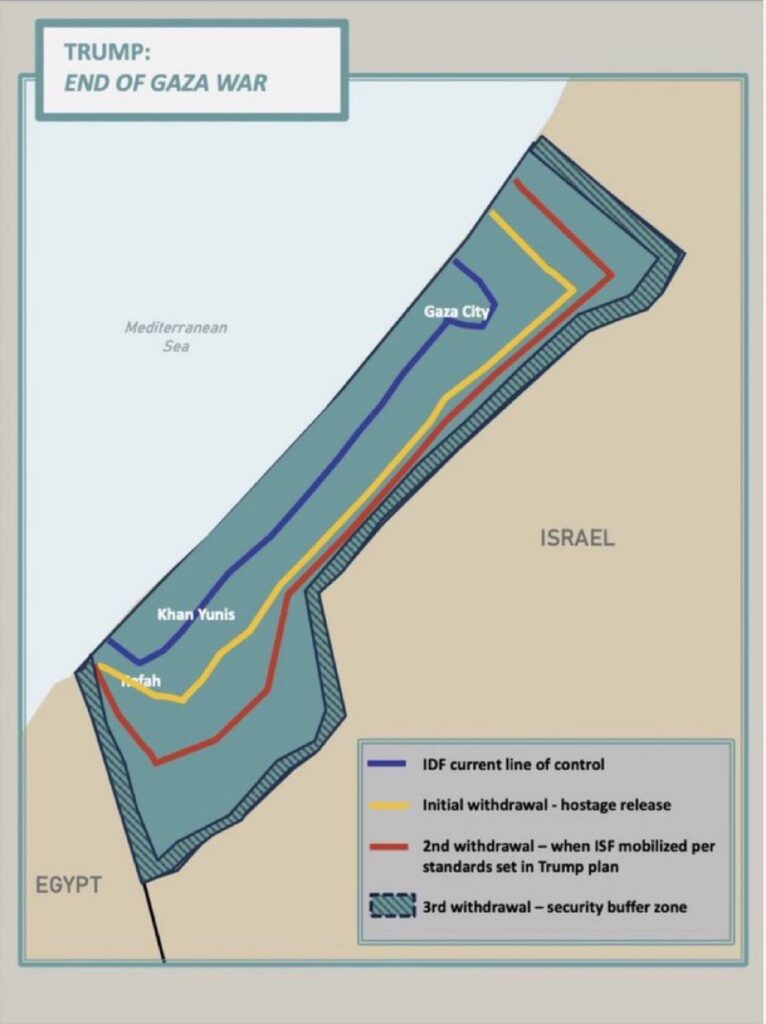
Hamas’ acceptance of the US peace plan by saying it is ready to release all captives under the Trump plan is a significant step forward. Although a Hamas official says not to disarm until Israeli occupation ends, as Israeli genocide in Gaza enters its 728th day. The US, Türkiye, Egypt, Qatar, and the UN welcome Hamas’ response to Trump’s Gaza plan, whereas Israel is divided on this significant step. Despite US President Donald Trump’s call for Israel to immediately halt the bombardment, air strikes have continued to target northern Gaza, including densely populated areas. Previously, US President Donald Trump had given Hamas a 48-hour deadline to accept a US-brokered peace proposal for Gaza. If Hamas rejects the deal, Trump warned of severe consequences, stating “all hell will break out against Hamas” and “there will be peace in the Middle East one way or the other”. Whereas Israel has given a final warning to Palestinians to evacuate, stating that those who do not leave Gaza City will be considered terrorists. Hamas rejected GITA and Trump’s Plan of disarmament, viewing it as a threat to Palestinian sovereignty and resistance efforts, which the plan’s implementation could lead to further conflict, potentially drawing in other regional actors. In the meantime, the Israeli military’s interception of the flotilla by challenging the International community and norms, which included 497 participants from 46 countries, was a serious illegality and diplomatic issue. There is no justification for intercepting peaceful humanitarian missions, a clear violation of the UN Charter and international laws. So, the question is, why can’t the world’s most powerful navies break the Israeli blockade? UN special envoy raises a question. Pakistan also strongly condemned Israel’s interception of the Global Sumud Flotilla and detention of international activists in flagrant violation of international law. The Israeli-Palestinian conflict has once again taken centre stage with US President Donald Trump’s unveiling of his 20-Point Peace Plan, aimed at Gaza, which reeks of exploitation, framing the besieged territory as an investment opportunity while prioritising Israeli security above all else. This plan is a stark reminder of the West’s long history of hypocrisy, colonising and exploiting Arab lands, with Gaza being the latest target. By establishing a “special economic zone” with preferential tariffs and inviting international investors to rebuild Gaza, Trump is essentially setting the stage for a new era of neo-colonialism by ignoring the UN, EU, Russia, and China, and strengthening the Abraham Accords and Israel. The plan’s emphasis on demilitarisation is nothing but a thinly veiled attempt to erase Palestinian identity and resistance to a more secure Israel. Furthermore, the inclusion of Tony Blair, a war criminal responsible for millions of Iraqi deaths, as a key player in the plan’s implementation is a slap in the face to the Palestinian people. This plan is a recipe for disaster, and it’s imperative that Palestinians and their allies reject it outright. Trump said the plan includes the establishment of a new oversight body, the so-called Board of Peace, which will include a former British Prime Minister. Trump’s plan contains no clear mechanism for Israeli withdrawal, and under the plan, Hamas will have no role in Gaza’s governance, either directly or indirectly. Whereas, Netanyahu told the Israeli people in Hebrew immediately after the press conference with Trump that the Israeli army would not leave Gaza, “We are not going to be part of any agreement, our policy towards Israel has not changed”. A number of the elements of this proposal are things that Israel has repeatedly and publicly said it is not at all prepared to do.. Will Netanyahu himself be the biggest obstacle to Trump’s 20-point plan? Will Trump oblige Israel to withdraw from Gaza and implement the agreement? Indeed, Trump’s Plan for Gaza hands Netanyahu a political lifeline, without involving the guarantees of the UN, EU, Russia, and China. The proposal has received negative reactions from the international community, which has limited the UN’s Role for the two-state solution, and restricted the UN’s role to only focus on humanitarian aid, playing a restricted role without involving the guarantees of the UN, EU, Russia, and China. There’s no clarity with the ambiguous phased Israeli withdrawal, as Israeli forces would withdraw from Gaza in phases, but no specific timeline is provided. A temporary International Stabilisation Force (ISF) would be deployed to Gaza, comprising regional partners, including Jordan and Egypt, only to disarm Hamas and dismantle its military infrastructure. The proposal says: “Gaza will be governed under the temporary transitional governance of a technocratic, apolitical Palestinian committee,” though it does not identify any Palestinian individual or group by name as being involved in the transition. The panel would be supervised by a new international transitional body called the “Board of Peace.” It would be headed by Trump and would include other heads of state and members, including Blair. The plan has been mixedly welcomed by some countries, including the Palestinian Authority, Egypt, Saudi Arabia, and the United Arab Emirates, while others, like the Palestinians, have criticised it as a recipe for continued aggression. PM Pakistan said: “ I welcome President Trump’s 20-point plan to ensure an end to the war in Gaza.” Pakistan’s principled position is that no relationship with Israel will be established without giving rights to the Palestinian state as before 1967. Russian President Putin suggests the preferred option is to transfer control of Gaza to the Palestinian President. China says Netanyahu must be brought to justice and tried; otherwise, there will never be peace in the Middle East. The plan’s rejection by Hamas and some Muslim countries may exacerbate tensions in the region, and the implementation could lead to further displacement of Palestinians from Gaza, potentially altering the territory’s demographic makeup. In the volatile landscape of the Middle East, where the Israel-Hamas conflict has raged since October 2023, two intertwined proposals have emerged as potential blueprints for postwar Gaza: the Gaza International Transitional Authority (GITA), spearheaded by former British Prime Minister Tony Blair, and President Donald Trump’s 20-point plan to eradicate Hamas influence and rebuild the Strip. Hamas would have no role in Gaza’s governance. The body would handle the funding for the redevelopment of Gaza, without giving an exact timeline. The plan said some investment proposals and ideas have been crafted by international groups, which were not identified. Tony Blair’s involvement in Middle East affairs is no novelty; as the UK’s leader from 1997 to 2007, he was a key architect of the 2003 Iraq invasion, a decision that has haunted his legacy and fuelled accusations of Western imperialism in Arab circles. The same Tony Blair who supported the US invasion of Iraq and spread the false narrative of weapons of mass destruction. In which millions of Muslim Iraqis were killed. Blair’s government was accused of using fabricated evidence to justify the war, and he has been widely criticised for his role in the conflict. The GITA concept crystallised in early 2025 amid stalled ceasefire talks, with Blair quietly drafting a framework for postwar Gaza governance at the behest of US advisors, including Trump’s son-in-law Jared Kushner. The proposal’s controversy stems from Blair’s polarising history; his Iraq involvement evokes war crimes in the region, eroding trust and painting GITA as a neocolonial imposition. Critically, GITA explicitly bars Hamas from any governance role, enforcing demilitarisation through disarmament programs and independent monitoring, without involving the guarantees of the UN, EU, Russia, and China. As a result, Hamas has rejected the plan of disarmament and demanded an amendment to the demilitarisation clause of Trump’s Gaza peace plan, while many Muslim countries have expressed reservations due to the non-inclusion of their amendments.
Indeed, Trump’s Plan for Gaza hands Netanyahu a political lifeline, without involving the guarantees of UN, EU, Russia, and China. The success of any peace plan hinges on international guarantees, cooperation and a commitments to protecting human rights and preventing further suffering. A lasting solution will require inclusive dialogue and a guarantee to Palestinian self-determination and statehood!
The Israeli-Palestinian conflict is a complex issue, requiring careful consideration and nuanced solutions. It’s disheartening to witness the stark contrast between the collective military might of Islamic countries and their apparent inability to protect Muslim lives in Gaza. With over 57 Islamic nations boasting a combined military force exceeding six million personnel, equipped with advanced weaponry, one would expect a more robust response to atrocities and Palestinian’s genocide committed by Israel against fellow Muslims. Trump’s 20-Point Peace Plan for Gaza has sparked debate, with details emerging about its potential implications. The proposed plan for Gaza’s future appears to prioritise Israeli control, dismissing the possibility of a Palestinian state and the role of the Palestinian Authority in Gaza. The United Nations’ role would be limited to providing humanitarian aid, with aid distribution handled exclusively by neutral international agencies such as the UN and the Red Crescent. The plan doesn’t specify when the Israeli army would withdraw from Gaza, leaving uncertainty about the duration of the Israeli presence. The plan disregards the longstanding demand for Palestinian statehood, a crucial aspect of the Israeli-Palestinian conflict. The Palestinian Authority’s role in governing Gaza would be eliminated, potentially paving the way for alternative governance structures. Hamas would be expected to release all prisoners, potentially leading to its decline or elimination as a governing force in Gaza. Netanyahu’s role has always been as an obstacle to peace. The plan supported and positioned him as a key figure in shaping Gaza’s future. Trump’s role as Chairperson to play a significant role in Gaza’s governance and economic development raises questions about the implications for the region’s stability and Palestinian self-determination. By disregarding Palestinian demands for statehood and self-governance, the plan may exacerbate tensions and lead to further conflict. The plan’s focus on Israeli control and potential governance by external actors could erode Palestinian autonomy and self-determination. The devastating impact of the conflict on Gaza’s infrastructure and population would likely continue, with severe humanitarian consequences. The plan’s feasibility and implications remain uncertain, with many questioning its potential to bring lasting peace or stability to the region. The plan, modelled on international transition missions in places like Kosovo and Timor-Leste, would grant GITA supreme political and legal authority in Gaza for up to five years. Key aspects include: Governance Structure by a governing board with a nominal Muslim representative; Ensuring security guarantees for Israel, and strengthening the Abraham Accord. Arab governments have expressed concerns about the plan’s ambiguity regarding Palestinian statehood, emphasising the need for a clear timeline. However, the timeline for the Palestinian Authority to take over administration remains unclear. The plan’s ambiguity would lead to prolonged uncertainty, potentially taking decades to resolve. The plan’s success hinges on various factors, including: Hamas’s response to relinquish control and disarm will significantly impact the plan’s feasibility; Israeli cooperation to end its state terrorism by Netanyahu’s government is crucial for the plan’s implementation; The role of regional partners and international community in providing security guarantees to Palestinian, funding, and political backing will be vital in determining the plan’s success. The situation in Gaza is dire, with the conflict having already claimed thousands of lives and left much of the territory in ruins. President Trump’s recent message seems to give Israeli Prime Minister Netanyahu a free hand to take whatever actions he deems necessary against Hamas, provided they align with US interests. This stance raises questions about the international community’s role in mitigating the conflict and the implications for Gaza’s future. Arab states, including the UAE, are pressing weakly on Netanyahu to accept the plan and abandon annexation plans, warning that such moves would shut the door to further Israeli normalisation with leading Arab and Muslim nations. The conflict has resulted in a severe humanitarian crisis, with over 70,000 Palestinians killed and 2.3 million residents living in dire conditions. The vital UN’s role in mandating is weaker and could revitalise the Security Council, but would be vetoed by Russia or China if perceived as US overreach. Financially, it demands billions from Western and Gulf states, potentially straining alliances amid global economic woes, yet offering a model for conflict resolution in places like Ukraine or Yemen. The plan’s implications indeed warn of neo-imperialism: imposing technocrats sidelines democracy, echoing failed interventions in Iraq and Afghanistan. Trump’s chairmanship personalises US foreign policy, raising questions about sustainability post-2028; failure might exacerbate anti-Western sentiment, empowering regional forces. Indeed, this 20-Point Trump plan is only strengthening the Abraham Accords and Israel, with Gulf states poised to fund reconstruction, potentially normalising ties with Israel further. For Israel, it ensures security with indefinite occupation, allowing Netanyahu to claim victory over Hamas. Yet, for Palestinians, it’s a double-edged sword: the PA endorses it for aid influx but decries Gaza-West Bank fragmentation and absent statehood guarantees. Hamas’s potential disarmament could fracture resistance movements, but forced amnesty risks internal strife. Overall, it fully tilts power toward Israel’s monarchies, marginalising Palestinian influences and altering the Palestinian national project. Feasibility hinges on Hamas’s compliance and international funding; without them, it risks becoming another paper peace. While it may deliver short-term calm, long-term success demands addressing Palestinian aspirations, lest it sow seeds for future uprisings. In a region scarred by broken promises, GITA and Trump’s plan do not represent high-stakes diplomacy—potentially transformative, undeniably divisive. Despite their military prowess, many Islamic countries seem to be influenced by external forces, particularly the United States, which has significant sway in the region. This dynamic raises questions about the true nature of their military strength and its application in protecting Muslim interests globally. Key Military Powers in the Middle East: Turkey, Iran, Egypt, Saudi Arabia and Iraq’s military remains a significant force in the region. But, despite all the military powers in the Islamic World, the GITA would have supreme political and legal authority in Gaza for the next five years, potentially setting the stage for long-term Israeli and international control. The plan involves ensuring Israel’s security guarantees and strengthening the Abraham Accords by preventing Hamas and other Palestinian roles. GITA could potentially fully control Gaza’s governance and economy as its colony. The plan has the backing of the US and other Western powers, which could attract significant investment as a real estate opportunity. The GITA would erode Palestinian self-governance and perpetuate Israeli and Western dominance. The plan’s development has been criticised for excluding Palestinian voices and perspectives. Hamas and other Palestinian groups might resist GITA, leading to further conflicts, proxies, and instability. The plan reflects the ongoing struggle for influence in the Middle East, with the US and its allies seeking to shape the region’s future. Regionally, GITA could exacerbate tensions between Israel, Palestine, and neighbouring countries, potentially destabilising the region. In the Middle East, the plan’s success would depend on the cooperation of various regional actors, including Israel, Palestine, Iran and Arab governments. The situation in Gaza has drawn comparisons to the brutal aggression against Muslims in Bosnia and Herzegovina, where the international community’s inaction led to devastating consequences. The parallels between the two conflicts serve as a stark reminder of the importance of learning from history and standing against injustice. Both conflicts highlight the international community’s failure to protect vulnerable populations, leading to massive human rights abuses and loss of life. The success of any peace plan hinges on international cooperation and a commitment to protecting human rights and preventing further suffering. The future of Gaza and the region remains uncertain, with various actors vying for influence and control. The situation could escalate into further violence, potentially destabilising the region and drawing in international actors. A lasting solution will require inclusive dialogue and a guarantee of Palestinian self-determination and statehood.