The writer is an economist, anchor, geopolitical analyst
and the President of All Pakistan Private Schools’ Federation
president@Pakistanprivateschools.com
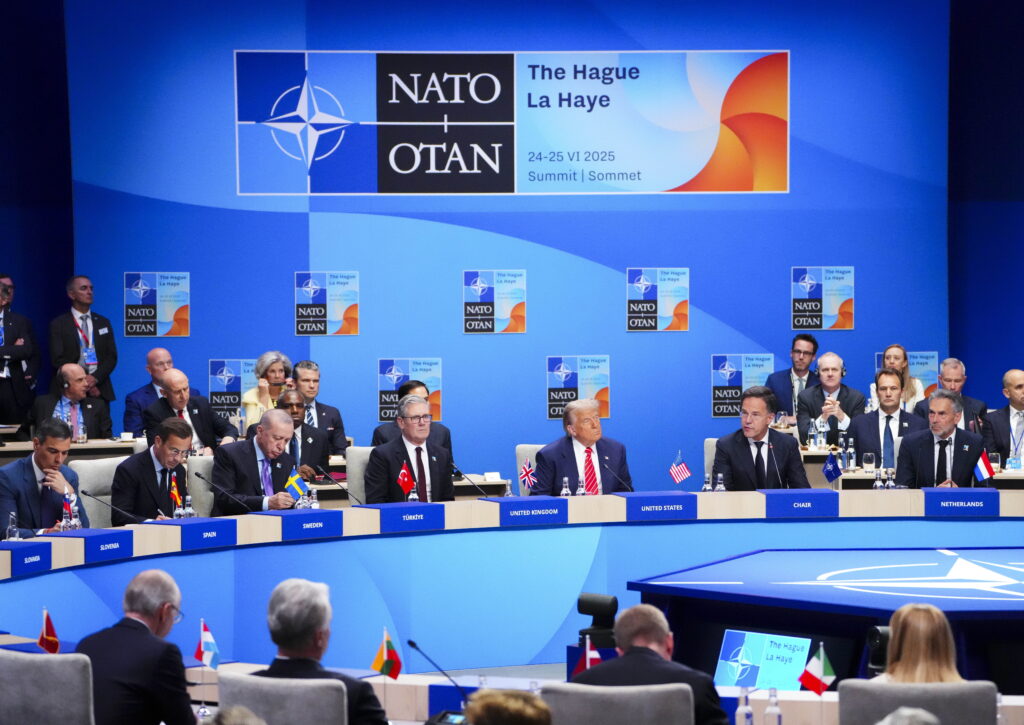
The proposed US peace deal for Ukraine has sparked intense debate, with many viewing it as a betrayal of NATO allies. The deal, which favors Russia, has raised concerns about the future of European security and the US commitment to defending its allies. The incoming Trump administration’s 28-point Ukraine “peace framework” is no longer a rumour. Leaked in mid-November 2025 and partially confirmed by both Washington and Moscow, it demands that Kyiv permanently cede Crimea and the four annexed regions (approximately 19–22% of Ukraine’s pre-2014 territory), accept a hard cap on the Ukrainian armed forces (reportedly 250–300,000 active personnel), abandon NATO membership aspirations for at least 30 years, and agree to a demilitarised zone 80–120 km deep along the current front line. In return, Russia would freeze the conflict, lift some sanctions, and allow limited Western monitoring of the ceasefire. The deal would force Ukraine to surrender territory to Russia, undermining its sovereignty and territorial integrity. The US move has shaken trust among NATO allies, raising questions about the alliance’s reliability and commitment to collective defense. The deal could embolden Russia, potentially destabilizing the region and threatening European security. Europe’s reaction has been panic disguised as principled resistance. Within days, a 24-point European counter-proposal — coordinated by France, Britain, Germany, Poland, and the Baltic states — was leaked to Reuters. It keeps the door open to future Ukrainian NATO membership, rejects any permanent territorial concessions, demands Russian withdrawal to the February 2022 lines “as a basis for talks,” and, most explosively, authorises the deployment of a “coalition of the willing” European peacekeeping force inside Ukraine, including on the Russian border, under a bilateral security pact that deliberately mimics Article 5 language without formally invoking NATO. This is not a negotiated settlement. It is a dictated surrender dressed as diplomacy. As per updated Figures (November 2025) Military aid to Ukraine since February 2022: United States: $66.9 billion direct military with $50–60 billion intelligence, training, munitions drawdowns that total U.S. security assistance ~$120–130 billion; European Union institutions with bilateral European commitments: ~€167 billion total aid (military, financial, humanitarian), of which roughly €85–90 billion is military. Europe has spent more in absolute terms, but almost entirely in fragmented, duplicative, and often non-lethal forms. The U.S. has carried the decisive kinetic load (HIMARS, Patriot, ATACMS, F-16 enablement, 80% of precision munitions). Ukrainian military losses (conservative Western estimates, November 2025) Killed: 90,000–110,000; Wounded: 250,000–300,000 (many permanently disabled). Desertions and refusals: ~150,000 in 2024–2025 alone. Russian losses are higher in absolute numbers but sustainable given Russia’s population and wartime economy (GDP growth 4.1% in 2025, Central Bank of Russia). Trump’s plan to withdraw from NATO and reduce US involvement in European affairs has raised concerns about the alliance’s future. European countries are desperate to maintain US support, and some have been accused of prolonging the Ukraine war to keep the US engaged. Trump’s advisors have suggested that the US should focus on its own defense and let European countries take greater responsibility for their security. The potential US withdrawal from NATO, spearheaded by President Donald Trump, has sparked concerns about the future of European security and the alliance’s very existence. The US has been a leading force behind NATO’s ideology since its inception, and its involvement in the Ukraine war has been a crucial aspect of the conflict. America created NATO in 1949 and rebuilt Western Europe with $150 billion (valued in 2025 dollars) of Marshall Plan money precisely to keep the continent as a loyal, dependent, forward operating base against the Soviet Union. For seventy-five years the deal was simple: Europe would spend modestly on defence (often 1–1.5% of GDP) and host American troops and nuclear weapons. America would pay the real bill (3.5–5% of its own GDP) and guarantee Europe’s security forever. That contract made Europe rich, peaceful, and militarily indolent. It also allowed the United States to project power globally while outsourcing the moral and political costs of European security to Washington. Trump is now ending that contract. He is doing it not out of spite but because the American public has finally noticed that the arrangement is a one-way street. The United States still accounts for approximately 68–70% of total NATO defence spending even after the 2025 Hague Summit raised the target from 2% to 5% of GDP. Only three allies (Poland, Estonia, and the United States itself) are projected to meet the new 5% pledge by 2035; most will struggle to reach even 3%. Indeed, Europe’s debt makes the New NATO target comical. Public debt-to-GDP ratios, Q2/Q3 2025 (Eurostat & national sources): Greece 151.2%; Italy 138.3%; France 115.8%; Belgium 106.2%; Spain 104.7%; Portugal 101.1%; and Euro area average 88.2%. These countries are supposed to triple their defence spending while servicing debts at interest rates that have doubled since 2021? Impossible. Italy alone would need to find an extra €90–100 billion annually to hit 5% — roughly the size of its current primary surplus that it does not have. Europe knows this. That is why its leaders are desperate to keep the Ukraine war burning at a low intensity: an active conflict is the only thing that still forces the United States to remain engaged in European security.
The situation is fluid, with ongoing negotiations and diplomatic efforts to address the concerns of all parties involved. As the situation unfolds, one thing is clear: the implications of this deal will be far-reaching, with significant consequences for Europe and the global order.
Trump’s plan to withdraw from European affairs could have far-reaching consequences, including the collapse of the EU and a significant shift in global dynamics. NATO was established after World War II to provide collective defense against potential threats. The US has played a pivotal role in shaping the alliance and ensuring European security. The Ukraine war has been ongoing since 2014, with Russia’s annexation of Crimea and support for separatist groups in eastern Ukraine. The US and NATO have been involved in the conflict, providing military aid and training to Ukraine. A US withdrawal from NATO could have significant consequences, including: EU Collapse that the EU could collapse under the weight of its debt, leading to economic instability and a power vacuum in Europe. Europe’s lagging behind the US, Russia and China in defense systems and space-based military capabilities has significant implications for global and regional geopolitics. The continent’s inability to keep pace with the rapid advancements in defense capabilities and technology, particularly in hypersonic missiles, poses a substantial threat to its security and stability. Europe’s lack of advanced missile defense systems makes it vulnerable to potential threats from Russia and other nations. This vulnerability could embolden adversaries to test Europe’s defenses, potentially leading to increased tensions. As a key player in NATO, Europe’s inability to defend itself could undermine the alliance’s credibility and effectiveness. This could lead to questions about the US’s commitment to European security and potentially create fissures within the alliance. Europe’s lagging behind in missile defense systems poses a significant threat to its security. The continent’s reliance on US military and defense systems could limit its ability to respond to emerging threats independently. This could lead to increased aggression and a heightened risk of conflict in the region. Europe’s inability to defend itself could limit its autonomy and independence. This could lead to a loss of sovereignty and a diminished ability to make decisions that align with its own interests. Europe’s defense spending has been criticized for being inadequate. The continent’s failure to invest in advanced missile defense systems has left it vulnerable to emerging threats. Politically incorrect but evidenced: Europe’s welfare-state priorities may undermine its defense edge, fostering a “free-rider” dynamic on US tech. Future scenarios include a bifurcated space economy—US-led vs. Sino-centric—or multilateral norms if Europe mediates. Absent reform, orbital debris from tests could trigger Kessler Syndrome, rendering space inaccessible. Failure to do so could undermine Europe’s security and stability, and limit its ability to act independently in the face of emerging threats. Security Vacuum in case of US withdrawal could create a security vacuum, allowing Russia to exert greater influence in the region. Whereas, NATO’s Future and the alliance’s future would be uncertain, and its very existence could be at risk. European Defense for European countries would need to significantly increase their defense spending to compensate for the US withdrawal. The notion that European “peace” plans might actually be war-prolongation strategies is a stark warning sign. The Post-WWW2 contract, built on principles of cooperation and collective security, seems to be unraveling. This contract, established to prevent future conflicts, is being tested by shifting global dynamics and national interests. The potential cancellation of this contract by one party raises concerns about the stability of international relations. The EU’s peace project, aimed at promoting cooperation and preventing war, is facing challenges. The alliance’s expansion and involvement in conflicts have sparked debate about its true intentions. That’s why, in plain language, Europe is trying to sabotage Trump’s deal by turning a ceasefire into a permanent Western military presence on Russia’s frontier — knowing full well that Moscow will never accept it and that any shooting incident would drag the United States back in, whether Trump wants it or not. This is the real betrayal — but not the one Europe claims. Macron, Starmer, Tusk, and Metsola do not want peace on Trump’s terms because peace on Trump’s terms means the end of American strategic subordination of Europe. A frozen conflict with Russian troops 400 km from Warsaw but no American tripwire force in Ukraine is, for Warsaw and Paris, infinitely worse than the status quo of endless attritional war with full U.S. logistical and intelligence backing. So Europe is floating the one idea guaranteed to make real peace impossible: permanent Western (read: European-led but American-backed) troops inside Ukraine, on the Russian border, under a legal framework that would trigger war if attacked. Moscow has already said this is a red line equivalent to U.S. missiles in Cuba in 1962. Everyone in Europe knows it. They are counting on Russian rejection to scupper Trump’s deal and force Washington to choose between abandoning Europe entirely or re-engaging on Europe’s maximalist terms.
That is the true betrayal — not Trump’s realism, but Europe’s cynical attempt to entrap the United States in a conflict it can no longer afford and no longer wants. A weakened EU and NATO could shift the global balance of power, impacting international security and cooperation. The situation is fluid, with ongoing negotiations and diplomatic efforts to address the concerns of all parties involved. As the situation unfolds, one thing is clear: the implications of this deal will be far-reaching, with significant consequences for Europe and the global order. The situation demands careful consideration of the motivations behind these plans and their potential consequences. As tensions rise, it’s vital to prioritize diplomacy and dialogue to maintain global stability and security. Brutal but necessary: Trump should proceed with the 28-point framework unilaterally if necessary. Offer Ukraine a bilateral U.S. security guarantee (similar to Israel or Taiwan) outside NATO, including nuclear umbrella language, in exchange for signing. This gives Kyiv something Europe cannot provide while removing the NATO red line that blocks Russian acceptance. Announce that after the Ukraine deal is signed, U.S. troop numbers in Europe will be reduced by 50% within 24 months and that the U.S. will no longer backfill European shortfalls in NATO’s eastern flank. This forces Europe to choose: pay for its own defence or accommodate Moscow. Europe should immediately drop the fantasy of NATO peacekeepers inside Ukraine. It is the fastest route to World War III. Instead, accept the territorial loss, freeze the conflict, and pivot to a serious pan-European defence build-up financed by Eurobonds explicitly earmarked for military purposes — something Berlin and The Hague have blocked for decades. The post-1945 American security umbrella over Europe is over. The only question left is whether Europe will finally grow up and pay its own bills, or whether it will try one last desperate gamble to chain America to a dying order. Trump’s forced surrender for Ukraine is harsh. But pretending the war is still winnable is cruel. The real betrayal was promising Kyiv victory in 2022 when no one was willing to fight Russia directly. Ending the war on bad but realistic terms is not betrayal — it is the first honest act Europe has seen from Washington in thirty years. The US and European countries should engage in diplomatic efforts to resolve the Ukraine conflict and reduce tensions with Russia. NATO should implement reforms to increase European defense spending and reduce reliance on US support. The EU should work towards greater integration, including a common defense policy, to ensure European security and stability. The US and European countries should cooperate with international organizations, such as the UN, to address global security challenges. The situation is complex, and the consequences of a US withdrawal from NATO are far-reaching. It is essential to consider multiple perspectives and work towards a diplomatic solution that ensures European security and stability.
The writer is an economist, anchor, geopolitical analyst and the President of All Pakistan Private Schools’ Federation
president@Pakistanprivateschools.com