
The writer is an economist, anchor, and geopolitical analyst
and the President of All Pakistan Private Schools’ Federation
president@Pakistanprivateschools.com
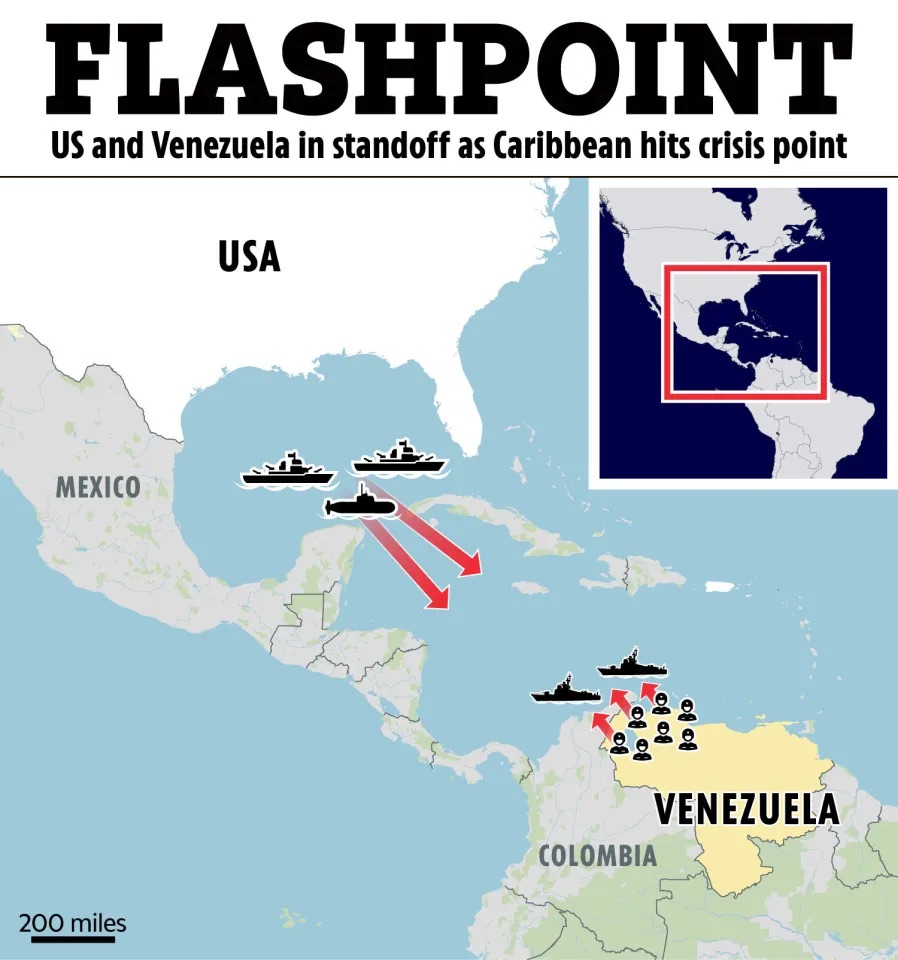
The escalating tensions between Venezuela and the US have significant implications for global politics, potentially drawing in major powers like Russia and China. The recent deployment of US military forces in the Caribbean has sparked a heated debate, with Venezuelan President Nicolas Maduro accusing Washington of planning to seize Venezuela’s vast oil, gas, and gold reserves. Maduro claims the US is fabricating “Hollywood stories” about drug trafficking to justify intervention in Venezuela. This move has significant geopolitical implications, potentially drawing in global powers like Russia and China, while testing the alliance between the US and EU. As the Venezuela-US conflict teeters on the brink of escalation, the prospect of Latin America’s countries being drawn into a regional war is a daunting one. The region’s complex history of intervention, rivalry, and fragile state institutions makes it particularly vulnerable to the devastating consequences of such a conflict. If the conflict were to spread, countries like Colombia, Brazil, and Argentina may be forced to take sides, further complicating the situation. The humanitarian toll would be immense, with millions of people potentially displaced, and economic instability rippling throughout the region. The US sees Venezuela’s resources as crucial to its own energy security and global influence. The US military deployment in the Caribbean has significant implications for the region and the world: The move has heightened tensions between the US and Venezuela, with Maduro warning of potential military conflict. The situation could destabilize the region, potentially leading to refugee crises, economic disruption, and social unrest. Any disruption to Venezuela’s oil production could impact global energy markets, leading to price spikes and economic instability. The US-Venezuela crisis could also be seen as part of the broader US-China rivalry, with China being a key supporter of Maduro’s government. US intervention could potentially lead to a transition to democracy and improved human rights in Venezuela. The US could argue that its actions are aimed at curbing narcotics trafficking, a significant concern for US policymakers. Many countries view US intervention as a threat to sovereignty and non-interference in internal affairs. Military intervention would come with significant economic costs, including potential damage to Venezuela’s oil infrastructure and the impact on global energy markets. Intervention could lead to a humanitarian crisis, with potential civilian casualties and displacement. US-Venezuela Conflict is a Geopolitical Quagmire. The recent deployment of US military forces in the Caribbean, allegedly to seize Venezuela’s vast oil, gas, and gold reserves, has ignited a geopolitical firestorm. Venezuela, a country with the world’s largest oil reserves, has become a focal point in the global struggle for energy dominance. The potential conflict between the US and Venezuela has significant implications for global markets, trade, and investment. In the event of a US-Venezuela war, Russia and China would likely counter US influence in the region. Both countries have their own economic interests. Russia’s state-owned oil company, Rosneft, has significant investments in Venezuela’s oil sector, while China has provided substantial loans to Venezuela in exchange for oil. As geopolitical rivalry both Russia and China are keen to challenge US dominance in the region, potentially providing economic and military support to Venezuela. US Strategy to Counter Russian and Chinese Influence is very much failing to effectively counter Russian and Chinese influence in Venezuela, the US is unable to create robust diplomatic engagement to strengthen partnerships with regional nations, promoting democratic norms and highlighting the benefits of cooperation with the US; and bitterly failed to offer compelling alternatives to Chinese and Russian investment, focusing on sustainable development and transparency.
Despite to provide military assistance and training to regional partners, US is promoting instability and insecurity in the region. By disinformation tools, US is trying to manipulate and highlight the risks of partnering Russian and Chinese, but badly failed in public diplomacy. In this situation, a conflict in Venezuela would have far-reaching geopolitical implications: Disruption to Venezuela’s oil production would impact global energy markets, leading to price spikes and economic instability; The conflict could destabilize the region, potentially leading to refugee crises, economic disruption, and social unrest; US economic sanctions would further restrict Venezuela’s access to international markets, exacerbating the country’s economic crisis. The potential consequences of US military intervention in Venezuela are dire: Military action could lead to a humanitarian crisis, with potential civilian casualties and displacement; Intervention could escalate the conflict, potentially drawing in other countries and leading to a wider regional conflict; Disruption to oil markets could have a significant impact on the global economy, leading to higher prices and economic instability. No doubt, a US-Venezuela conflict would be a geopolitical quagmire, with significant implications for global markets, trade, and investment. The US must carefully consider its strategy rather to counter Russian and Chinese, US must raise positively its influence in the region, prioritizing diplomatic engagement, economic alternatives, and security cooperation.
The escalating tensions between Venezuela and the US have significant implications for global politics, potentially drawing in not only major powers like Russia and China, but also drawing in other Latin American countries and sparking a broader conflict. A geopolitical regional war would have devastating consequences, including humanitarian crises, economic disruption, and social unrest.
Venezuela holds the largest oil reserves in the world, estimated at over 300 billion barrels, and its natural gas reserves are substantial, with the US Energy Information Administration (EIA) estimating 167 trillion cubic feet of proven reserves. Additionally, Venezuela’s gold reserves are estimated to be worth billions of dollars. The US sees Venezuela’s resources as crucial to its own energy security and global influence. Russia and China are likely to counter US influence in Venezuela, given their strategic interests in the region. Both countries have their own economic Interests: Russia’s state-owned oil company, Rosneft, has significant investments in Venezuela’s oil sector, while China has provided substantial loans to Venezuela in exchange for oil. Both Russia and China are keen to challenge US dominance in the region, potentially providing economic and military support to Venezuela. Whereas, the role of EU as Ally of US is also very much important. The EU has imposed sanctions on Venezuela, supporting the US “maximum pressure” campaign against the Maduro regime. In the event of a US-Venezuela conflict, the EU would likely to support US diplomatically: EU member states would likely align with US positions on Venezuela, given their shared concerns about Maduro’s authoritarian rule; The EU could impose its own economic sanctions on Venezuela, further exacerbating the country’s economic crisis. In these circumstances a US-Venezuela conflict would have significant geopolitical and economic implications globally and regionally: Disruption to Venezuela’s oil production would impact global energy markets especially to EU, leading to price spikes and economic instability. The conflict could destabilize the region, potentially leading to refugee crises, economic disruption, and social unrest: US economic sanctions would further restrict Venezuela’s access to international markets, exacerbating the country’s economic crisis, and also to EU energy crisis. The potential consequences of US military intervention in Venezuela are far-reaching: Military action could lead to a humanitarian crisis, with potential civilian casualties and displacement; Disruption to oil markets could have a significant impact on the global economy, leading to higher prices and economic instability; Military intervention could escalate the conflict, potentially drawing in other countries and leading to a wider regional conflict. The situation in Venezuela is complex, with deep-seated economic, social, and political issues. The US military deployment in the Caribbean has raised tensions, and the potential for conflict remains high. The conflict may extend into a geopolitical proxy war, with Russia and China supporting Venezuela, while the US backs opposition groups. Venezuela, with the world’s largest oil reserves, has become a focal point in the global struggle for energy dominance. Russia and China are likely to counter US influence in Venezuela, given their strategic interests in the region. Russia’s state-owned oil company, Rosneft, has significant investments in Venezuela’s oil sector, while China has provided substantial loans to Venezuela in exchange for oil. Both Russia and China are keen to challenge US dominance in the region, potentially providing economic and military support to Venezuela. A US-Venezuela conflict would have far-reaching consequences: Disruption to Venezuela’s oil production would impact global energy markets, leading to price spikes and economic instability. The conflict could destabilize the region, potentially leading to refugee crises, economic disruption, and social unrest. Venezuela seeks to maintain sovereignty and control over its oil reserves. US aims to counter Russian and Chinese influence in the region and promote democratic values. Russia seeks to expand its influence in Latin America and challenge US dominance. Whereas, China aims to secure energy resources and expand its economic influence in the region. The situation in Venezuela is complex, with deep-seated economic, social, and political issues. The US, Russia, and China are likely to play significant roles in shaping the country’s future, with potential implications for global politics and energy markets. The escalating tensions between Venezuela and the US have significant implications for regional stability as well, potentially drawing in other Latin American countries and sparking a broader conflict. A geopolitical regional war would have devastating consequences, including humanitarian crises, economic disruption, and social unrest. Diplomatic efforts and dialogue between the US and Venezuela are essential to avoid a military confrontation and find a peaceful resolution to the crisis, and a peaceful resolution to prevent Latin America from becoming a powder keg of conflict. The international community must prioritize diplomatic efforts and dialogue to avoid a military confrontation and find a peaceful resolution to the crisis. Regional organizations and frameworks can play a critical role in promoting trust-building, transparency, and détente, while addressing the underlying issues that fuel the tensions. Ultimately, a peaceful resolution to the crisis will require a nuanced understanding of the complex interplay of geopolitical, economic, and social factors at play in the region.
The writer is an economist, anchor, geopolitical analyst and the President of All Pakistan Private Schools’ Federation
president@Pakistanprivateschools.com