

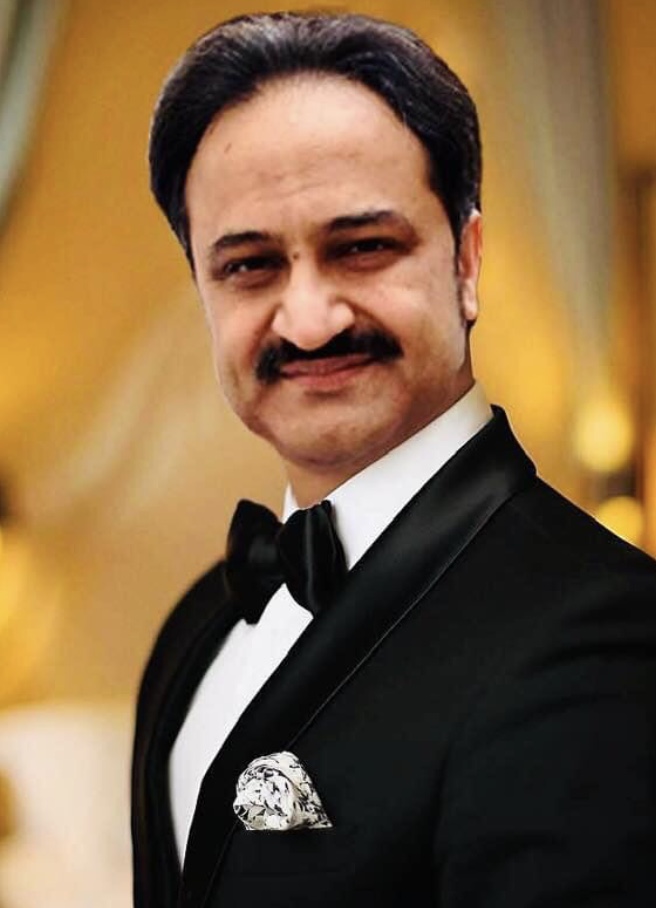
The writer is an economist, anchor, and geopolitical analyst
and the President of All Pakistan Private Schools’ Federation
president@Pakistanprivateschools.com
In a landmark diplomatic engagement signaling a thaw in bilateral ties, Pakistani Prime Minister Shehbaz Sharif and Chief of Army Staff Field Marshal Asim Munir met with U.S. President Donald Trump at the White House. This rare high-level gathering, held in the Oval Office, marked the first such visit by a Pakistani premier since 2019 and underscored a renewed commitment to collaboration amid shifting geopolitical dynamics. The meeting, accompanying Sharif and Munir were Pakistani Deputy Prime Minister Ishaq Dar, while Trump was joined by Vice President JD Vance and Secretary of State Marco Rubio. Official images released by the Pakistani government showed the leaders engaged in animated discussions, with Trump flashing a thumbs-up gesture, symbolizing optimism for future partnerships. Pakistan’s remarkable transformation from international isolation to a star of global diplomacy is a testament to effective leadership and strategic diplomacy. Under Field Marshal Asim Munir’s visionary guidance, Pakistan has not only restored its relationships with key global partners but also strengthened its position on the world stage. The country’s diplomatic resurgence is evident in its: Strengthened US-Pakistan Relations; Strategic Partnership with Saudi Arabia; Assertive Global Presence. This diplomatic renaissance is a direct result of Field Marshal Munir’s competent and consistent approach, which has earned Pakistan a reputation as a reliable and strategic partner. His leadership has been instrumental in: Defending National Interests; Promoting Regional Stability; Enhancing Global Influence; and Showcasing Pakistan’s diplomatic prowess and promoting its interests globally. The talks encompassed a broad spectrum of issues critical to both countries’ interests. The agenda focused on enhancing trade relations, bolstering security cooperation, and addressing global challenges such as counterterrorism and economic stability. Regional stability in South Asia, including developments in Afghanistan and tensions along the Pakistan-India border, were also key points of discussion. President Trump praised Sharif and Munir as “great guys and leaders,” highlighting Pakistan’s role in regional peace efforts. This endorsement comes on the heels of recent milestones, including a July trade deal involving Pakistan’s oil reserves and Sharif’s public support for Trump as a Nobel Peace Prize candidate. The meeting between PM Shehbaz and President Trump signals a new chapter in US-Pakistan relations, with both nations seeking to deepen their economic and strategic ties. As the global geopolitical landscape evolves, this partnership could have significant implications for regional stability and cooperation. With the US and Pakistan working together on trade, energy, and security issues, the future of their relationship looks promising. Historically, U.S.-Pakistan interactions have been marked by ups and downs, often influenced by regional security concerns. Field Marshal Munir’s involvement, rare for such summits, highlights the integral role of Pakistan’s military in foreign policy. Prior engagements, including a private luncheon between Trump and Munir earlier this year, laid the groundwork for this broader dialogue. The meeting also touched on critical minerals cooperation, building on prior agreements between Pakistani entities and U.S. firms. Bilateral trade emerged as a cornerstone of the dialogue, with both sides expressing intent to expand economic ties. Pakistan’s strategic location and resources were emphasized as assets for mutual benefit, potentially offsetting recent U.S. tariffs on goods from other nations in the region. Security discussions reportedly included countering terrorist threats, with Munir’s presence underscoring the military dimension of the partnership. The White House rendezvous follows weeks of anticipation, with initial reports surfacing about the meeting on the sidelines of the United Nations General Assembly (UNGA) in New York. Sharif and Munir arrived in Washington after a red-carpet welcome at Andrews Air Base, proceeding directly to the Oval Office. This engagement represents a notable shift in U.S.-Pakistan relations, which have warmed under the Trump administration. The point to strained U.S.-India ties—exemplified by Trump’s recent criticisms of Indian Prime Minister Narendra Modi and imposed tariffs on Indian imports—as a factor drawing Washington closer to Islamabad. A former U.S. general has even attributed this pivot to perceived “arrogance” from India, fostering stronger bonds between Trump and Pakistani leadership. This is Pakistani Army Chief Field Marshal Asim Munir’s second meeting with the US President this year. It may be recalled that in June this year, US President Trump had invited Pakistani Army Chief Field Marshal Asim Munir for lunch. Donald Trump said during a press conference before meeting Prime Minister Shahbaz Sharif that he was ‘meeting with two great leaders. Both the Prime Minister of Pakistan and the Field Marshal are excellent personalities.
Donald Trump said, “I am a little late in arriving, he has reached the beautiful Oval Office, I will meet him shortly.” In Pakistan, it’s hailed as a “historic moment” symbolizing a new chapter in relations, with official statements emphasizing strengthened partnership and cooperation. Indian media outlets have interpreted Trump’s warm reception as a subtle jab at Modi, amid ongoing U.S.-India frictions. Globally, the talks are seen as part of Trump’s broader strategy to recalibrate alliances in South Asia. With Pakistan’s endorsement from allies like Qatar and Saudi Arabia, this could lead to increased U.S. investment and military collaboration. However, critics question the long-term sustainability, given past volatilities in the relationship. As the leaders concluded their discussions, optimism prevailed. Sharif’s office described the atmosphere as “productive,” with commitments to follow-up actions on trade and security. This exclusive White House summit not only revives U.S.-Pakistan dialogue but also reshapes the strategic landscape in a multipolar world, where old alliances are tested and new ones forged. This high-level dialogue signifies a shift from security-centric ties to a focus on geo-economics, with both nations exploring new avenues for cooperation.
The future of US-Pakistan relations looks promising, with both nations seeking to deepen their economic and strategic ties. However, the impact of this partnership on regional dynamics, particularly with regards to China and India, remains to be seen. As US and Pakistan toast their reset, the world watches: Is this the dawn of a new order, or just another chapter in the great game?
This meeting isn’t just diplomatic theater; it’s a geopolitical pivot. US-Pakistan relations have long been transactional, oscillating between alliance and estrangement; and comes at a time of complex regional dynamics, with several pressing issues: The US-brokered ceasefire between India and Pakistan has held, and both nations are engaging in diplomatic efforts to resolve their difference; The US is recalibrating its relations with India and Pakistan, potentially impacting its ties with China; Pakistan has condemned Israel’s actions in Gaza, and the country is likely to continue its support for the Palestinian cause. The meeting also underscores Pakistan’s growing strategic partnerships: Pakistan-KSA Defence Pact, a recent defence agreement with Saudi Arabia aims to enhance regional security and cooperation; US-Pakistan Counterterrorism Efforts: The two nations are working together to combat terrorism, particularly against the Islamic State Khorasan (IS-K) group. The post-9/11 era saw billions in U.S. aid flow to Islamabad in exchange for counterterrorism support, only for trust to erode over accusations of Pakistani duplicity in harboring militants. The 2021 Afghanistan pullout under Biden marked a low point, with Pakistan accused of aiding the Taliban’s resurgence. Enter Trump 2.0: His administration views Pakistan not as a liability but as a linchpin in containing China, securing critical resources, and stabilizing the region. This encounter, marked by warm handshakes and a 30-minute delay as Trump wrapped up executive orders, signals a dramatic thaw in US-Pakistan relations—relations that had frayed after the chaotic 2021 U.S. withdrawal from Afghanistan. The meeting’s true provocation lies in its global fallout. China, Pakistan’s closest ally via the China-Pakistan Economic Corridor (CPEC), views the U.S. courtship warily. Frictions over security and debt have already strained Beijing-Islamabad ties, and U.S. inroads in minerals and energy could erode CPEC’s dominance. Trump’s push to reclaim Bagram Airbase in Afghanistan—rejected by the Taliban—adds fuel, as he cites its proximity to China’s nuclear sites. Regaining Bagram would give the U.S. a vantage point to monitor Beijing, potentially drawing Pakistan into a U.S.-China proxy tussle. India, meanwhile, watches with alarm. Trump’s souring ties with Prime Minister Narendra Modi—over Russian oil imports and the Gaza conflict—have tilted Washington toward Pakistan. This could exacerbate Kashmir tensions, as a bolstered Pakistan challenges India’s regional primacy. The U.S.-India alliance, once a bulwark against China, now faces strains, reshaping South Asia’s quadrilateral dynamics. On the Gaza front, Pakistan’s vocal condemnation of Israel’s actions—labeled genocide by the UN and others—clashes with U.S. support for Israel. Broader Middle East ties, like the September 17, 2025, Pakistan-Saudi Arabia mutual defense pact, complicate matters. The pact, which deems aggression against one as against both and hints at nuclear sharing, signals Riyadh’s diversification from U.S. security umbrellas amid Gaza fallout. But beneath the cordiality lies a web of strategic calculations that could reshape global geopolitics, from the race for rare earth minerals to the shadowy world of cryptocurrencies, and from untapped oil fields to nuclear-tinged defense pacts. For decades, Pakistan has been caught in the crosscurrents of great-power rivalry, balancing its “all-weather” alliance with China against sporadic U.S. courtship. Trump’s return to the White House in January 2025 has accelerated this shift, as Washington seeks to counter Beijing’s influence in South Asia while navigating tensions with India. The discussions, though not fully disclosed, reportedly touched on bilateral trade, energy security, and regional stability—issues that could either stabilize the volatile region or ignite new flashpoints involving China, India, Afghanistan, and the Middle East. This reset is timely. Pakistan faces economic turmoil—inflation, debt, and energy shortages—while the U.S. grapples with supply-chain vulnerabilities exposed by the Ukraine war and tech rivalries with China. The meeting underscores a mutual need: Washington wants access to Pakistan’s untapped resources and strategic location; Islamabad craves investment and diplomatic leverage. But is this a genuine partnership or a marriage of convenience? It’s the latter, with Pakistan leveraging its nuclear arsenal and proximity to Afghanistan to extract concessions, while Trump uses it to project “America First” strength. At the heart of this rapprochement is trade, particularly in sectors where Pakistan holds hidden potential. A standout is rare earth minerals—essential for everything from electric vehicles to missiles. Pakistan boasts vast deposits of antimony, copper, gold, tungsten, lithium, cobalt, and rare earth elements, largely untapped due to infrastructure gaps and political instability. Previously, President Trump announced plans for American companies to engage in oil exploration in Pakistan, which could be a game-changer for the country’s economy. Additionally, the US and Pakistan are working on a trade deal, with tariffs set at 19%. This development could boost bilateral trade and investment, particularly in sectors such as: Exploration of oil and gas resources in Pakistan; Cooperation in the extraction and processing of rare earth minerals; Emerging technologies and cryptocurrency. Just weeks before the White House meeting, U.S. Strategic Metals inked a $500 million deal with Pakistan to develop these resources, starting with immediate exports and expanding to processing. This pact isn’t mere commerce; it’s a strategic jab at China’s near-monopoly on rare earths, reducing U.S. dependence on Beijing and positioning Pakistan as a key supplier in the global green transition. Equally intriguing is the digital and cryptocurrency domain. Pakistan, eyeing a role as a Web3 hub, has deepened ties with the U.S. on crypto policy, focusing on regulation, financial inclusion, and innovation. In a bold move, Islamabad struck a deal with World Liberty Financial—a crypto venture backed by Trump’s family, which holds a 60% stake—potentially funneling billions into Pakistan’s digital economy. Pakistan’s plans for a sovereign Bitcoin reserve, powered by surplus electricity, could transform its energy woes into tech windfalls. Yet, this raises thorny questions: Will it empower ordinary Pakistanis or enrich elites? And how does it align with U.S. efforts to regulate crypto globally, especially amid fears of illicit finance? Pakistan’s energy sector offers another tantalizing prize. Estimates suggest over 9 billion barrels of oil and 105 trillion cubic feet of natural gas reserves, including massive offshore deposits that could rank among the world’s largest. Recent discoveries by firms like Oil & Gas Development Company and Mari Energies underscore this potential. The U.S. is keen to partner, with a July 2025 agreement aimed at developing these reserves and easing tariffs. This could be transformative for Pakistan, alleviating chronic shortages and boosting GDP. For the U.S., it’s about diversifying energy sources away from volatile Middle East suppliers. This White House rendezvous marks a pivotal moment, but one fraught with risks. Will it foster prosperity or fuel instability? Pakistan gains economic lifelines, yet at the cost of alienating China and provoking India. The U.S. secures strategic assets, but entangles itself in nuclear brinkmanship and regional quagmires. In a multipolar world, such alliances are fluid—today’s pivot could be tomorrow’s pivot away. The future of US-Pakistan relations looks promising, with both nations seeking to deepen their economic and strategic ties. However, the impact of this partnership on regional dynamics, particularly with regards to China and India, remains to be seen. As US and Pakistan toast their reset, the world watches: Is this the dawn of a new order, or just another chapter in the great game?
